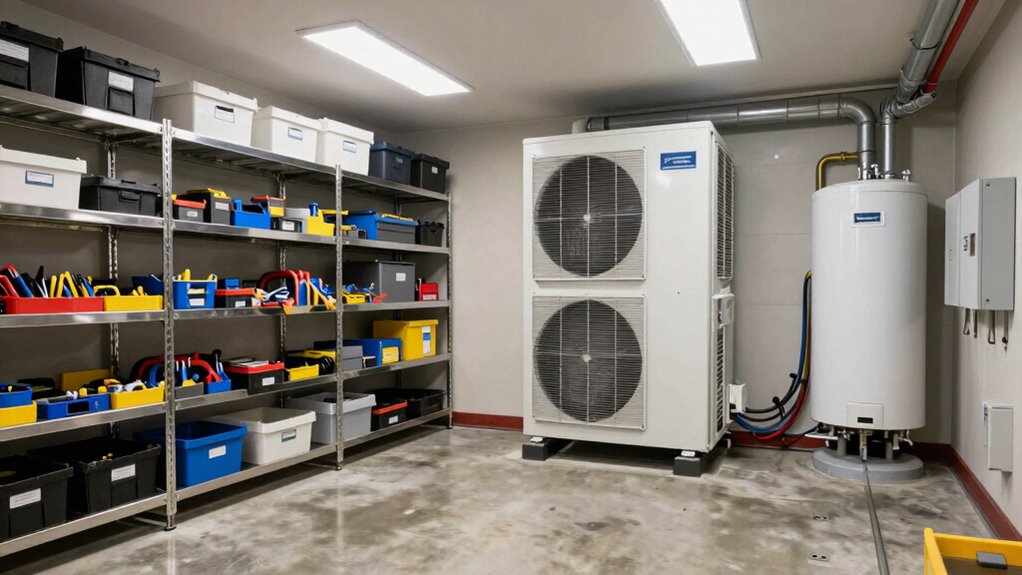

To prepare your utility space for larger system upgrades, start by clearing clutter, tools, and stored items to create a safe, organized area. Assess the structure to make certain walls, floors, and ceilings can support the added weight, and upgrade ventilation, insulation, electrical, and plumbing systems as needed. Leave enough space for maintenance and future upgrades, and consider consulting professionals for capacity checks. Keep going to discover how these steps guarantee a smooth, efficient upgrade process.
Key Takeaways
- Clear clutter and organize the space to ensure unobstructed access and safe installation.
- Assess and upgrade ventilation to handle increased airflow and prevent heat buildup.
- Enhance insulation and temperature control to protect equipment and improve energy efficiency.
- Verify structural integrity and reinforce flooring for supporting heavier systems.
- Upgrade electrical and plumbing systems to meet higher power and flow requirements safely.
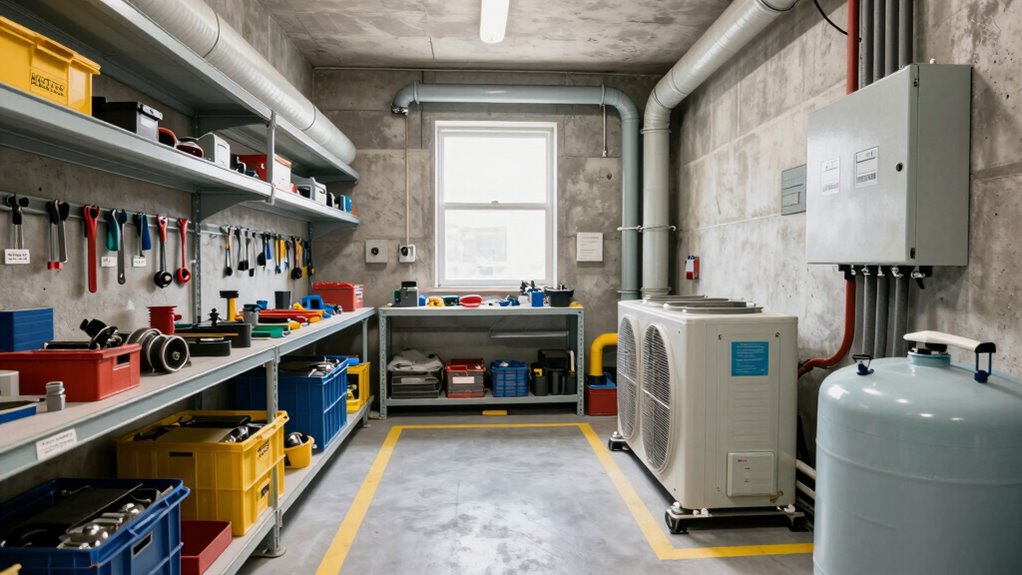
Are your utility spaces ready for upcoming system upgrades? If you’re planning to install larger HVAC units, water heaters, or electrical systems, it’s crucial to evaluate your current setup. Proper preparation ensures a smoother transition, minimizes disruptions, and maximizes the efficiency of the new equipment. Start by inspecting the space itself. Clear out clutter, tools, and any stored items that could obstruct access or hinder upgrades. A clean, organized area makes it easier to work safely and efficiently.
Next, focus on ventilation improvements. Upgrading systems often generate more heat or require better airflow, so assess your current ventilation capacity. If your space feels stuffy or damp, it might not support larger equipment properly. Consider installing or upgrading exhaust fans, vents, or louvers to promote better airflow. Improving ventilation not only helps with heat dissipation but also reduces moisture buildup, which can prevent mold and corrosion that could threaten your new systems. Ensuring adequate ventilation capacity is vital for system longevity and performance. Additionally, evaluate your existing ventilation systems to identify potential areas for enhancement.
Insulation enhancements are equally crucial. Proper insulation keeps the utility space temperature-controlled, protecting sensitive components from extreme heat or cold. If your space lacks sufficient insulation, add or upgrade insulation materials around walls, ceilings, and ductwork. This prevents energy loss and helps your systems operate more efficiently. Additionally, insulating pipes and ducts minimizes heat loss and reduces the risk of freezing or condensation issues, which could cause damage or reduce system performance. Proper insulation also plays a role in energy efficiency, helping to lower operational costs over time.
While you’re at it, check the structural integrity of your utility space. Ensure walls, floors, and ceilings can support the weight of the new equipment. Reinforce flooring if necessary, especially if heavier appliances are involved. Make sure there’s enough clearance for maintenance and repairs—don’t forget to leave space for future upgrades or servicing.
Finally, review your electrical wiring and plumbing systems. Larger systems often demand more power or water capacity. Consult a professional to upgrade your electrical panels and wiring if needed, guaranteeing they meet safety standards. Similarly, verify that your plumbing can handle increased flow rates or pressure, and replace outdated pipes if necessary. Addressing these aspects beforehand prevents costly modifications later on. It’s also beneficial to schedule inspections to catch any existing issues that could hinder upgrades.
Preparing your utility spaces for larger system upgrades requires careful planning and attention to detail. By improving ventilation, enhancing insulation, and ensuring structural and utility readiness, you set the stage for a seamless upgrade process. This proactive approach minimizes downtime, reduces unexpected costs, and guarantees your new systems operate efficiently for years to come.
utility space organization storage bins
As an affiliate, we earn on qualifying purchases.
As an affiliate, we earn on qualifying purchases.
Frequently Asked Questions
How Do I Identify the Best Location for System Upgrades?
You identify the best location for system upgrades by analyzing your utility layout and considering ventilation considerations. Look for a space with ample room for expansion and easy access to existing infrastructure. Guarantee proper ventilation to prevent heat buildup and maintain safety. Check for sufficient clearance around equipment and proximity to power sources. Prioritize a spot that minimizes disruptions during installation and future maintenance, making upgrades smooth and efficient.
What Safety Precautions Are Necessary During Utility Space Modifications?
You should prioritize fire safety by installing smoke detectors and keeping fire extinguishers nearby during utility space modifications. Always turn off electrical power before working on any wiring to prevent electrical hazards. Wear appropriate protective gear, like gloves and goggles, and guarantee proper ventilation. Keep the workspace clear of flammable materials, and follow all safety protocols to minimize risks and ensure a safe environment during upgrades.
How Can I Minimize Downtime During Upgrades?
To minimize downtime during upgrades, plan equipment maintenance schedules carefully, preferably during off-peak hours. Keep your utility space organized so you can quickly locate tools and parts, reducing delays. Communicate with your team about the upgrade timeline and coordinate tasks efficiently. Regularly review your upgrade plan to identify potential bottlenecks, allowing you to address issues proactively and facilitate a smoother, faster shift without unnecessary disruptions.
What Permits or Approvals Are Required Before Starting?
Before starting, you need to obtain necessary permits and approvals. Check local building codes to guarantee your plans comply with safety and zoning regulations. You’ll likely need to submit detailed plans for review and obtain inspection approvals before proceeding. Contact your local building department early to understand specific requirements, as they’ll guide you through the approval process and help you avoid delays or violations during your utility space upgrade.
How Should I Budget for Unexpected Utility Space Issues?
Think of budgeting for unexpected utility space issues as steering a ship through unpredictable waters—you need a sturdy plan. Start with detailed cost estimation, then add a contingency budget, typically around 10-20%, to cover surprises. This way, you stay afloat even if unforeseen problems arise. Proper contingency planning ensures you’re prepared for surprises, so your project sails smoothly without sinking your finances.
Conclusion
By properly preparing your utility spaces, you guarantee smoother system upgrades and prevent costly delays. Remember, a well-organized space can reduce upgrade times by up to 30%, saving you both time and money. Taking the time now to plan and maintain your utility areas pays off, especially when unexpected issues arise. Stay proactive, stay prepared—your future self will thank you for the effort you put in today.