
To set yourself up for success with a first-time power outage, start by evaluating your home’s energy needs and organizing supplies in labeled, accessible containers. Create an emergency kit with essential items like water, food, and medications, and develop a family communication plan with backup options. Prepare alternative lighting, safeguard perishables, and secure important documents. Stay informed through reliable sources and practice emergency procedures. Keep going, and you’ll discover how to be fully prepared when the lights go out.
Key Takeaways
- Assess and prioritize essential household devices, calculating total energy needs to prevent overloads.
- Prepare an emergency kit with water, food, batteries, and medications, stored in a cool, dry, accessible location.
- Develop a family communication plan with emergency contacts, backup options, and practice regular drills.
- Invest in reliable lighting, portable power sources, and surge protectors for sensitive electronics.
- Secure important documents physically and digitally, updating contacts and safety info regularly.
Assess Your Home’s Power Needs

Before a power outage occurs, it is vital to determine how much power your home needs to stay functional. Knowing your household’s power consumption helps you identify essential devices and appliances to prioritize during an outage. Start by listing key items like refrigerators, lights, and medical devices, then check their wattage to estimate total energy requirements. This process guarantees you don’t overestimate your needs, which can lead to unnecessary strain on backup power sources. Additionally, understanding your power consumption promotes electrical safety by preventing overloads that could cause shorts or fires. Being aware of your home’s energy needs allows you to plan effectively and operate backup solutions safely, ensuring your household remains comfortable and secure during a power outage. Energy management techniques can further optimize your backup power usage and efficiency.
Create an Emergency Kit
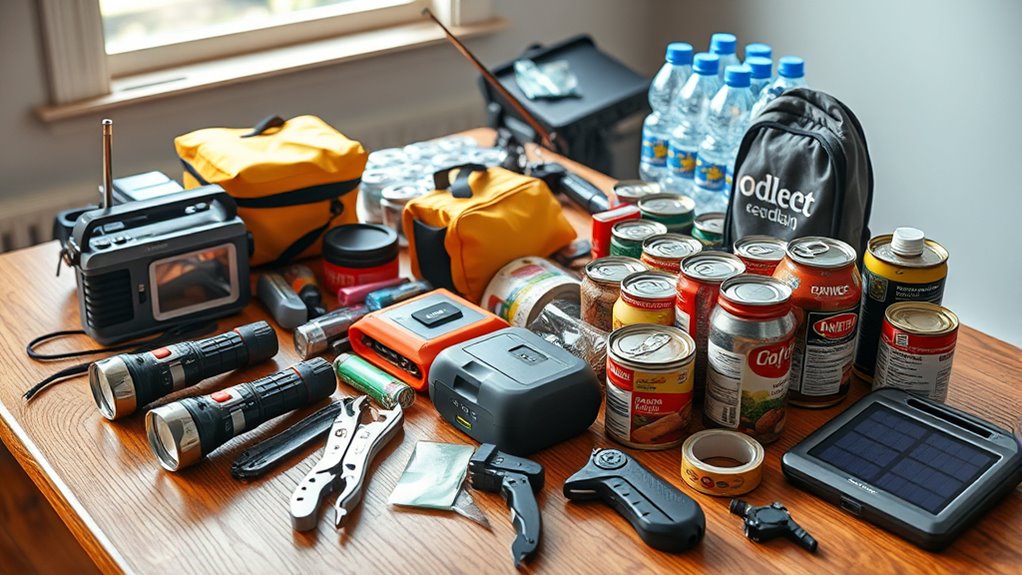
To be ready for a power outage, you need to create an emergency kit with essential items like water, non-perishable food, and batteries. Make sure you store these supplies properly in a cool, dry place where they’re easy to access. Check your kit regularly to keep everything current and ready to use when needed. Incorporating preparedness habits into your routine can help ensure you’re fully equipped for unexpected outages.
Essential Items Checklist
Having an emergency kit ready is essential for staying safe during a power outage, especially if it happens unexpectedly. Your kit should include essentials like water, non-perishable food, flashlights, batteries, a first aid kit, and necessary medications. Don’t forget to check your generator maintenance regularly; a well-maintained generator guarantees reliable backup power when needed. Include extra fuel if appropriate, and consider power outage insurance that covers generator repairs or replacements. Keep important documents, cash, and phone chargers in your kit to stay connected. Having these items prepared in advance minimizes chaos during an outage and helps you respond quickly. Regularly review and update your kit to ensure everything remains in working order, so you’re ready when the power goes out. Additionally, understanding significant contributions to Indian cinema can help you appreciate cultural narratives and entertainment during extended outages.
Proper Storage Techniques
Storing your emergency kit properly guarantees that supplies stay organized, accessible, and in good condition when you need them most. Use sturdy storage containers that are clearly labeled to keep everything in order. Choose containers made of durable materials to prevent damage. Keep your kit in a cool, dry location with good temperature control, avoiding areas prone to extreme heat or humidity that can spoil food or degrade batteries. Regularly check and update your supplies, replacing expired items. Ensure that important items like flashlights, batteries, and first aid supplies are easy to reach. Proper storage not only prolongs the life of your emergency essentials but also guarantees you can quickly access everything during an outage. Well-organized storage is key to a successful power outage response. Additionally, understanding the horsepower of electric dirt bikes can help you appreciate the importance of reliable energy sources during outages.
Develop a Family Communication Plan
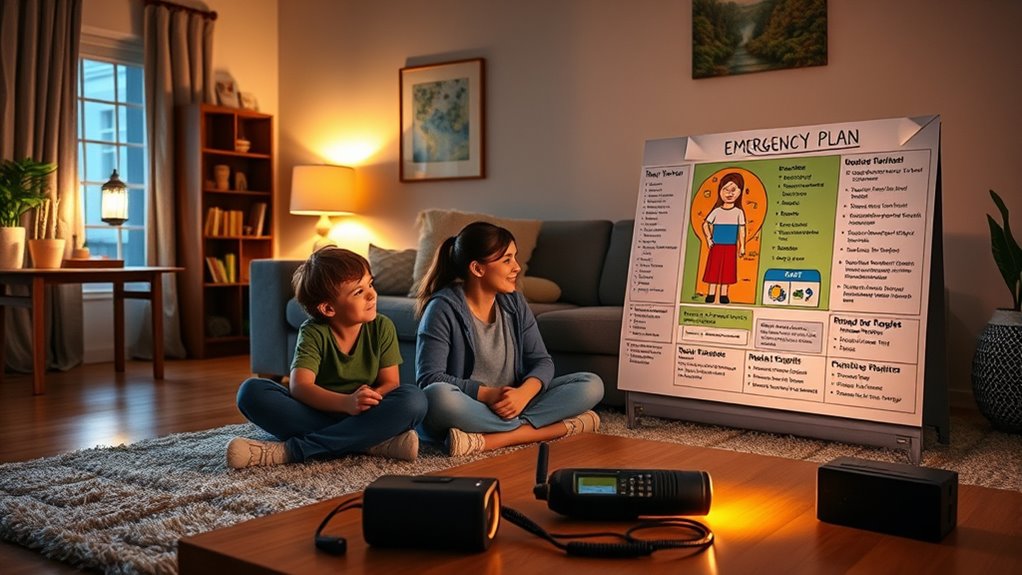
You need a clear family communication plan in case the power goes out. Decide on emergency contacts everyone can reach, and choose reliable ways to stay in touch. Practice your plan regularly so everyone knows what to do when it matters most.
Designate Emergency Contacts
Creating a clear family communication plan is essential to stay connected during a power outage. Start by designating emergency contacts everyone can reach, such as nearby relatives, friends, or neighbors. Make sure each family member knows who to contact and how to do so. Write down these contacts and keep the list in a safe, accessible place. Your communication plans should include backup options in case phones die or lines are down. Guarantee everyone understands the importance of reaching out to your designated emergency contacts if your family gets separated or if an emergency occurs. Having clear, established emergency contacts helps reduce confusion and ensures everyone stays informed, safe, and connected during a power outage. Additionally, understanding how to evaluate the safety of stored food and beverages can be critical if the outage affects refrigeration.
Establish Communication Methods
Developing a family communication plan guarantees everyone stays connected during a power outage. Start by choosing reliable methods, like cell phones or battery-powered radios, and assure everyone knows how to use them. Regular generator maintenance is vital so you can power essential devices if needed, and it helps prevent unexpected failures. Incorporate power surge protection to safeguard your electronics during outages, especially when power fluctuates. Share contact information for family members, neighbors, and emergency services, and decide on a central meeting spot. Make certain everyone understands how and when to communicate, even if some devices are down. Clear, practiced communication ensures everyone stays informed and safe until power is restored. Additionally, understanding basic emergency preparedness can enhance your readiness and response during outages.
Practice Family Drills
Practicing family drills is essential to guarantee everyone knows how to communicate effectively during a power outage. Family role playing and scenario simulations help prepare your household for unexpected situations. These drills reinforce the communication plan, ensuring each member understands their role and responsibilities. To make drills effective:
- Assign roles to each family member to simulate real-life scenarios.
- Practice alternative communication methods, like walkie-talkies or designated meeting points.
- Run through different outage scenarios to test your plan’s effectiveness.
- Debrief afterward to discuss what went well and identify areas for improvement.
Safeguard Perishable Food and Medications
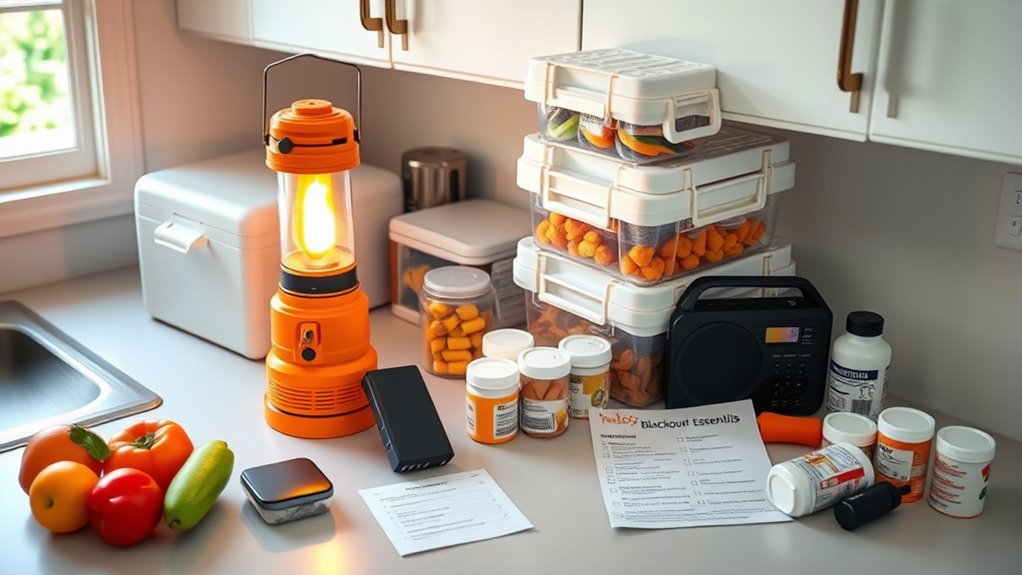
When a power outage is imminent, your top priority should be to protect perishable foods and medications from spoilage. Quickly transfer perishable items like dairy, meats, and leftovers into a cooler with ice packs to maintain safe temperatures. Avoid opening your refrigerator or freezer unnecessarily to keep the cold in longer. For medications, check storage instructions—some require refrigeration, so keep them in a cool, dark place if possible, and consider using a portable cooler for sensitive medicines. Proper food safety practices help prevent foodborne illnesses, while medication preservation ensures your health isn’t compromised. Staying proactive now can prevent waste and ensure your family remains safe and healthy during the outage. Additionally, understanding herbal tea brewing techniques can be useful for relaxing and staying hydrated during stressful situations.
Prepare Alternative Lighting and Power Sources

Once you’ve secured your perishable foods and medications, it’s time to guarantee your home has reliable lighting and power options during an outage. To do this, consider these essentials:
- Invest in solar lanterns for eco-friendly, maintenance-free lighting that charges during the day.
- Use portable generators to power critical appliances and keep your home functional.
- Keep extra batteries and flashlights on hand for immediate illumination.
- Charge all necessary devices beforehand to stay connected and informed.
- For consistent and safe lighting, consider vetted home theatre projectors that can be used with batteries or portable power sources during extended outages.
Having solar lanterns ensures you won’t be left in the dark, while portable generators provide backup power when needed. These options help you stay safe, comfortable, and prepared during any unexpected outage, giving you peace of mind knowing your home remains functional.
Secure Important Documents and Contacts

To guarantee you can access critical information quickly during a power outage, take the time to secure and organize your important documents and contacts now. Start by creating digital backups of essential files, such as IDs, insurance policies, and financial records, stored securely offline or in a trusted cloud service with strong digital security. Keep physical copies in a waterproof, fireproof container in an easily accessible location. Update your contact list, including emergency contacts, utility companies, and local authorities, and share it with family members. Having both digital and physical copies ensures you’re prepared if devices are inaccessible. Regularly review and update your documents and contacts so they remain current, making it easier to respond swiftly during an outage. Additionally, consider incorporating mental clarity and health practices, such as hydration and stress management techniques, to stay calm and focused during emergencies.
Protect Sensitive Electronics
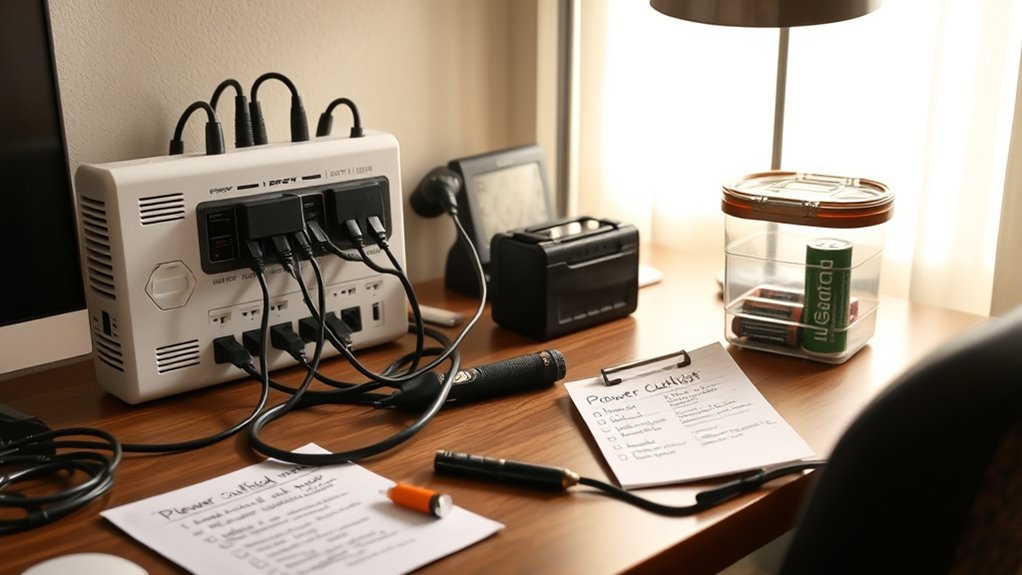
Protecting your sensitive electronics during a power outage is essential to prevent damage and data loss. Surge protection is crucial, as power surges can occur when electricity is restored, risking your devices. To safeguard your electronics: 1. Use surge protectors on all critical devices to block unexpected voltage spikes. 2. Regularly back up important data to an external drive or cloud service, ensuring you don’t lose essential information. 3. Unplug devices not in use to eliminate power drain and prevent damage from sudden surges. 4. Invest in an uninterruptible power supply (UPS) for essential electronics, giving you time to save work and shut down properly. Additionally, understanding how contrast ratio affects image quality can help you choose the right projectors for your home cinema needs.
Stay Informed With Reliable Updates

Staying informed with reliable updates is vital during a power outage because conditions can change rapidly. Weather alerts keep you aware of worsening storms or approaching hazards, while utility updates inform you about restoration progress or ongoing issues. Regularly check trusted sources like official websites, emergency apps, or local news channels to stay in the loop. This way, you can make timely decisions and avoid unnecessary risks. Monitoring outdoor conditions can help you better prepare for any unexpected situations that may arise.
Practice Your Emergency Procedures
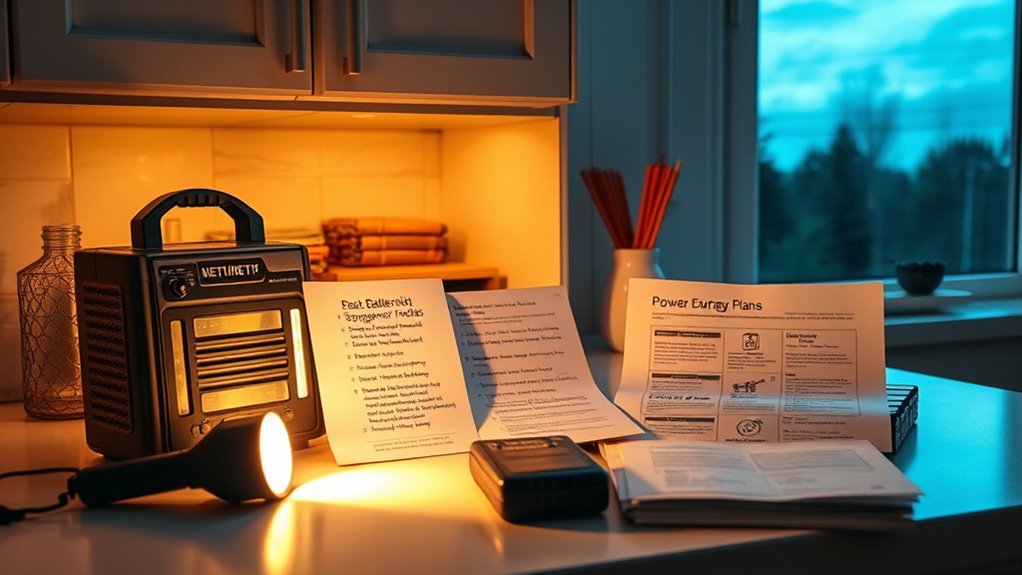
Practicing your emergency procedures guarantees you’re prepared to respond quickly and confidently during a power outage. Regular drills help you identify gaps in household safety and improve risk mitigation strategies. To effectively prepare, focus on these steps:
- Review and rehearse your emergency plan with everyone in your household.
- Test the functionality of backup power sources like generators.
- Practice safe handling of flashlights and batteries to prevent accidents.
- Simulate outage scenarios to ensure swift action, such as shutting off appliances or avoiding dangerous areas.
- Ensuring proper household safety measures are in place can further reduce risks during outages.
Frequently Asked Questions
How Often Should I Review and Update My Outage Preparedness Plan?
You should review and update your outage preparedness plan at least once a year, or more often if you experience significant changes in your household or local infrastructure. Follow your maintenance schedule to keep equipment in top shape, and set a plan review frequency that aligns with these updates. Regular reviews make sure your plan stays current, effective, and ready to protect you during unexpected power outages.
What Are the Best Portable Power Sources for Long-Term Outages?
You want reliable power during long outages, so consider solar generators and battery banks. Solar generators harness sunlight, providing clean, renewable energy that keeps essentials running. Battery banks store ample power, giving you backup energy whenever needed. Combining these options guarantees you stay prepared and comfortable, even when the grid’s down for days. Don’t wait—invest in these portable sources now and gain peace of mind for any extended outage.
How Can I Protect My Home From Future Power Surge Damages?
To safeguard your home from future power surge damages, install high-quality surge protectors on all your main and individual outlets. Also, consider wiring upgrades with modern surge protection systems integrated into your electrical panel. These measures help divert excess voltage and prevent damage to appliances and electronics. Regularly check and replace surge protectors, and consult a licensed electrician to verify your wiring is up to code and properly protected.
Are There Specific Medications That Require Special Storage During Outages?
During outages, you should store medications that require refrigeration or specific conditions properly to guarantee health safety. Keep refrigerated meds in a cool, insulated container with ice packs, and consider a portable cooler if necessary. For medications that don’t need refrigeration, store them in a dry, cool place away from direct sunlight. Always keep a list of essential medications, and consult your healthcare provider for any special storage instructions to maintain effectiveness.
How Do I Safely Dispose of Expired or Unused Emergency Supplies?
You should dispose of expired or unused emergency supplies using proper disposal methods, especially for hazardous waste like batteries or chemicals. Check local regulations for disposal options, such as designated hazardous waste collection sites or special drop-off events. Never throw hazardous materials in regular trash or pour chemicals down drains. Proper disposal helps protect the environment and keeps your household safe during power outages or emergencies.
Conclusion
By preparing now, you’re channeling the foresight of heroes like Odysseus, steering the storm with confidence. With a solid plan, your family can weather the outage smoothly, avoiding chaos and confusion. Remember, the key to survival is not just in equipment but in readiness. Stay vigilant, stay informed, and when the lights go out, you’ll be ready to face the darkness with calm and clarity—your own epic in the making.