To make a simple home maintenance binder, gather a sturdy binder, dividers, sheet protectors, and a pen. Organize sections for manuals, warranties, service providers, and schedules, and label them clearly. Use color coding for quick access and add an index at the front. Keep important contacts and upcoming maintenance tasks visible. Regularly update the binder to stay current and prevent clutter. If you keep going, you’ll learn all the tips to make it even more effective.

Get furniture and decor delivered free with Prime
- Fast, free delivery on millions of items
- Prime Video, Amazon Music and more included
- Member-only deals all year
Key Takeaways
- Choose a sturdy binder and organize sections with labeled dividers for different categories like plumbing, electrical, and appliances.
- Gather essential documents such as manuals, warranties, receipts, and contact information to include in each section.
- Use sheet protectors to safeguard important papers and keep the binder tidy and durable.
- Add a maintenance calendar or schedule for key tasks like filter replacements and inspections.
- Regularly update the binder to keep information current and review it to address upcoming maintenance needs.
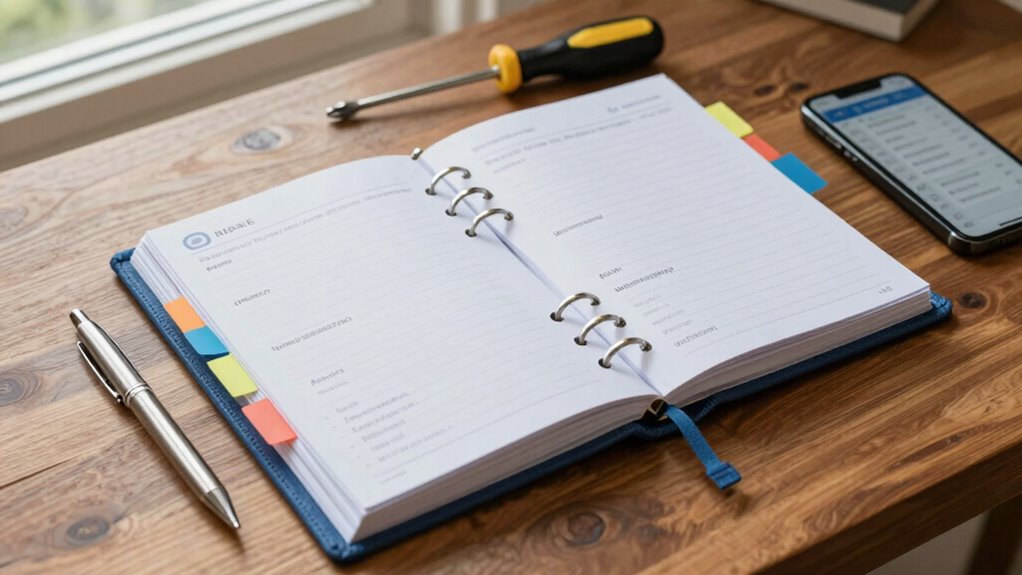
Keeping your home organized and well-maintained can be easier than you think, especially when you have a dedicated system in place. A home maintenance binder serves as your go-to resource, helping you track repairs, schedules, warranties, and important documents all in one place. To start, you’ll want to gather some basic supplies like a sturdy binder, sheet protectors, dividers, and a pen. The key to making your binder truly useful is applying smart organizing tips and customizing it to fit your home’s specific needs.
A home maintenance binder simplifies organization by consolidating repairs, schedules, warranties, and key documents in one personalized, easy-to-access system.
Begin by creating clear sections within your binder. Use dividers to separate categories such as plumbing, electrical, appliances, HVAC, warranties, and service providers. Label each section prominently so you can find information quickly. When it comes to organizing tips, consider color-coding your dividers or tabs for visual cues—this makes locating documents faster and keeps your system intuitive. Binder customization is essential because no two homes are alike; adapt your sections as needed, adding or removing categories based on your household’s unique requirements.
Next, compile all relevant documents into your binder. This includes manuals, receipts, warranties, and contact information for contractors or service providers. Use sheet protectors to keep these documents safe from spills or tears, and consider adding an index at the front of your binder for quick reference. When you regularly update your binder, you prevent clutter from piling up and guarantee that everything you need is at your fingertips. Incorporate organizing tips like using tabs for each section and keeping a dedicated space for upcoming maintenance tasks or reminders.
Binder customization also involves adding calendars or schedules. For example, note when filters need replacing, annual inspections, or service appointments. This proactive approach helps you stay ahead of potential issues and avoid costly repairs. You might also create a page for emergency contacts or local service providers, making it easy to access important numbers during urgent moments. As you learn more about your home’s needs, tweak your binder so it remains a practical, personalized tool that simplifies your home management. Additionally, understanding home maintenance practices can help you prioritize tasks and maintain your property more effectively, especially when you keep track of preventative maintenance schedules. Regularly reviewing your binder can also help you identify potential issues early, which is crucial for avoiding costly repairs and maintaining your home’s value over time.
home maintenance binder supplies
As an affiliate, we earn on qualifying purchases.
As an affiliate, we earn on qualifying purchases.
Frequently Asked Questions
What Materials Are Best for Organizing the Binder?
You should choose materials that are durable and easy to organize. Use a binder with a sturdy cover to protect your documents, and consider labeling templates to keep everything clear and accessible. Opt for thick, high-quality paper or plastic sleeves for important papers, and include dividers for different sections. These materials make your home maintenance binder resilient, organized, and simple to update, ensuring your home info stays protected and easy to find.
How Often Should I Update the Maintenance Records?
You should update your maintenance records at least quarterly, especially after routine inspections or repairs. Regular updates help you stay on top of issues before they become costly. It’s also smart to review emergency contacts annually, ensuring they’re current. Keeping your binder updated guarantees you have all essential information handy, making home maintenance smoother and more efficient, and helping you respond quickly in emergencies.
Can Digital Versions Replace Physical Binders Effectively?
Digital versions can effectively replace physical binders if you prioritize digital organization and guarantee backups. Paper vs. digital mainly hinges on your preference and access needs. Digital records are easy to update, search, and share, making them convenient for quick reference. However, keep in mind that technology can fail, so maintaining a physical copy as a backup is smart. Ultimately, choose what suits your lifestyle and assures your maintenance info stays accessible and secure.
How Do I Prioritize Maintenance Tasks in the Binder?
They say “a stitch in time saves nine,” so start with priority scheduling and task categorization in your binder. List urgent repairs first, like plumbing leaks, and then categorize tasks by frequency or room. This approach helps you focus on what’s most important, ensuring critical issues get addressed promptly. Regularly update your categories and priorities to keep your maintenance routine efficient and manageable.
What Is the Ideal Size for a Home Maintenance Binder?
You should choose a home maintenance binder that’s compact yet spacious enough to hold all your essential documents. A 1.5 to 2-inch binder works well, giving room for budget planning sections, seasonal checklists, and maintenance logs. This size keeps it manageable, so you’re more likely to keep it updated. It’s big enough to include all your important info without becoming bulky or overwhelming to handle regularly.
Conclusion
With your home maintenance binder in hand, you’ll have a trusty map guiding you through every repair and reminder. Think of it as a personal fairy tale, where each page turns into a chapter of your home’s story—well-organized and ready for any adventure. Keep it updated, and you’ll breeze through chores, knowing your home is in good hands. This simple binder transforms chaos into clarity, making maintenance feel like a walk in the park.
Halloween Picks
halloween
As an affiliate, we earn on qualifying purchases.