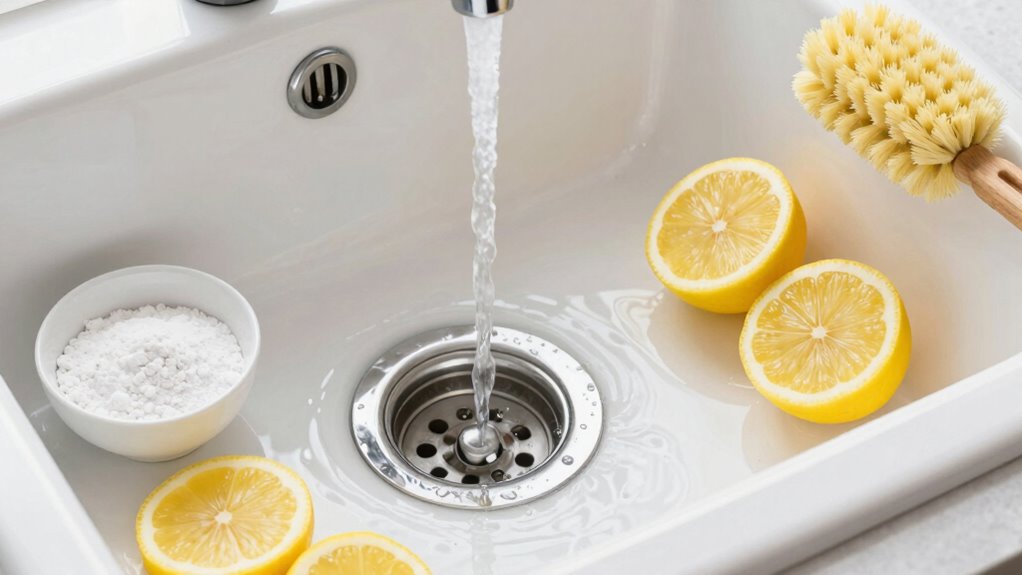
To keep your sink drains moving smoothly without harsh chemicals, rely on natural solutions like homemade enzyme cleaners or biodegradable products with beneficial bacteria. These break down grease, hair, and food debris safely, preventing clogs and odors. Regularly rinse drains with hot water or vinegar and use drain strainers to catch particles. Incorporating these eco-friendly habits helps maintain healthy plumbing. To discover more effective tips, keep exploring eco-conscious ways to care for your drains.

Get furniture and decor delivered free — and shop member deals
- Fast, free delivery on millions of items
- Access to Prime Big Deal Days deals on October 6–7
- Prime Video, Amazon Music and more included
Key Takeaways
- Use hot water and vinegar regularly to dissolve minor buildup naturally.
- Pour homemade enzyme cleaner into drains weekly to break down organic debris.
- Install drain strainers to catch hair and food scraps, preventing clogs.
- Avoid pouring grease or oils down the drain to prevent solidification and blockages.
- Perform routine flushing with a mixture of hot water and natural cleaners to maintain flow.
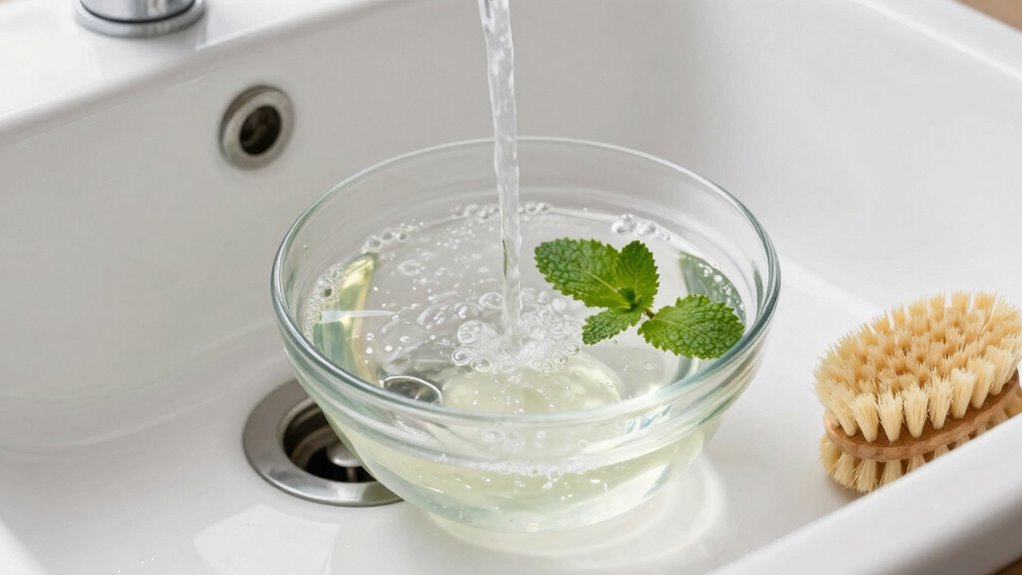
Nobody wants a slow or clogged sink, especially when harsh chemicals can damage pipes and harm the environment. Luckily, you don’t need to rely on strong, toxic cleaners to keep your drains flowing smoothly. Instead, you can turn to biodegradable solutions and natural enzyme cleaners that are safe, effective, and eco-friendly. These options work by breaking down organic buildup like grease, hair, and food particles without introducing harmful substances into your plumbing or the environment.
Using biodegradable solutions is a wise choice because they’re designed to decompose naturally, reducing the risk of chemical buildup inside your pipes. Regularly pouring a mixture of hot water and vinegar down your drain can help loosen minor clogs and prevent buildup. For tougher issues, natural enzyme cleaners are your best bet. These products contain beneficial bacteria and enzymes that digest organic matter inside your drain, clearing blockages and eliminating odors without harsh chemicals. You simply pour the enzyme cleaner into your drain and let it work overnight or for several hours, giving the bacteria time to break down grease and debris that cause clogs.
Use natural enzyme cleaners and vinegar to keep drains clear and odor-free safely.
You can also make your own natural enzyme cleaner at home using simple ingredients. Combine sugar, fruit scraps like pineapple or banana peels, water, and a bit of molasses in a jar. Let the mixture ferment for a few days, then strain out the solids and pour the liquid into your drain. This homemade enzyme solution will help prevent future clogs by maintaining a healthy bacterial balance in your pipes. Regular use of these natural cleaners promotes a healthier plumbing system and reduces the need for mechanical snaking or harsh chemicals. Incorporating biodegradable solutions into your routine ensures you’re supporting both your plumbing and the environment.
In addition to using natural cleaners, it’s important to practice preventive habits. Always run hot water after washing dishes or brushing your teeth to flush away soap scum and food particles. Avoid pouring grease or oils down the drain, as they solidify and cause clogs. Using a drain strainer can catch hair and food scraps before they enter your pipes, making your cleaning routine easier and more effective. Combined with natural enzyme cleaners and biodegradable solutions, these habits form a thorough approach to maintaining clear, healthy drains.
As an affiliate, we earn on qualifying purchases.
Frequently Asked Questions
Can Natural Remedies Fully Replace Commercial Drain Cleaners?
Natural remedies can be effective as eco-friendly alternatives and chemical-free solutions for maintaining your drain, but they might not fully replace commercial drain cleaners in all situations. While baking soda, vinegar, and hot water work well for regular maintenance, stubborn clogs may still require stronger methods. You can try natural options first, but keep in mind that some blockages might need professional help or commercial products for complete clearing.
How Often Should I Perform Drain Maintenance?
For ideal operation, perform drain maintenance regularly—about once a month. Maintaining a consistent schedule prevents buildup, prolongs your drain’s lifespan, and keeps water flowing freely. If you notice slow drainage or odors, increase the frequency. By sticking to a simple schedule, you safeguard your sink’s longevity, save money, and avoid harsh chemicals. Consistent care creates a clean, clear, and reliable drain, ensuring peace of mind and plumbing performance.
Are There Specific Tools for Clearing Slow Drains?
Yes, there are specific tools for clearing slow drains. Drain snakes are effective for reaching deep clogs, allowing you to break up or remove blockages. A plunger with proper techniques can also help dislodge minor obstructions near the drain opening. Use a combination of these tools for best results—start with a plunger, then try a drain snake if the clog persists. Regular use keeps your drains flowing smoothly without harsh chemicals.
What Are Signs of a Severely Clogged Drain?
You notice water pooling and slow drainage, signaling a severe drain obstruction. Perhaps you hear gurgling sounds or see a foul smell wafting from the drain, indicating a stubborn clog. These signs warn you to act quickly, as neglecting clog prevention can lead to backups or pipe damage. Keep an eye out for these symptoms to catch problems early and maintain smooth, unobstructed drains without harsh chemicals.
Is It Safe to Use Boiling Water Regularly?
Yes, using boiling water regularly is generally safe and can help keep your drain clear without harsh chemicals. It’s a safe alternative that reduces the risk of chemical safety issues, especially if you’re concerned about using strong cleaners. Just be cautious with very hot water to avoid damaging your pipes or causing burns. Incorporating boiling water into your routine is an easy, natural way to maintain a smooth, clog-free drain.
Conclusion
So, there you have it — no need to turn your sink into a bubbling chemical war zone. With a little baking soda, vinegar, and some regular maintenance, you can keep things flowing smoothly without poisoning yourself or the planet. Who knew that a splash of natural ingenuity could save your pipes and your conscience? So go ahead, ditch the harsh stuff, and let your sink drain happily ever after — guilt-free and clog-free!
Fall Picks
fall essentials
As an affiliate, we earn on qualifying purchases.