TL;DR

Get furniture and decor delivered free with Prime
- Fast, free delivery on millions of items
- Prime Video, Amazon Music and more included
- Member-only deals all year
An Ideal Home report examines why radiators may not heat rooms effectively, citing expert advice on cleaning, bleeding and keeping furniture clear. The report also discusses balancing radiator flow and thermostat use, but provides no independent test showing how much these steps would improve heating in a particular home.
Ideal Home has published advice on radiator problems that may leave rooms feeling cold, including dust buildup, trapped air and furniture blocking heat. The report quotes home-heating and appliance experts recommending basic maintenance and checks, while the amount any action would improve a specific home’s heating depends on its condition and setup.
Martin Garbutt, head of technical governance at home services platform Ding, told Ideal Home that dust inside radiators can affect air quality and reduce a radiator’s efficiency by up to 10%. That figure is an expert’s claim as reported by the publication; the article does not provide the underlying study or explain the conditions used to calculate it. Garbutt recommends turning a radiator off and allowing it to cool before removing dust with a vacuum’s narrow nozzle or a hairdryer. He also suggests a damp cloth and a long-handled brush for cleaning the outside and harder-to-reach areas.
Trapped air is another possible cause of uneven heating. Ian Palmer-Smith, an appliance repair expert at Domestic & General, said a radiator that is cold at the top and warm at the bottom may contain air that is interfering with hot-water circulation. Gurgling or banging sounds can also be signs, he said, and he recommends bleeding radiators at least once a year as routine maintenance.
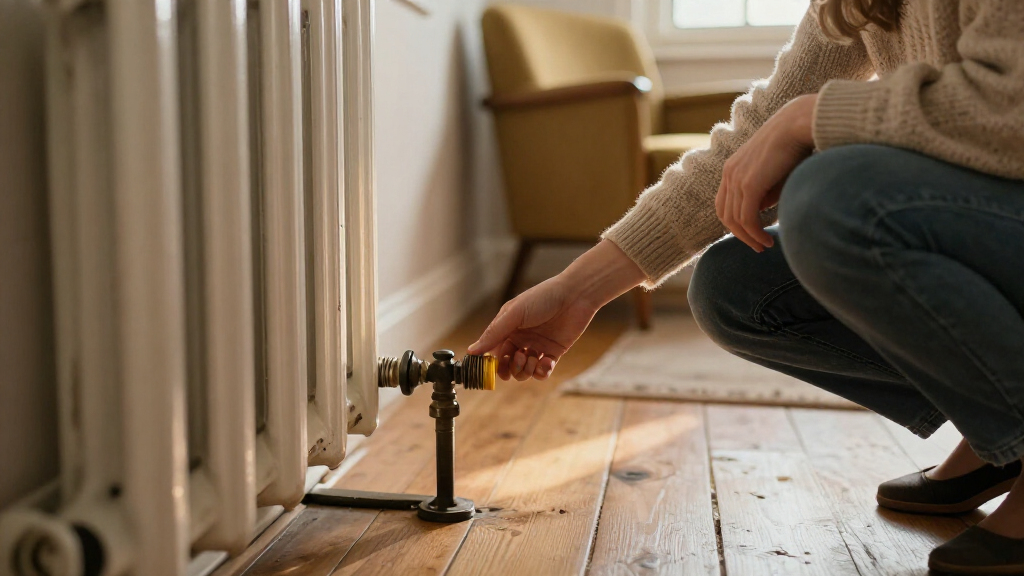
If a radiator remains cooler than others after bleeding, Ant Langston of HeatandPlumb.com said the system may need balancing. He described the lockshield valve, usually at the end opposite the thermostatic radiator valve, as a way to adjust water flow between radiators. The Ideal Home report also advises not placing large furniture in front of radiators, since this can obstruct heat moving around the room, and raises correct thermostat use as another possible factor. It does not provide a detailed thermostat procedure.
Why Radiator Airflow and Balance Matter
Uneven heat can have more than one cause. Dust, trapped air, restricted airflow, a system that needs balancing, poor insulation or draughts may all contribute to rooms feeling colder than expected. The report’s practical value is that it points readers toward observable signs—such as a cold radiator top or furniture covering a heat source—before assuming the boiler itself is at fault.
These checks may help households identify straightforward maintenance issues, but they are not a diagnosis. Cleaning or bleeding a radiator will not correct every heating problem, and a persistent fault may require a qualified heating professional. The article does not compare energy bills or quantify potential savings, so it does not establish that these steps will lower costs.
Products Worth Considering

Dyson Ball Animal Total Clean Upright Vacuum

Samsung 42-Inch Class OLED S90F 4K Smart TV (2025)

iRobot Roomba Max 715 Pet Robot Vacuum with AutoEmpty Dock
As an affiliate, we earn on qualifying purchases.
Checks Before the Heating Season
The report is framed around the approach of colder weather and an account from an Ideal Home writer whose older, draughty house remained cold despite running central heating. That experience is the writer’s own, not a controlled test. The article says poor insulation and draughts may explain some of the discomfort, alongside possible radiator issues.
Its recommendations draw on comments from experts at Ding, Domestic & General and HeatandPlumb.com. The article focuses on cleaning, bleeding, furniture placement and balancing; it does not report a new study, product test or change in official heating guidance. The advice is general and may not apply to every radiator or heating system.
“If your radiator feels cold at the top and hot at the bottom, this means there is trapped air inside of it that is preventing hot water from circulating.”
— Ian Palmer-Smith, appliance repair expert at Domestic & General, as quoted by Ideal Home
What the Radiator Advice Cannot Confirm
The report does not establish why any particular home is cold or show that one maintenance step will resolve the problem. Its efficiency estimate for dust is attributed to Garbutt, but the article supplies no methodology or independent verification. It also does not quantify the effect of furniture placement, bleeding or balancing on room temperature or energy use.
The source raises thermostat use but the provided material ends before giving the writer’s specific thermostat issue or expert guidance on it. It is therefore unclear what settings or practices the article ultimately recommends. Readers should also check the instructions for their own heating system before carrying out maintenance; the report does not give system-specific safety guidance.
Practical Checks and Professional Help
The report’s immediate suggestions are to clean radiators before relying on them for the season, look for cold spots and unusual noises, and move furniture that blocks heat. Turn a radiator off and let it cool before cleaning, as Garbutt advises. If bleeding does not resolve uneven heating, the article points to possible balancing, but adjusting system valves may not be suitable for every setup.
For persistent cold rooms, leaks, unusual boiler behavior or uncertainty about the system, contact a qualified heating professional rather than treating the article as a repair manual. No follow-up test or measured result is included in the source, and it does not state whether the writer’s home became warmer after the checks.
Key Questions
What can a cold radiator at the top indicate?
According to appliance repair expert Ian Palmer-Smith, a radiator that is cold at the top and warm at the bottom may have trapped air. He also identifies gurgling or banging sounds as possible signs. These symptoms do not by themselves confirm the cause.
How often does the report recommend bleeding radiators?
Palmer-Smith told Ideal Home that bleeding should be part of standard maintenance at least once a year. Follow the instructions for your heating system, and seek professional help if the problem persists.
Can dust make a radiator less effective?
Garbutt said dust may reduce radiator efficiency by up to 10%. Ideal Home does not cite the underlying evidence or specify the conditions for that estimate, so it should be treated as an attributed claim rather than a guaranteed result for every radiator.
What should I do if one radiator stays cooler than the others?
The report says trapped air may be one cause; if bleeding does not help, Langston suggested the system could need balancing through the lockshield valves. Because systems differ, consider asking a qualified heating professional before adjusting valves.
Does the report show these steps will cut heating bills?
No. It offers general maintenance advice but does not report measured energy savings, bill reductions or controlled tests of the suggested steps.
Source: idealhome.co.uk