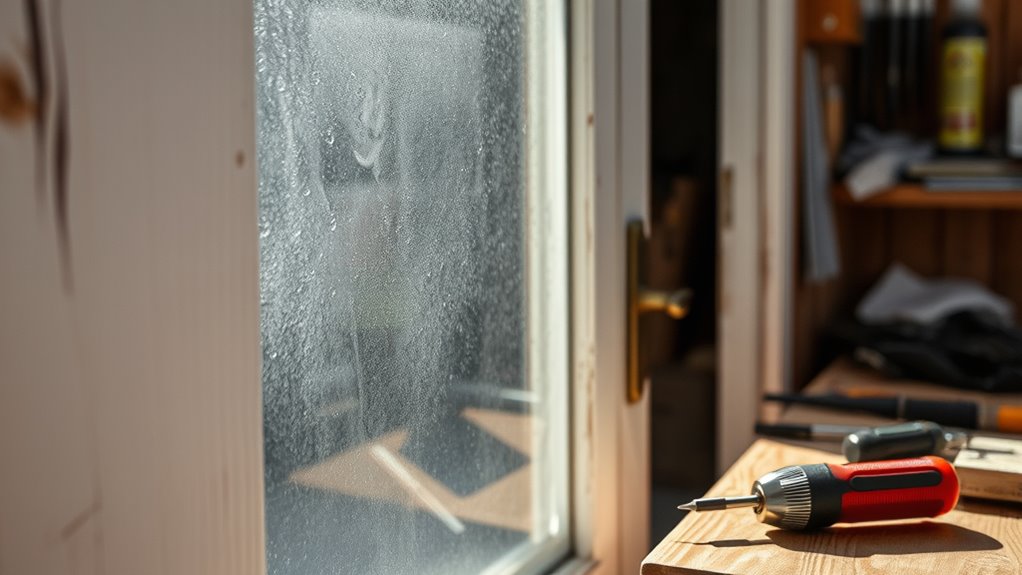

If your door or window sticks, start by inspecting the hinges for dirt, rust, or misalignment. Lubricate the hardware with WD-40 or silicone spray and open and close it to work in the lubricant. If it still sticks, loosen the hinge screws slightly and adjust the position of the door or window. For persistent issues, check for warping or swelling in the frame. Keep exploring for more tips to guarantee smooth operation.
Key Takeaways
- Inspect hinges and hardware for rust, debris, or misalignment, and clean or replace as needed.
- Apply lubricant like WD-40 or silicone spray to hinge pins and joints to ease movement.
- Slightly loosen hinge screws to adjust door or window positioning for proper fit.
- Use shims behind hinges to realign and improve smooth operation.
- Check for warping or swelling in the frame, especially in humid conditions, and seek professional help if persistent.

A sticky window or door can be a frustrating problem that disrupts your daily routine, but fixing it is often straightforward. When a door or window sticks, it’s usually because the hardware isn’t functioning smoothly, or the hinges need a little adjustment. These issues are common and can be resolved with a few simple steps, saving you time and money on professional repairs.
Start by inspecting the hardware, especially the hinges. Over time, hinges can become squeaky, rusty, or misaligned, causing the door or window to stick. To fix this, first open the door or window and examine the hinges closely. You might notice rust or debris that’s preventing smooth movement. Applying a lubricant designed for hardware, such as WD-40 or a silicone spray, can work wonders. Spray the lubricant directly onto the hinge pins and joints, then open and close the door or window a few times to work the lubricant in. This often loosens up any rust or grime, allowing the hardware to function more smoothly. If the hinges are bent or damaged, consider replacing them or adjusting their position. Loosen the hinge screws slightly, then realign the door or window and tighten the screws back in place. This can rectify any misalignment causing sticking.
Inspect hinges for rust, debris, or misalignment; lubricate, adjust, or replace to fix sticking doors or windows.
Hinge adjustment is vital because even minor shifts can make a significant difference. Use a screwdriver to tighten or loosen the screws, and take care not to overtighten, which might warp the hinge or strip the screw holes. For more precise adjustments, you can insert shims behind the hinges to shift the door or window slightly, ensuring a better fit within the frame. If the door or window still sticks after adjusting the hinges and lubricating the hardware, check the frame itself for warping or swelling, especially if you live in a humid climate. Sometimes, the problem isn’t hardware but the structure shifting over time.
Additionally, understanding structural shifting can help you identify whether the frame has warped, which might be causing sticking issues. Once you’ve lubricated the hardware and made hinge adjustments, test the door or window multiple times to verify it opens and closes smoothly. If it continues to stick, revisit these steps, and don’t hesitate to seek professional help if needed. Remember, maintaining hardware lubrication and making proper hinge adjustments are fundamental steps that often resolve sticking issues quickly. Performing these simple fixes regularly can prevent future problems, keeping your doors and windows operating smoothly and quietly. With a bit of effort, you can enjoy a well-functioning door or window without the annoyance of sticking or jamming.
Frequently Asked Questions
Can Weather Changes Cause Windows or Doors to Stick?
Yes, weather changes can cause windows and doors to stick. Climate impact, such as humidity and temperature fluctuations, leads to seasonal expansion and contraction of the wood or metal. During humid or hot weather, materials expand, making them stick or jam. When the weather cools or dries out, they shrink back, often freeing up. Being aware of these patterns helps you anticipate and address sticking issues effectively.
Is It Necessary to Replace the Entire Window or Door?
You don’t always need a full window replacement or door repair when they stick; sometimes, a simple fix suffices. Think of it like tightening a screw on a loose cabinet hinge—quick and easy. If the problem persists or the frame is damaged, then replacing the entire window or door might be necessary. Usually, a professional inspection helps you decide whether a repair or full replacement is the best choice.
How Often Should I Lubricate Door Hinges or Window Tracks?
You should lubricate your hinges and clean the tracks at least once every six months to keep them functioning smoothly. Use a suitable hinge lubrication spray to prevent squeaks and rust, and clear out debris from the window tracks with a brush or vacuum. Regular hinge lubrication and track cleaning help prevent sticking, extend the life of your door or window, and guarantee easy operation whenever you use them.
Are There Eco-Friendly Solutions for Fixing Sticking Problems?
You can definitely find eco-friendly solutions for sticking windows or doors. Recycled materials, like reclaimed wood or metal, reduce environmental impact, while biodegradable lubricants, such as plant-based oils, keep your hinges moving smoothly without harming the planet. These options are effective and safe, proving that sustainable choices really do work. So, next time you fix a sticky door or window, choose eco-friendly products to protect your home and the environment.
Can DIY Fixes Void My Window or Door Warranty?
Yes, DIY fixes can impact warranty implications. If you attempt repairs yourself, you risk voiding your window or door warranty, especially if the manufacturer requires professional service for certain issues. While some minor adjustments are safe, it’s important to weigh the DIY risks. To protect your warranty, consider consulting the manufacturer or a professional before making repairs, ensuring you don’t unintentionally lose coverage.
Conclusion
Now that you’ve tackled that stubborn window or door, you’ve opened the door to a smoother, quieter home. Think of your efforts as a gentle breeze clearing away the cobwebs of frustration, leaving behind a seamless glide. With a little elbow grease, you’ve transformed a sticky obstacle into a flowing gateway. So, go ahead—celebrate your handiwork, because a well-functioning door or window is the heartbeat of a cozy, harmonious home.