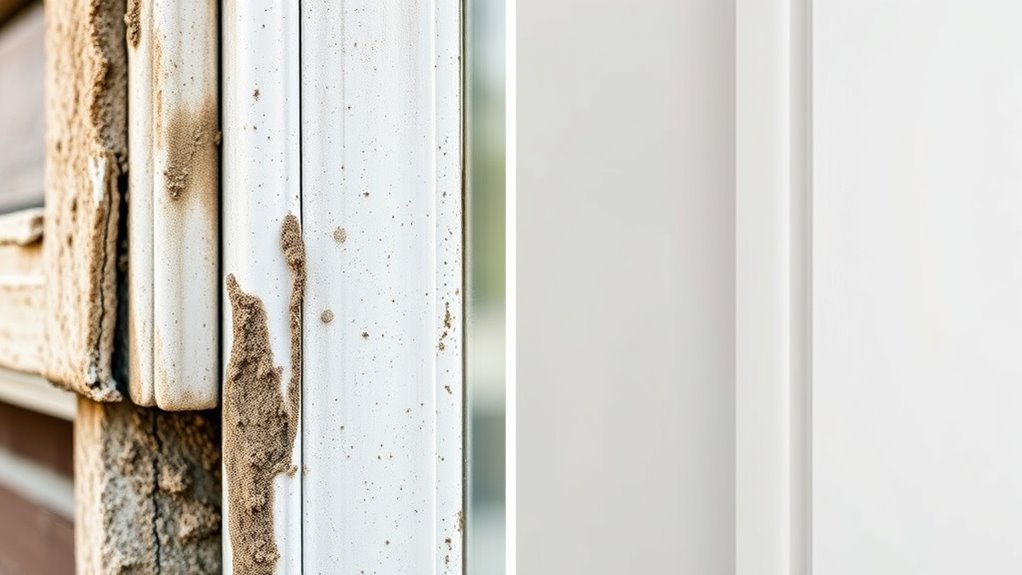

You should use exterior caulk when sealing gaps exposed to weather, like around windows, doors, or outdoor siding, because it’s made to withstand rain, sun, and temperature swings. Interior caulk is best for indoor projects such as drywall seams or trim, where durability against weather isn’t needed. Choosing the right type guarantees your project stays intact and looks good over time. Keep going to learn more about how each caulk type is designed for specific conditions.
Key Takeaways
- Use exterior caulk for weather-exposed areas like windows, doors, and siding to withstand outdoor elements and temperature changes.
- Choose interior caulk for indoor projects such as drywall seams, molding, and gap filling where weather resistance is unnecessary.
- Exterior caulk features additives for flexibility and adhesion on rough surfaces exposed to moisture and temperature fluctuations.
- Interior caulk offers a smooth finish, low odor, and easy water cleanup suited for indoor surfaces and aesthetic applications.
- Select caulk based on environmental exposure, surface type, and whether the application requires weatherproofing or a seamless indoor finish.

When choosing caulk for your home, understanding the differences between exterior and interior options is vital. The right caulk can make a significant difference in how well your repairs hold up over time, especially when it comes to weather resistance and adhesion properties. Exterior caulk is specifically designed to withstand the elements—rain, snow, sun, and temperature fluctuations. Its weather resistance ensures that it remains flexible and intact despite exposure to harsh conditions. This type of caulk typically contains additives that prevent cracking, shrinking, or peeling, which are common issues with less durable products. On the other hand, interior caulk doesn’t need to fight the elements. Instead, it focuses on providing a clean, seamless finish for indoor projects, with adhesion properties optimized for smooth, stable surfaces like drywall, wood, or plaster.
When you’re sealing gaps around windows and doors outside, exterior caulk is your best choice. Its weather resistance means it can handle rain and UV rays without breaking down, protecting your home from drafts, water intrusion, and pests. You’ll notice that exterior caulk tends to be more elastic, allowing it to expand and contract with temperature changes, which is vital in preventing cracks and leaks. The adhesion properties are also superior for rough or uneven surfaces typically found outdoors, ensuring a secure, long-lasting seal even in challenging conditions.
Inside, your focus shifts to achieving a neat appearance and preventing air leaks without the need for weather resistance. Interior caulk is formulated to stick well to smooth surfaces and to be easy to apply and paint over. Its adhesion properties are tailored for indoor environments, where the risk of moisture exposure is lower. You want a product that adheres firmly without excessive flexibility, which could cause it to crack over time in a controlled climate. Interior caulk also often has a lower odor and cleans up easily with water, making it more user-friendly for indoor projects.
Frequently Asked Questions
Can Exterior Caulk Be Used Indoors?
Yes, you can use exterior caulk indoors, but it’s not always ideal. Exterior caulk offers superior weather resistance and adhesion strength, which helps prevent leaks and damage from humidity. However, it may be more rigid and less paintable than interior caulk. If you need a flexible, easy-to-apply sealant for indoor use, opt for interior caulk. Use exterior caulk indoors only if its weather resistance and adhesion strength are necessary for your project.
Is Interior Caulk Suitable for Outdoor Use?
Is interior caulk suitable for outdoor use? Generally, it’s not recommended since it lacks the necessary weather resistance and UV stability needed to withstand outdoor elements. You need exterior caulk for outdoor projects because it’s formulated to handle rain, sun, and temperature changes. Using interior caulk outside can lead to cracking or peeling over time. So, always select a product designed for the environment to ensure durability and effectiveness.
How Long Does Exterior Caulk Typically Last?
Exterior caulk typically lasts 5 to 10 years, depending on UV resistance and exposure to weather. You should check for cracks or peeling regularly to maintain a good seal. To extend its lifespan, choose a caulk with UV resistance and color matching options that blend seamlessly with your surfaces. Proper application and maintenance help guarantee your exterior caulk remains effective and lasts as long as possible.
What Is the Best Type of Caulk for Bathrooms?
For bathrooms, you should choose a high-quality, mold-resistant silicone caulk. It offers excellent mildew prevention and flexibility, which is essential in humid environments. Look for caulk labeled specifically for bathrooms or areas with high moisture. This type seals gaps effectively, resists mold growth, and lasts longer, ensuring your bathroom stays clean and protected. Avoid using latex or acrylic caulk, as they’re less resistant to mold and mildew.
Are There Eco-Friendly Caulk Options Available?
Yes, eco-friendly options are available for caulk. You can choose sustainable caulk made from natural or low-VOC materials, which reduce harmful emissions and environmental impact. Look for products labeled as eco-friendly options, eco-conscious, or biodegradable. These sustainable caulk choices are perfect for reducing your carbon footprint while still providing effective sealing for both interior and exterior projects. Always check product labels to verify they meet your eco-friendly standards.
Conclusion
Knowing when to use exterior versus interior caulk guarantees your projects last. Did you know that properly sealed homes can save up to 20% on energy bills? Using the right caulk at the right time not only improves your home’s comfort but also cuts costs long-term. So, choose wisely, apply correctly, and enjoy the peace of mind that comes with a well-maintained home. Your careful attention today protects your investment tomorrow.