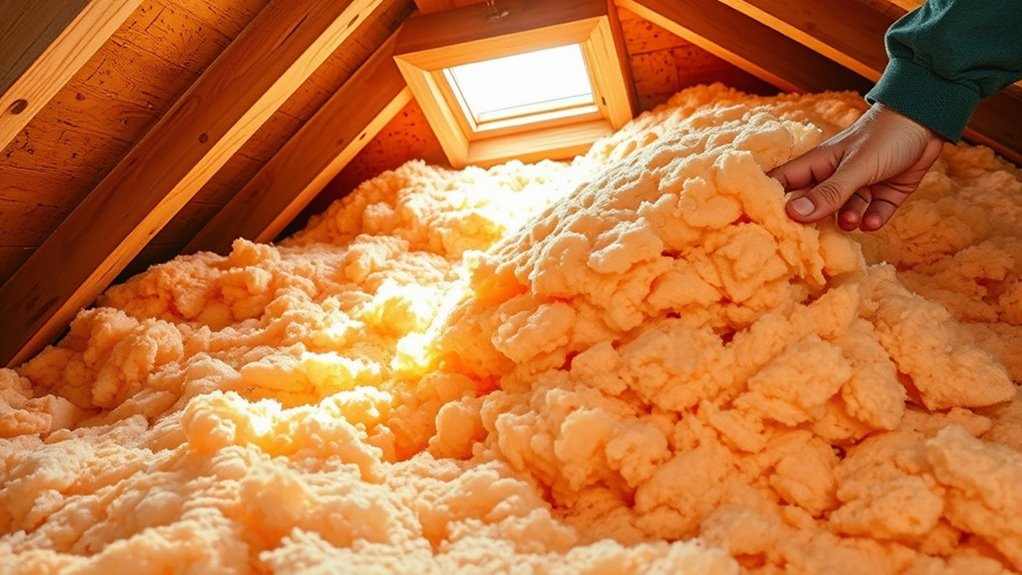

Attic insulation helps keep your home comfortable by reducing heat transfer and stopping air leaks. It involves choosing the right material, like fiberglass, blown-in cellulose, or spray foam, based on your climate and budget. Proper ventilation is also key to prevent moisture buildup and maintain insulation effectiveness. When combined correctly, insulation and ventilation improve energy efficiency and extend the life of your attic. Keep exploring to find out how to maximize these benefits in your home.
Key Takeaways
- Proper attic insulation helps regulate temperature, reduce energy bills, and improve overall home comfort year-round.
- Ventilation prevents moisture buildup, mold, and ice dams, enhancing insulation efficiency and preventing attic damage.
- Common insulation materials include fiberglass batts, blown-in cellulose, spray foam, and radiant barriers, each suited for different needs.
- Combining adequate ventilation with the right insulation maximizes energy efficiency and extends the lifespan of attic components.
- Correct installation and material selection tailored to climate and budget are essential for effective attic insulation.
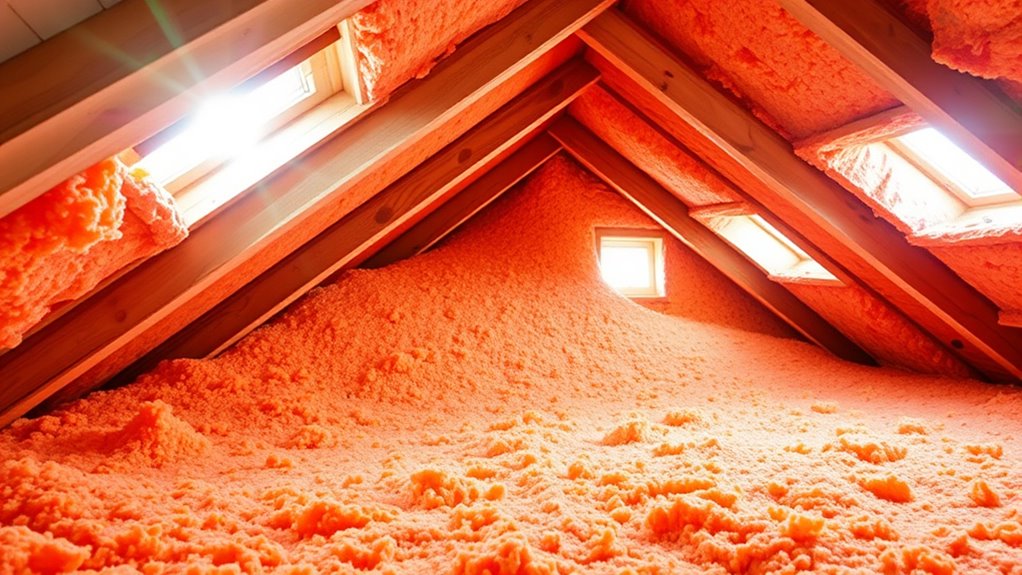
Are you wondering why attic insulation is essential for your home? The answer lies in its ability to regulate temperature, improve energy efficiency, and reduce your utility bills. Proper attic insulation keeps warm air inside during winter and prevents heat from entering during summer, making your home more comfortable year-round. But to maximize these benefits, understanding ventilation strategies and insulation material types is crucial.
Attic insulation boosts energy efficiency by regulating temperature and lowering utility bills year-round.
Ventilation strategies play a vital role in maintaining a healthy attic environment. Good ventilation prevents moisture buildup, which can cause mold, wood rot, and insulation damage. It also helps regulate temperature fluctuations, reducing the risk of ice dams in colder months. Proper attic ventilation involves a balanced system of intake vents, usually located at the soffits or eaves, and exhaust vents at the ridge or roof peak. This setup ensures a continuous flow of air, preventing stale, humid air from lingering and impairing insulation performance. When planning your attic insulation, consider your home’s specific ventilation needs, as inadequate airflow can diminish insulation effectiveness and lead to costly problems down the line. Incorporating appropriate ventilation strategies ensures that your insulation functions optimally and extends its lifespan.
Choosing the right insulation material types is equally important. There are several options, each with its own advantages and best-use scenarios. Fiberglass batts are among the most common; they’re easy to install and cost-effective, making them ideal for DIY projects. Blown-in cellulose provides excellent coverage and can fill irregular spaces, offering superior air sealing qualities. Spray foam insulation offers high R-values and superior air barrier properties, but it tends to be more expensive and may require professional installation. Reflective or radiant barriers are suitable for hot climates, reflecting heat away from the attic. When selecting insulation, consider factors such as R-value, moisture resistance, and compatibility with your attic’s ventilation system. Properly chosen and installed insulation, combined with effective ventilation strategies, creates a balanced environment that preserves energy, prevents damage, and prolongs the lifespan of your home.
Ultimately, understanding how ventilation strategies and insulation material types work together will empower you to make informed decisions about your attic insulation. Proper ventilation ensures your insulation performs optimally, while selecting the right material guarantees effective thermal protection tailored to your climate and budget. By prioritizing these aspects, you’re taking vital steps toward a more energy-efficient, durable, and comfortable home. Don’t overlook the importance of a well-ventilated attic paired with suitable insulation — it’s the foundation of a smart, sustainable home improvement.
Frequently Asked Questions
How Often Should Attic Insulation Be Replaced?
You should replace attic insulation every 15-20 years or when it becomes damaged, moldy, or compressed. Proper attic ventilation helps prevent moisture buildup, which can lead to mold and reduce insulation effectiveness. Regular inspections ensure your insulation stays in good shape. If you notice mold, pests, or significant wear, it’s time to substitute it to maintain energy efficiency and prevent health issues.
Can I Install Insulation Myself or Hire a Professional?
Sure, you can totally DIY your attic insulation if you’re feeling brave—just remember, it’s easier to hire contractors who know what they’re doing. While DIY installation saves money, it often ends up costing more in mistakes and time. Plus, professionals bring expertise and safety gear, making the job faster and more effective. So, weigh your skills and patience before diving into this insulation adventure—sometimes, hiring pros is the smarter choice.
What Are the Signs of Poor Attic Insulation?
You can spot poor attic insulation by feeling for drafts or noticing uneven temperatures. Signs include increased energy bills, mold, or moisture issues caused by missing vapor barriers or inadequate insulation types. If your attic’s insulation isn’t properly installed or is damaged, heat escapes in winter and enters in summer. Check for gaps, compressed insulation, or signs of pests, and consider upgrading to suitable insulation types for better energy efficiency.
Is Spray Foam Insulation Better Than Traditional Options?
Is spray foam insulation better than traditional options? Absolutely. Think of spray foam advantages as a superhero cape—sealing gaps and providing superior insulation. Compared to batt or blown-in materials, spray foam offers better air sealing, higher R-values, and long-term energy savings. When considering insulation material comparison, spray foam stands out for its durability and efficiency, making it a smart choice for keeping your home comfortable and reducing energy bills.
How Does Attic Insulation Impact Home Resale Value?
Attic insulation can boost your home’s resale value by improving energy efficiency and thermal comfort. When you upgrade your insulation, buyers see lower energy bills and a more comfortable living space, making your home more attractive. It shows you’re proactive about home maintenance, which adds appeal. Plus, well-insulated attics help prevent drafts and temperature fluctuations, making your home stand out in the market and potentially increasing its value.
Conclusion
Now that you know the basics of attic insulation, it’s like discovering a hidden secret to your home’s comfort. As you start your project, you might find that a simple upgrade makes a big difference—almost like it was waiting there all along. Insulating your attic isn’t just about saving energy; it’s about creating a cozy space you’ll enjoy for years. Sometimes, the smallest changes lead to the biggest comfort, and your home’s warmth just got a little easier.