
VOCs, or Volatile Organic Compounds, are chemicals emitted from common products like paints, cleaners, and furniture, which can harm indoor air quality and your health. Short-term exposure causes headaches and dizziness, while long-term risks include organ damage and cancer. To reduce VOCs, increase ventilation, use air purifiers, and choose low- or no-VOC products. Keep your indoor air safe—discover effective ways to manage VOCs and create healthier living spaces.
Key Takeaways
- VOCs are chemicals emitted from household products like paints, cleaning supplies, and furniture, impacting indoor air quality.
- Short-term VOC exposure can cause headaches, dizziness, and respiratory issues, while long-term exposure may lead to serious health conditions.
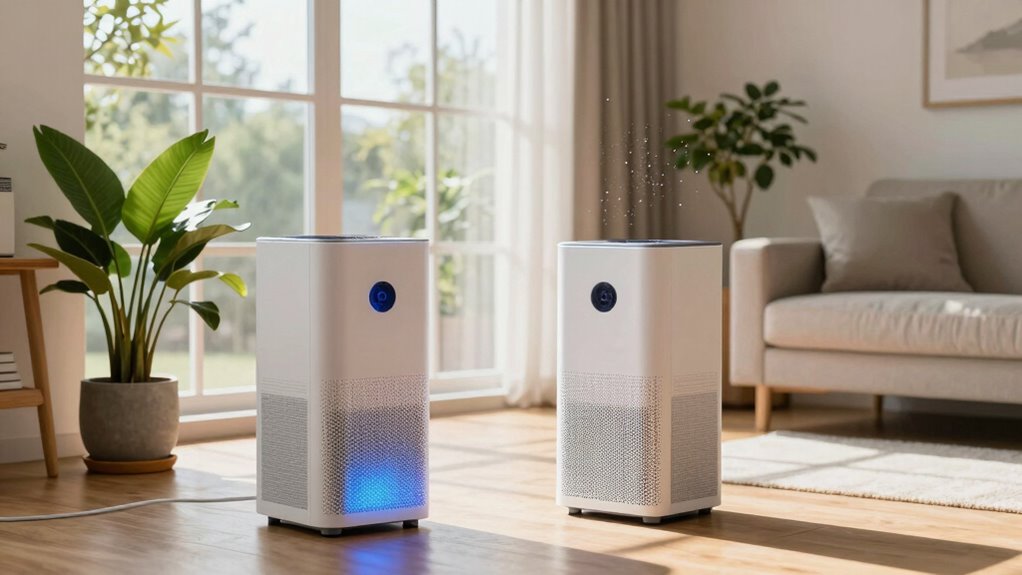
- Increasing ventilation and using air purifiers with activated carbon filters help reduce indoor VOC levels.
- Choosing low-VOC or VOC-free products and monitoring air quality with reliable sensors improve indoor safety.
- Proper source control, regular cleaning, and safety certifications contribute to healthier indoor environments.
What Are VOCs and Why Are They a Health Concern?
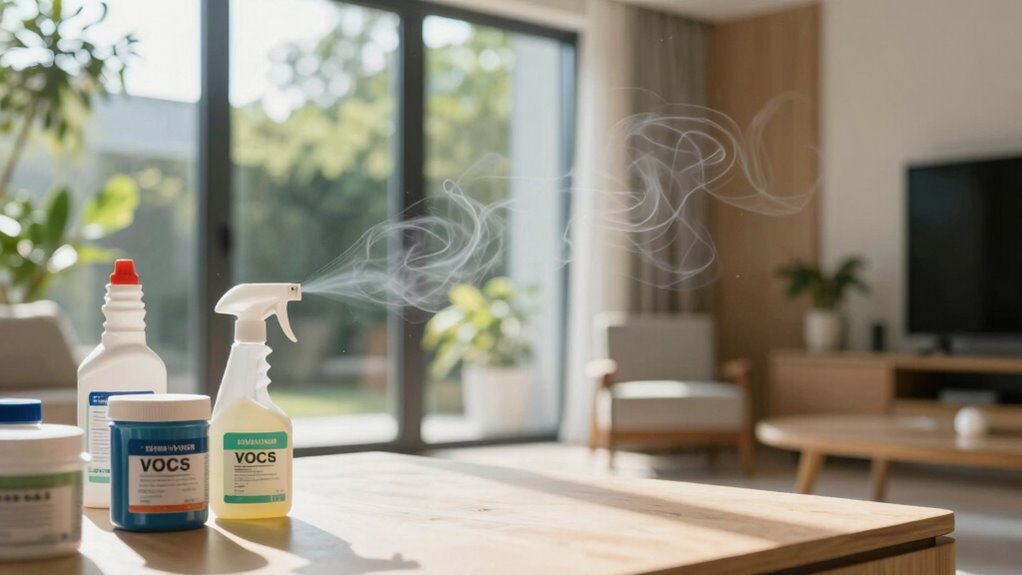
Have you ever wondered what VOCs are and why they matter for your health? Volatile Organic Compounds, or VOCs, are chemicals released into the air from everyday products like paints, cleaning supplies, and furniture. They can markedly impact indoor air quality, making your home less safe. When VOCs accumulate indoors, you’re exposed to chemical exposure that might cause short-term issues like headaches and dizziness, and long-term health problems. Understanding what VOCs are helps you recognize how common household items contribute to indoor pollution. By being aware of VOC sources, you can take steps to improve air quality and reduce your exposure, creating a healthier living environment for you and your family. Additionally, indoor air pollution influences how well you can see and enjoy your media in a safe and comfortable setting, especially when considering air filtration systems. Recognizing indoor air pollution sources such as VOCs is crucial for implementing effective mitigation strategies.
How Do VOCs Affect Your Health and the Environment?
Wondering how VOCs impact your health and the environment? VOCs can substantially degrade indoor air quality, making your living space less safe to breathe. When you’re exposed to these chemicals, you might experience headaches, dizziness, or respiratory issues. Long-term exposure can lead to more serious health problems, such as organ damage or increased cancer risk. Beyond your health, VOCs also have a notable environmental impact. They contribute to the formation of ground-level ozone and smog, which harm ecosystems and reduce air quality outdoors. Reducing VOC emissions helps protect both your well-being and the planet. Understanding how VOCs affect indoor air quality and the environment is crucial for maintaining a healthy indoor environment, and the use of air purifiers can be an effective way to reduce VOC levels. Additionally, implementing proper ventilation can significantly decrease VOC concentrations indoors. Employing VOC control strategies can further minimize exposure and promote a safer, cleaner space. Being aware of common VOC sources in household products can help you make smarter choices to limit your exposure. Utilizing air quality monitors can also provide real-time data on VOC levels and help you take prompt action. By understanding how VOCs affect indoor air quality and the environment, you can take steps to minimize exposure and make smarter choices for your health and the environment.
Which Household Products Emit the Most VOCs?
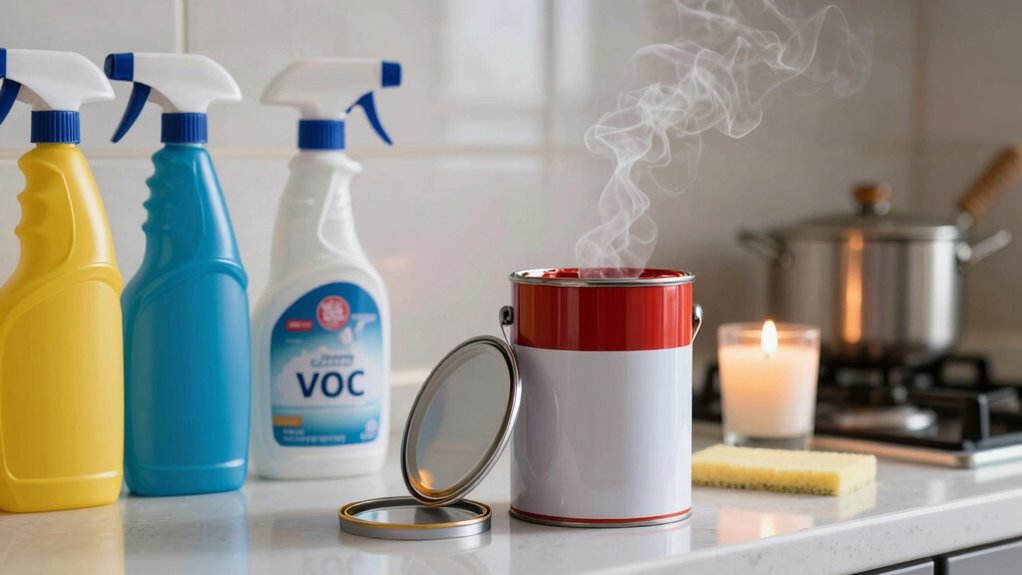
Many common household products release significant amounts of VOCs, contributing to indoor air pollution and potential health risks. Items like air fresheners, cleaning supplies, and paints are some of the main pollutant sources inside your home. These products often contain chemicals that off-gas VOCs during use and over time, increasing your indoor air levels. Aerosol sprays, disinfectants, and certain glues also emit high VOC concentrations. Even your furniture and carpets can be sources, as they release VOCs from adhesives and dyes. Recognizing these pollutant sources helps you understand where VOCs originate. By being aware of products with high VOC emissions, you can better manage indoor air quality and reduce exposure to these harmful pollutants. Reducing VOC exposure can significantly improve your home’s air safety, especially when combined with natural ventilation practices. Additionally, utilizing air purifiers with appropriate filters can help diminish indoor VOC levels significantly.
How Can I Reduce VOC Levels in My Home?
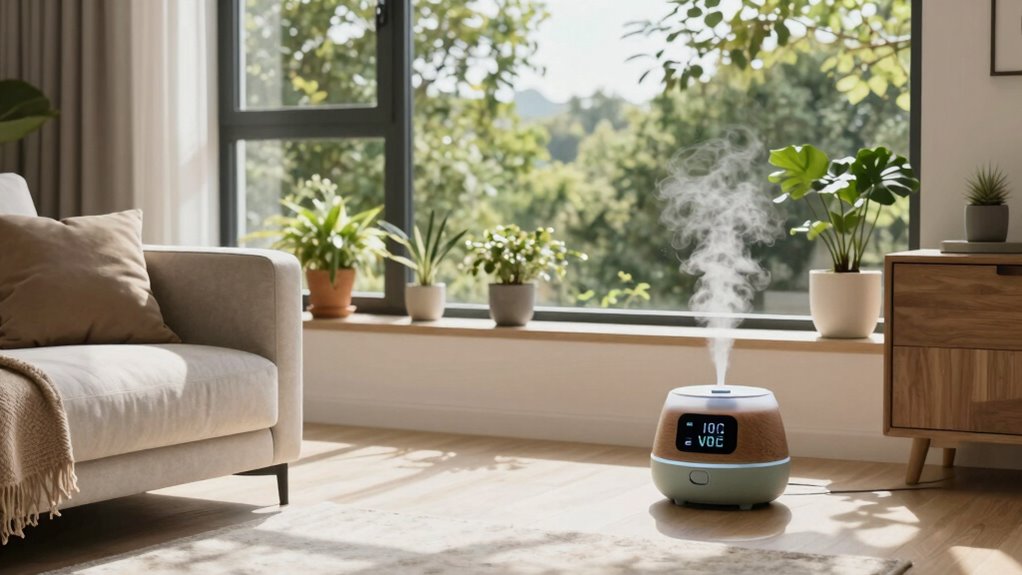
You can effectively reduce VOC levels in your home by increasing ventilation and choosing low-VOC or VOC-free products. Proper ventilation strategies help dilute indoor pollutants, while air purifiers with HEPA filters remove VOCs from the air. To optimize your efforts, consider the table below:
| Ventilation Strategies | Air Purifiers | Product Choices |
|---|---|---|
| Open windows regularly | Use HEPA filters | Select low-VOC or VOC-free items |
| Use exhaust fans | Maintain filters | Avoid heavily scented products |
| Increase airflow through fans | Place purifiers in common areas | Read labels for VOC content |
Implementing these steps creates a healthier indoor environment and minimizes VOC exposure effectively.
What Are the Best Low-VOC and No-VOC Products?
Looking for products that keep VOC levels low? You’ll find top low-VOC paints and no-VOC cleaning options that help improve your indoor air quality. Choosing these products makes it easier to create a healthier home environment. Incorporating environmentally friendly cleaning supplies and using environmentally friendly cleaning supplies can further reduce indoor pollutants. Additionally, selecting products with halal certification standards ensures they meet specific safety and quality criteria, supporting a healthier living space. Being aware of product safety certifications can also guide you toward better choices for reducing VOC exposure, especially when considering air quality testing techniques to monitor indoor pollutants effectively.
Top Low-VOC Paints
Choosing low-VOC and no-VOC paints can substantially improve indoor air quality while still providing a durable finish. When selecting paint, consider brands known for their low emissions and easy application. Good paint selection starts with reading labels and choosing products labeled “low-VOC” or “zero-VOC.” Proper wall preparation ensures the paint adheres well and lasts longer, reducing the need for touch-ups or reapplication. Here are some top low-VOC options:
- Benjamin Moore Natura – Offers excellent coverage with zero VOCs, ideal for sensitive spaces.
- Sherwin-Williams Harmony – Low odor, low-VOC, suitable for walls and ceilings.
- Behr Premium Plus Zero VOC – Affordable, durable, and environmentally friendly.
These paints help you create a healthier indoor environment while maintaining a professional finish.
No-VOC Cleaning Options
Switching to no-VOC cleaning products can considerably improve indoor air quality and create a healthier environment for your family. These natural cleaning options reduce harmful emissions and support better air purification, making your home safer. Look for products labeled “VOC-free” or “no-VOC,” as they contain fewer or no volatile organic compounds. Many brands now offer eco-friendly, natural cleaning solutions that use plant-based ingredients, essential oils, or mineral-based cleaners. These products effectively clean surfaces without releasing toxic fumes, helping you lower VOC exposure. By choosing no-VOC options, you promote a healthier living space, especially for sensitive individuals. Incorporating natural cleaning methods alongside proper ventilation can further reduce VOC levels and enhance overall indoor air quality. Understanding the importance of indoor air quality can help you make more informed choices for a healthier home environment. Being aware of emission sources and their impact can guide you toward safer cleaning choices that support a cleaner indoor environment. Additionally, selecting products with low or no VOC content aligns with sustainable and health-conscious living practices. Implementing these practices can also contribute to a safer indoor environment, benefiting everyone in your household. Regularly checking product labels for certifications or eco-labels can help ensure you are choosing truly low-VOC or no-VOC options.
How to Monitor and Improve Indoor VOC Levels?
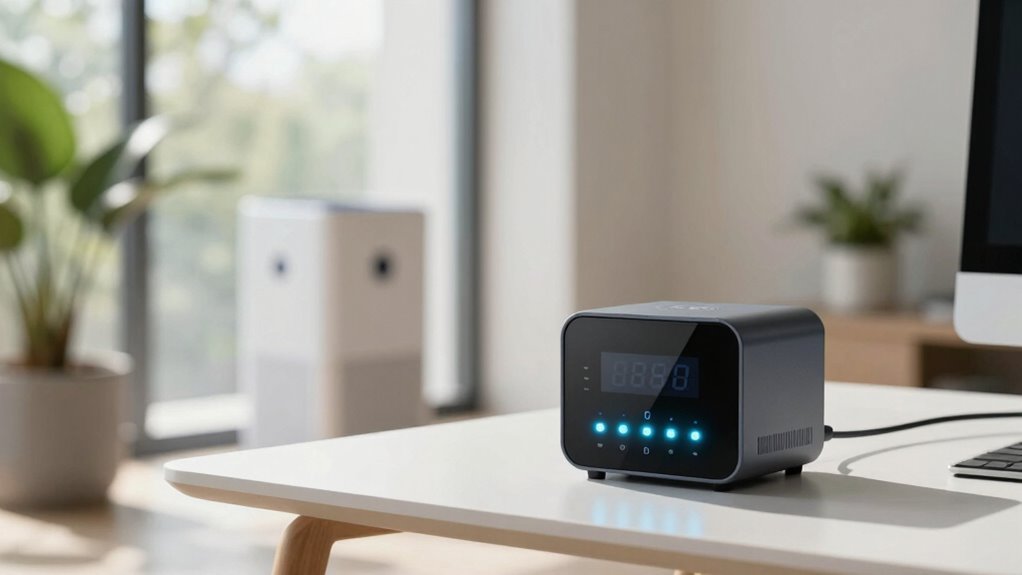
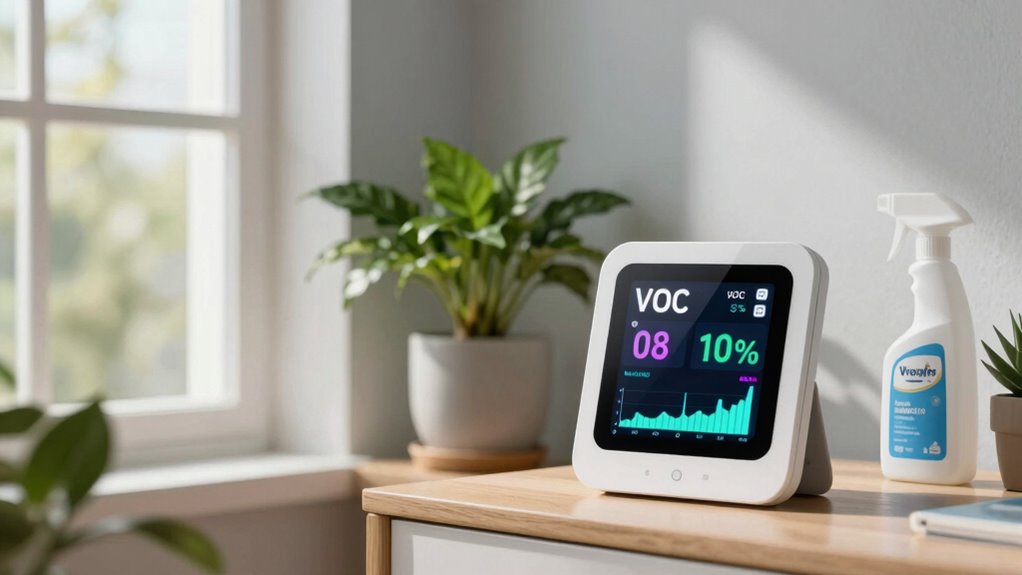
Monitoring indoor VOC levels is essential for maintaining a healthy environment, and luckily, there are straightforward ways to do so. Using air quality sensors allows you to track VOC concentrations in real-time, helping you identify problem areas. To improve indoor air quality, consider these strategies:
Monitoring VOC levels with sensors helps maintain a healthy indoor environment.
- Install reliable air quality sensors to monitor VOC levels consistently.
- Enhance ventilation by opening windows or using exhaust fans to dilute VOC concentrations.
- Implement ventilation strategies like air purifiers with activated carbon filters to absorb VOCs effectively.
- Regularly cleaning and avoiding sources of VOCs can further support a safer indoor environment.
- Understanding the performance metrics of your monitoring devices can help ensure accurate readings and effective management.
- Being aware of VOCs and health risks can motivate proactive measures to reduce exposure and improve overall air quality.
- Choosing reliable air quality sensors based on their accuracy and durability can make a significant difference in your VOC monitoring efforts.
- Recognizing the importance of sensor calibration ensures your readings remain precise over time.
Frequently Asked Questions
Are There Natural Sources of VOCS Outside of Human-Made Products?
Yes, natural emissions from plants, trees, and soil release VOCs into the air, contributing to outdoor pollution. You might notice these emissions when you’re near forests or during warm weather, as vegetation naturally emits these compounds. While human-made products add to VOC levels, natural sources also play a significant role in outdoor pollution, affecting air quality without any human involvement.
How Long Do VOCS Typically Remain in Indoor Air?
VOCs typically linger in indoor air for days to weeks, depending on factors like ventilation and VOC decay rates. You can improve air quality by increasing indoor monitoring to detect VOC levels and enhance ventilation, which speeds up VOC decay. Regularly airing out your space or using air purifiers helps reduce VOCs faster, ensuring healthier indoor air. Keep an eye on VOC levels to maintain a safe and comfortable environment.
Can Plants Effectively Absorb and Reduce VOC Levels?
Yes, plants can effectively absorb and reduce VOC levels through plant absorption and natural reduction processes. As you place certain houseplants like spider plants or peace lilies in your space, they actively take in VOCs through their leaves and roots, helping to improve indoor air quality. While they won’t eliminate all VOCs, integrating plants into your environment is a natural way to support cleaner air and reduce harmful emissions.
What Are the Regulations Governing VOC Emissions in Products?
You need to follow regulatory standards that set emission limits for VOCs in products. These standards vary by region but aim to reduce air pollution and protect health. Manufacturers must comply with laws like the EPA’s Clean Air Act or European regulations, ensuring VOC levels stay within permitted limits. Staying informed about these regulations helps you choose compliant products and support efforts to minimize VOC emissions effectively.
How Does Ventilation Impact VOC Concentrations Indoors?
An ounce of prevention is worth a pound of cure. Ventilation considerably impacts indoor VOC concentrations by increasing air exchange and removing stale, VOC-laden air. Proper air filtration enhances this process, capturing VOC particles before they linger. You should regularly open windows, use exhaust fans, and maintain air filters to keep VOC levels low. These steps help guarantee healthier indoor air and reduce potential health risks associated with VOC exposure.
Conclusion
Reducing VOCs in your home is like tending a delicate garden—you need awareness, effort, and consistent care. By choosing low-VOC products, ventilating regularly, and monitoring indoor air, you can create a healthier environment for yourself and your loved ones. Remember, even small steps can make a big difference, turning your home into a safe haven amidst a world full of invisible pollutants. Protecting your space is the key to breathing easier and living better.