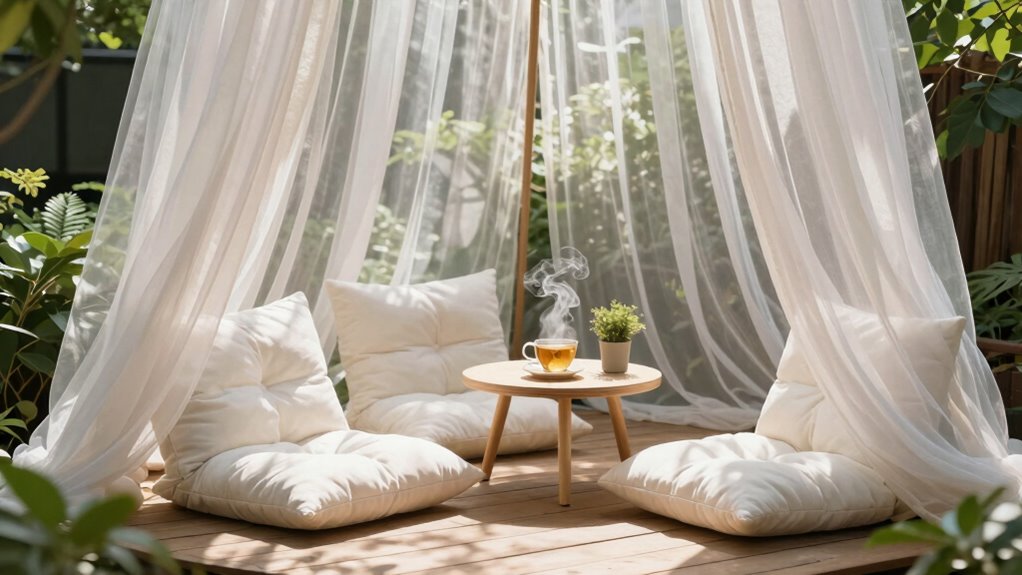

To set up a quiet zone for better stress recovery, start by installing soundproof walls or adding acoustic panels and weatherstripping doors to block external noise like traffic or household sounds. Create a calming atmosphere with soft lighting, soothing decor, and natural elements like plants. Use calming scents and gentle sounds to enhance relaxation. Establish a routine to spend regular, distraction-free time in your space. If you keep exploring, you’ll discover even more tips to make your stress relief sanctuary truly effective.

Get furniture and decor delivered free with Prime
- Fast, free delivery on millions of items
- Prime Video, Amazon Music and more included
- Member-only deals all year
Key Takeaways
- Install soundproof walls or use acoustic panels to block external noise and create a peaceful environment.
- Choose calming decor, soft lighting, and natural elements to foster relaxation within the space.
- Incorporate calming scents, water features, or nature sounds to enhance sensory tranquility.
- Use soundproofing techniques like weatherstripping and barriers to minimize residual noise.
- Establish a consistent routine for spending time in the quiet zone to promote regular stress recovery.

Creating quiet zones in your home or workplace can considerably enhance your ability to recover from stress. When you carve out a designated space free from noise and distractions, you give yourself the chance to relax, recharge, and regain focus. One of the most effective ways to establish this peaceful environment is by installing soundproof walls. These barriers block out external noise, whether it’s traffic, conversations, or household sounds, creating a cocoon of calm. You don’t need to go overboard; even partial soundproofing—such as adding acoustic panels or weatherstripping doors—can make a noticeable difference. Think of soundproof walls as the foundation for your stress-relief sanctuary, ensuring that intrusive sounds don’t seep in and disrupt your peace.
Once you’ve created a quiet space, it’s essential to design it in a way that promotes relaxation. Calming decor plays a crucial role here. Choose colors like soft blues, gentle greens, or neutral shades that evoke tranquility. Incorporate natural elements such as plants or stones to foster a sense of harmony with nature. Keep the space clutter-free and organized, as chaos can quickly counteract the calming effect you’re aiming for. Use comfortable seating, like plush chairs or cushions, to invite yourself in and make the space inviting. Soft lighting, whether from lamps or dimmable fixtures, adds warmth and prevents the environment from feeling sterile or cold. Adding natural elements can further reinforce a connection to the environment and enhance the calming effect.
You should also consider the sensory experience beyond just sound and visuals. Adding elements like a diffuser with calming essential oils, such as lavender or chamomile, can enhance your relaxation. Keep the atmosphere quiet and soothing by limiting electronic devices that emit noise or bright screens. If possible, add a small water feature or a gentle sound machine that produces nature sounds, which can further drown out residual noise and deepen your sense of calm. Remember, the goal is to create a space where you feel safe and undisturbed, so customizing it to your preferences boosts its importance. Utilizing soundproofing techniques can significantly improve the effectiveness of your quiet zone.
In addition, establishing a dedicated routine** for spending time in your quiet zone can help reinforce its calming effects and make stress recovery** a consistent part of your life.
As an affiliate, we earn on qualifying purchases.
Frequently Asked Questions
How Long Should a Quiet Zone Be Maintained for Optimal Stress Recovery?
For ideal stress recovery, maintain your quiet zone for about 20 to 30 minutes, depending on your needs. Duration planning is essential, so listen to your body and extend or shorten the time as needed. During this period, use relaxation techniques like deep breathing or meditation to maximize benefits. Consistent, dedicated quiet time helps your mind unwind and reduces stress more effectively over time.
Can Outdoor Quiet Zones Be as Effective as Indoor Ones?
Outdoor quiet zones, with their natural charm, can be just as effective as indoor ones, especially when you embrace nature immersion and seek urban tranquility. Being surrounded by greenery and fresh air helps lower stress hormones and calms your mind. By choosing peaceful parks or quiet gardens, you tap into the restorative power of nature, allowing you to disconnect from daily chaos and recharge more naturally than you might indoors.
What Are Some Common Mistakes to Avoid When Creating Quiet Zones?
To avoid common mistakes when creating quiet zones, don’t overlook the importance of ambient lighting; harsh lights can disrupt relaxation. Also, guarantee your furniture arrangement promotes comfort and privacy, steering clear of cluttered or open layouts that increase noise and distractions. Keep the space simple and calming, focusing on elements that foster tranquility. By paying attention to lighting and furniture, you craft an effective environment for stress recovery.
How Do Noise-Canceling Devices Enhance Quiet Zones?
Imagine a gentle embrace of silence—noise-canceling devices greatly enhance your quiet zones by boosting noise isolation and creating effective acoustic barriers. They actively reduce background sounds, turning noisy environments into peaceful retreats. With these devices, you’ll find it easier to unwind, focus, and recover from stress. Their technology guarantees you’re enveloped in serene silence, making your quiet zone a true sanctuary for relaxation and mental clarity.
Are There Specific Materials Recommended for Soundproofing Quiet Areas?
You should choose soundproofing materials like dense foam panels, mass-loaded vinyl, or acoustic blankets to effectively reduce noise. Incorporate acoustic treatments such as diffusers and bass traps to improve sound quality and absorption. These materials work by blocking, absorbing, or diffusing sound waves, creating a peaceful environment. Select products based on your space’s size and noise levels, ensuring your quiet zone remains a true sanctuary for stress recovery.
Conclusion
Think of your quiet zone as a peaceful island in a stormy sea. When you create this calm haven, you give your mind and body a safe harbor to recover and recharge. Just like a sailor finds solace on a tranquil shore, you’ll find renewed strength and clarity. Embrace your quiet space regularly, and it’ll become your sanctuary from life’s chaos, helping you sail smoothly through stress back to serenity.
Halloween Picks
halloween
As an affiliate, we earn on qualifying purchases.