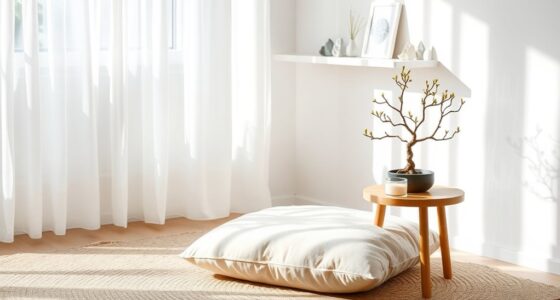
To combat Seasonal Affective Disorder at home, maximize natural light by opening curtains and positioning furniture near windows. Keep blinds open during the day and use reflective surfaces to bounce light around rooms. Incorporate bright artificial lighting like mood-boosting lamps, especially during darker months. Maintaining a bright, cheerful environment helps improve mood, energy, and sleep patterns. By implementing these strategies, you can better manage your mood—learn more ways to create a light-filled space that supports your well-being.
Key Takeaways
- Maximize natural light by opening curtains, facing furniture towards windows, and trimming obstructions.
- Use mood-boosting lamps that mimic sunlight daily, especially during darker months.
- Incorporate layered lighting with overhead, task, and accent lights for a bright, cheerful environment.
- Choose light-colored walls and decor to reflect more light and enhance brightness indoors.
- Keep windows unobstructed and leverage reflective surfaces to improve natural light distribution.
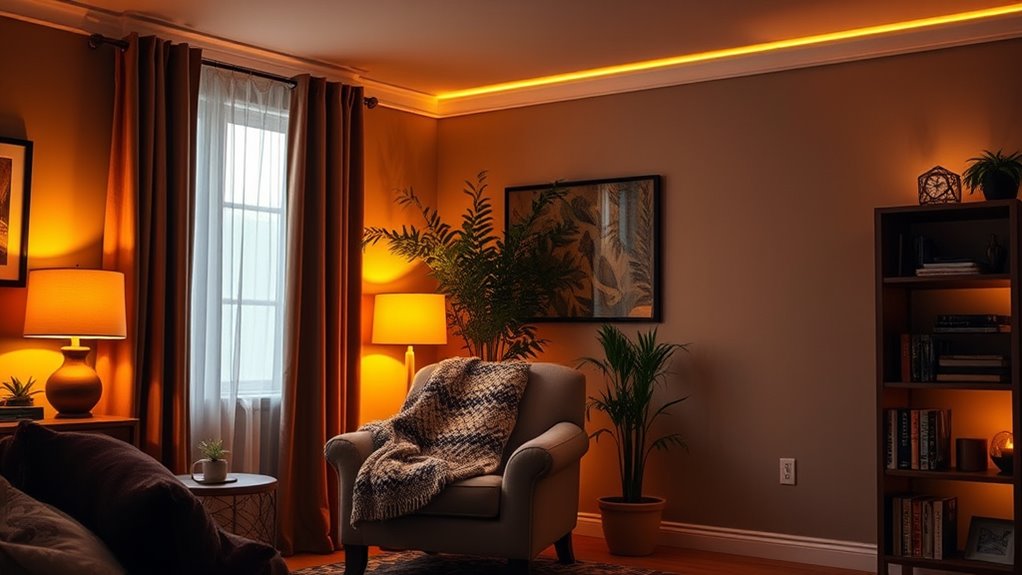
Are you making the most of your home’s natural light? During the darker months, sunlight can feel scarce, leaving you feeling sluggish or low. To combat this, you should prioritize maximizing natural light exposure. Open your curtains wide each morning to let in as much sunlight as possible. Position your furniture to face windows, so you absorb more light throughout the day. Trim any overgrown plants or furniture blocking windows, and consider adding reflective surfaces like mirrors to bounce light around your rooms. These small changes can considerably boost your mood and energy levels by increasing your exposure to natural light, which is crucial for regulating your body’s internal clock and improving overall well-being. Incorporating diverse lighting options can further enhance the brightness and ambiance of your space. In addition to natural light, mood boosting lamps are an essential tool to help you through the darker months. These specially designed lamps mimic natural sunlight and can be used daily to help regulate your circadian rhythms. When you wake up, sit near a mood boosting lamp for about 20-30 minutes, especially in the morning, to simulate sunlight exposure. This practice can help reduce feelings of depression and improve your sleep patterns. Use these lamps consistently, even on cloudy days, to keep your mood stable and your energy levels steady. They are particularly effective for those experiencing seasonal affective disorder, as they provide a reliable source of bright light that can compensate for the lack of natural sunlight. It’s also helpful to create a bright, inviting environment inside your home. Use light-colored walls and decor to reflect light better, making rooms feel more open and cheerful. Incorporate layered lighting—combine overhead lights with task and accent lighting—to ensure every corner of your home is well-lit. During the day, keep blinds or shades open to make the most of available daylight. When natural light isn’t enough, rely on mood boosting lamps to fill the space with bright, warm light that lifts your spirits. Consistently maintaining a well-lit environment can help you feel more alert and motivated, especially when outdoor light is limited. Ultimately, the key to managing seasonal affective disorder at home is balancing natural light exposure with artificial bright light sources. By making these light strategies a daily habit—maximizing sunlight, using mood boosting lamps, and creating a bright, inviting space—you can improve your mood, boost your energy, and make the winter months more manageable. You don’t have to let the season’s darkness control how you feel; small, intentional lighting choices can make a big difference.
Frequently Asked Questions
Can Light Therapy Replace Medication for SAD?
Light therapy can be a helpful medication alternative for managing sadness caused by Seasonal Affective Disorder, but it might not fully replace medication for everyone. You could find it effective in boosting your mood and regulating your circadian rhythm. However, some individuals may still need medication or therapy alongside light therapy for all-encompassing relief. It’s best to consult your healthcare provider to determine the most suitable treatment plan for your needs.
What Are the Risks of Using Bright Light Therapy?
Like a knight from a fairy tale, you might face risks with bright light therapy. You could experience eye strain or discomfort from prolonged exposure. There’s also a concern about UV exposure damaging your eyes over time. To stay safe, use the device as directed, avoid staring directly into the light, and consult your eye doctor if you notice any issues. Proper use minimizes risks and maximizes benefits.
How Do I Choose the Right Light for My Home?
You should choose a light with a cool, white light color, ideally around 5000 to 6500 Kelvin, for effective therapy. Place the light about 16-24 inches from your face, at eye level, to maximize exposure without causing discomfort. Make certain the light is designed for light therapy, offering at least 10,000 lux, and avoid placing it where it can cause glare or direct reflection, which can be distracting.
Are There Natural Light Alternatives to Manage SAD?
Like a sunrise breaking through clouds, natural light lifts your mood. You can boost your happiness by placing indoor plants near windows that filter sunlight, creating a calming sanctuary. Use sheer or light-colored window treatments to maximize daylight while reducing glare. These natural alternatives help manage sadness by bringing in gentle, life-affirming light, making your space feel warmer and more inviting, just like a bright morning after a long night.
How Long Should I Use a Light Box Each Day?
You should aim for an ideal exposure time of about 20-30 minutes daily with your light box. The exact duration depends on the light intensity, typically between 10,000 lux and 20,000 lux. Start with 20 minutes in the morning and adjust if needed, ensuring you’re sitting at the recommended distance. Consistency helps maximize benefits, so make this part of your daily routine for the best results.
Conclusion
By incorporating these home light strategies, you can brighten your days and lift your spirits during darker months. Think of your home as a lighthouse guiding you through stormy seas, offering warmth and hope. Don’t wait for the sun to shine—take control of your environment and create a sanctuary of light. With a little effort, you’ll find your mood brightening, and seasons won’t feel so overwhelming anymore. Your brighter days are just a switch away.