To reduce dry indoor air in winter, you should use humidifiers suited for your space, and regularly check and clean them to prevent mold. Adding natural moisture sources like indoor plants, cooking, or drying laundry can also help, along with placing water bowls near heat sources for gradual evaporation. Ensuring proper ventilation and monitoring humidity levels keeps the air comfortable and healthy. Keep exploring for more effective tips to maintain ideal indoor humidity all winter long.
Key Takeaways
- Use a humidifier to add moisture and maintain indoor humidity between 30-50%.
- Incorporate indoor plants that transpire water to naturally increase humidity.
- Cook, boil water, or dry laundry indoors to boost moisture levels.
- Ensure proper ventilation and close doors/windows when heating to prevent dry air entry.
- Place bowls of water near heat sources for gradual evaporation and added humidity.
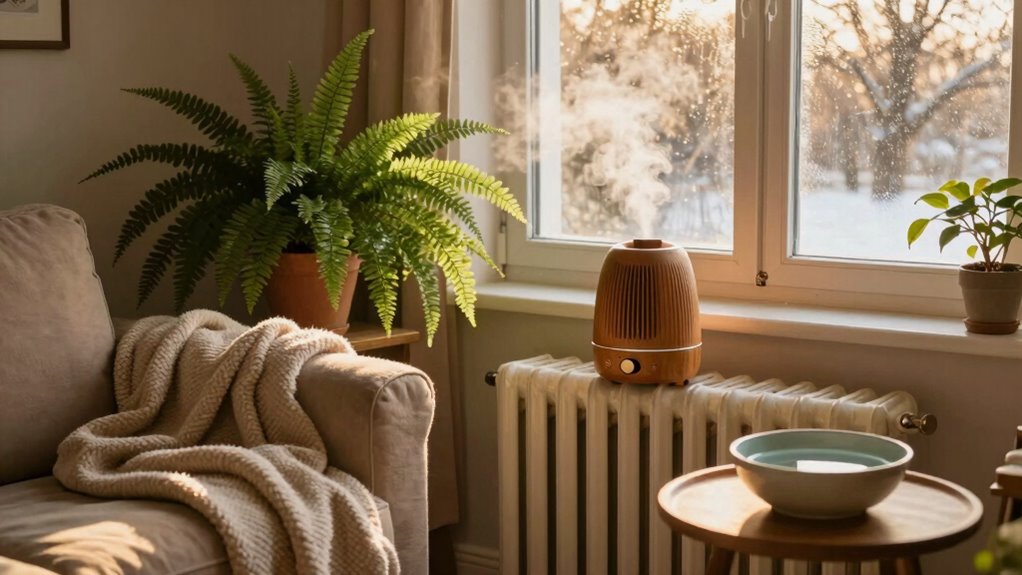
Are you tired of experiencing dry, uncomfortable air indoors during the winter months? If so, you’re not alone. Cold air naturally holds less moisture, and heating systems only make things worse by sucking the humidity out of your home. To improve your indoor air quality, you need to find effective ways to add moisture back into the air. One of the simplest and most efficient methods is using a humidifier. When chosen and maintained properly, a humidifier’s effectiveness can make a noticeable difference, alleviating dry skin, sore throats, and static electricity. However, it’s equally important to remember that humidifiers are just one part of the solution. Incorporating natural moisture sources can substantially boost your efforts, making the air more comfortable without relying solely on devices.
Using natural moisture sources alongside humidifiers enhances indoor comfort and air quality during winter.
Natural moisture sources include indoor plants, which transpire water through a process called transpiration, releasing moisture into the air. Adding houseplants like pothos, peace lilies, or spider plants can gradually increase humidity levels without much effort. Cooking and boiling water also contribute moisture; keeping pots on the stove or using a kettle on the counter can add humidity naturally. Similarly, drying laundry indoors on a rack allows moisture to evaporate into the air, especially in well-ventilated spaces. If you’re cautious about excess humidity leading to mold, balance is key—use these sources strategically and monitor humidity levels. Understanding the humidity level in your home can help you maintain a healthier environment and prevent problems associated with excessive moisture. Incorporating indoor humidity monitoring devices can assist in maintaining optimal levels and avoiding issues caused by too much moisture. Additionally, ensuring proper ventilation helps regulate humidity and prevents stagnant air that can encourage mold growth. Proper air exchange is essential for maintaining a healthy indoor environment.
Using a humidifier effectively means selecting the right size for your space and maintaining it properly. Check the device regularly for mineral build-up or mold, and change filters or pads as recommended. Setting the humidifier to maintain indoor humidity between 30% and 50% is generally ideal; too much moisture can cause other issues, like mold growth or dust mites. Proper humidifier maintenance ensures optimal performance and prevents health risks. Complement this with natural moisture sources, and you’ll find that your home feels warmer and more comfortable, reducing the need for excessive heating and lowering energy bills.
In addition to humidifiers and natural sources, managing your home environment can help. Keep doors and windows closed when the heat is on to prevent dry air from entering, and consider placing bowls of water near heat sources. This simple trick allows evaporation to add moisture gradually. By combining these strategies—using a humidifier effectively, leveraging natural moisture sources, and managing your indoor environment—you can notably reduce dry indoor air during winter. This not only improves your comfort but also promotes better health, helping you breathe easier and stay well during the cold months.

Humidifier Large Room Bedroom with Night Light, 2.1Gal(8L) Humidifiers for Home with Essential Oil Diffuser, Top Fill Whole House Cool Mist Humidifiers for Plants Baby Kids Adults(Black)
- Large 8L Capacity Tank: Holds enough water for 48 hours
- Leakproof Top Fill Design: Easy to refill without spills
- High Moisture Output: Humidifies up to 800 sq.ft
As an affiliate, we earn on qualifying purchases.
As an affiliate, we earn on qualifying purchases.
Frequently Asked Questions
Can Houseplants Really Improve Indoor Humidity Levels?
Yes, houseplants can improve indoor humidity levels. Through plant transpiration, they release moisture into the air, increasing humidity. Maintaining soil moisture is essential, so water your plants adequately to maximize this effect. As you care for your plants, you’ll notice the air feels less dry and more comfortable. Just remember to choose plants suited for indoor environments, and your home’s humidity should improve naturally over time.
Are Humidifiers Safe for Children and Pets?
You might wonder if humidifiers are safe for your kids and pets. They can be, but only if you choose the right ones—look for pet-friendly humidifiers with safety features. Always follow manufacturer instructions to prevent over-humidifying, which can cause mold or bacteria. Keep humidifiers clean and well-maintained. When used correctly, these devices are a safe, effective way to improve indoor air quality without risking your loved ones’ health.
How Often Should I Clean My Humidifier?
You should clean your humidifier at least once a week to maintain proper humidifier maintenance. Regular cleaning prevents mold, bacteria, and mineral buildup that can affect air quality and safety for your family. If you use it daily, increase cleaning frequency to twice a week. Always follow the manufacturer’s instructions for cleaning, and use vinegar or mild disinfectants to thoroughly sanitize the tank and components.
Will Opening Windows Increase Indoor Humidity During Winter?
Opening windows during winter is like letting a gust of fresh air into a stuffy room, but it can disrupt your indoor humidity balance. Natural ventilation might lower indoor moisture levels, making the air even drier. If you’re trying to boost humidity, it’s better to keep windows closed, use a humidifier, or add houseplants. This way, you maintain a cozy, balanced environment without losing the moisture you need.
What’s the Ideal Humidity Level for Indoor Air in Winter?
The ideal indoor humidity level during winter is between 30-50%, which supports good indoor air quality and comfort. To achieve this, you can use humidity control techniques like running a humidifier, placing water containers near heat sources, and maintaining proper ventilation. Keep an eye on humidity levels with a hygrometer, and adjust your methods as needed to prevent dryness, allergies, and other indoor air quality issues.
Conclusion
By taking these simple steps, you can enjoy more comfortable, moist indoor air all winter long. Remember, maintaining proper humidity levels not only boosts your comfort but also helps your health and home. So, why suffer through dry, itchy skin and static shocks when easy solutions are at your fingertips? Keep your indoor air balanced and cozy—your lungs and skin will thank you! Isn’t a healthier, more comfortable winter worth a little extra effort?