
Creating dedicated healthy meal-prep zones in your kitchen helps you stay organized and promotes nutritious eating. Set up a fruit and veggie prep area with labeled containers and separate the protein station for easy access. Organize grains, legumes, and snacks with clear bins, labels, and airtight containers. Establish a workspace for cooking and assembly, plus waste management bins for cleanliness. If you keep your zones well-planned, you’ll find prepping easier and more efficient—discover how to optimize each space for better results.
Key Takeaways
- Designate separate zones for produce prep, protein assembly, grains, snacks, and storage to promote organization and efficiency.
- Use labeled containers and clear signage to streamline meal prep and prevent cross-contamination.
- Incorporate dedicated workspaces with proper lighting and essential tools for safe, healthy cooking.
- Keep healthy snacks and fruits in visible, accessible containers to encourage nutritious choices.
- Implement proper waste management and air purification to maintain a hygienic, fresh kitchen environment.
Designating a Fruit and Vegetable Prep Area
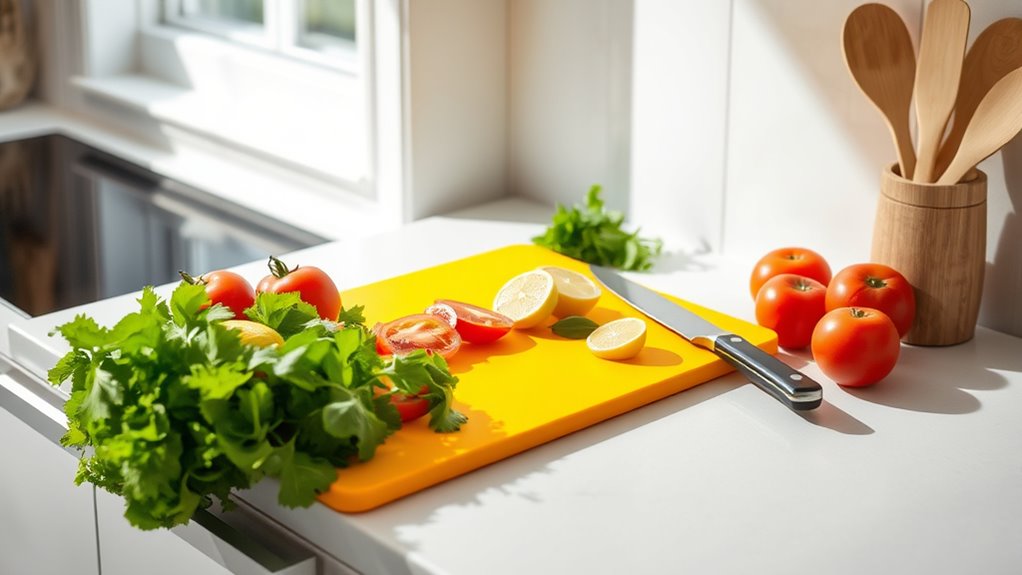
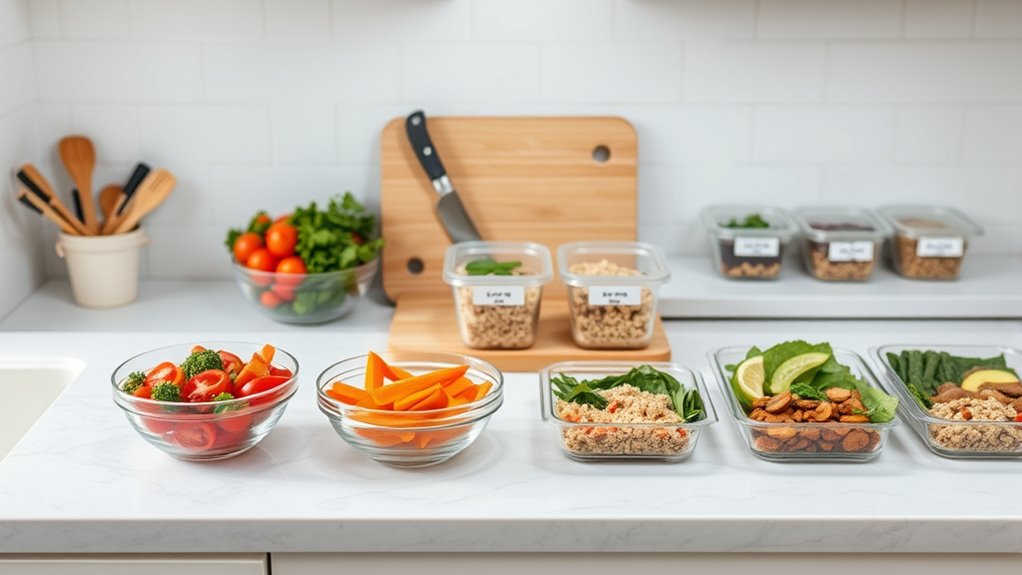
Creating a dedicated fruit and vegetable prep area helps keep your kitchen organized and safe. When you set up this space, it becomes your go-to spot for fruit prep and vegetable washing, making your workflow smoother. Use a separate cutting board and sharp knives to prevent cross-contamination. Keep a small basin or sink nearby for washing produce thoroughly, removing dirt and pesticides. Having everything organized in this zone helps you quickly prep snacks or ingredients for meals without cluttering other counters. Label containers for washed produce and scraps to maintain cleanliness. This dedicated area not only improves efficiency but also promotes healthier eating habits, as you’re more likely to prep fresh produce regularly when it’s easily accessible and well-organized. Incorporating proper air purification can further enhance your kitchen environment by reducing airborne pollutants and odors.
Creating a Protein Storage and Assembly Station
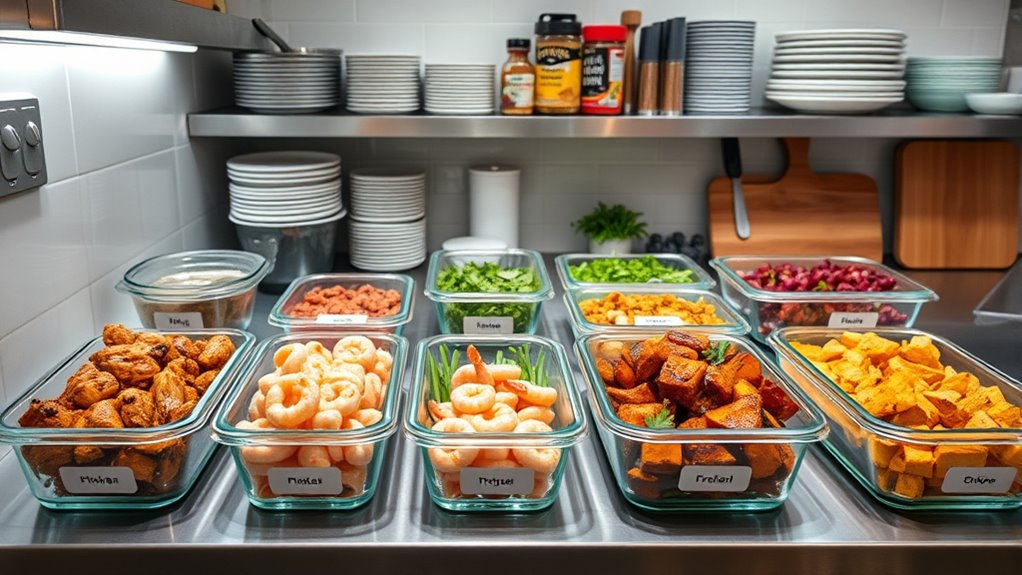
Set up your protein station with clear storage containers, so everything stays fresh and accessible. Organize the containers by protein type to streamline your prep process. Establish an assembly workflow that makes putting together meals quick and efficient. Incorporate multi-functional furniture to maximize space and improve workflow in your kitchen.
Designate Storage Containers
To streamline your meal prep, designate specific storage containers for proteins, making it easier to access and assemble your meals efficiently. Choose clear containers with secure lids to keep proteins fresh and visible. Use labeling labels or container labels to identify different types of proteins quickly, especially if you prep multiple varieties. Stick to a consistent naming system, like “Chicken Breast” or “Tofu,” so you can grab what you need without hesitation. Organize containers in a designated zone in your fridge or pantry to reduce clutter and save time. This setup helps you maintain an organized, efficient workspace and minimizes the risk of mix-ups. Clear labels and dedicated containers make your protein storage straightforward, supporting a smoother, more effective meal prep process. Proper beneficiary designation can help avoid costly errors and maximize your meal prep efficiency.
Organize by Protein Type
Organizing your protein storage by type helps streamline your meal prep process and reduces clutter. When you categorize proteins—meat, poultry, fish, and dairy—you can quickly find what you need and improve meat preservation. To set up your station, consider these tips:
- Use clear containers for different protein types to enhance dairy organization and prevent cross-contamination.
- Store raw meats on the bottom shelf to avoid drips and facilitate safe meat preservation.
- Label each section with the protein type for quick identification.
- Keep frequently used proteins at eye level for easy access during prep.
- Incorporate proper filtration systems to help maintain freshness and prevent spoilage of your proteins.
This organization minimizes time spent searching and ensures your proteins stay fresh longer. A dedicated station keeps your kitchen neat and makes healthy meal prep more efficient.
Implement Assembly Workflow
Creating a dedicated protein storage and assembly station streamlines your meal prep process by bringing everything you need into one organized space. This setup helps you implement meal prep shortcuts, making it easier to assemble meals quickly. Keep proteins like cooked chicken, beef, or tofu in clearly labeled containers within easy reach. Design your station to promote kitchen flow optimization by arranging tools, utensils, and containers nearby. Use separate compartments for raw and cooked proteins to prevent cross-contamination. Consistently prepping and portioning proteins at this station reduces prep time and simplifies assembly. By establishing this focused area, you minimize unnecessary movement and decision-making during meal prep, making it more efficient and enjoyable. Incorporating proper storage solutions ensures your ingredients stay fresh and accessible. Ultimately, a well-organized assembly station keeps your kitchen streamlined and your meals nutritious.
Organizing a Grain and Legume Zone
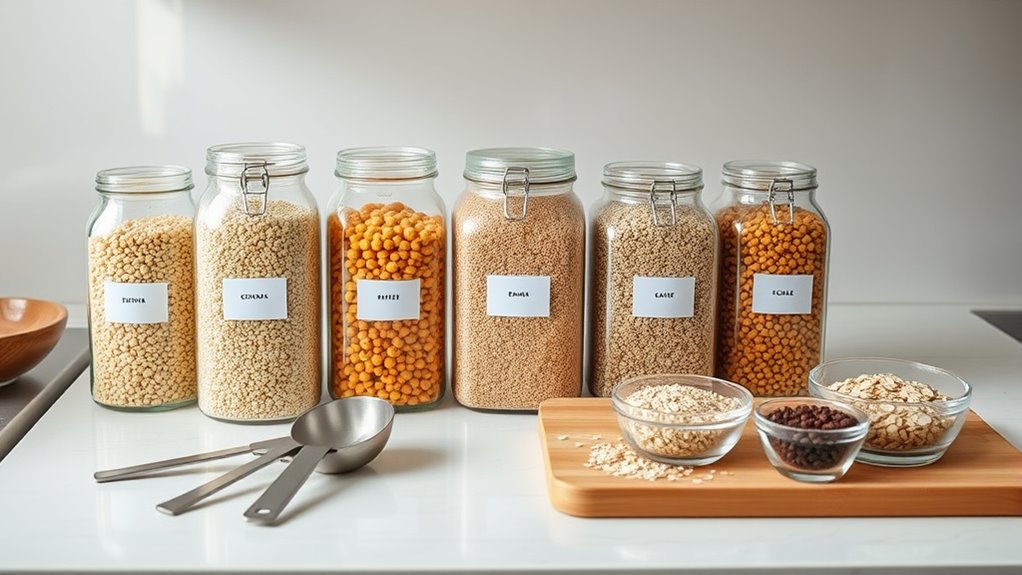
Setting up a dedicated grain and legume zone helps you keep these staples easily accessible and properly stored. This zone streamlines your meal prep, especially for grains and legumes that require specific handling. To optimize this area, consider these tips:
- Use airtight containers for grain storage to preserve freshness and prevent pests.
- Label containers with the grain or legume name and cooking instructions.
- Keep dry legumes in a separate section for easy legume prep and quick access.
- Store bulk quantities at eye level for efficient use and to minimize waste.
Setting Up a Snack and Nutritious Treat Corner
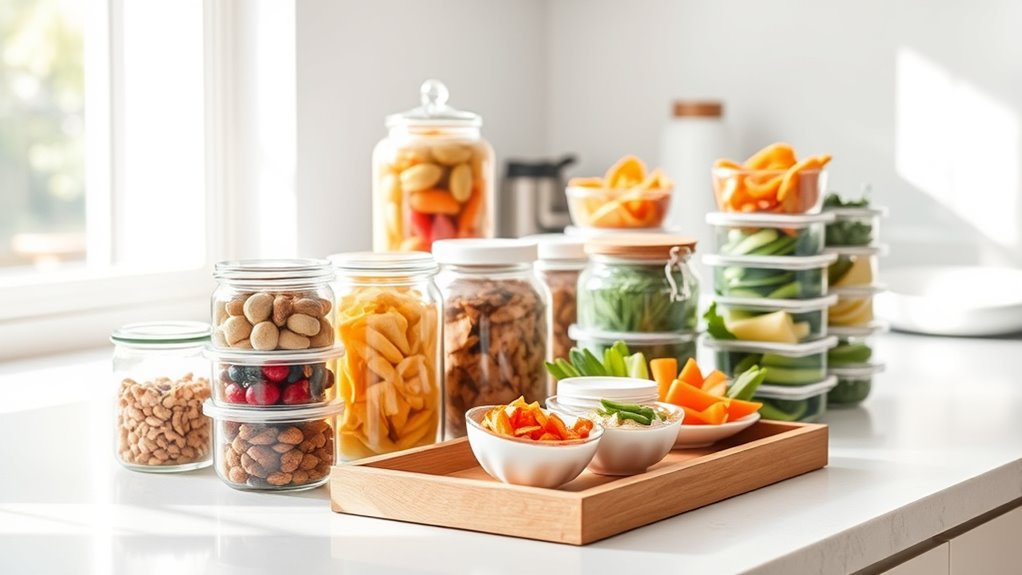
Start by stocking your corner with healthy snacks like nuts, fruits, and whole-grain crackers. Organize these treats so they’re easy to reach and quickly grab when hunger strikes. Keep fresh options visible and rotating to guarantee you always have nutritious choices available. Incorporate strategic organization to maximize accessibility and promote consistent healthy habits.
Stock Healthy Snacks
Designing a dedicated snack corner with healthy options makes it easy to grab nutritious treats throughout the day. To stock your space effectively, focus on diverse healthy snack options that satisfy cravings and boost energy. Here are some snack prep tips to keep in mind:
- Choose whole foods like nuts, seeds, and dried fruits for convenience and nutrition.
- Pre-portion snacks into small containers or bags to promote mindful eating.
- Incorporate readily available fresh produce such as apples, carrots, and berries.
- Rotate snack options weekly to maintain variety and prevent boredom.
- Consider Kia Tuning options to customize your vehicle and make your driving experience more enjoyable.
Organize for Accessibility
To guarantee your snack and treat corner is truly accessible, organize it thoughtfully so you can quickly find and reach your healthy options. Use dedicated containers and clear bins to hold your meal prep tools and nutritious snacks, making everything visible at a glance. Arrange items based on your kitchen layout, placing frequently used snacks at eye level or in easy-to-reach spots. Keep your favorites front and center, and group similar items together for efficiency. Consider using labeled jars or baskets to maintain order. By designing this space with accessibility in mind, you’ll streamline your snack prep process and encourage healthier choices throughout the day, turning your corner into a convenient, inviting zone for nutritious treats.
Keep Fresh Treats
Creating a dedicated space for fresh treats guarantees your snacks stay appealing and easy to grab. By establishing a snack and nutritious treat corner, you simplify fruit storage and snack organization. To maximize efficiency, consider these tips:
- Use clear containers to keep fruit visible and fresh.
- Separate healthy options like nuts and dried fruit for quick access.
- Label shelves or bins to streamline snack selection.
- Regularly check and replenish supplies to prevent spoilage.
- Be mindful of proper storage techniques to maintain snack freshness and safety.
This setup encourages healthy choices and reduces the hassle of searching through clutter. Keeping fresh treats accessible and organized makes it easier to enjoy nutritious snacks anytime. Plus, it helps you maintain control over portion sizes and prevents overeating. With a dedicated refresh spot, your kitchen becomes a convenient, inviting space for wholesome indulgences.
Establishing a Cooking and Assembly Workspace

Setting up a dedicated cooking and assembly workspace is essential for efficient meal prep. Choose a clear, spacious area with good kitchen lighting to keep your workspace bright and inviting. Arrange your meal prep tools—sharp knives, cutting boards, measuring cups, and bowls—within easy reach to streamline your workflow. Use a sturdy counter or table to serve as your central hub for chopping, mixing, and assembling ingredients. Keep frequently used items nearby, and consider organizing utensils in containers or drawer dividers. Proper lighting reduces eye strain and helps guarantee precision when preparing ingredients. Establishing a designated Kitchen Environment can enhance safety and comfort during meal prep. By establishing a dedicated space with well-placed tools and ideal lighting, you create an environment that encourages quick, safe, and enjoyable meal prep sessions.
Arranging a Food Storage and Container Station

Organizing a dedicated food storage and container station guarantees your meal prep stays efficient and clutter-free. To maximize space and functionality, consider these key steps:
- Sort storage container types by size and shape for easy stacking and access.
- Use labeled bins or drawers to categorize meal prep gadgets and containers.
- Keep frequently used storage container types at eye level for quick grabbing.
- Designate a section for meal prep gadgets like reusable bags, silicone lids, and portion control containers.
This setup helps you quickly find the right container for each task and keeps your workspace tidy. Investing in versatile storage container types and organizing tools ensures your meal prep process remains smooth and stress-free. A well-arranged station saves time and encourages healthy eating habits.
Creating a Cleaning and Waste Management Area

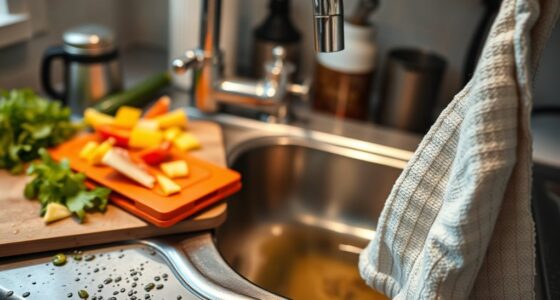
A well-designed cleaning and waste management area keeps your kitchen tidy and ready for meal prep. Establishing designated spots for cleaning routines helps you quickly sanitize surfaces and tools, reducing bacteria and cross-contamination. Place cleaning supplies like sprays, cloths, and sponges within easy reach but away from food prep zones. For waste management, set up separate bins for recyclables, compost, and trash, making disposal straightforward. Use clear labels and ensure bins are easily accessible so you stay consistent with waste separation. Regularly empty and sanitize bins to prevent odors and pests. This setup encourages efficient cleaning routines and keeps waste organized, allowing you to maintain a hygienic, clutter-free environment that supports healthy meal prep habits.
Designing a Meal Planning and Recipe Corner
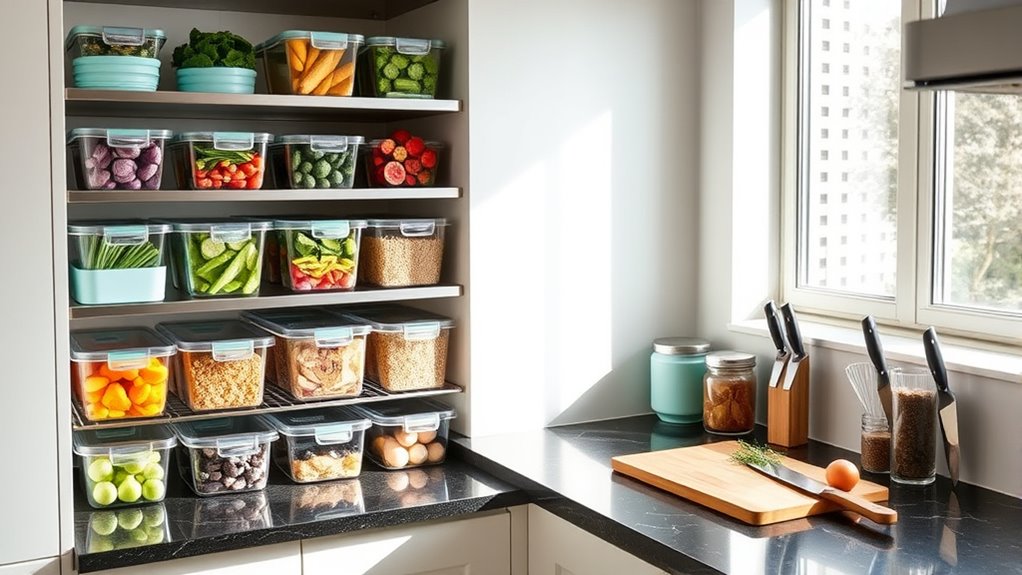
Creating a dedicated meal planning and recipe corner in your kitchen helps streamline your cooking process and makes meal prep more enjoyable. To optimize this space, focus on:
- Choosing the right meal prep gadgets like portion containers, a digital scale, and a blender to simplify prep tasks.
- Ensuring kitchen lighting is bright and adjustable, so you can clearly see recipes and prep ingredients.
- Organizing a nearby surface or drawer for holding cookbooks, tablets, or printed recipes for quick access.
- Incorporating a chalkboard or whiteboard for weekly meal ideas, shopping lists, and reminders.
This setup encourages efficiency and creativity, helping you stay on top of meal plans while reducing clutter and confusion during prep.
Maintaining Accessibility and Flexibility in Your Zones

To keep your meal prep zones effective, you need to prioritize accessibility and flexibility. Make sure frequently used tools and ingredients are within easy reach, avoiding clutter that can slow you down. Incorporate a meal prep playlist to keep your energy high and maintain focus, especially during busy prep sessions. Good kitchen lighting design also plays a vital role—bright, well-placed lights ensure you see clearly, reducing errors and accidents. Adjust lighting levels based on tasks, such as brighter lights for chopping and softer lighting for organizing. Flexibility means setting up zones that can adapt to different recipes or meal plans. Regularly reassess your setup to stay organized and efficient, so your kitchen remains a functional space for healthy meal prepping.
Frequently Asked Questions
How Often Should I Reorganize My Meal-Prep Zones?
You should reorganize your storage and meal planning routines every few months or when you notice clutter or inefficiency. Regularly updating your meal-prep zones helps keep your kitchen functional and makes meal prep easier. If you find yourself spending extra time searching for ingredients or tools, it’s a good sign to refresh your organization. Staying proactive guarantees your zones stay optimized for healthy, stress-free meal prep.
What Safety Measures Are Essential in Each Zone?
Think of your kitchen as a fortress, each zone a crucial stronghold. In food storage, lock up raw meats separately to prevent cross-contamination. Keep knives sheathed and sharp to guarantee safe cutting, avoiding accidents. Regularly sanitize surfaces and wash hands, like guards maintaining the fortress’s defenses. These safety measures protect you from hazards, making your meal prep both efficient and secure. Prioritize these rules to defend your health and peace of mind.
How Can I Personalize Zones for Dietary Restrictions?
To personalize your zones for dietary restrictions, start with customized storage solutions tailored to your needs. Use clear allergen labeling on containers to prevent cross-contamination and guarantee easy identification. Allocate specific areas for ingredients that meet your dietary requirements, like gluten-free or vegan items. This way, you keep everything organized, safe, and accessible, making meal prep more efficient and aligned with your dietary goals.
What Tools Are Best for Maintaining Hygiene in Prep Areas?
To keep your prep areas hygienic, you should use effective tools like sanitizing spray and antibacterial mats. Regularly spray surfaces with sanitizing spray to eliminate germs, especially after handling raw foods. Place antibacterial mats in high-traffic zones to prevent cross-contamination and make cleaning easier. These tools help you maintain a clean, safe environment, giving you peace of mind while preparing healthy meals.
How Do I Prevent Cross-Contamination Between Zones?
Ever wondered how to keep food safety excellent? To prevent cross-contamination, you should clearly separate your prep zones for raw meats, vegetables, and cooked foods. Use color-coded cutting boards and utensils, and always wash your hands thoroughly between tasks. Implement strict hygiene practices like sanitizing surfaces regularly. By staying organized and attentive, you guarantee your kitchen remains safe and hygienic, protecting everyone from foodborne illnesses.
Conclusion
By organizing your kitchen into dedicated zones, you create a balanced rhythm—each space a beat in your healthy meal prep symphony. When your fruit, proteins, grains, and snacks are harmonized, meal prep becomes effortless and joyful. Keep your zones flexible, like a flowing melody, adapting as your needs change. This rhythm not only streamlines your process but also nurtures a healthier, more mindful you—making your kitchen a sanctuary for nourishing choices.