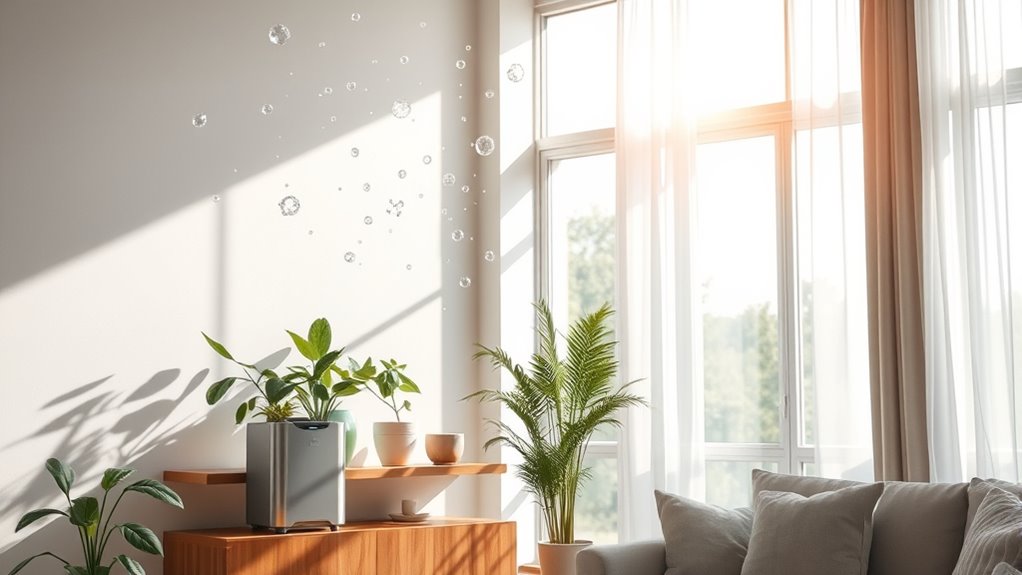

To improve indoor air quality and reduce dust and VOCs, use air purifiers with HEPA filters and guarantee they run regularly in busy rooms. ventilate daily by opening windows or exhaust fans, especially in kitchens and bathrooms. choose natural, fragrance-free cleaning products, and vacuum often with a HEPA filter vacuum. Keep humidity between 30-50% to prevent mold. Staying aware of these tips helps create a healthier, more comfortable environment—discover more ways to breathe easier inside.

Get furniture and decor delivered free — and shop member deals
- Fast, free delivery on millions of items
- Access to Prime Big Deal Days deals on October 6–7
- Prime Video, Amazon Music and more included
Key Takeaways
- Use HEPA air purifiers regularly to filter dust, allergens, and VOCs from indoor air.
- Improve ventilation by opening windows and using exhaust fans to dilute indoor pollutants.
- Choose natural, fragrance-free cleaning products and frequently dust and vacuum with HEPA filters.
- Maintain indoor humidity between 30-50% to prevent mold growth and reduce VOCs.
- Regularly wash bedding, curtains, and soft furnishings to minimize dust and allergen buildup.

Have you ever wondered how the air inside your home affects your health? The truth is, indoor air quality plays a crucial role in your overall well-being. Dust and volatile organic compounds (VOCs) can accumulate over time, leading to allergies, respiratory issues, and other health problems. Fortunately, there are simple steps you can take to reduce these pollutants and breathe cleaner air every day.
One of the most effective ways to improve indoor air quality is by using air purifiers. These devices work by filtering out dust, allergens, and VOCs from the air, making it safer to breathe. When choosing an air purifier, look for models with HEPA filters, which are designed to trap tiny particles that can irritate your lungs and skin. Keep your air purifier running regularly, especially in rooms where you spend a lot of time, such as bedrooms and living areas. This continuous filtration helps maintain a healthier environment and reduces the buildup of airborne pollutants.
Using HEPA-filter air purifiers consistently improves indoor air quality and reduces airborne pollutants.
In addition to using air purifiers, natural ventilation is a key component of maintaining good indoor air quality. Opening windows and doors allows fresh air to circulate inside your home, diluting indoor pollutants and replacing stale air. Even in colder months, ventilating for a few minutes each day can markedly improve air quality. Cross-ventilation—opening windows on opposite sides of a room or house—creates a breeze that quickly exchanges indoor and outdoor air. If natural ventilation isn’t always feasible, consider installing exhaust fans in kitchens and bathrooms to remove moisture, odors, and VOCs that often originate from cooking, cleaning products, and personal care items.
Reducing dust and VOCs also involves mindful choices about your household products. Opt for natural, fragrance-free cleaners instead of chemical-laden sprays and powders. Regularly dust and vacuum with a HEPA-filter vacuum cleaner to prevent dust from settling and becoming airborne again. Washing bedding, curtains, and soft furnishings frequently helps eliminate accumulated dust mites and allergens. Keep humidity levels in check—ideally between 30 and 50 percent—to prevent mold growth, which can worsen indoor air quality and lead to respiratory problems.
HEPA air purifier for dust and VOCs
As an affiliate, we earn on qualifying purchases.
As an affiliate, we earn on qualifying purchases.
Frequently Asked Questions
How Do Pets Affect Indoor Air Quality Levels?
Pets can profoundly impact your indoor air quality by releasing pet dander, which can trigger allergies and asthma. Their fur and skin flakes become airborne, increasing dust levels. Additionally, pet odor can linger in the air, affecting overall freshness. To improve air quality, regularly groom your pets, vacuum often with a HEPA filter, and use air purifiers to help with odor control and reduce airborne pet dander.
What Are the Best Plants for Improving Indoor Air Quality?
You should choose air purifying plants like snake plants, pothos, and peace lilies to improve indoor air quality. These toxin absorbing greenery naturally filters out pollutants and VOCs, making your space healthier. Keep in mind, regular watering and proper sunlight help these plants thrive and maximize their air-cleaning benefits. Adding such plants not only enhances your decor but also creates a fresher, safer environment indoors.
Can Air Purifiers Eliminate All VOCS and Dust?
Did you know that air purifiers can remove up to 99% of airborne particles? While they substantially reduce dust and VOCs, they can’t eliminate all contaminants. Air purifier limitations mean some VOCs and fine dust particles may still linger, especially if sources remain active. To improve indoor air quality, combine use of purifiers with proper ventilation, cleaning, and source control for the best results.
How Often Should I Replace My HVAC Filters?
You should replace your HVAC filters every 1 to 3 months, depending on filter type, household habits, and air quality. Regular filter maintenance keeps dust and VOCs in check and guarantees your system runs efficiently. Check your filters monthly and replace them when they look dirty or clogged. Following proper replacement schedules helps improve indoor air quality and prolongs the lifespan of your HVAC system.
Are There Specific Cleaning Products That Reduce Indoor Pollutants?
You should choose eco-friendly cleaners and natural disinfectants to reduce indoor pollutants effectively. Look for products labeled as non-toxic, biodegradable, and free from harsh chemicals like VOCs and synthetic fragrances. These options help improve indoor air quality while being safe for your family and the environment. Regularly cleaning surfaces with natural disinfectants minimizes dust and airborne contaminants, creating a healthier living space.
Conclusion
Maintaining good indoor air quality is like tending a delicate garden—you need to be attentive and proactive. By reducing dust and VOCs, you’re creating a healthier environment that feels as invigorating as a spring breeze. Regular cleaning, proper ventilation, and mindful product choices make all the difference. Remember, small steps add up to a gust of fresh air, so take action today to protect your home’s air quality and enjoy a cleaner, safer space.
Fall Picks
fall essentials
As an affiliate, we earn on qualifying purchases.