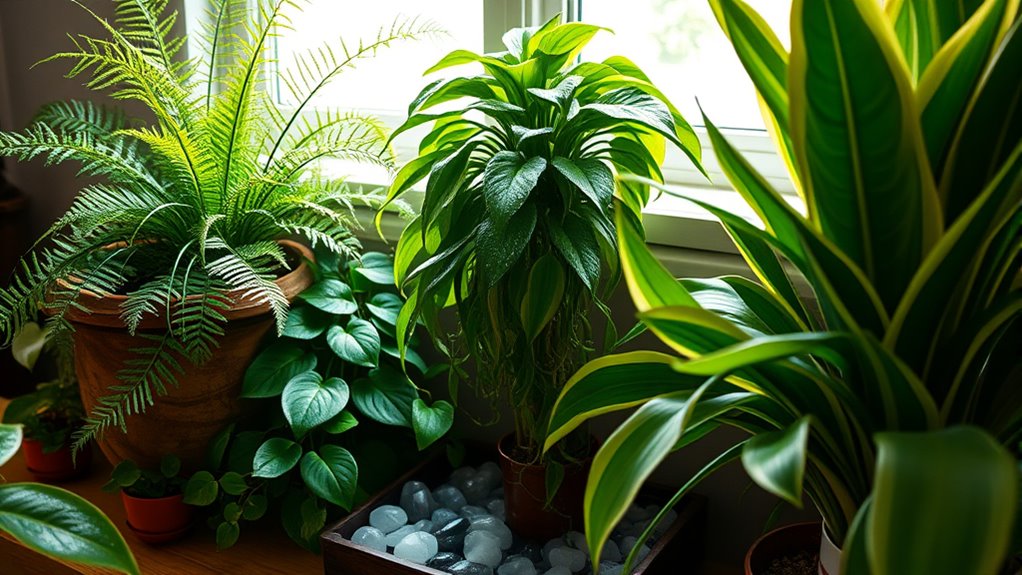

To help balance indoor humidity, you should consider houseplants like pothos, peace lilies, and Boston ferns, which are known for their high transpiration rates. These plants naturally release moisture, creating a more comfortable environment, especially during dry months. Proper placement and care maximize their benefits, so placing multiple plants around high-traffic areas and keeping their leaves clean can boost humidity levels effectively. Keep exploring for more tips on optimizing your home’s humidity with plants.
Key Takeaways
- Houseplants like pothos, peace lilies, and Boston ferns increase indoor humidity through transpiration.
- Proper watering and indirect sunlight help these plants maximize moisture release and stay healthy.
- Grouping multiple high-transpiration plants creates a microenvironment that boosts humidity levels.
- Placing plants in high-activity rooms and avoiding drafts enhances their humidity-regulating benefits.
- Combining houseplants with humidifiers can further improve indoor moisture balance.
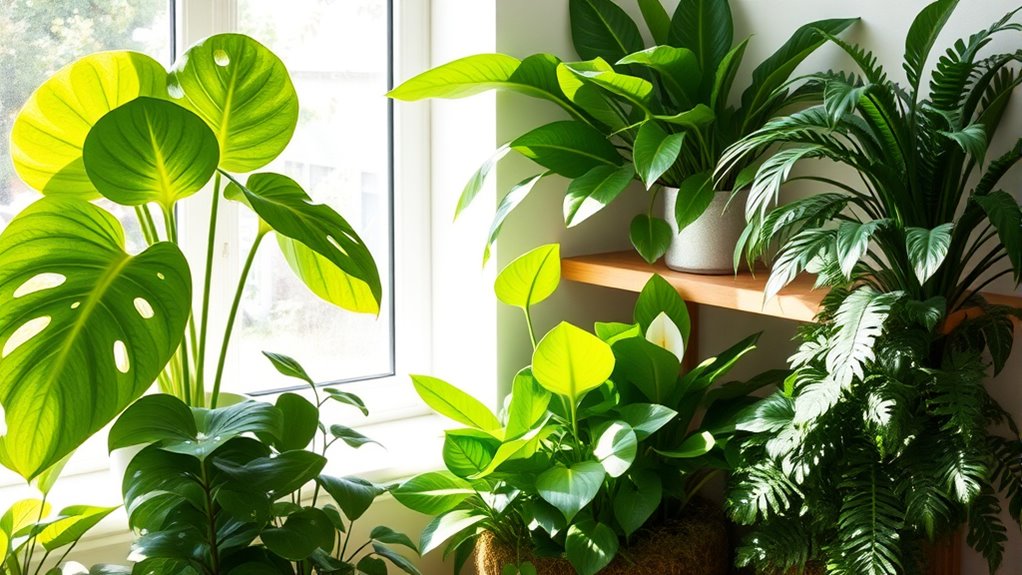
If you struggle with dry indoor air, incorporating certain houseplants can naturally boost humidity levels. These plants don’t just add a touch of greenery to your home; they actively participate in humidity regulation by releasing moisture into the air through a process called transpiration. When you choose plants known for their ability to increase humidity, you’re creating a more comfortable environment, especially during winter months when indoor air tends to become particularly dry.
To get the most out of your houseplants, proper plant care is essential. Plants like pothos, peace lilies, and Boston ferns are excellent choices for humidity regulation because they have high transpiration rates. Maintaining the right plant care involves providing adequate water, indirect sunlight, and proper soil conditions. Overwatering can lead to root rot, so it’s important to strike a balance—water when the top inch of soil feels dry. Conversely, underwatering can stress the plant and reduce its ability to release moisture. Consistency is key, so establish a routine that keeps your plants healthy and thriving.
In addition to watering, you should monitor your home’s environment. Placing these humidity-boosting plants in rooms where you spend the most time, like the living room or bedroom, maximizes their benefits. Grouping multiple plants together can also create a microenvironment with higher humidity levels, as the combined transpiration adds significant moisture to the surrounding air. Make sure to rotate plants periodically for even growth and to prevent pests or diseases from taking hold, which can hinder their ability to contribute to humidity regulation.
Another important aspect of plant care for humidity purposes is keeping the leaves clean. Dust on plant foliage can block sunlight and reduce photosynthesis, which in turn affects transpiration. Gently wipe leaves with a damp cloth regularly, especially if you notice dust settling. Additionally, maintaining proper humidity levels around the plants themselves helps, so avoid placing them near heat vents or drafts that can dry out the air and inhibit transpiration. Using a humidifier in conjunction with your houseplants can further enhance indoor moisture levels, creating a more balanced and comfortable atmosphere. Incorporating wall organization systems or other aesthetic decor can also help optimize space for your plants and improve overall home humidity balance.
Frequently Asked Questions
Which Houseplants Are Best for Very Dry Environments?
In very dry environments, you should choose succulents and desert plants, as they’ve adapted to thrive with minimal water. These plants excel at conserving moisture through specialized adaptations like thick, fleshy leaves and deep root systems. With proper desert plant care, you can keep them healthy and vibrant. They’re perfect for low-humidity spaces because they naturally resist dehydration, making them low-maintenance and resilient in arid conditions.
How Often Should I Water Humidity-Friendly Houseplants?
You should water humidity-friendly houseplants when their soil moisture feels dry to the touch, typically once a week or when the top inch of soil is dry. Stick to a consistent watering schedule, but avoid overwatering, which can harm the plants. Check your plant’s soil regularly, especially during dry seasons, and adjust your watering frequency accordingly to keep the soil moist but not soggy.
Can Houseplants Improve Air Quality Besides Humidity?
Yes, houseplants can improve air quality beyond humidity benefits. They absorb toxins and release oxygen, enhancing your home’s freshness. To maximize air purifier benefits naturally, place plants near windows or in well-ventilated areas. Use plant placement tips like grouping plants together for a stronger air-cleaning effect and choosing varieties known for air purification. These steps help you enjoy cleaner, healthier air with the beauty of your houseplants.
Are There Any Toxic Houseplants for Pets?
Yes, some houseplants are toxic foliage for pets. You should look for pet safe plants to avoid any risks. Plants like spider plants, Boston ferns, and Areca palms are generally safe, while others like pothos, philodendrons, and peace lilies are toxic. Always double-check plant labels and keep potentially toxic foliage out of your pet’s reach. Staying informed helps you create a pet-friendly, healthy indoor environment.
How Do I Care for Humidity-Boosting Houseplants During Winter?
During winter, you should adjust your humidity-boosting houseplants by maintaining a consistent watering schedule, ensuring the soil stays moist but not soggy. Place them in spots with adequate light requirements, like near east or south-facing windows, to support healthy growth. Increase humidity around the plants with a humidity tray or misting, but avoid overwatering, and make sure they get enough light to thrive all season long.
Conclusion
Bringing houseplants into your home not only adds beauty but also naturally boosts humidity levels. Did you know that a single mature plant can increase indoor humidity by up to 5%? This simple change can make your space more comfortable and healthier, especially in dry climates. So, consider adding a few humidity-friendly plants—your skin, respiratory health, and overall well-being will thank you for it. Plus, you get to enjoy a greener, more invigorating home environment.