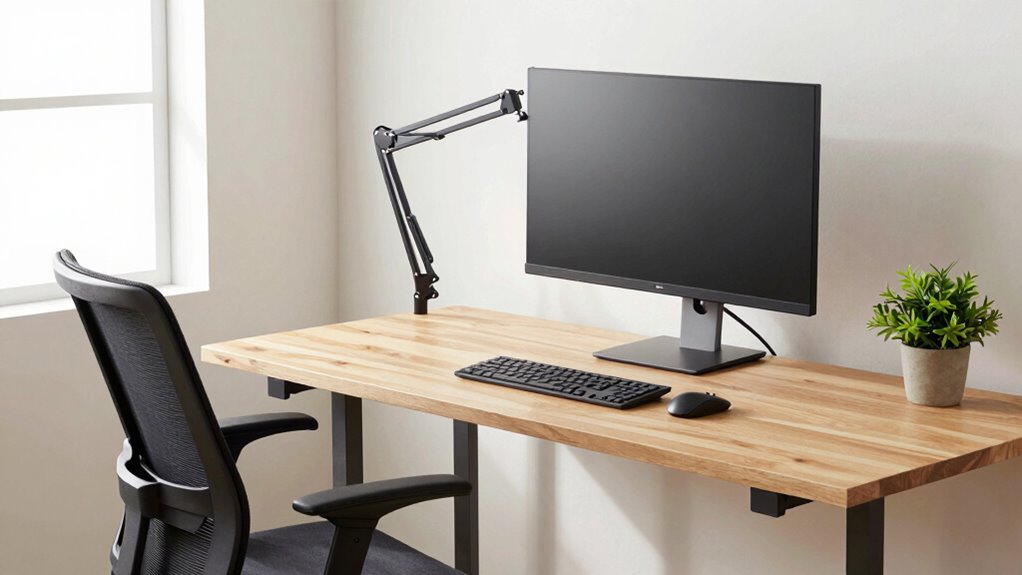

You can greatly improve your desk ergonomics without spending much by making simple adjustments with household items. Raise your monitor to eye level using books or cushions, and set your chair height so your feet are flat on the floor with knees at 90°. Keep your keyboard and mouse close, with elbows relaxed, and take frequent breaks to stretch and move. Curious how to optimize your setup further? Keep exploring for more practical tips to work comfortably all day.
Key Takeaways
- Use household items like books or cushions to raise your monitor and improve eye level positioning without expensive equipment.
- Adjust your chair height so feet are flat, knees are at 90°, and hips are level or slightly higher than knees.
- Keep your keyboard and mouse directly in front, with elbows close to your body and wrists neutral, using DIY wrist rests if needed.
- Position frequently used items within easy reach to reduce unnecessary stretching or twisting.
- Take regular breaks to stretch and move, preventing stiffness and promoting better posture without costly gadgets.
Are You Sitting Comfortably? Quick Checks to Improve Ergonomics

To make certain you’re sitting comfortably and reducing strain, start with a few quick ergonomic checks. First, pay attention to cushion placement; your seat cushion should support your hips evenly, preventing you from sinking or sliding forward. Adjust your chair height so your feet are flat on the floor, with your knees at a 90-degree angle. Proper foot positioning is key—your feet shouldn’t dangle or be overly pressed against the ground. If needed, use a footrest to achieve this. Ensure your lower back is supported, and your hips are level with or slightly higher than your knees. These simple adjustments promote better posture and help reduce discomfort during long hours at your desk. Additionally, choosing the right projector setup can enhance your home entertainment experience without the need for expensive equipment. Incorporating ergonomic accessories such as lumbar supports or adjustable desks can further improve comfort and productivity. Considering ergonomic principles from electric bike performance can also inspire better workspace adjustments, ensuring your setup supports optimal comfort and efficiency. Paying attention to kitchen science & materials concepts like proper support and material choices can also inform ergonomic decisions in your workspace.
Simple Posture Fixes You Can Do Today

Start by adjusting your chair height so your feet rest flat on the floor and your knees stay at a 90-degree angle. Next, position your screen at eye level to avoid straining your neck and eyes. These simple tweaks can instantly improve your posture and reduce discomfort. Additionally, consider ventilation considerations to ensure proper airflow around your workspace, which can help prevent fatigue and promote better ergonomics. Improving ergonomic workspace setup can also make a significant difference in your comfort during long periods of work, especially when incorporating smart appliances that can assist with maintaining proper posture and environment controls. Regularly assessing your water quality to ensure a clean environment can also contribute to overall well-being and comfort in your workspace. Moreover, ensuring good air circulation can help reduce indoor pollutants and maintain a fresh breathing environment.
Adjust Your Chair Height
Adjusting your chair height is a simple yet effective way to improve your posture instantly. Set your office chair to an ergonomic height so your feet rest flat on the floor, and your knees are at a 90-degree angle. Your hips should be level with or slightly above your knees. When your chair is at the right height, your lower back gets proper support, reducing strain. Keep your hips back in the chair and avoid slouching or leaning forward. Adjust the height so your keyboard and mouse are within easy reach, keeping your arms relaxed at your sides. This small change helps prevent discomfort and promotes better alignment throughout your workday, making your workspace more comfortable and healthier. Ensuring your chair height is properly adjusted can also help prevent musculoskeletal issues caused by poor ergonomics. Additionally, regularly checking and adjusting your chair height can contribute to long-term comfort and prevent fatigue over extended periods of work. Proper desk ergonomics is essential for maintaining good posture and overall well-being during your work hours. Incorporating correct chair positioning can further enhance your comfort and reduce the risk of strain. Taking these small steps can lead to better posture and overall well-being during your work hours.
Position Your Screen Properly
Positioning your screen correctly is essential for maintaining good posture and preventing neck strain. Start by adjusting your monitor placement so that the top of your screen is at eye level. This ensures you won’t tilt your head up or down, reducing neck tension. Keep the monitor about an arm’s length away from your face for ideal viewing. If it’s too low or too high, it can lead to awkward neck positions and discomfort. Use books or other stable objects to raise your monitor if needed. Proper monitor placement helps you maintain a neutral head position, which minimizes strain and fatigue. Regularly check your screen’s height and distance, and make adjustments to keep your posture aligned throughout the day.
How to Find the Right Desk and Chair Height Without Spending a Fortune

To find the right desk and chair height without breaking the bank, start by measuring your ideal height based on your body proportions. You can make simple adjustments using affordable accessories like cushions or blocks to improve comfort. With a little ingenuity, you don’t need fancy gear to create a supportive workspace. Incorporating ergonomic principles can help you optimize your setup without expensive equipment. Ensuring your workspace aligns with proper ergonomics can reduce strain and increase comfort during long work sessions. Additionally, understanding how to size and load your workspace effectively can further enhance comfort and safety. Applying ergonomic principles at home can make a significant difference in creating a healthy work environment. Paying attention to workspace setup can also prevent common discomforts and promote better posture.
Measuring Your Ideal Height
Finding the right desk and chair heights doesn’t have to cost a fortune; instead, it begins with measuring what works best for your body. Begin by sitting comfortably with your feet flat on the floor and your back supported. Use an ergonomic measurement to determine your ideal desk height—your forearms should be parallel to the ground when typing or writing. For the chair, ensure your knees are at a 90-degree angle and your feet rest flat. Measure the distance from your seat to your elbow to find the correct desk height. Adjust your current furniture if possible, or note these measurements to guide a budget-friendly upgrade. Accurate measurements help you create a setup that minimizes strain and promotes better posture without spending extra cash.
Adjusting on a Budget
Wondering how to perfect your ergonomic setup without breaking the bank? You can find budget-friendly solutions and DIY ergonomic hacks to adjust your desk and chair height easily. Start by repurposing household items like sturdy books or boxes to elevate your workspace. Use a simple table to compare options:
| Solution | Pros | Cons |
|---|---|---|
| Stacking books | Cheap, customizable | Unstable, uneven surface |
| Foam pads or cushions | Soft, supportive | Less durable |
| Adjustable furniture | Long-term fix | Higher upfront cost |
| DIY footrest | Improves posture | Requires effort to build |
| Re-purposed crates | Sturdy, versatile | May not match decor |
These solutions help you customize your setup without spending much, ensuring you stay comfortable and ergonomic on a budget. Additionally, exploring ergonomic principles can help you make smarter adjustments for better comfort and health.
Position Your Screen and Keyboard for Comfort and Efficiency

Positioning your screen and keyboard correctly can make a significant difference in your comfort and productivity. Start with monitor placement: the top of your screen should be at eye level, about an arm’s length away. This reduces neck strain and encourages good posture. When it comes to keyboard alignment, keep it directly in front of you, so your elbows stay close to your body and your wrists remain neutral. Avoid reaching or twisting to type; a slight downward tilt can help keep your wrists straight. Adjust your chair height so your feet are flat on the ground, with your forearms parallel to the floor. Proper monitor placement and keyboard alignment create an ergonomic workspace that minimizes fatigue and enhances focus throughout your day. Additionally, considering your field‑of‑view and workspace layout can further optimize comfort and reduce strain during long periods of work. Incorporating ergonomic accessories like wrist rests or adjustable stands can also provide extra support and comfort.
Organize Cables and Clutter for Better Comfort

Cluttered cables can create a safety hazard and contribute to discomfort during your workday. To improve your setup, focus on cable management and clutter reduction. Use cable clips or sleeves to bundle cords neatly along your desk or behind your workstation, preventing tangles and tripping risks. Labeling cables helps you identify and disconnect or troubleshoot easily. Avoid leaving loose cables sprawled across your workspace, which can cause frustration and accidental pulls. Implementing simple cable management solutions makes your area safer and more organized, reducing visual clutter and stress. Proper cable routing ensures that cords stay out of the way and minimizes strain on connectors and ports. Incorporating ergonomic principles into your cable setup can significantly enhance your overall comfort. Additionally, adopting smart cable management tools, such as cable organizers with built-in features, can streamline your workspace even further. Using filtration techniques to keep dust and debris away from your cables and equipment can extend their lifespan and maintain a cleaner environment. A tidy desk not only enhances safety but also promotes better focus and comfort. Take a few minutes now to organize your cables—your body and mind will thank you throughout the day.
Add Movement Breaks and Stretch Regularly

Incorporating regular movement breaks and stretches into your work routine can substantially boost comfort and productivity. Setting movement reminders helps you stay on track and prevents stiffness. During breaks, try simple stretch routines to loosen tight muscles. These quick actions can refresh your focus and reduce strain. Consider these tips:
- Use timers or apps to prompt movement reminders
- Stand up and stretch your arms, neck, and back every hour
- Do simple leg lifts or ankle circles to improve circulation
- Take a quick walk around your space to reset
Use Everyday Items to Support Your Back and Wrists

You can effectively support your back and wrists by using common household items instead of specialized equipment. For DIY lumbar support, roll up a towel or place a folded blanket behind your lower back to maintain proper posture. This simple fix encourages a natural curve in your spine, reducing strain. For wrist support, consider stacking books or using a thick, hardcover notepad to elevate your wrists while typing or using a mouse. These makeshift supports help keep your wrists in a neutral position, preventing discomfort and repetitive strain injuries. Don’t underestimate the power of everyday items; they’re inexpensive and easy to adjust. With a little creativity, you can improve your ergonomic setup without investing in costly gear, ultimately fostering a healthier, more comfortable workspace.
Common Ergonomic Issues and How to Fix Them

Many common ergonomic issues stem from poor posture and improper workstation setup, which can lead to discomfort and long-term health problems. To fix these, focus on keyboard ergonomics and monitor positioning. For example, ensure your keyboard is at a height where your elbows stay close to your body and your wrists aren’t bent. Adjust your monitor so the top of the screen is at eye level to prevent neck strain. Avoid slouching by sitting back in your chair with good lumbar support. Also, keep frequently used items within easy reach to reduce strain. Regularly take breaks and stretch to alleviate tension. By addressing these issues, you’ll improve your comfort and reduce the risk of pain or injury, all without fancy gear.
Frequently Asked Questions
Can I Improve Ergonomics Without Buying New Furniture?
Absolutely, you can improve ergonomics without buying new furniture. Focus on maintaining an ergonomic posture by adjusting your chair and monitor height, using books or a stand if needed. Organize your desk to keep essentials within reach, reducing strain. Take regular breaks to stretch and move. Small tweaks like these enhance comfort, prevent injury, and create a healthier workspace without any extra expenses.
How Do I Adjust My Monitor for Different Tasks?
To optimize your monitor for different tasks, start by adjusting its positioning and viewing angles. For focused work, place the monitor directly in front of you at eye level to reduce neck strain. When reviewing details, tilt or rotate the screen slightly to achieve the best viewing angles. These small tweaks help your eyes stay comfortable and your posture stay natural, making your workspace more adaptable and inviting.
Are There Specific Stretches for Office Workers?
You should incorporate desk exercises and stretching routines into your day to prevent strain. Try neck stretches by gently tilting your head side to side, shoulder rolls to relieve tension, and wrist stretches to avoid repetitive strain. Regularly stand up, reach overhead, and twist your torso to stay limber. These simple stretches can boost circulation, reduce discomfort, and keep you energized throughout your workday without needing fancy gear.
What Are Signs of Poor Ergonomic Setup?
Your body screams when your ergonomic setup is off. Look out for persistent neck or back pain, frequent headaches, or tingling in your limbs—that’s a sign your posture correction and chair adjustments aren’t enough. If your chair isn’t properly aligned or you slouch often, it’s time to fix it. Poor ergonomic setup can turn daily work into a nightmare, so pay attention and adjust your workspace now!
How Often Should I Evaluate My Workspace?
You should evaluate your workspace every few months to maintain good ergonomics. Regular ergonomic assessments help you spot issues caused by changing workspace habits or new discomfort signs. Pay attention to how you feel during and after your work sessions, and modify your setup accordingly. By routinely checking your workspace, you can prevent strain and ensure your posture stays healthy, making your workday more comfortable and productive.
Conclusion
Now, picture yourself at a clutter-free desk, your spine aligned, and your wrists relaxed like gentle waves. With just a few simple tweaks, you’ve transformed your workspace into a haven of comfort, where movement flows naturally and fatigue fades away. No fancy gear needed—just your awareness and small adjustments. Keep this peaceful scene in mind each day, and you’ll turn your desk into a place where productivity and well-being thrive effortlessly.