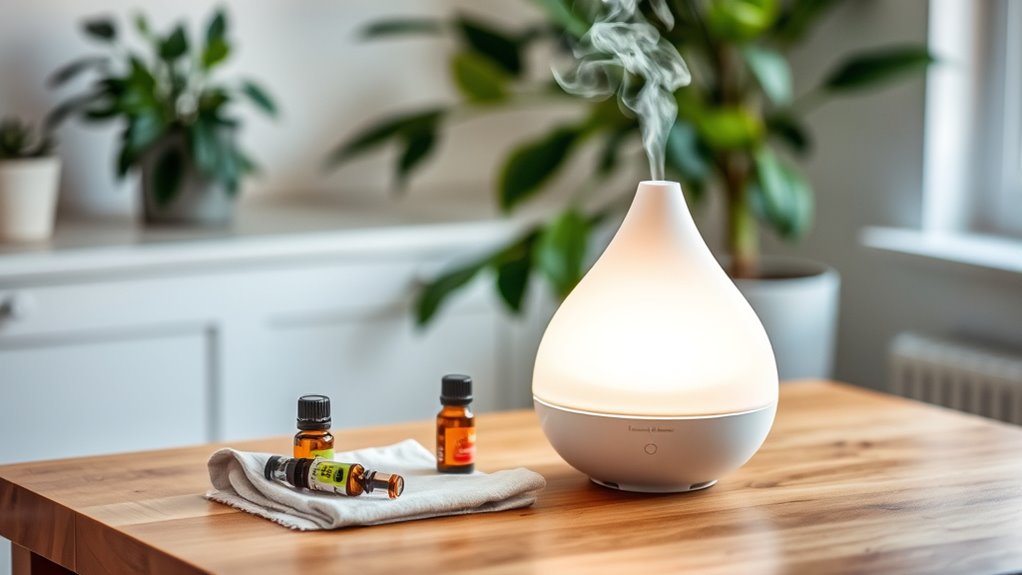

To diffuse essential oils safely, place your diffuser on a stable, flat surface away from walls, vents, and electronics, and keep it in a central room area for the best coverage. Use high-quality oils and limit drops to 3-5 per use, adjusting for room size. Always follow device instructions, utilize timers, and make certain proper cleaning. Monitoring scent strength and ventilation helps prevent overexposure. By understanding these basics, you’ll create a safe, soothing atmosphere—Gaining more tips becomes easier as you go along.
Key Takeaways
- Place the diffuser on a stable, central surface away from walls, vents, and electronics to ensure proper airflow and scent diffusion.
- Use only high-quality, pure essential oils in recommended small quantities (3-5 drops) to prevent overwhelming scents and device damage.
- Set timers or automatic shut-offs to control diffusion duration and avoid overexposure or scent fatigue.
- Ventilate the room after diffusing to prevent lingering overpowering scents and reduce allergy risks.
- Regularly clean the diffuser and stay informed about device security updates to ensure safe and effective operation.

Are you curious about how to effortlessly create a calming or invigorating atmosphere at home? The key lies in understanding diffuser placement and choosing the right essential oils. Proper diffuser placement ensures the scent distributes evenly and safely, while selecting the appropriate essential oils sets the mood you desire. When placing your diffuser, avoid spots too close to walls, vents, or electronics, as these can block airflow or interfere with the scent’s dispersion. Instead, position it on a stable, flat surface in a central part of the room to maximize coverage. Keep it away from curtains or open windows to prevent the aroma from dissipating too quickly. Remember, the goal is to achieve a balanced, pleasant scent without overwhelming the space or causing discomfort.
Choosing the right essential oils is equally important. If you’re aiming for relaxation, opt for lavender, chamomile, or sandalwood. These oils are known for their calming properties and can help create a peaceful environment. For an energizing boost, try citrus oils like orange, lemon, or grapefruit, or invigorating herbs like eucalyptus and peppermint. These scents stimulate your senses and can enhance focus or motivation. Always start with high-quality, pure essential oils, as synthetic or diluted options may not provide the desired effects and could cause irritation. Read labels carefully and purchase from reputable sources to ensure you’re getting safe, concentrated oils that are suitable for diffusing.
Additionally, be aware that AI vulnerabilities can sometimes affect safety features in smart diffusers, so choose devices with reliable security measures. As you experiment, pay attention to the amount of oil you add. Usually, a few drops—around 3 to 5—are enough for most diffusers. Too much oil can lead to overwhelming scents or even damage the device. When you’re just starting, it’s better to add less and adjust as needed. Also, consider the duration of diffusion; many diffusers have timers or automatic shut-offs, which help prevent overuse and keep the scent gentle. Be mindful of any allergies or sensitivities, especially when diffusing in shared spaces or around children. Ventilate the room after use to prevent lingering scents from becoming overpowering.
Frequently Asked Questions
Can Children Safely Use Essential Oil Diffusers?
Yes, children can safely use essential oil diffusers if you prioritize child safety. Always choose kid-friendly oils and use them in well-ventilated areas. Keep diffuser placement out of children’s reach to prevent accidental spills or ingestion. Limit diffusion time and avoid strong scents that may irritate sensitive airways. Monitoring your child’s reactions and consulting a healthcare professional guarantees safe, enjoyable aromatherapy experiences for your little ones.
How Long Should I Run My Diffuser Each Day?
Imagine your diffuser as a gentle whisper of wellness. For ideal running time, aim for about 15-30 minutes per session, up to three times a day. The diffuser duration depends on the size of the room and your comfort level. Always monitor how you feel and adjust the diffuser’s running time accordingly to prevent overexposure. Remember, moderation makes the aroma more delightful and safe.
Are There Any Essential Oils I Should Avoid Diffusing?
You should avoid diffusing essential oils with toxicity concerns or known harmful interactions, especially around children, pets, or pregnant women. Oils like eucalyptus, tea tree, and cinnamon can pose risks if misused. Always research individual oils for potential interactions, and consult a professional if you’re unsure. By staying cautious, you safeguard yourself and others from possible adverse effects and guarantee a safe, enjoyable diffusing experience.
Can Diffusing Essential Oils Cause Allergies or Sensitivities?
Diffusing essential oils can cause allergies or sensitivities if you’re prone to allergy triggers or have scent sensitivities. You might experience symptoms like sneezing, headaches, or skin irritation. To minimize risks, start with small amounts, guarantee proper ventilation, and observe how your body reacts. If you notice discomfort, turn off the diffuser and consult a healthcare professional. Always prioritize your comfort and safety when diffusing essential oils.
What’s the Best Type of Diffuser for Beginners?
Imagine a gentle mist filling your space, inviting calm and clarity. For beginners, ultrasonic diffusers are your best recommendation—they’re simple, quiet, and affordable. Their diffuser types create a fine, consistent mist, perfect for easy use. You’ll love how effortless it is to get started. With their sleek design and safety features, ultrasonic diffusers make your essential oil journey smooth, relaxing, and safe from the very first use.
Conclusion
So, after all this talk about safety, you might think diffusing essential oils is completely risk-free. But hey, even the most careful diffuser can turn into a scent-sational disaster if you ignore those simple guidelines. Ironically, the more you learn about safe use, the less likely you are to accidentally turn your calming space into a sneezing, irritated nightmare. Just remember, a little caution goes a long way—because, really, who wants to turn tranquility into chaos?