Circadian lighting adjusts your indoor environment to mirror natural light patterns, helping you stay alert during the day and relax at night. It involves using brighter, cooler light in the mornings to boost energy and softer, warmer light in the evenings to signal your body to wind down. By managing your lighting to support your body’s internal clock, you can improve sleep, focus, and overall well-being. Keep exploring to discover how to implement these simple changes effectively.

Get furniture and decor delivered free with Prime
- Fast, free delivery on millions of items
- Prime Video, Amazon Music and more included
- Member-only deals all year
Key Takeaways
- Circadian lighting mimics natural light patterns to support your body’s internal clock and improve sleep and alertness.
- It adjusts brightness and color temperature throughout the day, with bright, bluish light in the morning and warmer tones in the evening.
- Using circadian lighting during the day enhances focus and energy, while reducing blue light in the evening promotes better sleep.
- Installing adjustable fixtures or smart lighting systems helps synchronize indoor light with natural circadian rhythms.
- Consistent use of circadian lighting routines can boost overall health, productivity, and sleep quality.
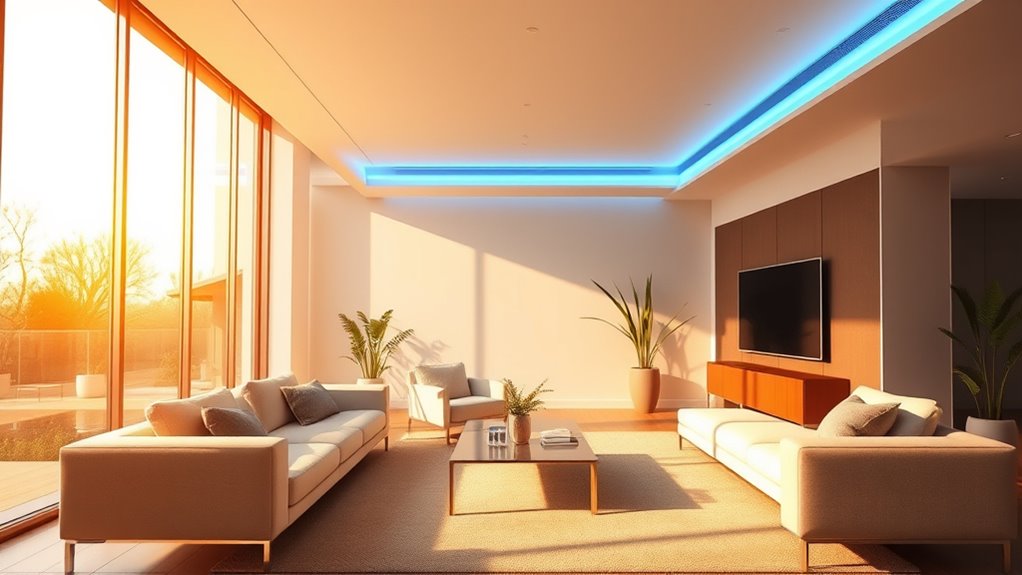
Have you ever wondered how lighting affects your daily rhythm? The way your environment is lit can substantially influence your sleep quality and overall productivity. Circadian lighting is designed to mimic natural light patterns, helping your body stay aligned with the day-night cycle. When you’re exposed to proper lighting throughout the day, especially during morning hours, it can boost your alertness and focus, making it easier to complete tasks efficiently. Conversely, in the evening, adjusting your lighting can signal to your body that it’s time to wind down, improving your sleep quality. This synchronization with natural light patterns isn’t just about comfort; it’s about optimizing your health and performance.
Your body’s internal clock, or circadian rhythm, responds strongly to light cues. Bright, bluish light in the morning suppresses melatonin production, which helps you feel awake and alert. As the day progresses, maintaining good lighting conditions guarantees that you stay energized and productive. When you use circadian lighting systems, they often simulate the changing qualities of natural daylight — bright and cool during the day, warmer and dimmer in the evening. This dynamic adjustment supports your body’s natural timing, helping you stay focused when you need to be alert and relax when it’s time to rest. As a result, you can experience a noticeable enhancement in your productivity, especially during work or study hours, because your body is operating on a more natural and supportive lighting schedule.
Bright morning light boosts alertness; warm evening lighting promotes relaxation and better sleep.
In the evening, circadian lighting becomes equally important. By reducing blue light exposure and shifting to warmer tones, you signal to your body that it’s time to prepare for sleep. This can lead to better sleep quality, allowing you to fall asleep faster and enjoy more restorative rest. When your sleep improves, you wake up feeling more refreshed and ready to tackle the day. Incorporating circadian lighting into your home or office doesn’t require drastic changes; simple smart lighting systems or adjustable fixtures can help you create an environment that aligns with your natural rhythms. Over time, this consistency can lead to healthier sleep patterns, enhanced cognitive function, and greater overall well-being.
Understanding how to use circadian lighting effectively means paying attention to your daily routines. Start your day with bright, cool light to jumpstart your alertness. As afternoon approaches, gradually transition to warmer, softer lighting to prepare your body for the evening. These small adjustments can have a big impact on your sleep quality and your ability to stay productive throughout the day. By harnessing the power of circadian lighting, you’re not just changing your environment—you’re supporting your body’s natural clock, improving your health, and revealing your full potential. Proper lighting management can make a significant difference in your overall well-being.
As an affiliate, we earn on qualifying purchases.
Frequently Asked Questions
Can Circadian Lighting Improve Athletic Performance?
Yes, circadian lighting can improve your athletic performance by enhancing your sleep quality and boosting your productivity. When your lighting aligns with your natural body clock, you fall asleep faster and wake up refreshed, leading to better recovery. Improved sleep supports muscle repair and energy levels. Plus, increased alertness during the day helps you train harder and stay focused, giving you a competitive edge in your athletic pursuits.
How Does Circadian Lighting Affect Mental Health?
You’ll notice that circadian lighting can profoundly boost your mental health by improving sleep quality and mood regulation. By mimicking natural light patterns, it helps you fall asleep faster and wake up refreshed, reducing stress and anxiety. When your environment supports your biological clock, you feel more balanced, alert, and positive throughout the day. Incorporating this lighting into your routine can lead to better overall mental well-being.
Are There Any Safety Concerns With Circadian Lighting?
Yes, there are safety concerns with circadian lighting. You should watch out for light flicker, which can cause eye strain or headaches, especially with certain fixtures. Additionally, excessive blue light exposure during evening hours might disrupt your sleep or cause discomfort. Make sure to choose high-quality lighting that minimizes flicker and limits blue light, especially before bed, to keep your environment safe and comfortable.
What Are the Costs Associated With Installing Circadian Lighting?
Getting your circadian lighting system up and running can feel like a tall order, but it’s worth it. Installation costs vary depending on the complexity and size of your setup, while maintenance expenses are usually low with energy-efficient options. Expect to invest a bit upfront, but over time, you’ll save on energy bills and enjoy improved well-being. Overall, it’s an investment that pays off in comfort and health.
How Does Circadian Lighting Impact Energy Consumption?
Circadian lighting can improve your energy efficiency by adjusting light levels based on the time of day, reducing unnecessary energy use. With smart light regulation, you use less electricity during periods of lower activity, which cuts costs and saves energy. This dynamic lighting adapts to your routines, ensuring you get the right amount of light without wasting power, ultimately making your space more eco-friendly and cost-effective.
Conclusion
By understanding and using circadian lighting, you can set the stage for better sleep, improved mood, and increased productivity. When you align your lighting with your body’s natural rhythms, you’re giving yourself a leg up in maintaining health and well-being. Think of it as tending to a delicate garden—you nurture it daily, and it blooms beautifully. So, don’t wait until it’s too late; start making small changes today and watch your days shine brighter.
Halloween Picks
halloween
As an affiliate, we earn on qualifying purchases.