
To boost your sleep naturally, use circadian lighting that mimics natural sunlight changes throughout the day. By adjusting your indoor lighting to match the sun’s rhythm—cooler hues in the morning and warmer tones in the evening—you help signal your brain when to wake and wind down. This alignment supports melatonin production and improves sleep quality. Keep exploring to learn how to implement these lighting strategies effectively at home.
Key Takeaways
- Circadian lighting mimics natural sunlight patterns, signaling the brain to produce melatonin at appropriate times for better sleep.
- Adjusting color temperature and brightness throughout the day helps align indoor lighting with your natural circadian rhythms.
- Using circadian lighting reduces sleep disturbances by promoting a healthy sleep-wake cycle and improving overall sleep quality.
- Automation and smart controls enable seamless transitions in lighting, supporting optimal sleep and alertness at different times.
- Incorporating circadian lighting in your home can boost mood, energy, and overall well-being by naturally regulating your body’s internal clock.
Understanding the Science Behind Circadian Rhythms
Understanding the science behind circadian rhythms is essential because these internal biological processes regulate your sleep-wake cycle and influence many aspects of your health. Your circadian rhythm is controlled by a master clock in your brain, which responds to light and dark cues. This clock influences melatonin regulation, the hormone responsible for making you feel sleepy at night. When your circadian rhythm is aligned with your environment, it helps with sleep cycle synchronization, ensuring you fall asleep and wake up at consistent times. Disruptions to this cycle, like irregular sleep schedules or artificial lighting at night, can impair melatonin production, leading to sleep problems and other health issues. Proper light exposure plays a crucial role in maintaining your circadian health and supporting natural sleep patterns. Understanding these mechanisms allows you to better support your body’s natural rhythms for improved sleep and overall well-being.
How Circadian Lighting Mimics Natural Sunlight
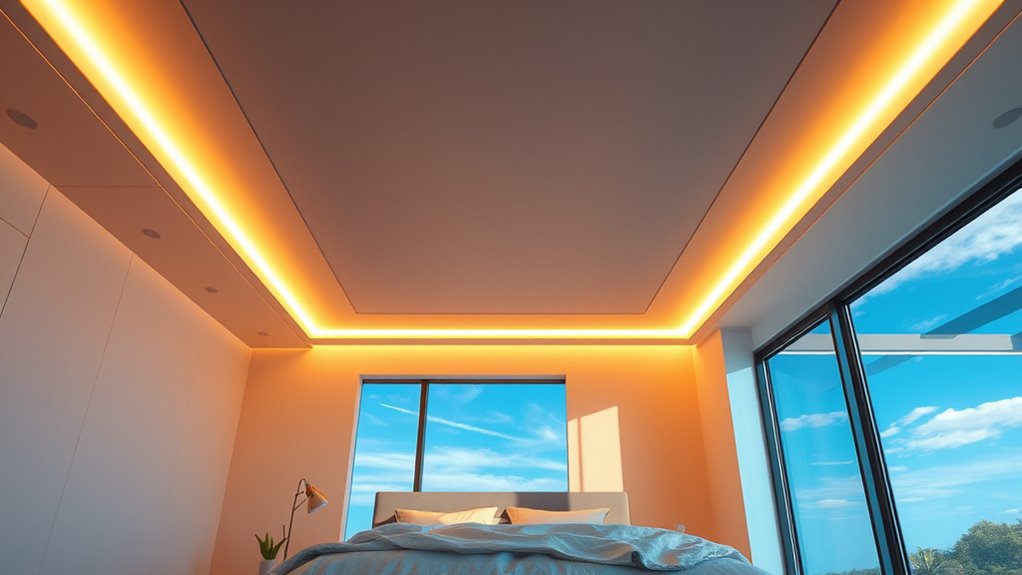
Circadian lighting is designed to replicate the natural changes in sunlight throughout the day, helping your internal clock stay synchronized with your environment. It adjusts the color temperature and light spectrum to match outdoor conditions, starting with cooler, bluish hues in the morning that mimic sunrise. As the day progresses, the lighting shifts to warmer, yellowish tones, similar to late afternoon sunlight. This dynamic change in color temperature and spectrum signals your body to wake up, stay alert, and wind down naturally. By mimicking the sun’s natural progression, circadian lighting helps you feel more energized during the day and prepares your body for restful sleep at night. It’s a simple way to bring natural sunlight patterns indoors, supporting your overall circadian rhythm. Understanding circadian rhythms can enhance the effectiveness of lighting adjustments for better health.
Benefits of Using Circadian Lighting for Better Sleep
Have you ever noticed how exposure to natural light helps you feel more rested? Using circadian lighting at home can boost your sleep quality by aligning indoor light with your body’s natural rhythms. When your lighting mimics the sun’s cycle, it signals your brain to produce melatonin at the right times, making it easier to fall asleep and wake up refreshed. Better sleep doesn’t just improve rest; it also enhances your mood, helping you feel more energized and positive throughout the day. Circadian lighting creates an environment that supports your body’s internal clock, reducing sleep disturbances and promoting overall well-being. By adjusting your lighting to match natural patterns, you can enjoy deeper, more restorative sleep and experience mood enhancement naturally. Incorporating circadian lighting technology can also help mitigate the effects of artificial light exposure on your circadian rhythm, further supporting healthy sleep patterns.
Practical Tips for Integrating Circadian Lighting in Your Home
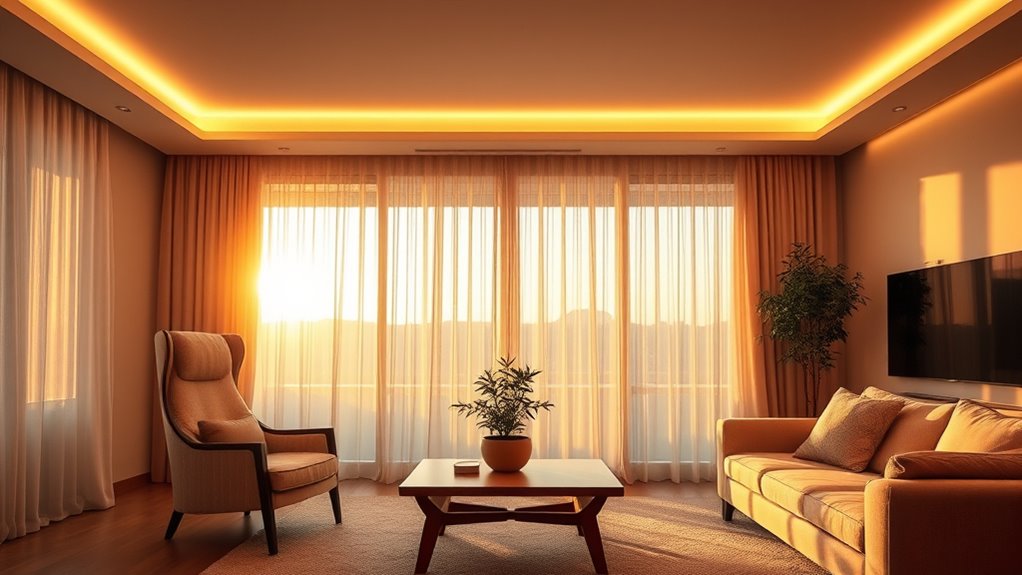
Implementing circadian lighting in your home can considerably improve your sleep and overall well-being. Start by using lighting automation systems that adjust brightness and color temperature throughout the day, mimicking natural light patterns. This helps regulate your internal clock effortlessly. To maximize benefits, install dimmable LEDs that support circadian rhythms and reduce energy consumption. Position lights strategically in common areas like the living room and bedroom to create ideal lighting zones. Keep lighting consistent with the time of day, avoiding bright blue lights close to bedtime. Prioritize energy efficiency by choosing smart lighting options that adapt automatically, saving electricity and supporting sustainability. Incorporating sound design techniques such as ambient sounds or white noise can further enhance your sleep environment and promote relaxation. With these practical tips, you’ll create a healthier, more comfortable environment that naturally promotes better sleep.
Choosing the Right Circadian Lighting System

Choosing the right circadian lighting system involves evaluating your home’s needs and your daily routines. Consider how different areas require varying color temperatures; brighter, cooler light in workspaces can boost alertness, while warmer tones in bedrooms promote relaxation. Light intensity is equally important—select a system that offers adjustable brightness levels to match your activity and time of day. Look for options that allow seamless control over both color temperature and light intensity, ensuring your lighting adapts to your circadian rhythm. Compatibility with smart home devices can enhance convenience, letting you automate lighting changes. By appraising these factors, you’ll choose a system that supports your sleep cycle, improves overall well-being, and creates a comfortable, healthful environment. Incorporating lighting customization features can further optimize your environment for better sleep quality and daytime alertness.
Frequently Asked Questions
How Does Circadian Lighting Affect Mood and Mental Health?
You might notice that your mood and mental health improve when you’re exposed to proper lighting. Light influences mood regulation by boosting serotonin levels, helping you feel happier and more balanced. It also enhances mental clarity, so you can focus better and think more clearly. When your environment mimics natural light patterns, you’re more likely to experience positive emotions and maintain good mental health throughout the day.
Can Circadian Lighting Help With Jet Lag or Shift Work?
Imagine a lighthouse guiding your internal clock through stormy seas; that’s what circadian lighting can do for you. It aids in travel adaptation by helping your body adjust to new time zones more quickly, reducing jet lag. For shift workers, it enhances work performance by aligning your alertness cycles with your schedule. You can feel more in sync and energized, turning chaos into calm with the right lighting at the right time.
Are There Any Health Risks Associated With Circadian Lighting?
You might wonder if circadian lighting causes health risks. While it can improve your sleep, improper use may lead to eye strain or hormonal disruption. If lighting is too bright or poorly timed, it could strain your eyes or interfere with hormone production, affecting your overall health. To minimize risks, use circadian lighting as recommended and consult a professional if you experience discomfort.
How Long Does It Take to See Improvements in Sleep Quality?
Like a dawn unfolding gradually, your body needs time to adjust to new lighting. Typically, you’ll notice improvements in sleep quality within a week or two, but this varies with your light adaptation and individual response. Consistent exposure to properly timed light signals helps synchronize your internal clock, speeding up the process. Patience is key—your sleep patterns will realign as your body responds to the subtle shifts in light cues.
Is Circadian Lighting Suitable for Children and Elderly Individuals?
You might wonder if circadian lighting suits children and elderly individuals. It’s generally safe and can help improve sleep when used properly, but you should consider child safety by ensuring lights aren’t too bright or harsh. For the elderly, adaptation is usually easy, but you may want to adjust settings gradually to prevent discomfort. Always consult a healthcare professional to tailor lighting needs safely for both groups.
Conclusion
By embracing circadian lighting, you’re turning your home into a lighthouse guiding your sleep back to its natural rhythm. Just like the sun rises and sets to keep life in balance, your lighting choices can restore harmony to your sleep cycle. When you make this simple switch, you’re not just lighting your space—you’re illuminating a path to better rest and overall well-being. Let circadian lighting be the compass that steers you toward restful nights and energized days.