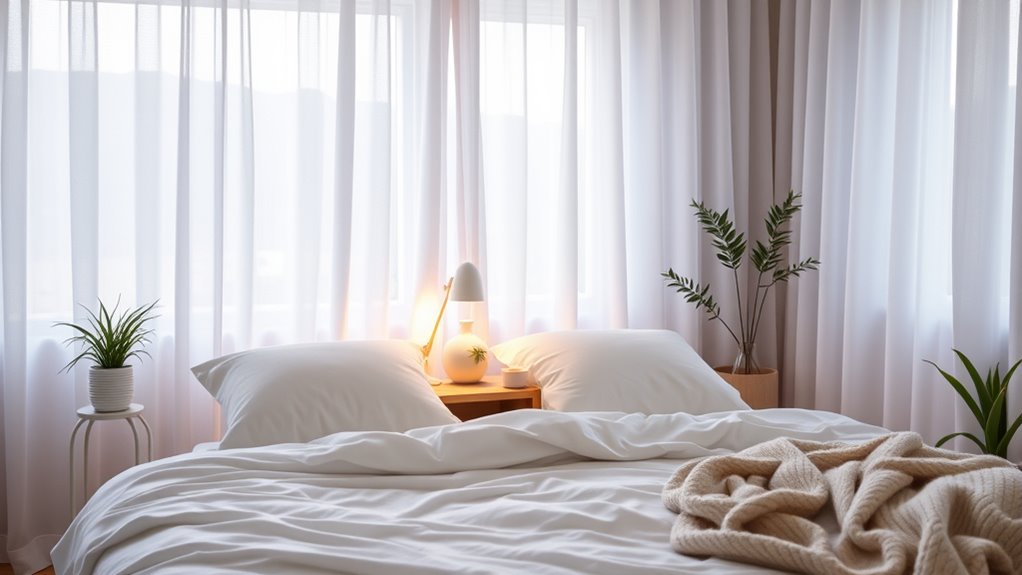

To create a calming bedroom for better sleep, choose soft, muted colors like gentle blues or calming greens, and incorporate relaxing scents such as lavender or chamomile through diffusers or candles. Keep your space tidy and organized, using storage solutions to minimize clutter. Use warm, dim lighting and comfortable bedding to promote coziness. Establish a consistent bedtime routine. Keep exploring ways to refine your environment for even more restful nights.
Key Takeaways
- Use soothing, muted paint colors like soft blues, greens, or neutrals to promote relaxation and reduce stress.
- Incorporate calming scents such as lavender or chamomile through diffusers or candles to create a tranquil atmosphere.
- Keep the bedroom clutter-free and organized with ample storage to foster a sense of calm and safety.
- Utilize soft, warm lighting and comfortable bedding to enhance coziness and support restful sleep.
- Establish a consistent bedtime routine and optimize the environment based on data-driven insights for better sleep quality.
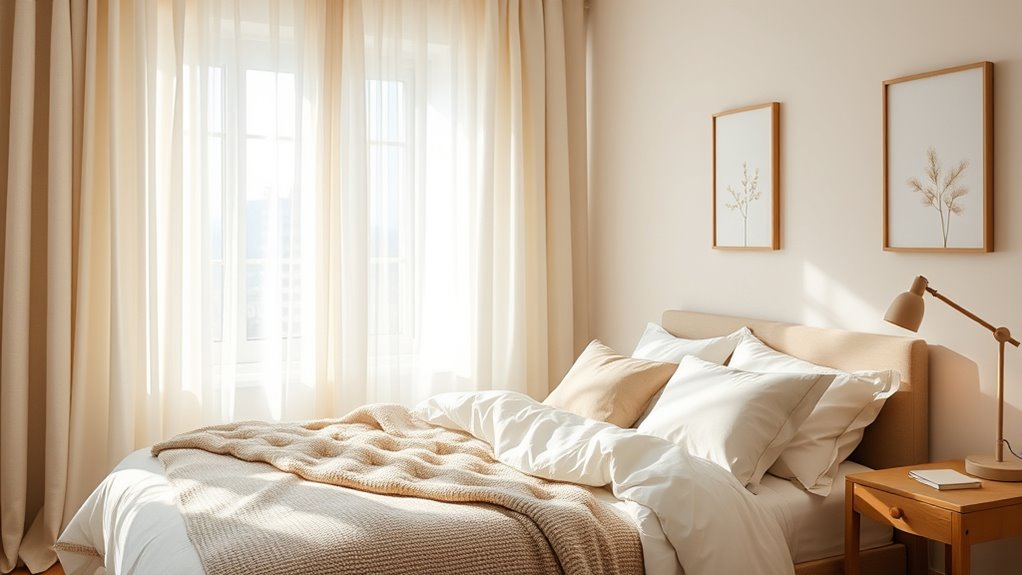
Creating a calming bedroom is essential for achieving restful sleep. When your space feels peaceful and inviting, you’re more likely to unwind and drift off easily each night. One of the simplest ways to set the tone is by choosing soothing paint colors. Opt for soft, muted shades like gentle blues, tranquil greens, or warm neutrals. These colors help lower your stress levels and create a serene environment. Bright or bold hues might energize you, making it harder to relax, so keep your walls subtle and calming. The goal is to craft a space that signals your mind it’s time to unwind, not to stimulate it.
Choose soft, muted paint colors to create a peaceful, relaxing bedroom environment that signals your mind to unwind.
Along with soothing paint colors, incorporating calming scents into your bedroom can considerably enhance its relaxing atmosphere. Scents like lavender, chamomile, or sandalwood have been proven to reduce anxiety and promote sleep. You can introduce these fragrances through essential oils, diffusers, or scented candles. Just be sure to keep the scents subtle; overpowering fragrances can have the opposite effect and disrupt your sleep. The key is consistency—using calming scents nightly helps train your brain to associate those aromas with relaxation and rest. When combined with the right paint colors, these scents create a multisensory experience that signals your body it’s time to settle down.
In addition to color and scent, keep your bedroom clutter-free. A tidy space reduces visual stress and makes it easier to relax. Invest in storage solutions that hide away unnecessary items, so your room remains peaceful and organized. Dim lighting also plays an essential role. Use soft, warm lamps or dimmable lights to create a cozy ambiance that encourages sleep. Avoid bright overhead lights before bed, as they can interfere with your circadian rhythm. Complement these elements with comfortable bedding—choose soft sheets and a supportive mattress—to further enhance your sense of comfort and safety.
Finally, establish a calming bedtime routine that reinforces your sleep environment. This might include reading a book, practicing gentle stretches, or listening to soothing music. Consistency is key: going to bed and waking up at the same time every day helps regulate your internal clock. When your bedroom is thoughtfully designed with soothing paint colors, calming scents, and peaceful organization, it becomes a sanctuary where your body and mind can truly relax. Additionally, focusing on data-driven strategies can help optimize your sleep environment for better results. Over time, these small changes can make a profound difference in your sleep quality, leaving you refreshed and ready to face each day.
Frequently Asked Questions
How Can I Reduce Noise in My Bedroom?
You can reduce noise in your bedroom by using soundproofing techniques like adding thick rugs, weatherstripping doors, and installing acoustic panels. Consider blackout window treatments to block outside sounds and light, enhancing tranquility. Using heavy curtains or double-glazed windows also helps. Additionally, placing furniture strategically and sealing gaps around windows and doors minimizes noise infiltration, creating a peaceful environment that promotes better sleep.
What Are the Best Colors for a Calming Bedroom?
They say, “Color is the keyboard, the eyes are the harmonies.” For a calming sleep environment, opt for soft, muted tones like blues, greens, or gentle neutrals. These colors promote relaxation through color psychology, helping you unwind and prepare for restful sleep. Avoid bright or bold shades, as they can be stimulating. By choosing soothing hues, you create a tranquil bedroom that encourages better sleep naturally.
How Does Room Temperature Affect Sleep Quality?
You’ll find that room temperature crucially impacts your sleep quality by aiding sleep cycle regulation. Keeping your bedroom between 60-67°F helps you fall asleep faster and stay asleep longer. Use temperature control devices like fans, air conditioners, or heaters to maintain this ideal range. When your room is too hot or cold, your sleep cycle gets disrupted, making it harder to get restorative rest.
Are There Specific Scents That Promote Relaxation?
A scent is worth a thousand words, and essential oils can truly set the mood for relaxation. Lavender, chamomile, and ylang-ylang are popular choices to promote calmness. Use aromatherapy diffusers to disperse these scents gently in your bedroom. These aromas help reduce stress, ease your mind, and improve sleep quality. So, incorporate calming essential oils into your nightly routine to create a tranquil environment you’ll look forward to every night.
What Lighting Options Create a Peaceful Sleep Environment?
You should opt for dimmable fixtures and warm LED lighting to create a peaceful sleep environment. Dimmable fixtures let you adjust the light level to your preference, helping you unwind. Warm LED lighting produces a soft, cozy glow that promotes relaxation and signals your body it’s time to sleep. Avoid harsh or bright lights, and aim for gentle, indirect illumination to foster a calm and restful atmosphere.
Conclusion
Now that you know how to create a calming bedroom, it’s time to transform your space into a peaceful retreat. Imagine falling asleep easily, waking up refreshed each morning. Isn’t it worth making small changes for better sleep and overall well-being? By simplifying your surroundings and adding soothing elements, you’ll make your bedroom a true sanctuary. Sweet dreams await—so why not start today and enjoy the restful nights you deserve?