If you wake up tired often, your bedroom setup might be to blame. Common mistakes include using an uncomfortable or unsupportive mattress, poor lighting that disrupts your circadian rhythm, noisy environments, or clutter that prevents relaxation. Inadequate ventilation and unsuitable temperatures can also wake you up and reduce sleep quality. Darkness, proper bedding, and a calm, organized space help improve rest. Keep exploring to discover how to fix these issues and wake up refreshed.
Key Takeaways
- Poor bedroom lighting, such as harsh or inadequate illumination, disrupts melatonin production and sleep cycles.
- Using an uncomfortable or unsupportive mattress and pillows causes poor sleep posture and fatigue.
- Excessive noise or lack of soundproofing prevents deep sleep stages and leads to tired mornings.
- Clutter and disorganization create visual and mental distractions, hindering relaxation and sleep quality.
- Inappropriate room temperature and poor ventilation reduce comfort, leading to restless, unrefreshing sleep.
How Your Mattress and Bedding Affect Sleep Quality

Your mattress and bedding play a crucial role in the quality of your sleep. The mattress materials you choose affect comfort, support, and durability, which directly influence how well you rest. For example, memory foam offers contouring support, while innerspring provides bounce. Proper bedding hygiene is equally important; regular washing of sheets and pillowcases removes dust, sweat, and allergens that can disrupt sleep. Using clean, breathable bedding helps regulate temperature and prevents skin irritations. Additionally, bedding materials and their breathability can impact sleep comfort and temperature regulation. If your mattress or bedding is old, stained, or unsanitary, it can cause discomfort and increase the likelihood of waking up tired. Maintaining bedding hygiene by regularly cleaning your bedding enhances sleep quality and reduces exposure to allergens. The sleep environment also influences overall sleep experiences, so ensuring it is optimal is essential. Ensuring proper bedroom setup — including things like room temperature, lighting, and noise levels — can significantly improve your sleep quality. Prioritize replacing worn mattresses and maintaining good bedding hygiene to create a sleep environment that promotes deep, restful sleep.
Why Bedroom Temperature and Ventilation Matter for Rest

Maintaining the right bedroom temperature and ensuring proper ventilation are essential for achieving restful sleep. Climate control helps keep your room cool, ideally between 60-67°F (15-19°C), which prevents overheating and sweating that can interrupt sleep. Ventilation improves air quality by reducing indoor pollutants and excess humidity, giving you fresh air to breathe throughout the night. Proper filtration systems and adjusting your thermostat and opening windows or using air purifiers can considerably improve your sleep environment. Adequate air circulation also helps prevent the buildup of indoor allergens and mold that can disrupt sleep. When your room stays at an ideal temperature with good airflow, your body can relax fully, making it easier to fall asleep and stay asleep longer. Good air exchange is vital for maintaining optimal indoor air quality, especially in tightly sealed rooms. Ensuring consistent temperature regulation creates a stable environment that supports your body’s natural sleep cycles. Additionally, maintaining proper humidity levels can prevent dryness or excess moisture, contributing to more comfortable sleep conditions. When your sleep environment is properly ventilated and climate-controlled, your body can relax fully, making it easier to fall asleep and stay asleep longer. Proper climate control is key to waking up refreshed.
How Proper Lighting Supports Better Sleep and Wakefulness

Proper lighting in your bedroom plays a significant role in regulating your sleep and wakefulness cycles. Using smart lighting allows you to adjust brightness and color temperature throughout the day, promoting natural rhythms. In the evening, dim ambient illumination helps signal your body it’s time to wind down, encouraging melatonin production. Bright, cool light in the morning can boost alertness and support wakefulness. Avoid harsh overhead lights before bed, as they can interfere with your sleep hormone balance. Instead, opt for soft, warm lighting or smart bulbs that gradually brighten to wake you gently. Proper lighting setup creates a calming environment that aligns with your body’s internal clock, making it easier to fall asleep and wake refreshed. Incorporating circadian rhythm principles can help tailor your lighting choices for optimal sleep and alertness. Additionally, adaptive lighting systems can further optimize your environment by automatically adjusting throughout the day based on your routines. Utilizing biological lighting cues can enhance the effectiveness of your lighting setup to support your natural sleep-wake cycle. Being mindful of lighting quality ensures your bedroom lighting supports both relaxation and alertness at appropriate times.
How Clutter and Disorganization Disrupt Your Sleep Environment

When your bedroom is cluttered, your eyes are constantly drawn to chaos, making it hard to relax. Disorganization can also make it difficult to find what you need, keeping your mind restless. Clearing away clutter and keeping things orderly helps create a calm environment that promotes restful sleep. Additionally, a well-organized space supports digital revolution elements like smart devices working seamlessly together, enhancing your overall sleep quality. Incorporating easy homemade flautas into your dinner routine can also reduce stress before bedtime by simplifying meal prep. Ensuring your bedroom setup minimizes distractions can further improve sleep by promoting a peaceful atmosphere. Paying attention to your sleep environment setup can also help eliminate potential sources of disturbance and create a more restful space.
Clutter Creates Visual Noise
Clutter and disorganization in your bedroom can create overwhelming visual noise, making it harder to relax and fall asleep. When your space is cluttered, your eyes constantly catch chaotic scenes, leading to sensory overload. This visual clutter distracts your mind, preventing the calm needed for restful sleep. Imagine your bedroom like this:
| Items in Disarray | Calm and Organized Space |
|---|---|
| Piles of laundry | Neatly folded clothes |
| Discarded books and papers | Clear surfaces |
| Unmade bed with clutter | Smooth, tidy bedding |
| Visible cords and accessories | Hidden or minimized |
Reducing clutter simplifies your environment, easing visual noise and helping your mind unwind, so you can finally get the restorative sleep you need. Paying attention to your shop layout and storage solutions can make a big difference in maintaining a clutter-free space. Incorporating tidy organization strategies can further enhance your sleep environment by reducing visual distractions. Additionally, choosing appropriate lighting can help create a calming ambiance that promotes relaxation and better sleep quality. Implementing these organization techniques can significantly improve your overall sleep experience.
Disorganization Hinders Relaxation
Disorganization in your bedroom can prevent you from fully relaxing, making it difficult to unwind at the end of the day. When your space is cluttered, your mind stays alert, and your bedroom decor loses its calming effect. Disorganization disrupts the tranquil atmosphere you need for restful sleep. To fix this, invest in effective storage solutions that keep essentials out of sight but within reach. Use under-bed storage, shelves, or baskets to organize clothes, books, and personal items. A tidy room promotes a sense of calm, helping you shift from wakefulness to sleep more smoothly. Incorporating elements like natural pools or outdoor seating areas can also enhance the overall serenity of your space. Remember, a well-organized bedroom isn’t just visually appealing—it’s essential for creating a soothing environment that encourages deep, restorative rest. Additionally, optimizing your air quality and comfort can further support restful sleep and overall well-being. Incorporating consistent routines around bedtime can reinforce relaxation and improve sleep quality. Choosing appropriate bedroom lighting can also influence your ability to relax and transition into sleep more effectively.
How Noise Levels in Your Bedroom Disturb Sleep and Cause Tiredness

Noise levels in your bedroom can profoundly disrupt your sleep, leaving you feeling exhausted even after a full night’s rest. Sudden sounds or persistent noise can wake you or prevent deep sleep stages, causing tiredness the next day. To combat this, consider soundproofing techniques like adding rugs, curtains, or wall panels that absorb sound. Noise masking devices, such as white noise machines or fans, can also help drown out disruptive sounds. These tools create a consistent background noise that makes sudden noises less noticeable, promoting uninterrupted sleep. Reducing noise disturbances is essential for restful sleep and waking up refreshed. By addressing noise issues with effective soundproofing and noise masking, you can considerably improve your sleep quality and reduce morning tiredness.
The Best Sleep-Friendly Lighting Options for Your Bedroom

Choosing the right lighting for your bedroom can considerably improve your sleep quality. To create a sleep-friendly environment, consider soft, warm lighting options that promote relaxation. Avoid harsh, bright lights that can interfere with melatonin production and disrupt your circadian rhythm. Opt for dimmable lamps or adjustable bedroom illumination to control brightness levels as you wind down. Using warm-colored bulbs, like amber or soft white, helps signal to your brain that it’s time to relax and prepare for sleep. Avoid blue light from screens or overhead lights before bed, as it can delay sleep onset. By selecting suitable lighting options, you create a calm atmosphere that encourages restful sleep and reduces wakefulness during the night.
Why Darkness in Your Room Is Key to Deep, Restorative Sleep
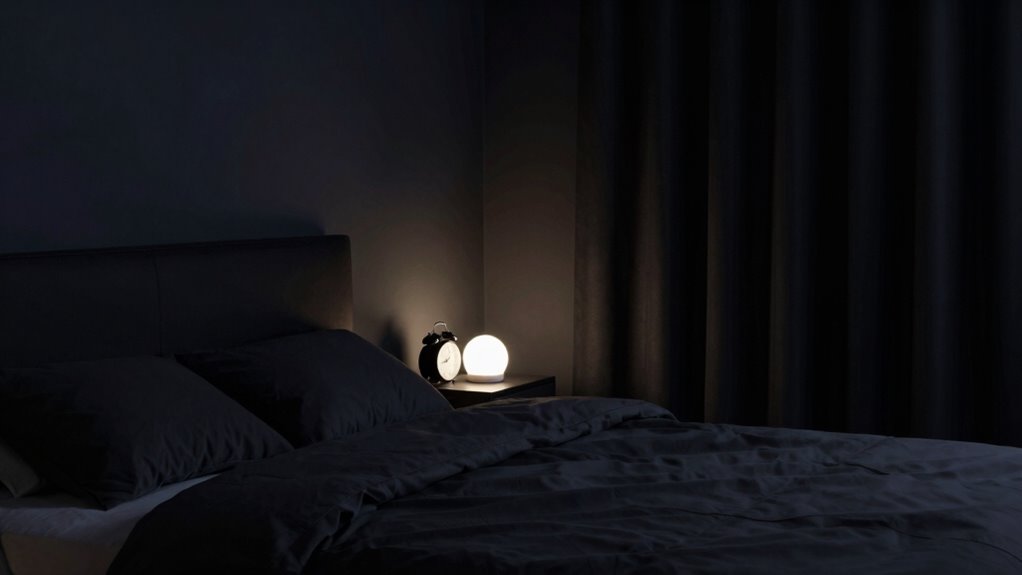
Creating a dark environment in your bedroom signals to your body that it’s time to wind down, making it easier to slip into deep, restorative sleep. Darkness helps regulate your circadian rhythm, improving sleep quality. To maximize darkness, consider window positioning—avoid windows directly facing your bed, or install blackout curtains. Keep your room free of small light sources, like chargers or digital clocks. The right mattress firmness also plays a role; a supportive, comfortable mattress reduces tossing and turning, indirectly supporting better sleep.
- Use blackout curtains or shades for complete darkness
- Avoid placing your bed near windows facing streetlights or outdoor lights
- Limit or turn off electronic devices before bed
- Opt for a mattress that offers proper support and comfort
- Cover any small light sources with tape or covers
How Poor Sleep Posture and Bedding Ergonomics Lead to Tired Mornings

Poor sleep posture and bedding ergonomics can leave you feeling exhausted even after a full night’s rest. When your sleep posture isn’t supportive, your muscles strain, causing discomfort and waking you up feeling tired. Poor bedding ergonomics, like an unsupportive mattress or pillow, can misalign your spine and neck, leading to stiffness and fatigue. To improve, choose a mattress that supports your body’s natural curves and pillows that keep your head aligned. Avoid sleeping positions that twist or strain your neck and back. Here’s a quick guide:
| Sleep Posture | Bedding Ergonomics | Effects on Wakefulness |
|---|---|---|
| Side sleeping | Firm mattress with proper support | Reduces muscle strain |
| Back sleeping | Ergonomic pillow | Ensures spinal alignment |
| Stomach sleeping | Soft, supportive bedding | Prevents neck pain |
| Curled-up positions | Adjustable bed setup | Promotes comfort |
| Poor alignment | Customizable bedding | Reduces fatigue |
Building a Consistent Bedtime Routine to Improve Sleep Quality

Establishing a consistent sleep schedule helps your body recognize when it’s time to rest, making it easier to fall asleep and wake up refreshed. Incorporating pre-bedtime rituals signals to your brain that bedtime is approaching, easing the shift to sleep. By sticking to these routines, you can greatly improve your overall sleep quality.
Consistent Sleep Schedule
Maintaining a consistent sleep schedule is essential for improving your sleep quality, as your body thrives on routine. Going to bed and waking up at the same times helps regulate your internal clock, making it easier to fall asleep and wake refreshed. To support this, consider using sleep tracking to monitor your patterns and identify any disruptions. Proper alarm placement is also key—place your alarm across the room to prevent snoozing and ensure you get up on time. Consistency reduces stress on your body and improves overall sleep quality. Keep these tips in mind:
- Stick to your schedule even on weekends
- Adjust gradually if needed
- Avoid caffeine close to bedtime
- Limit screen time before sleep
- Create a calming morning routine
Pre-Bedtime Rituals
Creating a calming pre-bedtime routine can considerably enhance your sleep quality by signaling to your body that it’s time to wind down. Establishing consistent rituals helps relax your mind and body, making it easier to fall asleep. Consider activities like dream journaling to process your day and clear your mind. Aromatherapy benefits, such as lavender or chamomile, can promote relaxation and reduce stress. To evoke emotion, reflect on this:
| Feelings Before Routine | Feelings After Routine |
|---|---|
| Restless, anxious | Calm, peaceful |
| Overwhelmed by thoughts | Focused, relaxed |
| Frustrated with sleep issues | Rested, rejuvenated |
Creating these mindful habits sets the stage for restorative sleep and wakes you up refreshed.
Practical Tips to Fix Common Bedroom Mistakes and Wake Up Refreshed

If your bedroom isn’t optimized for restful sleep, fixing common mistakes can make a big difference in how refreshed you feel in the morning. Start by improving your lighting design—use blackout curtains and dimmable lights to create a dark, calming environment. Focus on sleep hygiene by removing electronics and minimizing noise. Keep your room at a comfortable temperature and invest in a supportive mattress and pillows. Declutter your space to promote relaxation and reduce stress. Remember, consistent sleep routines and a cool, dark, quiet room are key to waking up energized.
Optimize your bedroom with blackout curtains, supportive bedding, and a clutter-free, cool, dark environment for better sleep.
- Use blackout curtains for complete darkness
- Install dimmable or warm lighting
- Keep electronics out of the bedroom
- Maintain a cool temperature (around 65°F)
- Declutter for a calming environment
Frequently Asked Questions
Can Bedroom Scents Influence Sleep Quality and Energy Levels?
Yes, bedroom scents can influence your sleep quality and energy levels. Essential oils like lavender promote relaxation, helping you sleep better, while citrus scents energize you upon waking. You should try scent layering—combining calming and invigorating aromas—to enhance your overall sleep experience. Using a diffuser or pillow sprays with these scents creates a soothing environment, making it easier to drift off and wake feeling refreshed.
How Does Electronic Device Placement Affect Sleep Disruption?
Placing electronic devices close to your bed exposes you to device glare and electromagnetic interference, which can seriously disrupt your sleep. The bright screens and flashing lights cause your brain to stay alert, making it harder to fall asleep. Electromagnetic interference can disturb your sleep cycles, leading to restless nights. Keep devices away from your bed, turn screens off an hour before sleep, and use airplane mode to minimize these disruptions and wake up refreshed.
Are Certain Mattress Materials Better for Preventing Tired Mornings?
Imagine your mattress as a gentle guardian, cradling you through the night. Memory foam molds to your body, offering personalized support and reducing pressure points, helping you wake refreshed. Spring mattresses provide bounce and airflow, but may cause disruptions if they’re too firm or noisy. For better mornings, opt for memory foam if you want comfort and fewer disturbances, ensuring you rise energized and ready to face the day.
What Role Does Humidity Play in Achieving Restful Sleep?
Humidity plays a vital role in your sleep quality by affecting humidity regulation and moisture control. When the air is too humid, you might wake up feeling sweaty or uncomfortable, disrupting your rest. Conversely, too dry air causes dry skin and throat irritation. Maintaining balanced humidity levels helps you stay comfortable, prevents moisture buildup, and promotes deeper, more restful sleep. Use a humidifier or dehumidifier to optimize your bedroom’s humidity for better mornings.
How Can Bedding Choices Reduce Morning Stiffness and Fatigue?
Your bedding choices are like a trusted dance partner, guiding you into a smooth morning. Opt for pillows with proper ergonomics that support your sleep position, reducing strain on your neck and shoulders. Use breathable sheets and a supportive mattress to keep your spine aligned. These choices help prevent morning stiffness and fatigue, so you wake feeling refreshed, ready to take on the day instead of dragging through it.
Conclusion
Think of your bedroom like a garden—you need to tend to it regularly to see it flourish. Fixing mattress issues, controlling temperature, and decluttering your space are like watering and weeding. When you create the perfect environment, you’ll wake up feeling refreshed, ready to face the day. Just as a well-tended garden blooms, a sleep-friendly bedroom nurtures your rest and energy—making tired mornings a thing of the past.