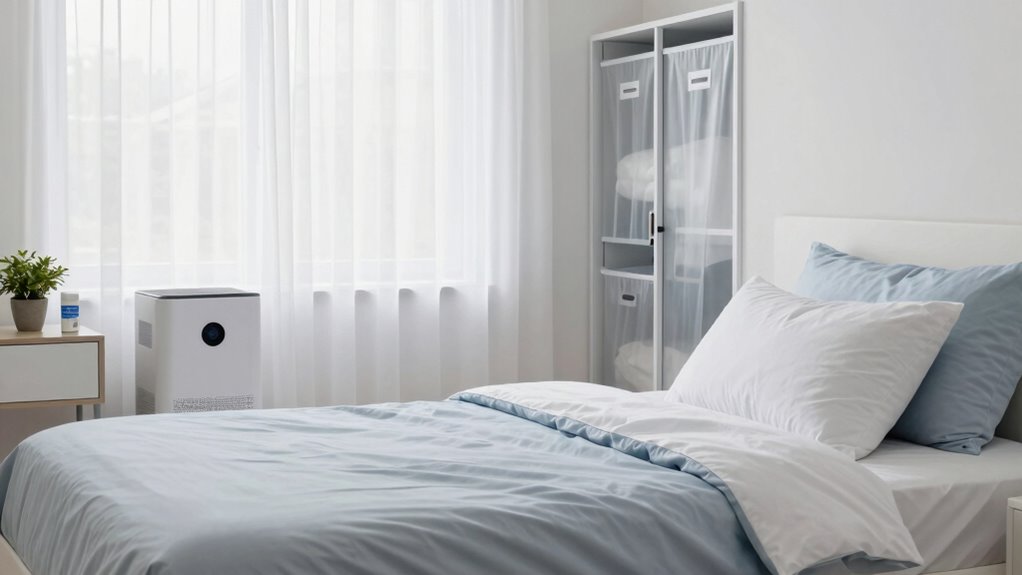

To allergy-proof your bedroom, focus on reducing common triggers like dust mites, pet dander, mold, and pollen. Regularly clean with a HEPA vacuum, wash bedding in hot water, and keep humidity below 50%. Use allergen-proof mattress covers and air purifiers for better air quality. Control clutter and moisture to prevent mold growth. Small, consistent changes make a big difference—exploring these strategies further can help you create a truly healthier sleep environment.
Key Takeaways
- Use HEPA air purifiers and maintain proper ventilation to reduce airborne allergens.
- Wash bedding and curtains weekly in hot water to eliminate dust mites and pet dander.
- Control humidity levels between 30-50% with dehumidifiers to prevent mold growth.
- Choose hypoallergenic bedding and install allergen-proof mattress and pillow covers.
- Regularly clean and declutter to minimize dust accumulation and improve indoor air quality.
Why Allergens Make Your Bedroom Unhealthy: And How to Fix It

Allergens such as dust mites, pet dander, mold spores, and pollen can considerably compromise your bedroom’s air quality, making it difficult to breathe and increasing allergy symptoms. These airborne allergens originate from common allergen sources like bedding, carpets, and indoor plants, which trap particles and release them into the air. When you breathe in contaminated air, your immune system reacts, leading to symptoms like sneezing, congestion, and itchy eyes. To improve air quality, you need to minimize these allergen sources by regularly washing bedding, using allergen-proof covers, and keeping humidity levels low. Proper ventilation and air purifiers can also help filter out airborne allergens, creating a healthier environment and reducing allergy triggers in your bedroom. Understanding the role of exposure reduction can further enhance your allergy-proofing efforts, especially when combined with air filtration techniques that target tiny airborne particles. Incorporating preventative measures such as routine cleaning and maintaining a dry environment can significantly decrease allergen buildup and improve overall sleep quality. Additionally, choosing natural cleaning products can help avoid introducing chemical irritants that may worsen allergy symptoms. Regularly inspecting your space for signs of mold and addressing moisture issues promptly also plays a crucial role in mold prevention.
What Are the Most Common Allergens in Your Bedroom?
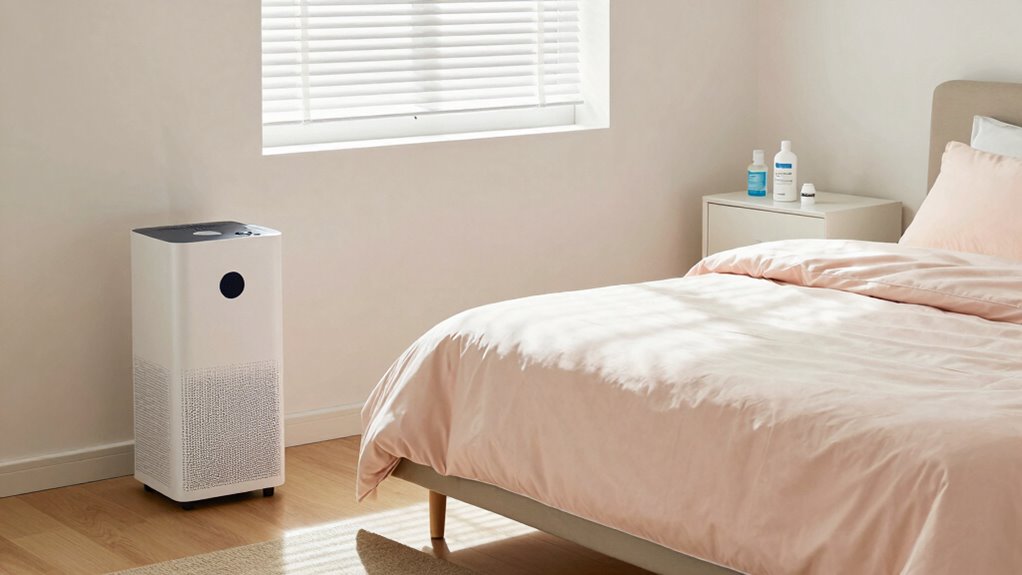
Many common substances in your bedroom can trigger allergy symptoms, making it essential to identify and manage them. The top allergens include dust mites, pet dander, mold spores, pollen, and indoor allergens from fabrics. To combat these, consider allergen-friendly furniture and regularly maintain your air purifier to guarantee optimal performance. Proper air purifier maintenance removes airborne particles, reducing allergy triggers. Use washable bedding and hypoallergenic mattresses to minimize dust mites. Additionally, air purification can significantly improve indoor air quality and lessen allergen levels. Here’s a quick overview:
| Allergen | Common Source |
|---|---|
| Dust Mites | Bedding, upholstery |
| Pet Dander | Cats, dogs |
| Mold Spores | Damp areas, humid environments |
| Pollen | Open windows, seasonal changes |
| Indoor Allergens | Fabrics, carpets, curtains |
Identifying these allergens helps you create a healthier, allergy-proof bedroom environment. Understanding indoor allergens is key to effectively reducing your exposure and improving sleep quality, especially when combined with proper cleaning habits to keep surfaces free of dust and dander. Additionally, regulating indoor humidity can help prevent mold growth and reduce mold spore levels in your bedroom. Implementing air filtration systems aligned with your needs can further enhance allergy mitigation efforts.
How to Control Humidity and Prevent Mold Growth
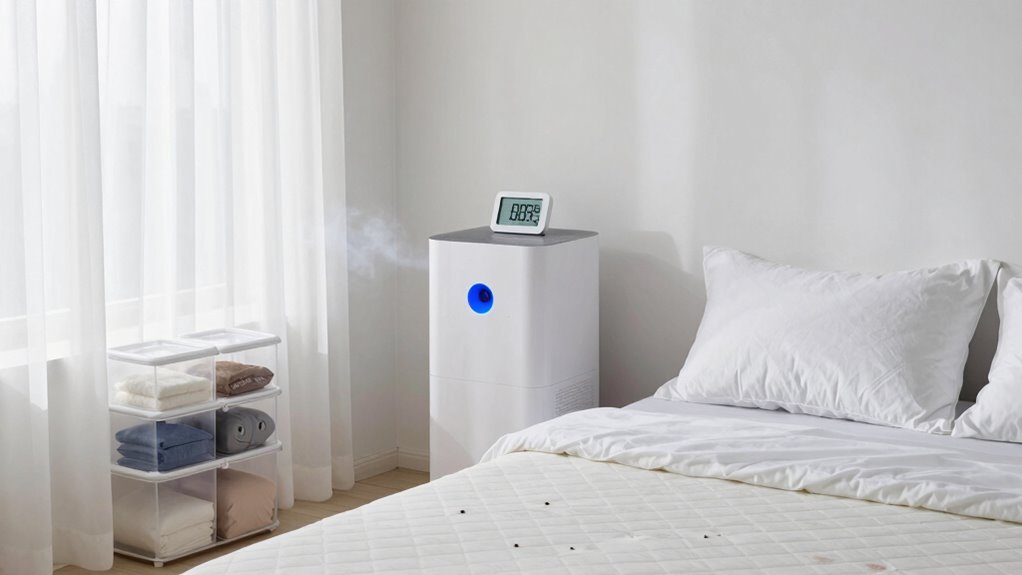
Controlling humidity levels in your bedroom is vital for preventing mold growth and maintaining a healthy environment. Aim to keep humidity between 30-50%, as this range discourages mold spores from thriving. Use a hygrometer to monitor moisture levels regularly. To improve humidity control, consider using a dehumidifier or air conditioner, especially in damp seasons. Proper ventilation is also key—open windows when possible or run exhaust fans to reduce excess moisture. Fix leaks promptly and clean any visible mold spots using mold-resistant solutions. Proper humidity management is essential for creating an inhospitable environment for mold, reducing allergy triggers and promoting better air quality. Incorporating whole-house water filtration systems can also help remove airborne mold spores and contaminants, further supporting a mold-free bedroom environment. Regularly inspecting and maintaining your home’s plumbing can prevent unnoticed leaks that contribute to excess moisture, making leak prevention an important part of mold control. Additionally, choosing mold-resistant building materials during renovations can help prevent mold growth in the long term. Understanding the relationship between humidity and mold can empower you to take proactive steps in maintaining a healthy bedroom environment. Mold prevention hinges on consistent humidity management, making it an essential step in allergy-proofing your bedroom.
How Regular Cleaning Can Reduce Dust, Dander, and Mold

Regular cleaning helps keep dust, pet dander, and mold spores at bay, making your bedroom safer for allergy sufferers. Using a damp cloth and vacuuming with a HEPA filter can effectively remove these irritants from surfaces and carpets. Staying consistent with cleaning routines prevents buildup and reduces allergy triggers over time. Additionally, air filtration systems can further improve indoor air quality by capturing airborne allergens. Understanding the science of air filtration can help you choose the most effective systems for your needs. Proper placement and maintenance of air purifiers, such as ensuring proper airflow, are essential for optimal performance. Implementing knowledge of HVAC systems can also enhance your efforts to maintain a healthier indoor environment. Regularly checking and replacing filters is another important aspect of maintaining effective air filtration, ensuring that your system continues to operate efficiently.
Effective Dust Removal
Cleaning your bedroom frequently is one of the most effective ways to minimize dust, dander, and mold. Regular dusting with a damp cloth traps dust mites and prevents them from becoming airborne. Use allergen barriers like washable mattress and pillow covers to reduce dust buildup in your bedding. Vacuum carpets and upholstery weekly with a HEPA filter vacuum, ensuring you remove hidden dust mites and allergens. Don’t forget to dust ceiling fans, light fixtures, and vents, as these collect dust over time. Washing bedding and curtains regularly in hot water to eliminate allergens is also crucial. Keeping clutter to a minimum prevents dust accumulation. Incorporating smart home automation can help schedule and monitor cleaning routines consistently, further reducing airborne allergens. Additionally, investing in energy-efficient cleaning devices can improve overall air quality and reduce energy consumption. Using air purifiers with HEPA filters can further enhance your bedroom’s air cleanliness. Regular maintenance of air filtration systems ensures they operate effectively and continue to reduce airborne contaminants. Developing a comprehensive cleaning schedule based on the specific needs of your environment can maximize allergen reduction. By maintaining a consistent cleaning routine, you markedly reduce airborne allergens, creating a healthier, allergy-proofed bedroom environment.
Mold Prevention Strategies
Since mold thrives in damp, poorly ventilated areas, maintaining a dry, clean environment is essential for prevention. Use mold-resistant materials like treated drywall or paint to reduce mold growth. Installing moisture barriers in walls and floors prevents excess moisture from seeping in and creating a breeding ground. Regularly clean your bedroom, paying special attention to areas prone to moisture, such as windowsills and behind furniture. Keep humidity levels below 50% with dehumidifiers or proper ventilation. Promptly fix leaks and damp spots to avoid mold development. Using dehumidifiers and ventilation can significantly help in controlling indoor humidity levels. By incorporating moisture barriers and choosing mold-resistant materials, you create an inhospitable environment for mold, dust, and dander, helping you maintain a healthier, allergy-free bedroom.
Choosing Hypoallergenic Bedding and Mattress Covers for Better Sleep
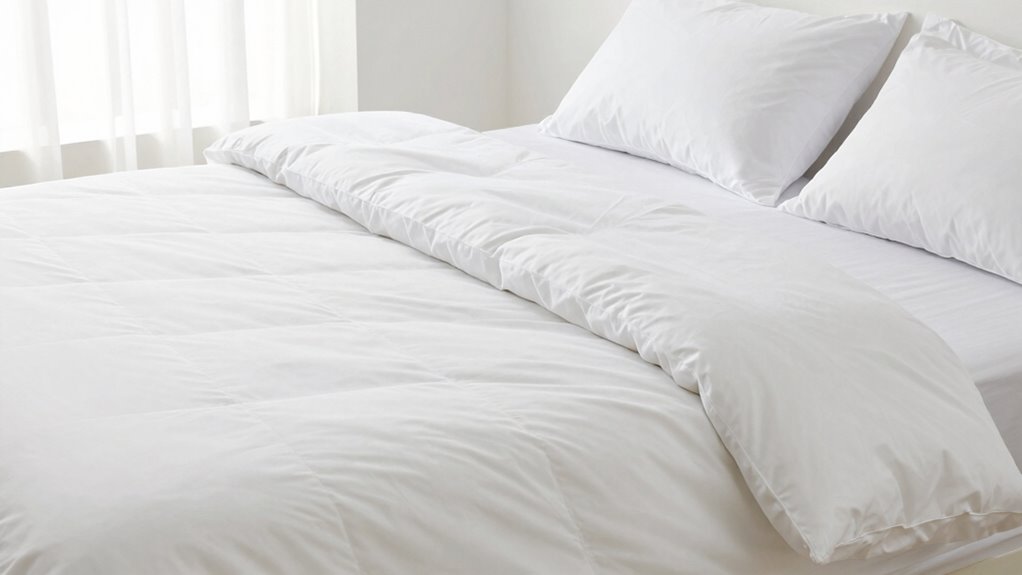
Choosing hypoallergenic bedding and mattress covers is one of the most effective ways to reduce allergens in your bedroom and improve your sleep quality. Opt for bedding made from hypoallergenic materials, which resist dust mites, mold, and bacteria. Look for products crafted from allergy resistant fabrics like tightly woven cotton, microfiber, or specialized synthetic fibers designed to block common allergens. These materials create a barrier that prevents allergens from settling into your bedding and mattress. Regularly washing your sheets, pillowcases, and covers in hot water also helps eliminate dust mites and other irritants. By investing in hypoallergenic bedding and mattress covers, you markedly lower allergen levels, creating a cleaner, healthier sleep environment that promotes restful nights and reduces allergy symptoms.
How to Limit Pet Dander and Keep Pets Out of the Bedroom

To reduce pet dander in your bedroom, start by establishing pet-free zones where they’re not allowed. Use air purifiers regularly to filter airborne allergens, and consider adding bedding barriers on your bed to prevent dander from settling. These steps help create a cleaner, allergy-friendly space for better sleep.
Establish Pet-Free Zones
Creating pet-free zones in your bedroom is an effective way to reduce pet dander and improve allergy symptoms. By establishing clear boundaries, you prevent pet elimination from spreading allergens into your sleep space. Use scent masking strategies, like air-dried herbs or essential oils, to make your room less appealing to pets and discourage them from entering. Consider installing physical barriers such as baby gates or closing doors to enforce these zones consistently.
| Strategy | Benefit |
|---|---|
| Pet elimination | Limits allergen buildup in the bedroom |
| Scent masking | Deters pets from entering or lingering in the room |
| Physical barriers | Reinforces pet-free boundaries |
| Consistent routine | Maintains a clean, allergen-reduced environment |
Use Air Purifiers Regularly
Using air purifiers regularly is one of the most effective ways to reduce pet dander in your bedroom. To keep them working effectively, perform routine air purifier maintenance, like replacing filters as recommended. This ensures ideal filtration and keeps airborne allergens at bay. Additionally, conduct air quality testing periodically to monitor allergen levels and confirm your purification efforts are working. Proper maintenance and testing help you identify if your air purifier is effectively reducing pet dander or if adjustments are needed. Remember, consistent use is key—leave your air purifier running, especially during peak pet activity times. By staying on top of air purifier maintenance and air quality testing, you’ll create a cleaner, allergen-reduced environment that’s more comfortable for allergy sufferers.
Implement Bedding Barriers
Implementing bedding barriers is an effective way to prevent pet dander from accumulating on your bedding and to keep pets out of the bedroom. Start by using high-quality mattress covers that are allergen-proof, creating a barrier between you and dander trapped in the mattress. These bedding barriers are designed to be tightly woven and waterproof, preventing dander from passing through. Make sure to wash your bedding and mattress covers regularly in hot water to eliminate any lingering allergens. Additionally, consider using pillow and duvet covers with similar allergen-proof properties. By creating this physical barrier, you reduce the amount of pet dander that settles on your bedding, helping you breathe easier and minimizing allergy symptoms during sleep.
Using HEPA Air Purifiers to Capture Allergens Effectively
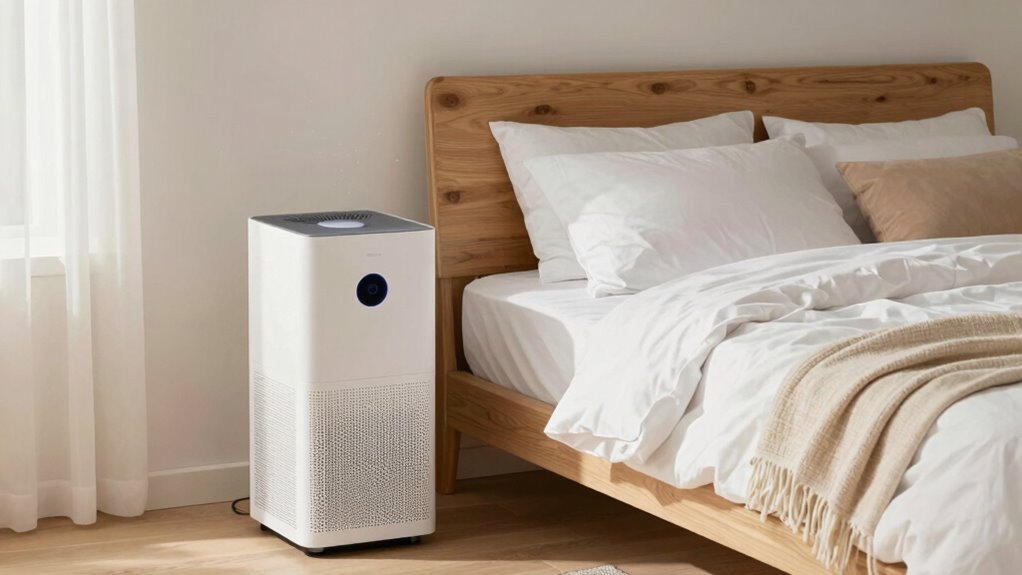
HEPA air purifiers are a highly effective tool for capturing airborne allergens in your bedroom. They use advanced air purifier technology to trap tiny particles like pollen, pet dander, and mold spores, considerably improving allergen filtration efficiency. When selecting a purifier, look for one with a true HEPA filter, which can filter out at least 99.97% of particles as small as 0.3 microns. Place it near your bed or in the center of the room for ideal airflow and allergen removal. Regularly change or clean the filters to maintain performance. By using a HEPA air purifier, you create a cleaner, healthier environment that reduces allergy symptoms and promotes restful sleep. This simple addition can make a noticeable difference in your bedroom’s air quality.
Creating a Routine for Washing Bedding and Maintaining Cleanliness

While a HEPA air purifier considerably reduces airborne allergens, keeping your bedroom allergen-free also depends on a consistent laundry routine and bedding maintenance. Regularly washing your sheets, pillowcases, and blankets in hot water (130°F or higher) kills dust mites and allergens. Establish a schedule—ideally weekly—to prevent buildup. To visualize, here’s a quick overview:
| Task | Frequency |
|---|---|
| Wash bedding | Weekly |
| Dust surfaces | Twice a week |
| Vacuum mattress | Monthly |
| Replace pillows | Every 1-2 years |
This routine minimizes allergens and maintains a clean sleeping environment, helping you breathe easier and reduce allergy symptoms effectively.
Tips for Long-Term Allergy-Proofing and Maintaining Your Bedroom

To effectively maintain an allergy-proof bedroom over the long term, consistency is key. Regularly check your air purifier maintenance to ensure it filters allergens effectively, replacing filters as recommended. Invest in allergen free furniture to reduce dust and pet dander buildup. Keep your space organized, so dust doesn’t settle in clutter. Establish a routine for airing out your room, especially after cleaning or opening windows.
Consistency in air purifier upkeep, clutter control, and regular airing creates a lasting, allergy-free bedroom sanctuary.
- Feel confident knowing your air purifier works efficiently, protecting your health every day
- Enjoy a cleaner, allergen-free sanctuary that promotes restful sleep
- Experience peace of mind with furniture designed to resist dust and pollen buildup
- Stay motivated to uphold your allergy-proofing habits for lasting comfort
Extra Tips for a Truly Allergen-Free, Restful Bedroom

Maintaining an allergen-free bedroom goes beyond regular cleaning and furniture choices; incorporating simple habits can make a noticeable difference in your sleep quality. Consider adding bedroom plants known for their air-purifying properties, like snake plants or peace lilies, to naturally filter airborne allergens. However, choose plants carefully, as some can trigger allergies. Additionally, focus on scent elimination by avoiding strong perfumes or scented products that can irritate your airways. Use unscented cleaning supplies and air out your bedding regularly. Keep windows closed on high pollen days and run an air purifier with a HEPA filter to reduce allergens further. These small adjustments create a more restful environment, helping you breathe easier and enjoy better sleep every night.
Frequently Asked Questions
Can Plants in the Bedroom Worsen Allergy Symptoms?
Yes, indoor plants can worsen allergy symptoms if they are allergy triggers for you. Some plants release pollen or mold spores that irritate your respiratory system, especially in enclosed spaces like your bedroom. If you have allergies, avoid keeping plants known for causing issues, such as certain tropical or flowering varieties. Opt for low-allergen plants or skip them altogether to minimize allergy symptoms and create a healthier sleeping environment.
Are Air Purifiers Safe for Children and Pets?
Air purifier safety for children and pets is generally good, but you should choose models with HEPA filters and certified safe materials. Keep the device out of reach to prevent accidents and avoid those with ozone generators, which can be harmful. When used properly, air purifiers can improve indoor air quality for your children and pets without risking their health. Always read manufacturer guidelines for safe usage and maintenance.
How Often Should I Replace My Hypoallergenic Bedding?
Think of your hypoallergenic bedding as a garden that needs regular tending. You should replace your bedding every 6 to 12 months to maintain ideal hypoallergenic bedding maintenance. This schedule helps prevent dust mites and allergens from taking root. Regular replacement ensures freshness and cleanliness, safeguarding your health. Keep an eye on signs of wear, and stick to this bedding replacement schedule for a healthier, allergy-free sleep environment.
Do Certain Cleaning Products Trigger Allergies?
Yes, certain cleaning products can trigger allergies, especially if you have chemical sensitivities. Many conventional cleaners contain fragrances and harsh chemicals that may worsen allergy symptoms. To minimize this risk, opt for fragrance-free options or natural cleaning solutions like vinegar and baking soda. Always read labels carefully, and consider testing new products in small areas to confirm they don’t cause a reaction. Your allergies will thank you for choosing gentler, fragrance-free options.
Can Natural Remedies Help Reduce Allergy Symptoms in the Bedroom?
Yes, natural remedies can help reduce allergy symptoms in your bedroom. By harnessing the healing benefits of herbal teas, essential oils, and homemade humidifiers, you promote pure, pest-free spaces. These natural remedy benefits include soothing your sinuses and supporting allergy symptom relief. You’ll enjoy a calmer, cleaner environment, feeling more comfortable and confident, as you create a cozy, allergy-friendly sanctuary with simple, sustainable solutions.
Conclusion
By following these simple steps, you can turn your bedroom into a haven free from allergens. Keep up with regular cleaning, control humidity, and choose hypoallergenic essentials, and you’ll breathe easier each night. Remember, a clean house is a happy house—don’t let allergens get the best of you. With a little effort, you’ll be sleeping soundly and waking up refreshed, proving that prevention is worth a pound of cure.