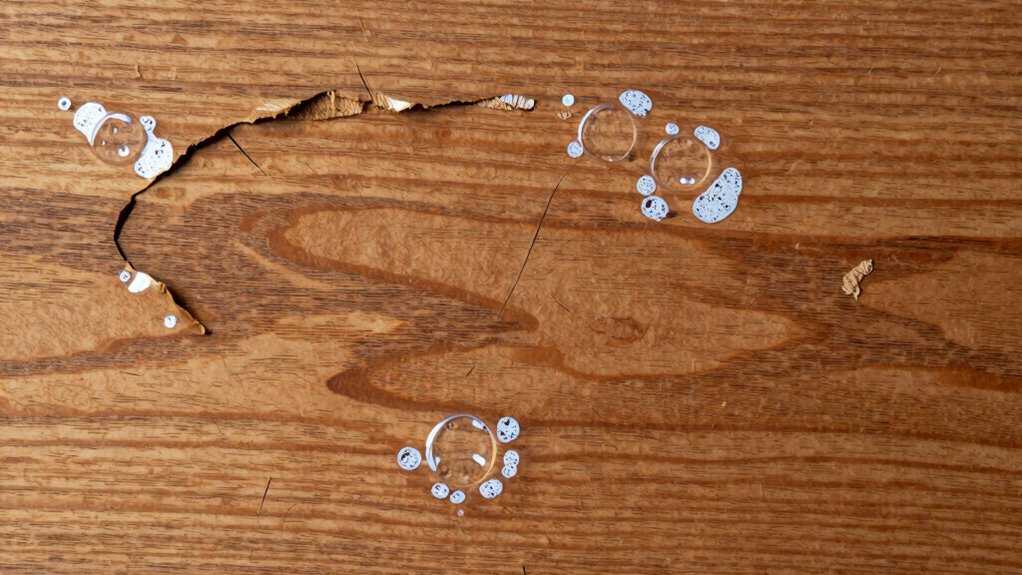

Wood veneer bubbles or lifts mainly happen when moisture gets trapped beneath the surface, causing pressure that creates bubbles or lifts. Fluctuating temperatures make the wood expand and contract, which can weaken the adhesive bonds over time. Poor installation, low-quality adhesives, or damage can also lead to these issues. If you want to know how to prevent and fix these problems effectively, there’s more to uncover below.
Key Takeaways
- Trapped moisture beneath the veneer creates pressure, causing bubbles or lifts over time.
- Temperature fluctuations lead to wood and adhesive expansion and contraction, resulting in lifting.
- Improper installation or low-quality adhesives weaken bonds, increasing bubble formation.
- Age, wear, and minor damage degrade adhesive strength, causing veneer to bubble or lift.
- Moisture infiltration from scratches or damage accelerates bubbling and lifting of the veneer.
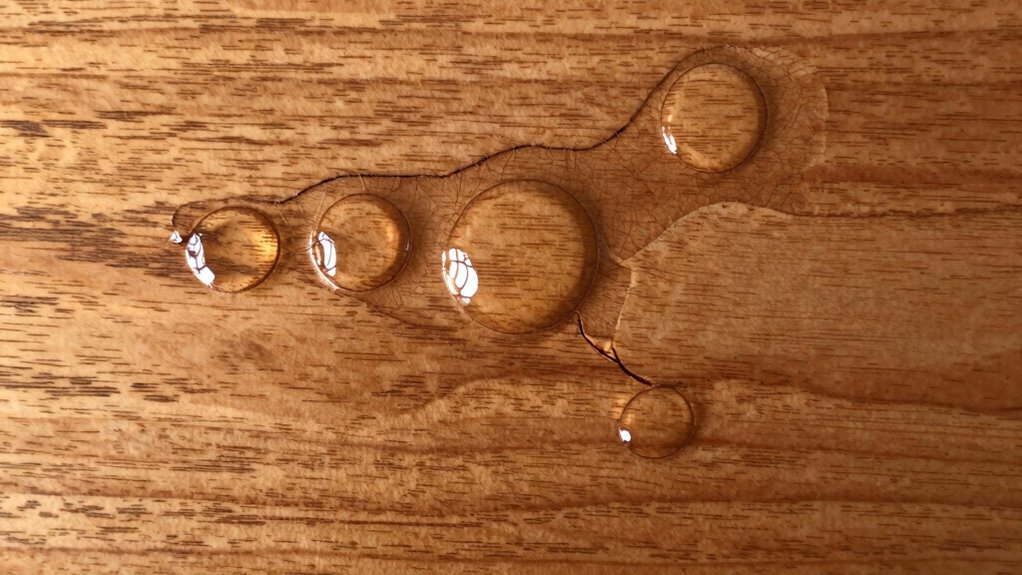
Moisture is another key culprit. Wood and veneer are sensitive to changes in humidity. When moisture gets trapped beneath the veneer, it creates pressure, causing bubbles or lifts. This is particularly common in environments with fluctuating humidity levels, or if the furniture was exposed to water or high moisture during or after installation. Over time, this trapped moisture causes the adhesive bond to weaken, resulting in separation. Additionally, temperature fluctuations can cause the wood and veneer to expand and contract at different rates, which puts stress on the adhesive bond and can lead to lifting or bubbling. Proper environmental control can help reduce this risk by maintaining stable humidity and temperature levels. Ensuring proper installation techniques can also significantly minimize these issues. Age and wear also contribute to these issues. Over years of use, the adhesive’s bond can deteriorate, especially if the original installation wasn’t done properly or if low-quality adhesives were used. Even minor damage or scratches can compromise the bond, allowing air or moisture to infiltrate and cause bubbling. When addressing these issues, proper wood veneer restoration methods are vital. You need to carefully remove the lifted veneer, then reapply adhesive using correct adhesive application techniques. This involves spreading a thin, even layer of high-quality adhesive and ensuring complete contact with the substrate. Using a roller or flat tool helps eliminate air pockets and guarantees a tight bond. In some cases, you might also need to reinforce the area with clamps or weights while the adhesive cures. When re-gluing, it’s essential to follow the manufacturer’s instructions precisely and avoid over-application, which can cause excess squeeze-out and mess. Taking your time during adhesive application and surface preparation ensures a durable, seamless repair. Proper surface preparation is crucial to ensure the adhesive bonds effectively and reduces the risk of future issues. Additionally, understanding the adhesive techniques involved can help prevent future lifting or bubbling. Furthermore, proper surface preparation is vital to ensure the adhesive bonds effectively and reduces the risk of future issues. By understanding the causes—improper adhesive techniques, moisture, temperature changes, and age—you can better prevent future lifting or bubbling and keep your veneer looking great for years to come.
As an affiliate, we earn on qualifying purchases.
Frequently Asked Questions
Can Temperature Fluctuations Cause Veneer to Bubble?
Yes, temperature fluctuations can cause veneer to bubble. When temperatures change, they lead to expansion and contraction, which can cause veneer warping. This movement stresses the adhesive, leading to adhesive failure and bubbles forming under the surface. If the adhesive weakens or wasn’t applied properly, the veneer becomes more susceptible to lifting or bubbling, especially with repeated temperature swings. Proper climate control helps maintain the veneer’s integrity.
Does Humidity Affect Veneer Adhesion Over Time?
Ever wonder how humidity can turn your smooth veneer into a warping nightmare? Yes, it affects veneer adhesion over time, causing it to lift or bubble. Fluctuating moisture levels weaken the glue, leading to adhesion failure and veneer warping. You need to control indoor humidity to keep your veneer flat and intact. Consistent humidity levels help maintain proper adhesion and prevent future liftings or bubbles.
Are Certain Wood Types More Prone to Lifting?
Yes, some wood types are more prone to lifting. Woods with more irregular grain patterns or softer textures tend to struggle with adhesion, especially if the veneer thickness is uneven or too thin. You might notice that veneer on woods like oak or cherry lifts more often, mainly because their grain varies and affects how well the adhesive bonds. Properly selecting wood and maintaining consistent veneer thickness can reduce lifting issues.
How Long Does Veneer Adhesive Typically Last?
Veneer adhesive typically lasts between 10 to 20 years, depending on factors like exposure, quality, and application. Its durability directly impacts veneer longevity, so choosing a high-quality adhesive and applying it properly guarantees better adhesion over time. Environmental conditions such as humidity and temperature fluctuations can shorten adhesive lifespan. Regular maintenance and avoiding excessive moisture help extend the veneer’s lifespan, keeping it securely bonded for years to come.
Can Improper Sanding Lead to Veneer Bubbling?
Yes, improper sanding can lead to veneer bubbling. If you don’t do thorough surface preparation, including even, dust-free sanding, the adhesive may not bond properly. Using incompatible adhesive with the veneer can also cause lifting. Make certain you sand the surface smoothly and choose the right adhesive, as these steps promote good adhesion and prevent bubbles or lifting over time. Proper surface prep and adhesive compatibility are key.
Conclusion
Now, you see bubbles and lifts in your wood veneer, it’s more than just a cosmetic issue—it’s a sign of underlying problems like moisture or poor adhesion. While the surface may seem delicate and easily disturbed, addressing these issues promptly can restore your veneer’s smoothness and durability. Remember, a flawless finish isn’t just about aesthetics; it’s about understanding what causes the flaws and fixing them before they worsen. Keep an eye on your veneer, and it’ll keep looking its best.