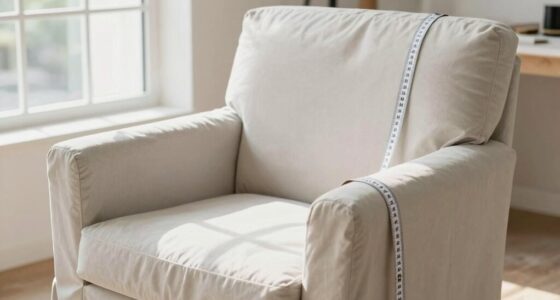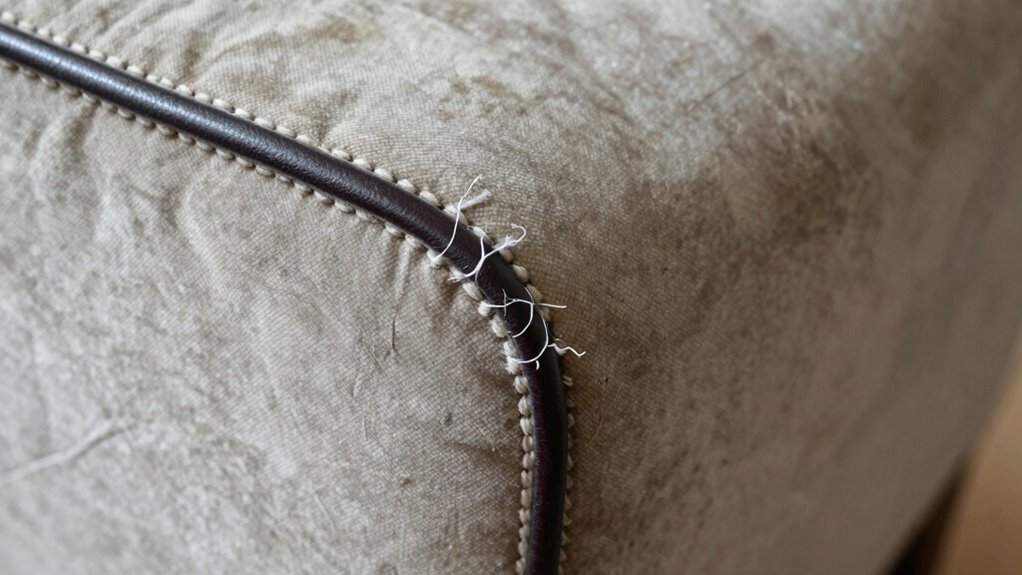

Upholstery piping starts to fray when fabric fibers weaken over time from exposure to sunlight, frequent use, or improper cleaning. Poor sewing techniques, like loose stitches or uneven seams, can also cause early fraying. Using low-quality or thin fabrics makes the piping more vulnerable, especially if not maintained properly. Recognizing these causes helps you understand how to prevent damage. If you want to learn more about protecting your furniture and extending its life, keep exploring the details.
Key Takeaways
- Exposure to sunlight weakens fabric fibers, leading to fraying over time.
- Poor sewing techniques or loose stitches create weak points prone to unraveling.
- Low-quality or thin fabrics are more susceptible to early fraying.
- Regular wear and environmental factors accelerate fabric deterioration and piping damage.
- Lack of proper maintenance and inspections allow minor frays to worsen.
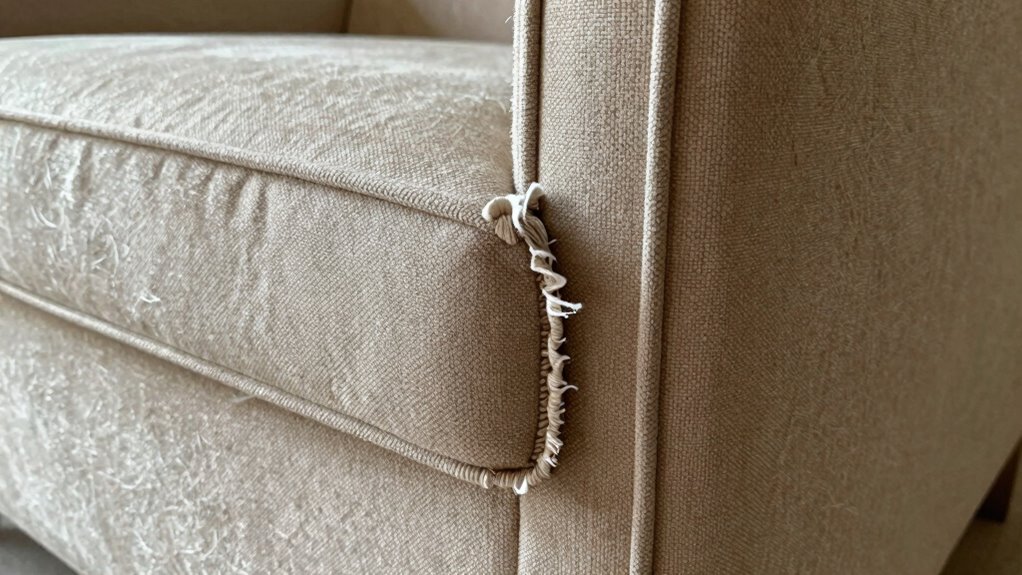
Upholstery piping adds a polished finish to furniture, but when it starts fraying, it can quickly detract from the piece’s appearance. The first thing you should understand is that fraying often results from fabric deterioration over time. Exposure to sunlight, frequent use, and even cleaning methods can weaken the fabric’s fibers, making the piping more susceptible to wear and tear. As the fabric deteriorates, it loses its strength and becomes more prone to unraveling, especially along the edges where the piping is sewn into the upholstery.
Upholstery piping can fray over time due to fabric deterioration from sunlight, use, and cleaning methods.
Another key factor that influences fraying is the quality of sewing techniques used during the piping’s installation. If the piping was sewn hastily or with inadequate stitches, it won’t hold up well under everyday stress. Poorly executed sewing techniques, such as loose stitches or uneven seams, create weak points that are more likely to fray prematurely. When the stitches aren’t tight enough, they fail to secure the piping properly, allowing the fabric to loosen and fray over time. Conversely, well-executed sewing techniques involve tight, even stitches that secure the piping firmly in place, helping it resist fraying even with regular use.
You should also consider the type of fabric used for the piping. Natural fibers tend to break down faster than synthetic ones, especially if the fabric isn’t designed to withstand wear. If the piping fabric is thin or low-quality, it’s more vulnerable to fraying because it doesn’t have the durability needed for long-term use. Choosing high-quality, tightly woven fabrics can make a significant difference in how long your piping stays intact. Additionally, understanding the fabric deterioration process can help you select better materials and maintenance strategies to prolong the life of your upholstery. Proper fabric care is essential to mitigate the effects of environmental exposure and daily use. Regular inspections and preventive maintenance can also help identify early signs of wear before they become more serious. Being aware of the wear and tear process can guide you in making informed decisions about repairs and replacements. Moreover, using appropriate seam techniques during installation can further strengthen the piping’s resistance to fraying.
In the end, understanding the causes behind fabric deterioration and employing proper sewing techniques during installation can extend the life of your upholstery piping. Taking good care of your furniture will help keep it looking sharp and polished for years to come, preventing those unsightly frays from marring its appearance.

Welt Piping Marine Vinyl Upholstery Trim Off White by 25 Yards Boat Auto
- Ideal for fabric joining: Perfect for connecting fabric pieces
- Marine Grade Vinyl: Durable outdoors, marine quality
- UV Resistant: Resists sunlight damage
As an affiliate, we earn on qualifying purchases.
As an affiliate, we earn on qualifying purchases.
Frequently Asked Questions
Can I Repair Frayed Upholstery Piping Myself?
Yes, you can repair frayed upholstery piping yourself. Start with simple DIY fixes like trimming loose threads carefully, then use fabric glue or a small needle and thread for piping reinforcement. If the fraying is extensive, consider replacing the piping entirely. With patience, you’ll extend your furniture’s life and improve its appearance. Just take your time, follow instructions, and you’ll successfully tackle this small upholstery project on your own.
How Long Does Upholstery Piping Typically Last?
Oh, your upholstery piping’s lifespan? Expect it to last around 5-10 years—if you’re lucky. Over time, fabric reinforcement weakens, and wear and tear set up piping replacement. The real trick is keeping it from fraying prematurely. Regular maintenance, gentle cleaning, and avoiding sharp objects can extend its life. But eventually, even the sturdiest piping gives in, and you’ll have to say goodbye and replace it.
Does the Type of Fabric Affect Piping Durability?
Yes, your fabric weave and piping material influence durability. A tight weave fabric resists fraying better, while loose weaves may wear quickly. Similarly, high-quality piping material like nylon or reinforced braid withstands friction and stretching more effectively than cheaper options. When you choose durable fabrics and sturdy piping materials, you help prevent fraying, ensuring your upholstery stays intact longer and maintains a polished look over time.
Are There Specific Cleaning Methods That Prevent Fraying?
To prevent fraying, use gentle cleaning methods and avoid harsh cleaning chemicals that can weaken the piping fabric. Opt for mild, fabric-safe cleaners and apply them carefully with a soft cloth or sponge. Incorporate fabric protection sprays to create a barrier against moisture and dirt, reducing wear over time. Regular, careful cleaning helps maintain piping integrity, keeping it from fraying prematurely and extending the lifespan of your upholstery.
When Should I Replace Frayed Piping Instead of Repairing?
When fraying becomes a persistent issue, it’s time to think about replacing the piping rather than repairing. Over time, piping material can weaken, making fray prevention difficult with repairs alone. If fraying affects the overall appearance or comfort, replacing the piping guarantees longevity and a fresh look. Trust your instincts—if repairs no longer restore the piping’s integrity and aesthetic, replacing is the best way to preserve your furniture’s beauty and durability.
Conclusion
Just like a well-worn path in a forest, your upholstery piping endures constant use, and over time, fraying becomes inevitable. To keep it looking pristine, treat it with care and perform regular maintenance. Remember, even the strongest armor can wear thin without proper attention. Stay vigilant, tend to your furniture, and you’ll preserve its beauty much like a cherished story—lasting, resilient, and ready to tell its tale for years to come.