To tell solid wood from veneer furniture, look closely at the grain patterns—solid wood has natural, continuous grains that run seamlessly around edges, while veneer often shows repetitive or perfect patterns. Check the weight; solid wood is heavier and feels sturdier. Inspect the edges—solid wood has continuous grain, whereas veneer edges may reveal layers or different core materials. Damaged veneer might chip or peel, unlike solid wood that ages gracefully. If you want to uncover more tips, keep exploring further.

Get furniture and decor delivered free with Prime
- Fast, free delivery on millions of items
- Prime Video, Amazon Music and more included
- Member-only deals all year
Key Takeaways
- Check for continuous grain patterns on edges and surfaces; solid wood’s grain runs seamlessly around the piece.
- Look for visible seams or layered edges; veneer often shows layered materials or repetitive patterns.
- Feel the weight; solid wood furniture is generally heavier and sturdier than veneer.
- Inspect the edges closely; veneer may reveal underlying core materials like plywood or MDF.
- Observe aging characteristics; solid wood develops a natural patina, while veneer is more prone to chipping or peeling.
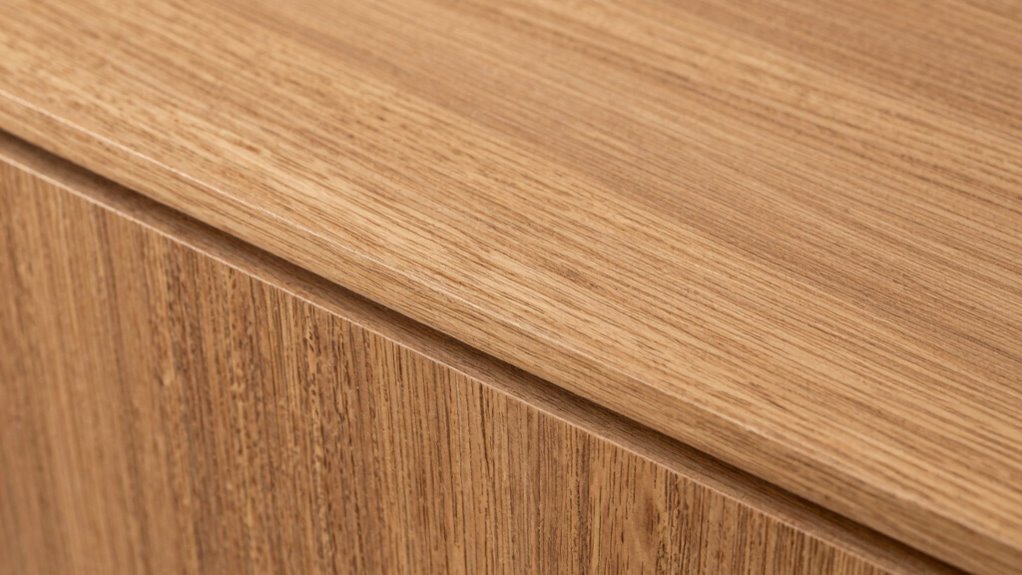
When choosing furniture, understanding the differences between solid wood and veneer can help you make an informed decision. One of the clearest ways to tell them apart is by examining the wood grain patterns. Solid wood furniture displays natural, unique grain patterns that run consistently across the entire piece. Each piece has a one-of-a-kind appearance, with variations in color, knots, and swirls that reveal its true nature. In contrast, veneer furniture often has a uniform or repeating pattern because it’s made with a thin layer of real wood glued over a core material. While some veneers mimic the appearance of solid wood convincingly, close inspection can reveal a pattern that looks too perfect or repetitive. Recognizing the grain pattern can help you quickly identify the type of wood used. Additionally, the presence of a consistent grain pattern across the surface is a strong indicator of veneer, especially if the pattern repeats or looks unnatural. You can also observe the construction quality, as solid wood pieces generally exhibit tighter joints and fewer visible seams compared to veneered furniture, which often relies on layered construction techniques.
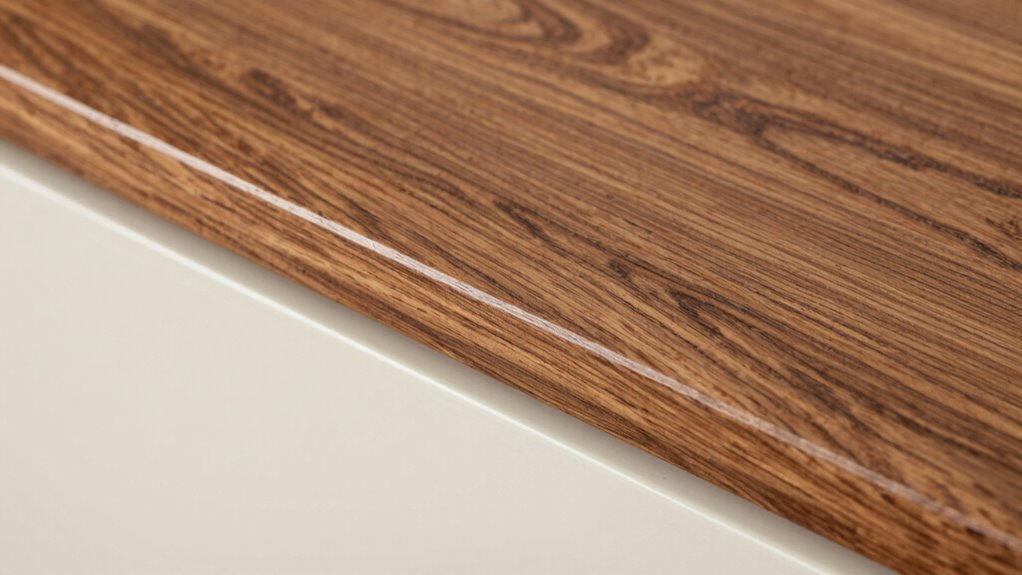
Solid wood showcases unique, natural grain patterns, while veneer often features uniform, repetitive designs.
Another aspect to consider is furniture weight. Solid wood pieces tend to be heavier because they’re constructed from solid blocks of wood, making them sturdy and durable. When you pick up a solid wood table or cabinet, you’ll notice its substantial heft, which is a sign of its quality and longevity. Veneer furniture, on the other hand, usually feels lighter since it has a core made of less dense materials like plywood, MDF, or particleboard, covered with a thin veneer layer. This makes veneer pieces easier to move and handle but can also impact their stability over time if the core isn’t properly constructed.
You can also perform a simple visual test to distinguish the two. Look closely at the edges or corners of the furniture. On solid wood furniture, the wood grain continues seamlessly around the edges, since it’s made from a single piece or multiple solid pieces joined together. With veneer furniture, the edges often reveal the core material, which can be a different color or texture than the surface veneer. Sometimes, if the veneer is damaged or worn, you might see a different layer underneath, indicating that it’s not solid wood. A core material such as plywood or MDF is a common giveaway that the piece is veneered.
Lastly, consider the overall feel and aging process. Solid wood furniture ages gracefully, developing a rich patina over time that enhances its character. Veneer, however, may be more susceptible to chipping, peeling, or water damage, especially at the edges. If you want a piece that will last for generations and looks authentic in every detail, solid wood is the way to go. But if you’re after a lighter, more affordable option with a convincing appearance, veneer can serve your needs—just pay attention to these key differences to tell them apart.
solid wood furniture identification
As an affiliate, we earn on qualifying purchases.
As an affiliate, we earn on qualifying purchases.
Frequently Asked Questions
Can Veneer Furniture Be as Durable as Solid Wood?
Veneer furniture can be just as durable as solid wood if made with quality materials and proper craftsmanship. While veneer offers excellent material authenticity, its furniture longevity depends on how well you care for it. You should avoid excessive moisture and direct sunlight to prevent damage. With proper maintenance, veneer furniture can last for many years, providing a beautiful, durable piece that rivals solid wood in both appearance and resilience.
How Can I Identify Veneer Furniture at a Glance?
Spotting veneer furniture is like reading a book’s cover—you notice details quickly. Look at the grain pattern; veneer often has a uniform, repetitive design, unlike the varied, natural grain of solid wood. Check surface texture—veneers tend to feel smoother and thinner, with edges sometimes revealing a different core material. Run your fingers over the surface and examine edges closely to identify these subtle clues easily at a glance.
Is Veneer Furniture More Affordable Than Solid Wood?
Veneer furniture is generally more affordable than solid wood because of material differences and the price comparison. Veneer uses thin slices of real wood glued onto cheaper core materials, reducing costs. Solid wood furniture, made entirely from real wood, costs more due to the higher material expense and craftsmanship involved. If you’re on a budget, veneer offers a stylish look at a lower price, but if durability and longevity matter, solid wood might be worth the investment.
Can Veneer Furniture Be Refinished or Repaired?
Think of veneer furniture as a delicate painting on a sturdy wooden canvas—you can definitely restore and repair it. With proper furniture restoration, you’ll preserve the veneer’s beauty and extend its life. Use gentle techniques to avoid damaging the thin surface, and focus on veneer preservation. Carefully refinishing scratches or chips can breathe new life into your piece, letting its charm shine while respecting its fragile veneer layers.
What Are the Environmental Impacts of Veneer Versus Solid Wood?
Veneer furniture generally has a lower environmental impact than solid wood because it uses less raw material, supporting sustainable sourcing and reducing deforestation. It also tends to have a smaller carbon footprint, as manufacturing processes are often more efficient. However, consider the durability and repairability of each, since solid wood can last longer and be more easily repaired, potentially balancing out initial environmental benefits.
Conclusion
Think of furniture like a tree—solid wood is the mighty trunk, sturdy and full of life, while veneer is the delicate bark, beautifully layered but ultimately thinner. When you choose furniture, you’re selecting between the enduring strength of the trunk or the intricate beauty of the bark. Trust your eyes and touch, for beneath the surface, the true nature reveals itself. Like a tree’s core, solid wood offers lasting resilience, making it the wiser choice for your home’s foundation.
Halloween Picks
halloween
As an affiliate, we earn on qualifying purchases.