
To measure your furniture for a slipcover without sewing skills, use a flexible tape measure to record width, height, and depth, including all cushions and decorative details. Be sure to add seam allowances and consider fabric stretchability for a better fit. Clear, organized measurements and photos help suppliers or tailors create the perfect cover. Keep these tips in mind, and you’ll discover how to achieve a professional look with ease—just keep going for more helpful guidance.
Key Takeaways
- Use a flexible measuring tape to record accurate width, height, and depth around the furniture’s widest and tallest points.
- Measure cushions separately to account for volume and shape, including their height and width.
- Add seam allowances and extra inches for ease of fit, especially when using stretch fabrics or elastic sections.
- Take clear, organized notes and photos of furniture to communicate precise measurements easily.
- Choose slipcover styles and fabrics that match your measurements, considering stretchability and decorative features for a perfect fit.
Why Accurate Measurements Are Key to a Perfect Slipcover Fit
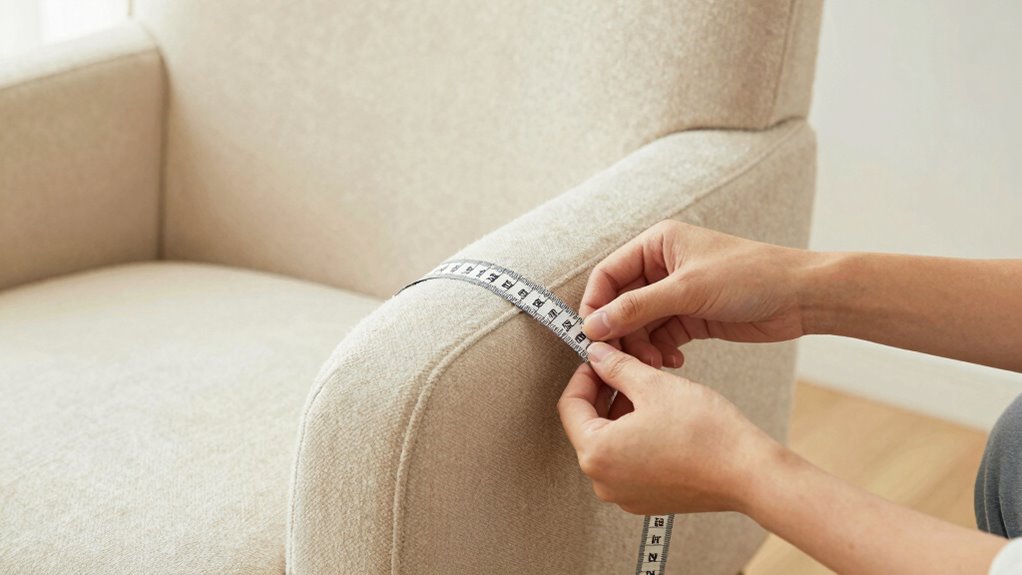
Accurate measurements are the foundation of a slipcover that fits perfectly. When you measure correctly, you ensure the fabric you choose will drape well and complement your furniture. Your fabric selection impacts the slipcover’s fit and comfort, so knowing the right measurements helps you pick the best material. Different slipcover styles, from tailored to relaxed, require precise dimensions to look polished and stay in place. If your measurements are off, your slipcover may be too loose or tight, causing wrinkles or sagging. Taking your time with precise measurements guarantees your slipcover will fit snugly and look professional. Whether you prefer a sleek or casual style, accurate measurements help you achieve a custom look without sewing skills. Utilizing on-page SEO strategies can also help ensure your slipcover project reaches the right audience and gets noticed. Paying attention to fabric stretch can further improve the fit and comfort of your slipcover. Additionally, understanding how fabric properties influence fit can help you select the most suitable material for your needs.
What Tools You Need and How to Prepare Your Furniture
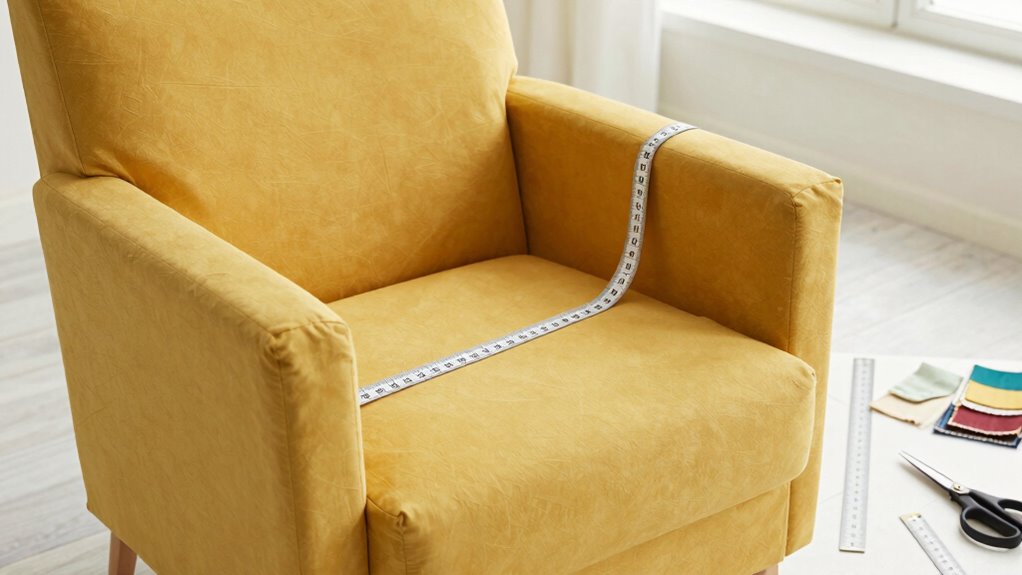
To get accurate slipcover measurements, you’ll need a flexible tape measure, a notepad, and a pen. Before measuring, make sure to clean and smooth out your furniture to avoid inaccuracies. Properly preparing your furniture guarantees your measurements will be precise and your slipcover fits perfectly. Additionally, considering the energy efficiency of your home can help you choose environmentally friendly cleaning and maintenance practices. Taking the time to measure carefully ensures your slipcover will fit snugly and look great. Being aware of support options can also assist if you need additional help with your slipcover project. Remember that essential oils can be used to create a calming environment during your project, making the process more enjoyable. Also, understanding the importance of color accuracy can help in selecting slipcovers that complement your room’s decor.
Tools for Accurate Measuring
Before you start measuring, gather the right tools to guarantee your slipcover fits perfectly. A flexible measuring tape is essential for accurate measurements of fabric textures and furniture contours. Keep a notepad and pen handy to record dimensions clearly. Use a ruler or a square for straight edges, especially when measuring the length and width of cushions and arms. To ensure color matching, bring fabric swatches or photos of your furniture’s current fabric to compare textures and shades. A mirror can help you see hard-to-measure areas, like the back or sides. Double-check all measurements before proceeding. Having these tools ready keeps the process smooth, minimizes errors, and helps you select a slipcover that looks great and fits snugly, with fabric textures and colors perfectly coordinated. Additionally, understanding wiring basics can be useful if your slipcover project involves any electrical or lighting elements. Proper preparation and measuring techniques are essential for a successful fit. Using measurement accuracy techniques can help prevent costly mistakes and ensure your slipcover fits just right. To improve precision, consider using a measuring guide to keep your measurements consistent throughout the process. Incorporating sound healing science principles can also promote relaxation during your project, making the task more enjoyable.
Furniture Preparation Tips
Gathering the right tools and preparing your furniture properly can make slipcover fitting much easier. Start by clearing the area and removing cushions so you can access all furniture surfaces. Check your furniture style—whether it’s a sleek modern sofa or a traditional armchair—and note any curves or details that influence slipcover fit. Use a fabric steamer or gentle brush to clean and loosen dust or debris, especially important for different fabric types like velvet or linen. Additionally, understanding your furniture’s upholstery materials can help you select the best cleaning methods and slipcover fabrics. Proper prep guarantees your slipcover fits snugly, regardless of furniture style or fabric type, and familiarizing yourself with furniture measurements ensures a more precise fit. Taking the time to measure correctly and noting fabric stretch properties can make the process even smoother and more successful. Being aware of stretch techniques that work best with your chosen fabric can further enhance your slipcover’s appearance and durability. Knowing how your fabric responds to stretching techniques can further improve your slipcover fit.
How to Measure Your Sofa or Chair for a Slipcover (Step-by-Step)
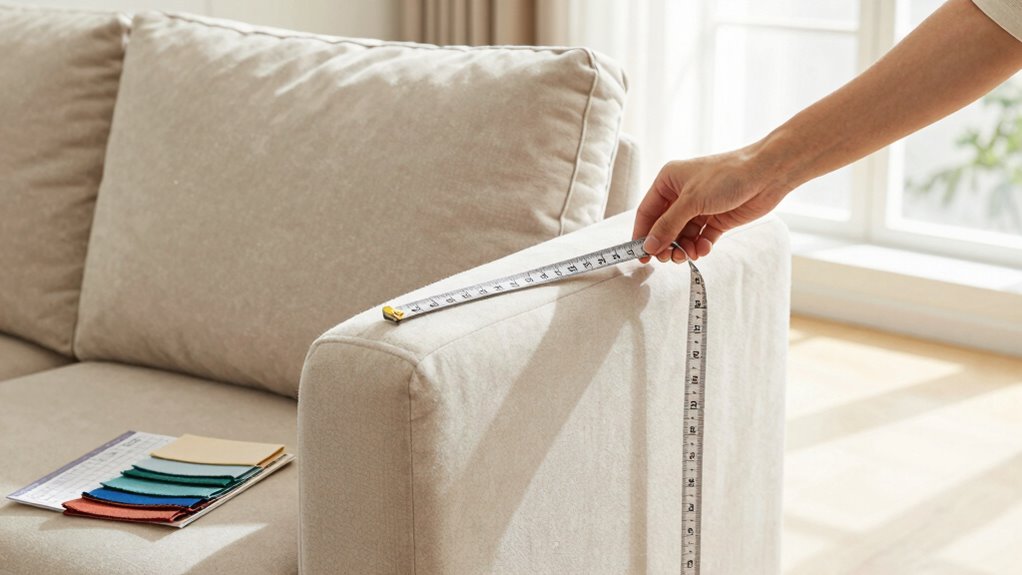
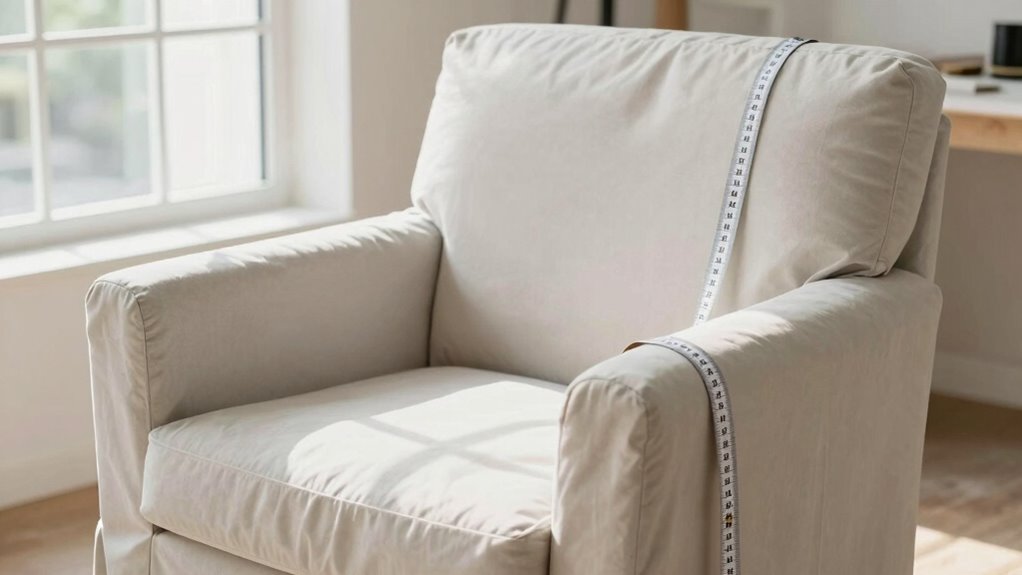
Accurately measuring your sofa or chair is essential to guarantee a perfect slipcover fit. Start by measuring the width, height, and depth of each piece, including arms, back, and seat. Use a flexible measuring tape for precise results. Note down fabric patterns to ensure the slipcover’s design aligns or complements your furniture. Measure the distance from the floor to the top of the arms and the back to determine height. For slipcover maintenance, consider adding extra inches for ease of fit and future adjustments. Take measurements twice to avoid errors. Remember, a snug fit enhances appearance and durability, while too tight can cause wear. By following these steps, you’ll ensure your slipcover fits well and looks great, no matter the fabric pattern. Additionally, understanding the best lifestyle products can help you choose fabrics that are durable and easy to maintain over time. Properly measured furniture dimensions can also prevent the need for costly adjustments later on. Ensuring accurate measurements can also help you select the most suitable fabric type for your slipcover, making it more comfortable and long-lasting. Being aware of safety considerations during measurement can further ensure that your furniture remains protected and secure.
Common Mistakes to Avoid When Measuring for Slipcovers
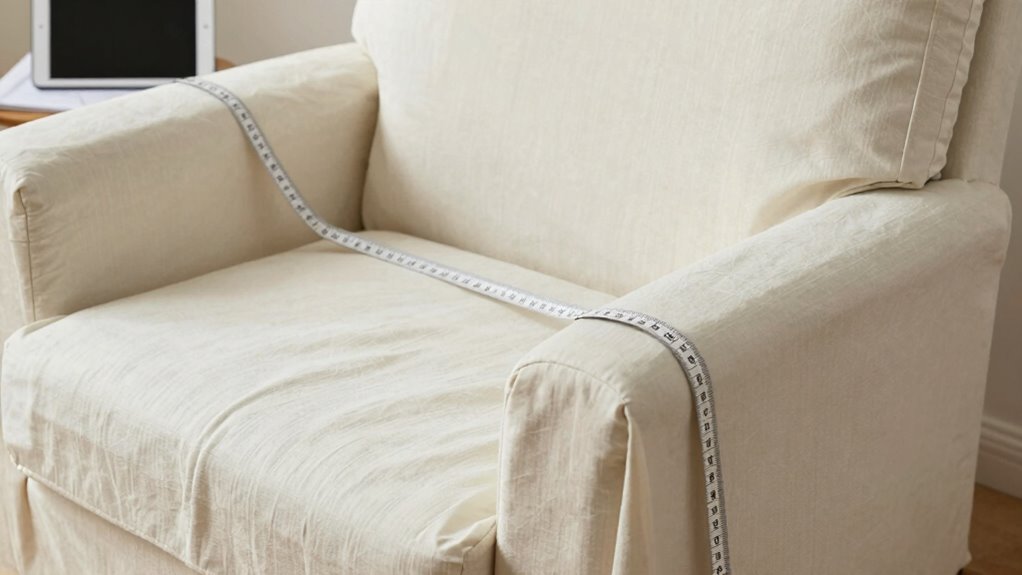
Many people overlook key details when measuring for slipcovers, which can lead to poor fits. You might ignore the furniture’s shape, forget about seam allowances, or overlook cushion dimensions. Paying attention to these common mistakes helps make certain your slipcover fits perfectly the first time. Additionally, understanding decoding slang can help you interpret measurements more accurately if instructions include informal language or colloquialisms. Recognizing creative storytelling techniques can also assist in visualizing the final fit and design outcome more effectively. Being aware of proper measuring techniques, such as using the right tools and methods, ensures greater accuracy and a better overall fit.
Ignoring Furniture Shape
Ignoring the shape of your furniture can lead to ill-fitting slipcovers that look awkward or don’t stay in place. Each piece has a unique furniture style, and overlooking this can cause the slipcover to bunch or slip off. For example, a rounded armchair needs different measurements than a boxy sofa. Pay attention to decorative accents like tufting, curves, or arm details, which affect how the cover fits. Failing to account for these features can make your slipcover look unpolished or cause it to shift during use. Measure carefully around these unique shapes and details to guarantee a snug, attractive fit. Recognizing the specific furniture style and decorative accents helps you choose a slipcover that complements your furniture’s character and stays secure.
Forgetting Seam Allowance
One common mistake when measuring for slipcovers is forgetting to add seam allowances, which are essential for a proper fit. Without including seam allowances, your slipcover may end up too tight or too loose, affecting measurement accuracy. To guarantee a smooth fit, always add extra fabric for seams.
Remember:
- Seam allowance provides room for sewing and adjustments.
- Skipping it can lead to ill-fitting slipcovers.
- Accurate measurements depend on including seam allowances from the start.
Overlooking Cushion Dimensions
Overlooking cushion dimensions is a common mistake that can result in slipcovers fitting poorly. When measuring, don’t just focus on the furniture height; you need to take into account the cushion dimensions as well. Cushions add volume and shape, so measuring their length, width, and thickness ensures your slipcover fits snugly without sagging or being too tight. Failing to account for cushion height can cause the slipcover to bunch or slip off, especially if the cushions are thicker or have removable covers. Always remove the cushions and measure them separately. Accurate cushion dimensions help you create a slipcover that contours perfectly to your furniture, providing a neat, professional look. Remember, cushions impact the overall fit, so neglecting these measurements leads to poor results.
How to Choose the Right Slipcover Size Based on Your Measurements
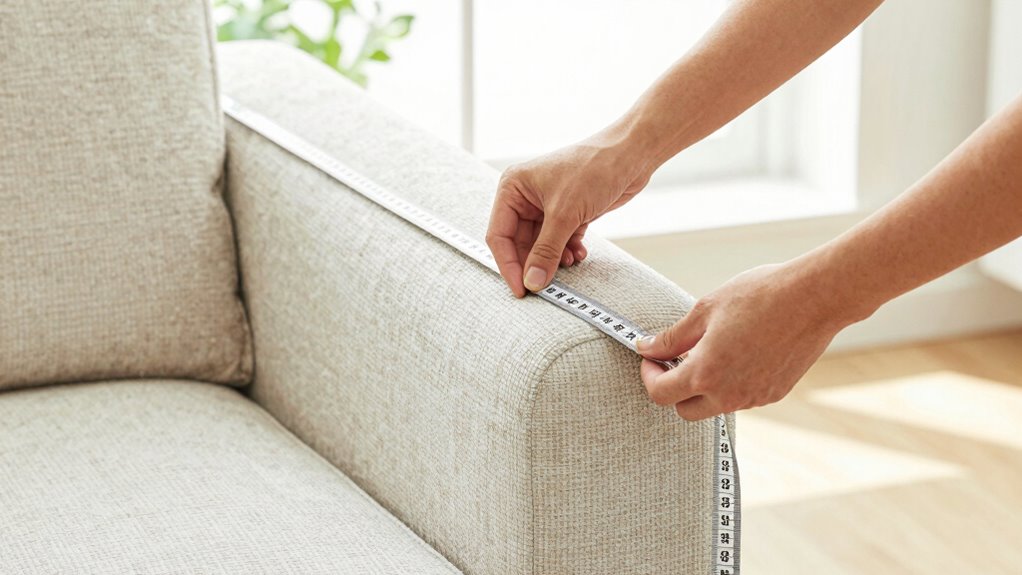
To guarantee your slipcover fits perfectly, you need to select the right size based on your measurements. Start by measuring the width, height, and depth of your furniture, then compare these to slipcover size charts. Remember, fabric selection influences fit; stretchier fabrics offer more flexibility, while structured fabrics need precise measurements. Slipcover styles vary—from tailored and fitted to loose and casual—so choose one that matches your comfort and aesthetic preferences. Keep these tips in mind:
Choosing the right slipcover size ensures a perfect, stylish fit for your furniture.
- Always measure the widest and tallest points of your furniture.
- Consider how much ease or snugness you prefer.
- Match your measurements with the style and fabric’s stretchability for the best fit.
This approach ensures a seamless, attractive look without guesswork.
Tips for Sharing Your Measurements Effectively With Suppliers or Tailors
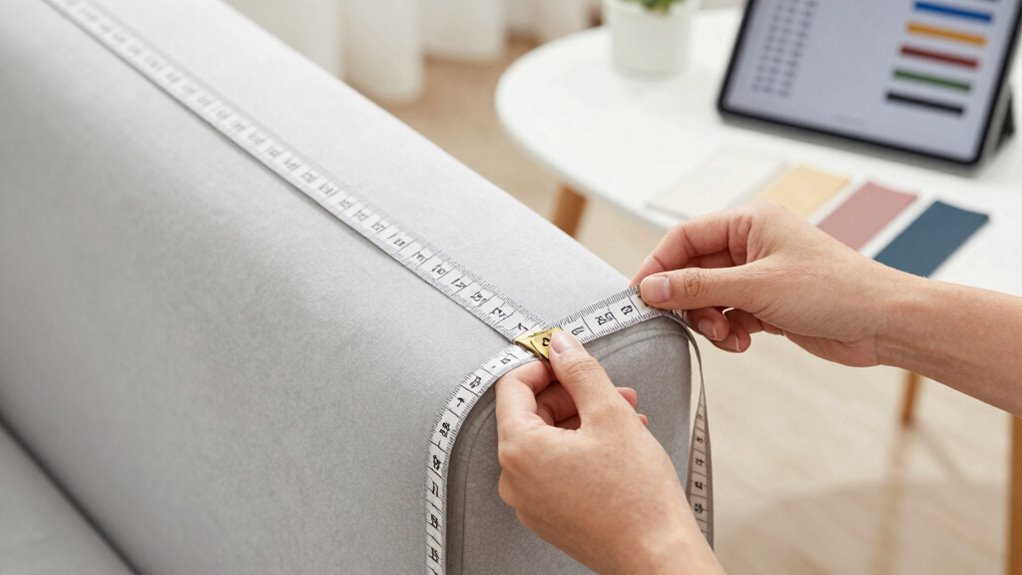
Sharing your measurements accurately is key to guaranteeing your slipcover fits as intended. When communicating with suppliers or tailors, be clear and precise. Use a measuring tape to record each dimension—height, width, depth, and armrest measurements—and double-check for consistency. Include details about your decorating ideas so they understand your style, which can influence fabric choices. Mention your preferred fabric options, such as stretch or non-stretch materials, to help them recommend the best textiles. Providing a simple, organized list of measurements alongside photos of your furniture can prevent misunderstandings. Clear communication ensures your slipcover matches your decorating ideas and fits perfectly, saving time and avoiding costly adjustments later.
Final Tips for Ensuring a Great Fit Without Sewing Skills

Even if you don’t have sewing skills, you can still achieve a perfect slipcover fit by following a few simple tips. First, choose fabric selection wisely; opt for durable fabrics that enhance slipcover durability and withstand regular use. Next, verify your measurements are precise and double-checked before purchasing fabric to avoid unnecessary adjustments. Lastly, focus on fit adjustments through elastic bands or stretchable fabric areas for a snug, professional look.
Achieve a perfect slipcover fit with durable fabrics, precise measurements, and elastic adjustments—no sewing skills needed.
To make the process easier, keep these tips in mind:
- Use high-quality, durable fabric to improve slipcover longevity
- Measure tension points carefully for a better fit
- Incorporate elastic or stretch sections for flexibility and smoothness
These steps help you achieve a great fit without sewing skills while maximizing slipcover durability.
Frequently Asked Questions
Can I Use a Tape Measure for All Types of Furniture?
Yes, you can use a tape measure for all types of furniture. Just ensure you measure carefully, including the height, width, and depth. Remember to take into account fabric care, especially if you plan to wash or clean the slipcover later. These DIY tips help you get perfect measurements without sewing skills, making slipcovers easier and more efficient. Always double-check your measurements to ensure a snug, professional fit.
How Do I Measure for a Slipcover on Oddly Shaped Furniture?
To measure for a slipcover on oddly shaped furniture, you should focus on custom fitting and shape adaptation. Use a flexible tape measure to follow the furniture’s contours closely, measuring width, height, and depth at multiple points. For curves and unusual shapes, take extra measurements and note any angles or unique features. This approach guarantees your slipcover fits snugly, adapting perfectly to your furniture’s distinctive shape.
What if My Furniture Measurements Change Over Time?
If your furniture’s measurements change over time, don’t worry. You can adapt by considering furniture durability and making seasonal adjustments to your slipcover. Regularly check and re-measure to make sure a snug fit, especially as the furniture settles or shifts. This way, you keep your slipcover looking fresh and neat, even if your furniture evolves. Staying proactive helps maintain a polished look without needing to start from scratch.
Are There Specific Slipcover Sizes for Different Furniture Styles?
Yes, slipcover sizes vary based on furniture style compatibility, so you should choose options tailored to your piece. For example, a tailored fit works best for modern styles, while a more relaxed fit suits traditional furniture. Don’t forget to explore slipcover color options to match or contrast with your decor. Measure accurately, consider your furniture’s style, and select the right size and color to refresh your space effortlessly.
How Do I Ensure the Slipcover Stays in Place Without Sewing?
To keep your slipcover in place without sewing, use non-slip pads on the furniture’s surface to prevent shifting. Elastic straps are also effective—they stretch around the furniture, securing the slipcover tightly. Position these straps strategically, especially at the corners and sides, to maintain a snug fit. Combining non-slip pads with elastic straps guarantees your slipcover stays put, giving your furniture a fresh look without any sewing needed.
Conclusion
Getting your slipcover measurements right is like fitting the last piece of a puzzle—you want everything to click perfectly. When you measure carefully, it’s as if you’re tailoring a suit for your furniture, not just covering it. Remember, even small inaccuracies can turn a snug fit into a saggy mess. So, take your time, double-check, and soon you’ll have a slipcover that looks custom-made—no sewing skills required!