
When deciding between repair and reupholstery, consider your furniture’s overall condition. If the frame is cracked or the cushions sag, repairs might be enough. However, if the fabric is torn, faded, or styled outdated, reupholstery can refresh its look and extend its life. Budget and usage also matter—minor issues cost less to fix, while reupholstery offers a style update. Keep exploring to learn which choice best suits your needs.
Key Takeaways
- Repair if the frame and cushions are in good condition and only minor issues exist.
- Reupholster when fabric is heavily worn, stained, or style update is desired.
- Consider repair for quick, cost-effective fixes; choose reupholstery for longer-lasting aesthetic improvements.
- Severe structural damage or outdated style may warrant replacement over repair or reupholstery.
- Budget, furniture age, and sentimental value influence whether to repair, reupholster, or replace.
How to Know If Your Furniture Needs Repair or Reupholstery
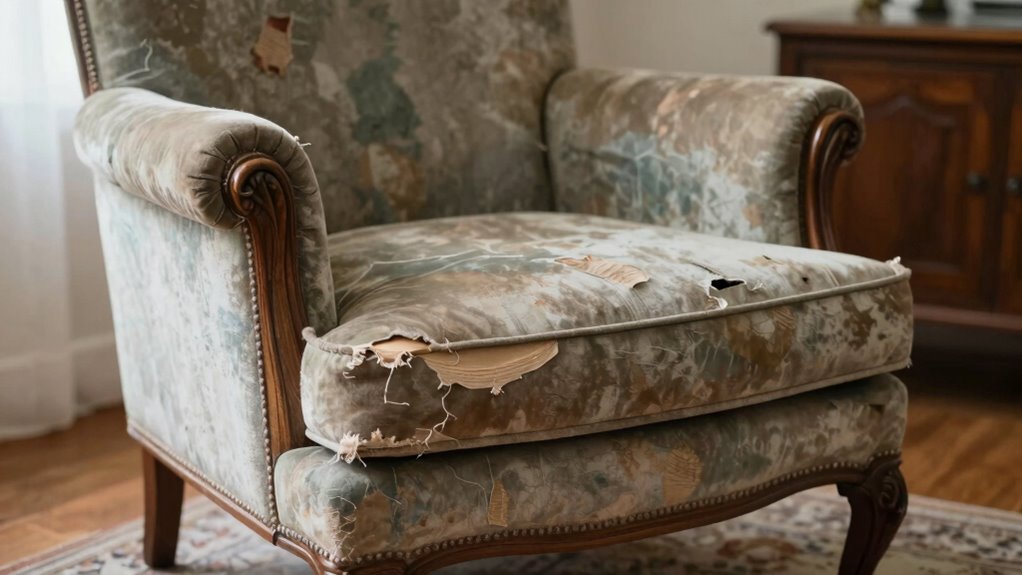
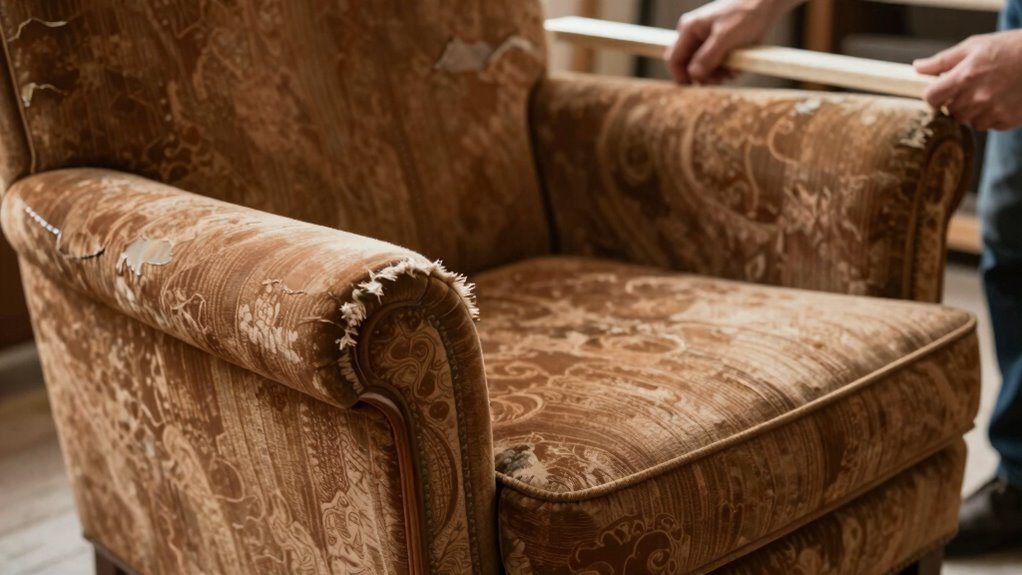
Determining whether your furniture needs repair or reupholstery can seem tricky, but paying attention to a few key signs can make the decision clearer. Start by examining the fabric condition: if the fabric is torn, heavily stained, or frayed beyond repair, reupholstery might be your best option. However, if the fabric is still intact but shows signs of wear or fading, reupholstering can refresh its look. Additionally, consider style matching; if the current upholstery no longer fits your decor or looks outdated, reupholstery allows you to update the style without replacing the entire piece. Conversely, if the frame is damaged or the cushions are sagging, repairs might be necessary first. Knowing when to choose reupholstery versus repair depends on assessing the overall condition and your aesthetic goals. For example, a furniture frame with structural damage may require repair before considering reupholstery. Furthermore, understanding furniture construction and how different components interact can help you make more informed decisions about repairs versus reupholstering. Proper knowledge of the materials used in your furniture can also guide you in choosing the most effective restoration method. Recognizing the cost-effectiveness of repair versus reupholstery can help you plan your restoration project more wisely.
Evaluating Your Furniture: Frame, Cushions, and Fabric Check
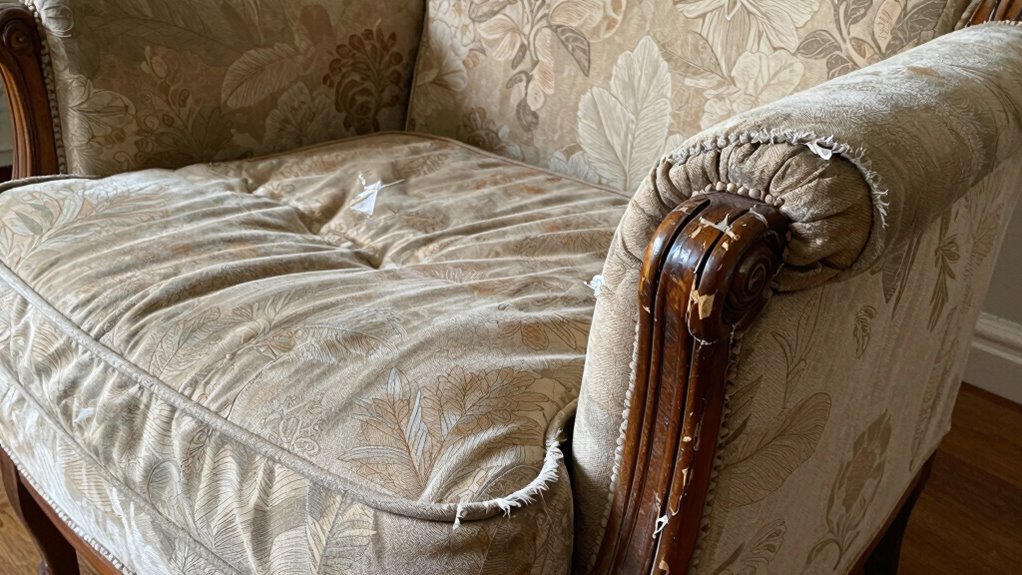
To properly evaluate your furniture, start by inspecting the frame for any structural damage or instability. Check for cracks, loose joints, or wobbling that could compromise frame stability. Next, examine the cushions for sagging or uneven wear, which indicates the need for re-padding or replacement. Assess the fabric durability by looking for tears, fraying, or fading; if the fabric is heavily worn or stained, it might be more practical to reupholster. Be thorough—sometimes, a sturdy frame with worn fabric can be revitalized with new upholstery, while a damaged frame may require repair or replacement. Additionally, consider the style and finish of the fabric to determine if it aligns with your decor and long-term maintenance needs. Ensuring both the frame stability and fabric condition are sound helps you decide whether repair or reupholstery is the better choice for your furniture.
Should You Repair or Reupholster? Pros, Cons, and Cost Factors
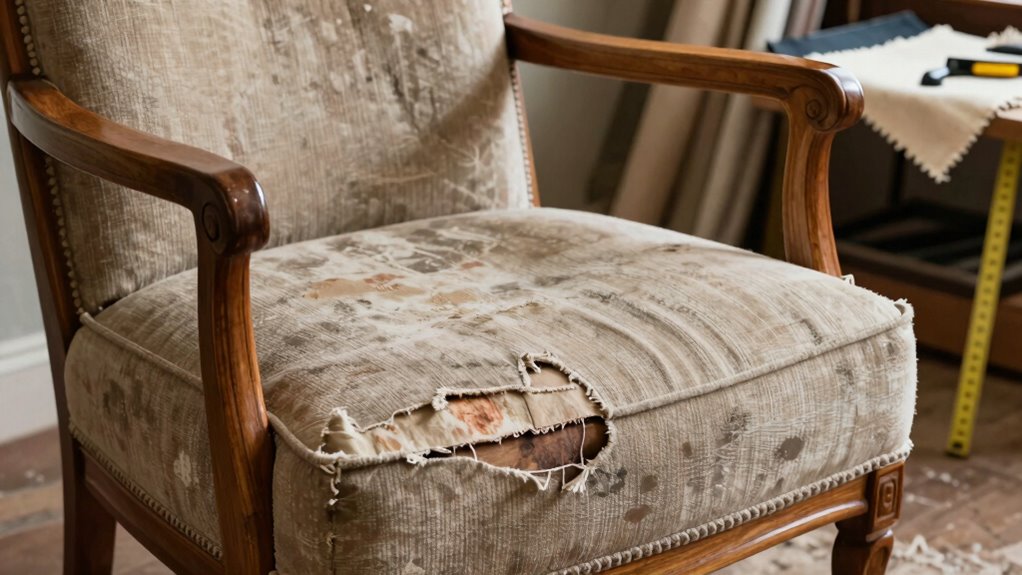
Deciding whether to repair or reupholster your furniture depends on several factors, including cost, durability, and the furniture’s overall condition. Repairing is often more cost-effective if the frame and cushions are in good shape, especially for pieces with high material durability. Reupholstering, however, can be a smart choice for vintage restoration, preserving the charm while updating the fabric and padding. The pros of repair include lower expenses and quicker turnaround, but it may not address underlying wear or outdated styles. Reupholstering offers customization and can extend your furniture’s lifespan, yet it can be pricier. Consider the furniture’s age, structural integrity, and your long-term goals when weighing these factors to make the best decision for your piece. Additionally, understanding the material durability of your furniture can help determine whether repair or reupholstery will provide the best value over time. Evaluating the condition of the furniture’s frame can also influence whether repair or reupholstery is more suitable for your needs. Moreover, assessing the wear and tear on cushions can help you decide if a simple repair will suffice or if a full reupholstery is warranted for comfort and appearance. Recognizing the impact of fabric choice on durability and style can further guide your reupholstery decisions, ensuring long-term satisfaction. It’s also helpful to consider the potential for future repairs, as some materials may require more frequent maintenance than others.
How Your Budget, Style Goals, and Usage Impact the Decision
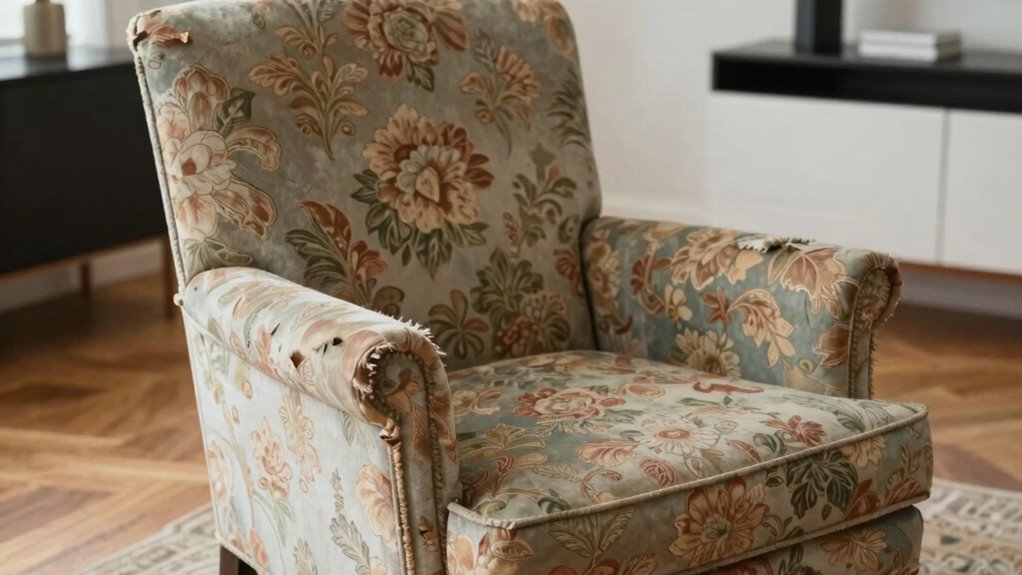
Your budget plays a crucial role in choosing whether to repair or reupholster your furniture, as each option varies considerably in cost. Consider these factors:
- Cost considerations: Repairs are often cheaper for minor issues, while reupholstery can be costly depending on fabric and labor.
- Style goals: Reupholstering allows you to update style and maintain a consistent look, aligning with your aesthetic goals.
- Usage: Heavy-use furniture might benefit from repairs to address specific damage, whereas reupholstering can refresh older pieces for long-term enjoyment.
- Long-term value: If your goal is style consistency, reupholstering preserves the original design, whereas repairs might only address immediate issues.
- Creative expression: Reupholstering offers an opportunity to explore artistic expression and customize your furniture to reflect your personal style. Additionally, understanding feature durability can help determine whether a repair or reupholstery will better withstand regular use.
Balancing these aspects helps you make an informed decision that fits your budget and style vision.
Deciding Whether to Repair, Reupholster, or Replace Your Furniture
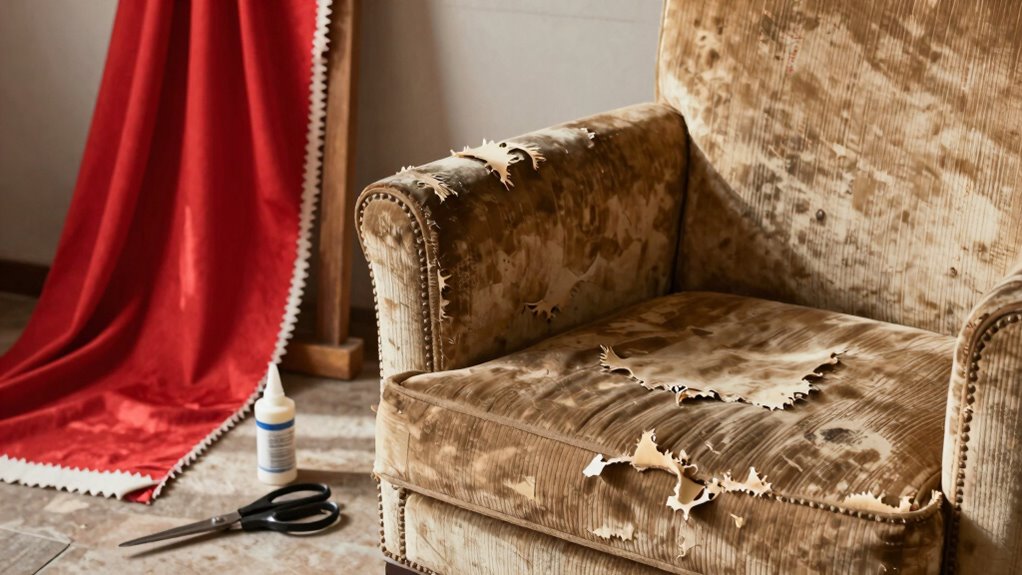
When considering whether to repair, reupholster, or replace your furniture, appraising the overall condition and longevity of the piece helps guide your choice. If your furniture has vintage charm and solid material durability, reupholstering can preserve its character while extending its life. Repair might be enough if structural issues are minor, but if the frame is compromised or materials are severely worn, replacement may be more practical. Think about how much you value the piece’s style and history—reupholstering can maintain its unique appeal. Incorporating local automation or smart monitoring systems can help extend the life of your furniture by alerting you to maintenance needs early on. Regular check-ups and proper upholstery care can also enhance the longevity of reupholstered pieces, ensuring they remain beautiful and functional for years to come. Additionally, understanding investment value can assist you in making a more informed decision about whether to repair or replace. For example, assessing the material quality and construction can help determine whether repairs will be cost-effective long term. Utilizing architectural solutions can sometimes provide innovative ways to restore or adapt furniture to fit new spaces or styles, adding another layer of value. If the cost of repairs or reupholstery exceeds the value or sentimental worth, replacing might be the better option. Ultimately, your decision depends on assessing these factors to balance style, function, and long-term investment.
Frequently Asked Questions
How Long Does Each Option Typically Last?
Repair typically lasts a few years, depending on material durability and how much use it gets, while reupholstery can extend your furniture’s lifespan by 10-15 years or more. Material durability plays a key role in lifespan estimates—sturdy fabrics and frames tend to last longer. If your piece is still in good shape but looks worn, reupholstering offers a longer-lasting refresh. Otherwise, simple repairs might be enough for a shorter-term fix.
Can I Do Repairs or Reupholstery Myself?
You can tackle repairs or reupholstery yourself if you’re comfortable with DIY projects and have some basic tools. Like a painter with a brush, you’ll need patience and attention to detail. However, for complex or delicate work, professional services are your best bet—they bring expertise and finesse. Decide based on your skill level, but remember, some projects are better left to the experts to guarantee a polished finish.
What Are Signs That Furniture Is Beyond Repair?
You’ll know furniture is beyond repair when its structural integrity is compromised, like major frame damage or extensive material deterioration. If cushions won’t hold shape or fabric is torn beyond simple fixes, it’s a sign. When repairs no longer restore furniture’s longevity or comfort, it’s time to contemplate reupholstery or replacement. Don’t ignore persistent issues—they indicate that your furniture has reached its end of life.
How Do Warranties Affect Repair or Reupholstery Choices?
Warranties and repair insurance considerably influence your repair or reupholstery choices. If your furniture is still under warranty coverage, you should prioritize repairs covered by the manufacturer to avoid extra costs. Repair insurance can also help offset expenses for reupholstery or repairs not covered by warranties. Always review your warranty details first; if coverage is limited, reupholstery might be a better long-term investment for durability and style.
Are Eco-Friendly Options Available for Repairs or Reupholstery?
Yes, eco-friendly options are available for repairs and reupholstery. You can choose sustainable materials like organic fabrics, recycled foam, or natural dyes. Opt for environmentally friendly processes that reduce waste and avoid harmful chemicals. By selecting these options, you support sustainability and minimize your environmental impact while giving your furniture a fresh, durable look. Always ask your upholsterer about their eco-friendly practices to guarantee your choices align with your values.
Conclusion
Ultimately, whether you repair, reupholster, or replace relies on your budget, style, and how much use your furniture gets. Think of it like choosing between a trusty steed or a shiny new carriage—sometimes, a well-maintained old friend is worth more than a glittering new one. Don’t rush your decision; take your time and weigh your options. Remember, even in this fast-paced world, some classics are worth a little extra care.