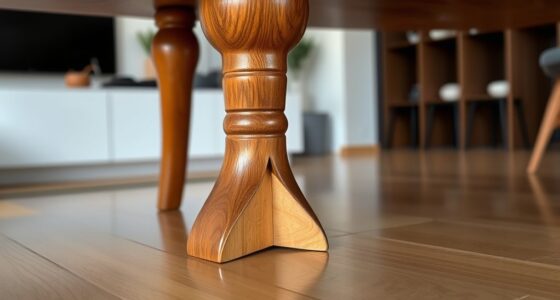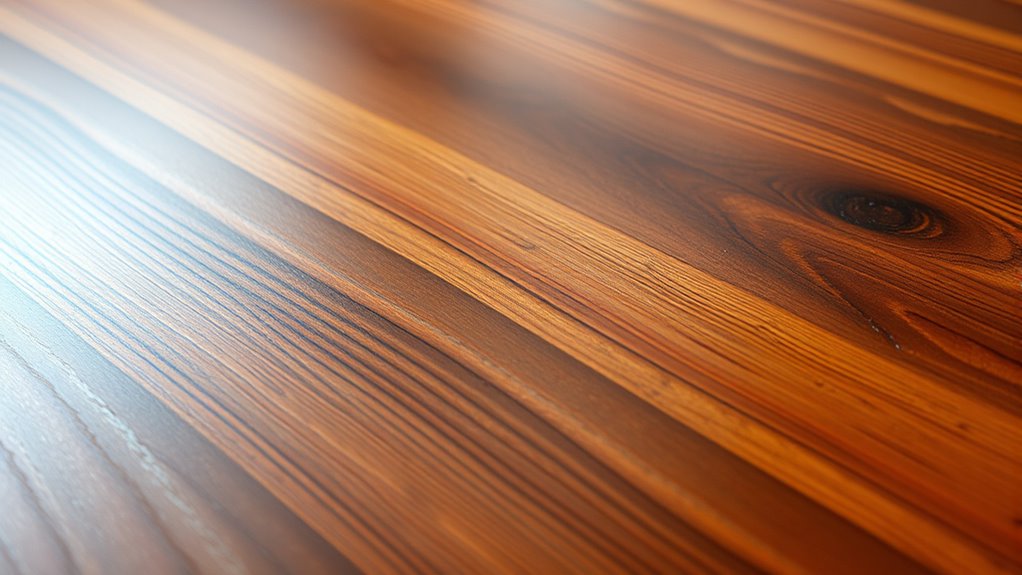

To refinish a scratched wood coffee table, start by cleaning the surface thoroughly and lightly sanding the scratched areas. Match a wood stain to your table’s color or go a shade darker for better coverage. Apply the stain evenly with a cloth or brush, wiping away excess and building up layers if needed. Finish with a furniture polish for shine and protection. For more detailed tips, you’ll find helpful guidance to restore your table beautifully.
Key Takeaways
- Clean and lightly sand the scratched area to smooth the surface before applying stain.
- Match or slightly darken the existing finish with a compatible wood stain for blending.
- Apply thin coats of stain with a cloth or brush, wiping excess for even color.
- Use furniture polish after staining to restore shine and protect the repaired surface.
- Maintain the table regularly with polish to prevent future damage and keep the finish vibrant.

Ever wondered how to restore your scratched wood coffee table to its original beauty? The good news is, you don’t need to be a professional to make it look like new again. With a few simple steps, you can effectively hide scratches and refresh the surface. The key is using the right products, like wood stain and furniture polish, combined with some careful preparation.
First, assess the depth of the scratches. Light surface scratches can often be treated with a simple application of furniture polish, which helps fill in minor marks and restores shine. For deeper scratches, you’ll need to use a wood stain that closely matches your table’s color. Pick a stain that matches the existing finish, or opt for a slightly darker shade if you want to add depth. Before applying any stain, clean the table thoroughly with a damp cloth to remove dust and debris. Then, gently sand the scratched area with fine-grit sandpaper to smooth out rough edges and create a proper surface for the stain to adhere to.
Assess scratch depth, then clean, sand, and match the stain for a seamless repair.
Once your surface is prepped, apply the wood stain with a clean cloth or brush, working within the grain of the wood. Be sure to apply it evenly and in thin coats to avoid drips or uneven coloring. Wipe away any excess stain promptly to prevent blotchiness. Depending on the depth of the scratches and the desired color, you may need to apply multiple coats, allowing each to dry completely before adding the next. After the stain has dried thoroughly, inspect the area. If the color looks consistent and smooth, you can move on to sealing and protecting the surface.
To finish, use furniture polish to restore the table’s shine and provide a protective barrier. Spray or apply the polish with a soft cloth, buffing gently in circular motions. This not only enhances the appearance but also helps conceal minor scratches and keeps the wood looking vibrant. Regular maintenance with furniture polish can help prevent future damage, making your table easier to clean and keeping it looking polished. Additionally, understanding personal debt forgiveness bills can help you manage your finances better, ensuring your furniture upkeep remains affordable.
With these steps, you’ll be able to breathe new life into your scratched wood coffee table. Patience is key—taking your time to match stains carefully and apply polish smoothly will ensure a professional-looking result. You don’t need fancy tools or extensive skills—just a little effort and the right products. Soon enough, your table will regain its original charm, ready to be enjoyed for years to come.
Frequently Asked Questions
Can I Refinish a Heavily Damaged or Gouged Wood Surface?
Yes, you can refinish a heavily damaged or gouged wood surface. Start by cleaning the area thoroughly, then apply wood filler to fill in deep gouges and scratches. Once it dries, use proper sanding techniques to smooth the surface, working from coarse to fine grit. This process helps restore the wood’s appearance and prepares it for staining or sealing, giving your table a fresh, polished look.
What Are Eco-Friendly or Non-Toxic Finishing Options?
You can choose eco-friendly or non-toxic finishes by using natural oils or plant-based finishes. These options are safe for your home and the environment, and they enhance the wood’s natural beauty. Apply food-grade mineral oil, tung oil, or plant-based polyurethane for a protective, non-toxic finish. These finishes are easy to use, sustainable, and free from harmful chemicals, giving your coffee table a beautiful, eco-conscious shine.
How Long Does the Refinishing Process Typically Take?
The refinishing process usually takes about 1 to 3 days. You’ll need to take into account drying time after applying each coat and the curing process before the table is fully ready. While it might seem like a quick fix, patience ensures a smooth, durable finish. Rushing can compromise your work, but waiting allows the finish to set properly. So, enjoy the moment of transformation, knowing your effort will pay off in longevity.
Will Refinishing Affect the Table’s Overall Value?
Refinishing your table can enhance its value by restoring its beauty through wood restoration and surface sanding. It shows you’ve invested effort to maintain or improve the piece, which can increase its appeal and worth. However, if done poorly or excessively, it might reduce value. Proper refinishing, with quality materials and craftsmanship, generally preserves or even boosts your table’s overall value and aesthetic appeal.
How Do I Prevent Future Scratches on My Wood Table?
To prevent future scratches on your wood table, follow good wood care tips like using coasters and placemats, and avoid placing sharp or heavy objects directly on the surface. Applying protective coatings such as a clear varnish or polyurethane creates a durable barrier, shielding the wood from scratches. Regularly clean the table with a soft cloth, and consider using felt pads on furniture to further protect it from accidental damage.
Conclusion
By following these simple steps, you can restore your scratched wood coffee table to its former beauty. Imagine noticing a scratch on your favorite piece, then quickly sanding, staining, and sealing to hide it. For example, Sarah did this last weekend and now her table looks brand new, sparking compliments from guests. With a little effort and patience, you can achieve similar results and enjoy a stunning, refreshed centerpiece in your living room.