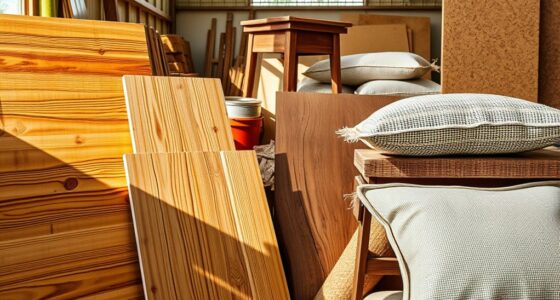
To protect your wood furniture from sun damage, keep it away from direct sunlight whenever possible. Use curtains, blinds, or UV-filtering window films to block harmful rays. Apply UV-resistant finishes or sealants regularly to strengthen protection. Position furniture in less exposed areas and rotate pieces to ensure even aging. Choosing finishes with built-in UV safeguards helps prevent fading and cracking. Continuing to explore proper strategies will help you keep your furniture looking its best for years.
Key Takeaways
- Keep furniture away from direct sunlight and use curtains, blinds, or UV-filtering window films.
- Apply UV-resistant finishes or sealants regularly to protect wood surfaces.
- Position furniture in less sun-exposed areas and rotate periodically to prevent uneven fading.
- Choose furniture with built-in UV safeguards or darker finishes for enhanced durability.
- Clean and reapply protective coatings consistently to maintain surface integrity and prolong lifespan.
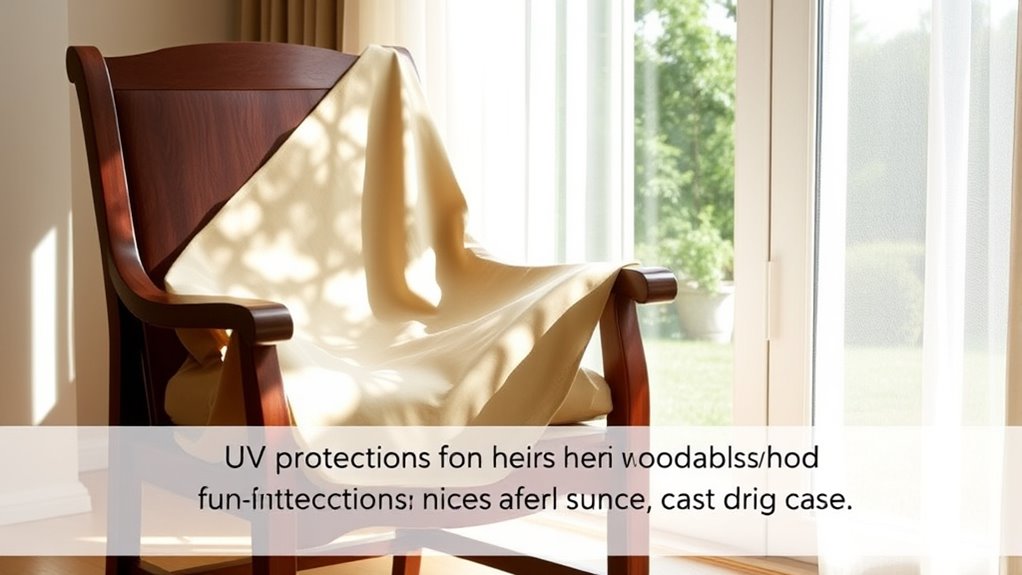
Sunlight can quickly fade and damage your wood furniture if you’re not careful. Over time, exposure to direct sunlight causes the wood’s finish to deteriorate, leading to discoloration, cracking, and warping. To prevent this, you need to pay attention to how you position your furniture and consider adding UV protection measures. Proper furniture placement plays a vital role in minimizing sun damage. Keep your wood pieces away from windows that receive intense sunlight, especially during peak hours. If relocating furniture isn’t possible, use curtains, blinds, or UV-filtering window films to block or diffuse harmful rays. These barriers help reduce the amount of ultraviolet light reaching your furniture, markedly slowing down the fading process.
Protect your wood furniture by avoiding direct sunlight and using UV filters or curtains.
UV protection is necessary when it comes to preserving the natural beauty of your wood. Applying a UV-resistant finish or sealant offers an extra layer of defense against harmful rays. These products are designed to absorb or reflect ultraviolet light, preventing it from penetrating deep into the wood. Regularly reapplying such finishes ensures your furniture maintains its color and structural integrity longer. Additionally, choosing furniture with UV-protective coatings during manufacturing can provide a built-in safeguard, so consider this when buying new pieces.
Another smart move is to rotate your furniture periodically. By shifting pieces to less sunny spots, you evenly distribute exposure and prevent one side from fading faster than the other. If your furniture is part of a display or in a sunlit room, consider placing decorative items like lamps or plants nearby to cast shadows or diffuse sunlight. This not only enhances your decor but also reduces direct light exposure.
Keep in mind that the type of wood and finish also influence how vulnerable your furniture is to sun damage. Softer woods and lighter finishes tend to show signs of fading more quickly. Investing in furniture with a darker stain or a protective veneer can help withstand prolonged sunlight exposure better. Also, maintaining the furniture’s finish by cleaning and reapplying protective coatings as recommended prolongs its lifespan and appearance.
Ultimately, protecting your wood furniture from sun damage requires a combination of strategic furniture placement, UV protection, and regular maintenance. Taking these steps now saves you from costly repairs or replacements later on. You’ll enjoy your beautiful, well-preserved wood pieces for years to come, all while maintaining their original charm and elegance.
Frequently Asked Questions
How Can I Tell if My Furniture Has Sun Damage?
You can tell if your furniture has sun damage by looking for furniture discoloration, especially uneven fading or bleaching. Also, check for surface cracking or warping, which often appear as the wood dries out and weakens. If the finish looks dull or patchy, those are signs of sun damage. Regularly inspecting your furniture helps you catch these issues early, so you can take steps to protect it better.
Are There Specific Types of Wood More Resistant to Sun Damage?
Certain wood species, like teak, cedar, and mahogany, are more resistant to sun damage due to their natural oils and dense grain patterns. These characteristics help them withstand UV rays better and resist fading or cracking. When choosing furniture, look for these types, as their grain patterns typically provide added protection. Keep in mind, even resistant woods benefit from regular maintenance and protective finishes to prolong their beauty and durability.
How Often Should I Reapply Uv-Protective Finishes?
Ever wonder how often you should reapply UV-protective finishes? Generally, you’ll want to do it every 1-2 years, depending on exposure and finish quality. The UV finish lifespan varies, but regular reapplications help maintain protection and prolong your furniture’s beauty. Don’t wait until signs of damage appear—staying proactive guarantees your wood stays vibrant and well-preserved. How often do you think your furniture needs a fresh coat?
Can Indoor Furniture Be Affected by Sunlight Through Windows?
Yes, indoor furniture can be affected by sunlight through windows. You should use window curtains or UV film to block or filter harmful UV rays that cause fading and damage. These options help protect your wood furniture from sun damage, keeping its color and finish intact. Regularly adjusting curtains or applying UV film guarantees your furniture stays beautiful longer, even when exposed to natural sunlight indoors.
What Are Natural Remedies to Repair Sun-Damaged Wood?
Imagine your sun-damaged wood as a fading photograph. To revive it, you can use natural remedies like wood stain removal with a mixture of vinegar and olive oil, gently restoring color. Follow up with natural oil treatments such as linseed or tung oil to nourish and protect the surface. These simple, eco-friendly methods breathe new life into your furniture, making it look vibrant and well-cared-for once again.
Conclusion
By taking simple steps like using UV protectant sprays and placing furniture away from direct sunlight, you can considerably extend the life of your wood pieces. Did you know that exposure to sunlight can cause furniture to fade by up to 90% over just a few years? Protecting your furniture not only preserves its beauty but also saves you money in the long run. Stay proactive, and your wood furniture will remain stunning for years to come.