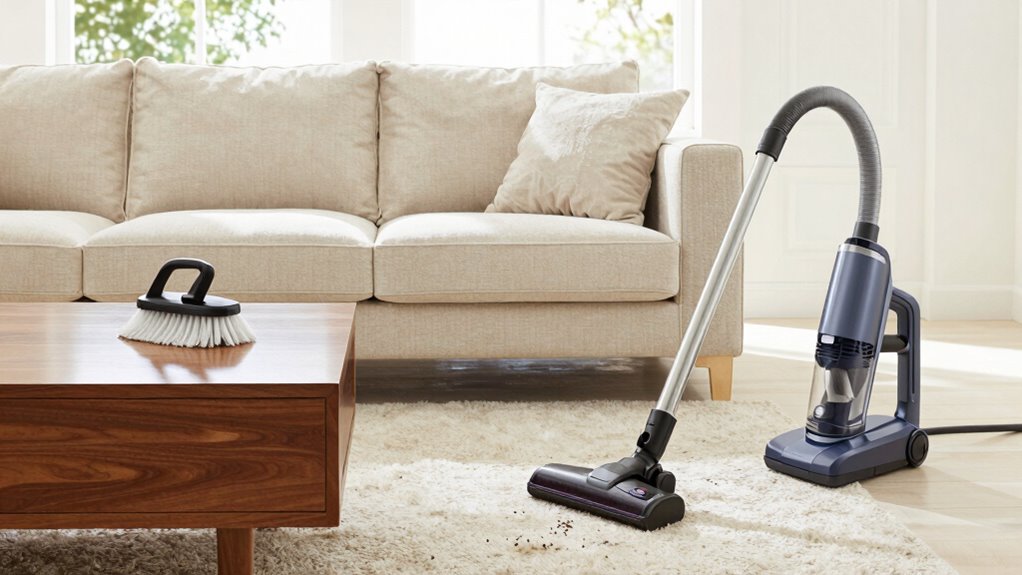

After a home renovation, start by removing loose dust with a vacuum or soft brush. Identify your furniture material to choose the right cleaning method—use a mild detergent for fabric, a leather cleaner for leather, or a vinegar-water mix for wood. Always test cleaners first and avoid excess moisture. Proper dust removal and gentle cleaning will protect your furniture and restore its shine. Keep exploring for more tips to keep your furniture looking its best longer.

Get furniture and decor delivered free — and shop member deals
- Fast, free delivery on millions of items
- Access to Prime Big Deal Days deals on October 6–7
- Prime Video, Amazon Music and more included
Key Takeaways
- Remove loose dust and debris with vacuuming or a soft brush before cleaning.
- Identify furniture material and select appropriate eco-friendly cleaning methods.
- Use mild detergents or specialized cleaners, testing on small areas first.
- Wipe surfaces gently to avoid damage, and dry thoroughly after cleaning.
- Buff furniture with a dry cloth to restore shine and ensure no residual moisture remains.
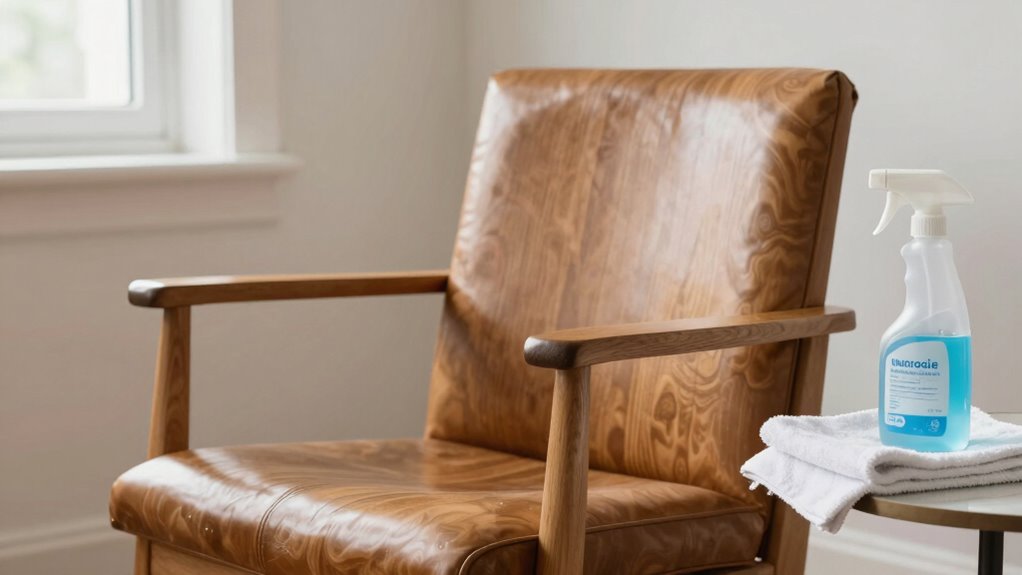
After the loose dust is gone, it’s time to address stain treatment. Renovation debris can sometimes cause stains or marks, especially if paint, adhesives, or other materials have splattered onto your furniture. Identify the type of fabric or material you’re dealing with to choose the correct cleaning method. For fabric upholstery, a mixture of mild detergent and water often works well; dab gently with a soft cloth, avoiding excessive moisture that could embed stains further. For leather furniture, use a leather cleaner or a damp cloth with a small amount of mild soap, then wipe dry immediately to prevent damage. If there are persistent stains, consider specialized stain removers designed for your furniture’s material. Always test a small, inconspicuous area first to ensure the cleaner doesn’t discolor or damage the surface. Proper dust removal is critical to prevent particles from embedding deeper into the fabric or finish during cleaning. Regular vacuuming can help keep dust and debris at bay and make the cleaning process easier. For wooden furniture, dust removal is just as critical, but you also want to treat any spots or smudges. Use a wood-safe cleaner or a mixture of vinegar and water to gently wipe the surface. For stubborn stains or marks, a bit of baking soda on a damp cloth can help lift the stain without harming the finish. Additionally, understanding cleaning techniques specific to different materials ensures effective and safe cleaning. Proper biodiversity practices involve selecting environmentally friendly cleaning products that minimize chemical impact on your surroundings. Incorporating eco-friendly cleaning products can help reduce your environmental footprint while maintaining your furniture’s integrity. Remember to avoid harsh chemicals that can strip the finish or cause discoloration. After cleaning, buff the furniture with a dry cloth to restore shine and remove any residual moisture.
Throughout this process, ensure your workspace is well-ventilated, especially if you’re using chemical cleaners. Take your time, and don’t rush—thorough dust removal followed by targeted stain treatment will leave your furniture looking refreshed and ready for everyday use again. Proper cleaning after renovation not only improves appearance but also extends the life of your furniture, making it a worthwhile effort.
eco-friendly furniture cleaner for wood
As an affiliate, we earn on qualifying purchases.
As an affiliate, we earn on qualifying purchases.
Frequently Asked Questions
Can I Use Vinegar to Clean Painted Furniture Safely?
Yes, you can use vinegar to clean painted furniture safely, but you should do so carefully. Vinegar safety is important because it’s mild and non-toxic, making it a good option for painted surfaces. Mix equal parts vinegar and water to create a gentle cleaning solution. Test it on a small, hidden area first to confirm it won’t damage the paint. Avoid using full-strength vinegar to prevent any potential harm.
How Long Should I Wait Before Cleaning Newly Installed Furniture?
You should wait at least 48 to 72 hours before cleaning newly installed furniture. This allows the paint, sealants, and finishes to cure properly, reducing damage from cleaning agents. During this time, focus on furniture maintenance by avoiding harsh cleaners and excessive moisture. Remove renovation debris carefully with a soft cloth or vacuum. Patience guarantees your furniture stays in great condition and maintains its appearance after the renovation.
Are DIY Cleaning Solutions Effective for Heavy Renovation Dust?
Diy cleaning solutions can be surprisingly effective for heavy renovation dust, but don’t assume they’re magic. You might be surprised how well eco-friendly cleaning methods work if you use the right ingredients like vinegar or baking soda. For stubborn dust, start with gentle solutions to avoid damage, then escalate if needed. Just remember, a proactive approach with eco-friendly cleaning can reveal your furniture’s true beauty faster than you think.
What Tools Are Best for Cleaning Intricate Furniture Carvings?
You should use specialized cleaning tools like soft brushes, compressed air, and small, gentle vacuums to clean intricate furniture carvings. These tools reach into detailed carving techniques without damaging delicate edges. A soft-bristled toothbrush is perfect for removing dust from tight spaces, while compressed air blows out debris. Always work carefully, ensuring you don’t harm the craftsmanship, and consider using a gentle, non-abrasive cleaner for best results.
Should I Remove Furniture Covers Before Cleaning?
You should definitely remove furniture covers before cleaning. Many believe covers protect furniture, but they can trap dust, debris, and moisture, potentially causing damage. Removing covers allows you to thoroughly clean and inspect furniture for dust buildup or damage. While furniture protection is essential, cover removal guarantees you can properly clean intricate carvings and surfaces, preventing further issues. Always wash covers separately to keep everything fresh and clean.
Conclusion
Cleaning your furniture after a renovation might seem intimidating, but with the right approach, you can restore its beauty quickly. Remember to test cleaning products first and work gently to avoid damage. Did you know that regular cleaning can extend furniture lifespan by up to 30%? Staying consistent with these steps not only refreshes your space but also protects your investment, ensuring your furniture stays stunning for years to come.
Halloween Picks
halloween
As an affiliate, we earn on qualifying purchases.