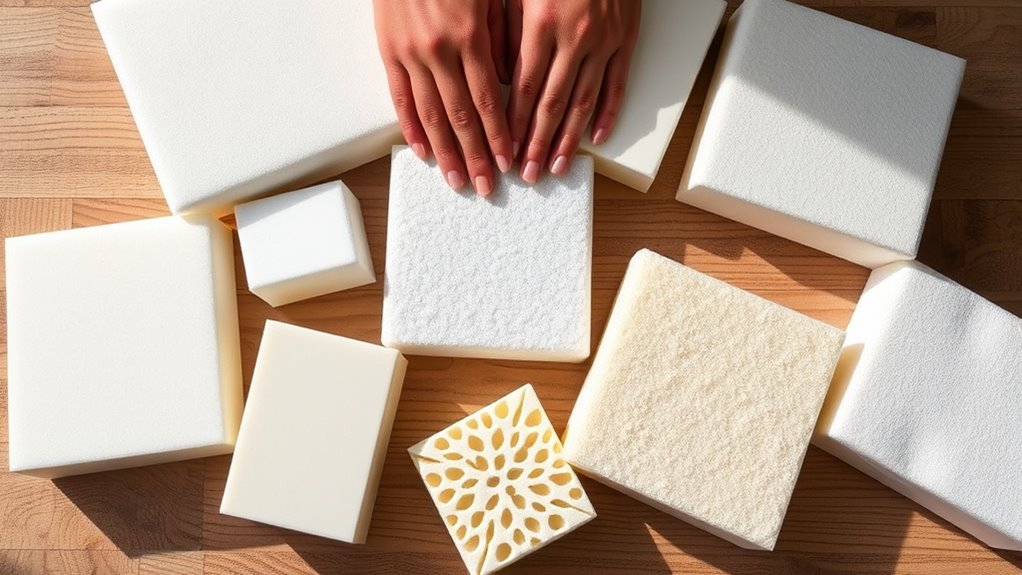

When choosing the right foam for seat cushions, consider how much support and durability you need. Higher-density foam offers longer-lasting support, making it better for everyday use or heavier individuals, while lower-density foam is softer and more affordable but may wear faster. Think about your comfort preferences—softer for a plush feel or firmer for better support and posture. Keep in mind that the right balance can guarantee lasting comfort—you’ll find helpful tips if you keep exploring.
Key Takeaways
- Determine the cushion’s intended use and frequency of use to select appropriate foam density and durability.
- Choose higher-density foam for long-lasting support, especially for heavier individuals or daily use.
- Opt for softer foams if comfort and a plush feel are priorities, but be prepared for potentially quicker wear.
- Balance foam firmness with density to achieve both supportive stability and pressure relief.
- Consider supplier quality and manufacturing standards to ensure you select durable, high-quality foam.

Are you unsure which foam best suits your seat cushion needs? Choosing the right foam can feel overwhelming, but understanding foam density and firmness levels makes the decision easier. Foam density refers to the weight of the foam per cubic foot, which directly impacts durability and support. Higher-density foam tends to be more durable and provides better support over time, making it ideal for daily use or heavier individuals. Lower-density foam, on the other hand, is lighter, softer, and more affordable, but it might wear out faster or offer less support. When selecting foam for your seat cushion, consider how much use it will get and your comfort preferences. If you want a cushion that lasts longer and maintains its shape, lean toward higher-density options. If you prefer a softer, plush feel and don’t mind replacing the cushion sooner, lower-density foam might suit you better. Additionally, since many foam types are rated by their cost-effective production methods, choosing a supplier with efficient manufacturing can ensure better quality at a reasonable price.
Firmness levels are equally important because they determine how soft or supportive the cushion will feel. Firmness is typically measured on a scale from soft to very firm, and your choice depends on your comfort needs and body type. If you prefer sinking into your seat and crave a plush experience, softer foams with lower firmness levels are ideal. They offer more give and can help relieve pressure points, especially if you spend long hours seated. Conversely, if you need more support, especially for your lower back or hips, medium to firm foams will keep you stable and prevent sinking too deep. Firmness also influences posture; a firmer cushion encourages better alignment, which can reduce discomfort during extended periods of sitting.
When choosing foam, it’s essential to strike a balance between density and firmness. A high-density foam with a softer firmness might provide both durability and comfort, whereas a lower-density foam with a firm feel might be less comfortable and less supportive over time. Testing out different options in person or reading reviews can help you gauge what feels best for your body and your needs. Keep in mind that personal preferences vary, and what works for someone else might not work for you. Ultimately, selecting the right foam involves considering how much support you need, how long the cushion should last, and how soft or firm you want your sitting experience to be. Making an informed choice ensures your seat cushion will be comfortable, supportive, and durable for years to come.
Frequently Asked Questions
How Does Foam Density Affect Cushion Durability?
Higher foam density means your cushion will last longer because it withstands foam compression better. During density testing, denser foam shows less deformation over time, assuring durability. You’ll notice that low-density foam compresses more quickly, leading to sagging and reduced support. So, when selecting foam, prioritize density to guarantee your seat cushion stays comfortable and supportive, even after prolonged use.
What Are Eco-Friendly Foam Options for Seat Cushions?
Did you know that eco-friendly foam options now make up over 30% of the market? You can choose from recycling initiatives or organic material options that reduce environmental impact. These foams are made using sustainable practices, like repurposing plastic bottles or natural latex. By selecting eco-friendly foam, you support a healthier planet while enjoying comfortable, durable cushions. It’s a simple step toward more sustainable living that makes a big difference.
Can Foam Be Customized for Orthopedic Support?
Yes, foam can be customized for orthopedic support. You can choose memory foam for its contouring properties or gel foam to add cooling and extra support. By selecting different densities or layering these materials, you can tailor your seat cushion to target specific pressure points and provide ideal comfort. Customization helps guarantee your cushion aligns with your unique orthopedic needs, offering better support and reducing discomfort during prolonged sitting.
How Does Temperature Impact Foam Comfort and Longevity?
You might worry that temperature sensitivity affects foam comfort and longevity, but it actually varies with conditions. When exposed to high heat, foam softens, providing more comfort, yet accelerates foam aging, reducing its lifespan. Cold temperatures make foam firmer, which might feel less comfortable. To guarantee durability, choose foams designed to resist temperature fluctuations, and keep your cushions in a stable environment to maintain comfort and extend their lifespan.
What Maintenance Is Required to Preserve Foam Cushions?
To preserve your foam cushions, you should regularly clean them using gentle cleaning techniques, like vacuuming and spot cleaning with mild fabric protection products. Protect the fabric with a suitable spray to prevent stains and spills. Avoid direct sunlight, which can damage the foam, and rotate cushions periodically to maintain even wear. This routine helps extend the lifespan of your cushions and keeps them looking fresh and comfortable longer.
Conclusion
Remember, you get what you pay for, so choose quality foam that suits your comfort needs. Take the time to evaluate firmness, durability, and your personal preferences. The right foam can transform your seat into a cozy retreat, making every sit a pleasure. Don’t settle for less—invest wisely and enjoy the comfort that lasts. After all, the comfort of your seat is worth every effort to choose wisely.