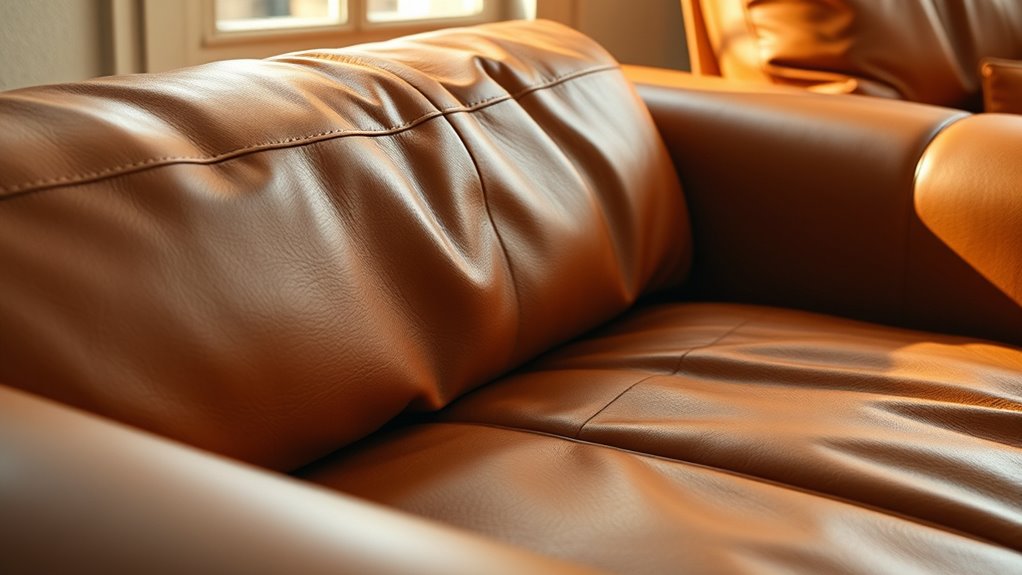

To care for your leather sofas and chairs, clean them regularly with gentle, specialized leather cleaners and wipe with a soft cloth. Apply a conditioner every few months to keep the leather supple, and protect your furniture from sunlight and heat sources. Blot spills immediately and avoid harsh chemicals. Using slipcovers and rotating cushions can prevent uneven wear. Keep up with these routine steps to maintain their look and longevity; continue for more effective care tips.
Key Takeaways
- Clean regularly with gentle, leather-specific cleaners and a soft cloth to prevent dirt buildup.
- Apply a suitable leather conditioner every few months to keep the surface supple and prevent cracking.
- Protect furniture from direct sunlight and heat sources to prevent fading and drying.
- Blot spills immediately with a dry cloth; avoid excessive moisture and harsh chemicals.
- Use throws or slipcovers and rotate cushions to minimize wear and extend the furniture’s lifespan.
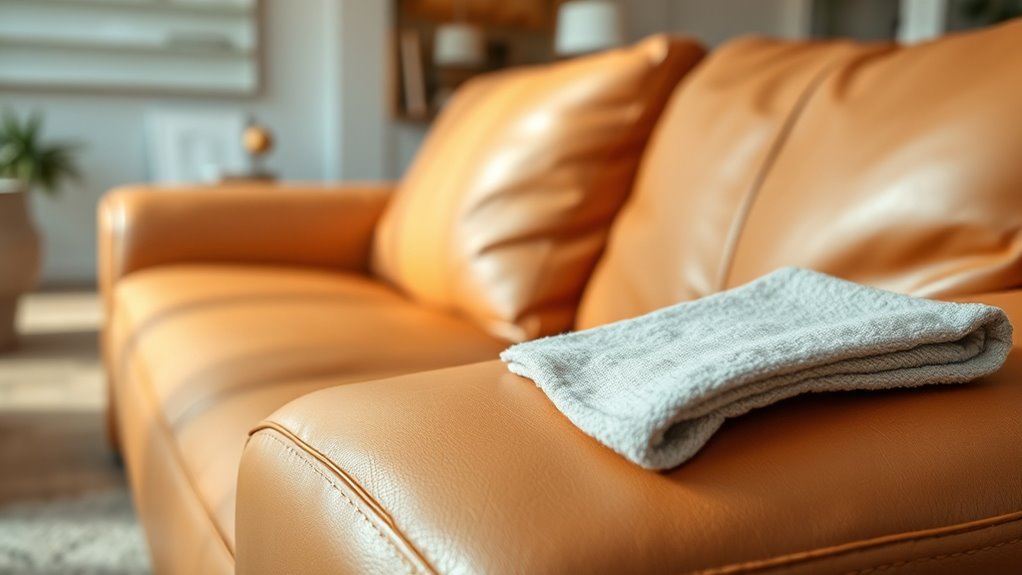
Leather sofas and chairs can add timeless elegance to your home, but they require proper care to stay looking their best. To maintain their beauty, you need to focus on regular leather cleaning and consistent upholstery maintenance. Proper cleaning prevents dirt and oils from building up, which can cause the leather to crack or fade over time. Using the right products and techniques is essential—harsh chemicals or abrasive tools can damage the surface, so stick to gentle cleaners specifically formulated for leather. Typically, a soft cloth dampened with a mild leather cleaner works well for spot cleaning. Avoid soaking the leather or applying excessive pressure, as that can lead to scratches or discoloration.
Upholstery maintenance extends beyond cleaning. It involves a routine that keeps your leather looking vibrant and prevents premature aging. Dust your furniture regularly with a microfiber cloth to remove surface debris. Every few months, consider applying a leather conditioner designed for your type of leather. This helps keep the material supple, prevents cracking, and enhances its natural shine. When choosing a conditioner, look for one that’s free of harsh chemicals and is compatible with your leather type—whether it’s aniline, semi-aniline, or protected leather. Applying the conditioner in a thin, even layer and buffing gently with a soft cloth ensures thorough coverage without leaving residue. Additionally, understanding leather quality assessment can help you choose the best products and maintenance routines for your furniture.
It’s also vital to protect your furniture from environmental factors. Keep your leather away from direct sunlight, which can cause fading and drying, and avoid placing it near heat sources like radiators. If you spill something, address it immediately by blotting with a clean, dry cloth. Don’t rub or use excessive moisture, as this can spread the stain or damage the leather’s surface. For stubborn stains, consult professional leather cleaners rather than risking further harm with home remedies.
In addition, consider the placement of your furniture. Using throws or slipcovers can protect high-use areas from wear and tear, especially if you have pets or children. Regularly rotate cushions if your leather furniture includes them, to ensure even wear and prevent sagging or indentations. Overall, consistent maintenance and proper cleaning are your best tools for preserving the look and longevity of your leather furniture. When you stay attentive to these details, your leather sofas and chairs will continue to elevate your space with their classic appeal for years to come.
Frequently Asked Questions
Can Leather Sofas Be Used Outdoors Safely?
Leather sofas aren’t designed for outdoor use because they lack outdoor durability and weather resistance. Exposure to sun, rain, and humidity can cause leather to crack, fade, and deteriorate quickly. If you want outdoor furniture, look for pieces specifically made with weather-resistant materials like treated leather or synthetic options. Protect your investment by keeping leather furniture indoors or under covered areas to maintain its appearance and longevity.
What Are the Best Cleaning Products for Antique Leather?
You think you can just grab any old cleaner for your antique leather? Think again! Use gentle, pH-balanced products like a mix of mild soap and distilled water, or specialized leather cleaners. For leather restoration, avoid harsh chemicals that damage the patina. Mastering cleaning techniques keeps your vintage treasure pristine. Trust me, your antique leather will thank you by aging gracefully, not cracking under your reckless cleaning spree.
How Often Should I Condition My Leather Furniture?
You should condition your leather furniture every 6 to 12 months, depending on its usage and exposure. Following a regular leather care schedule helps maintain its suppleness and prevents cracking. Keep in mind that over-conditioning can lead to buildup, so adjust the leather conditioning frequency based on your furniture’s condition. Regularly inspecting your pieces guarantees they stay beautiful and durable for years to come.
Are There Eco-Friendly Leather Care Options?
Yes, there are eco-friendly leather care options. You can choose vegan leather products, which are animal-friendly and often more sustainable. For natural cleaning, use plant-based or homemade solutions like a mix of water and a small amount of gentle soap or vinegar. These options help protect your furniture and the environment, giving you a safe, chemical-free way to maintain your leather or vegan leather pieces effectively.
How Do I Remove Ink Stains From Leather?
To remove ink stains from leather, act quickly with ink stain removal. Dab gently with a soft cloth dampened with rubbing alcohol or a specialized leather cleaner, avoiding rubbing to prevent spreading. Follow up with leather cleaning tips like applying a conditioner afterward to restore moisture. Test any product on a hidden area first to make sure it doesn’t damage the leather, and always use gentle, non-abrasive solutions for best results.
Conclusion
By following these simple steps, you’ll keep your leather loveseat luxurious and your sofa stunning. Regular cleaning, quick spills, and proper conditioning prevent problems and prolong the life of your furniture. Remember, consistent care creates comfort and confidence in your cushions’ condition. So, stay diligent, don’t delay, and enjoy your gorgeous, gleaming leather for years to come. Keep your chairs charming and your couches enthralling with just a little care and commitment!