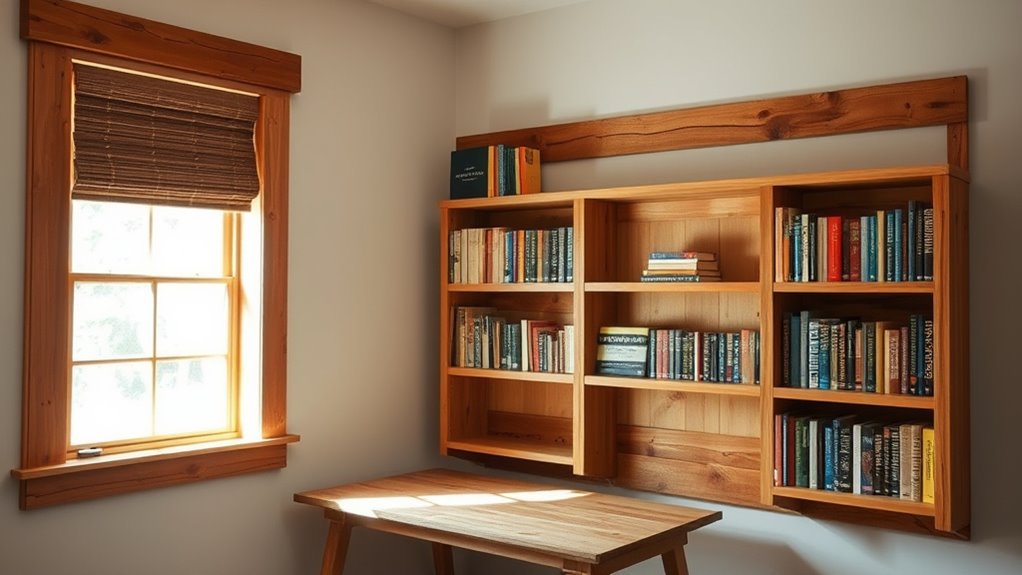

To construct built-in bookshelves on a budget, start by carefully planning your space and creating detailed blueprints to guarantee accuracy. Use affordable materials like plywood or reclaimed wood, and gather basic tools such as saws and drills. Measure precisely and design adjustable shelves for flexibility. Finish with paint or stain to match your decor, and maintain the shelves regularly for longevity. Stick with these tips, and you’ll discover more ways to create stylish, budget-friendly storage solutions.

Get furniture and decor delivered free with Prime
- Fast, free delivery on millions of items
- Prime Video, Amazon Music and more included
- Member-only deals all year
Key Takeaways
- Use affordable materials like plywood or reclaimed wood for cost-effective, customizable shelves.
- Measure and plan carefully with detailed blueprints to avoid costly mistakes during construction.
- Opt for simple, open designs or modular components to save on complex carpentry costs.
- Invest in basic tools and learn online tutorials to DIY and reduce labor expenses.
- Incorporate adjustable brackets or cleats for flexible shelf heights without additional structural costs.
As an affiliate, we earn on qualifying purchases.
Planning Your Space and Design Ideas
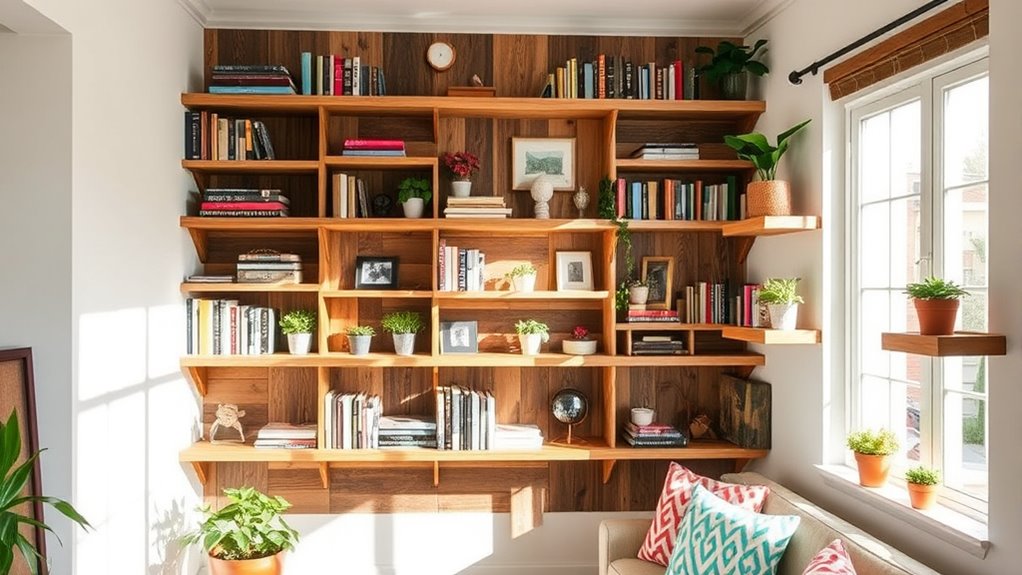
Before you begin building built-in bookshelves, it’s important to plan your space carefully. Start by evaluating the room’s dimensions and identifying the best location for your shelves. Focus on space optimization; consider how much storage you need and how the shelves will fit seamlessly into your existing decor. Think about incorporating lighting solutions—built-in lighting can highlight your collection and make the space more inviting. Decide whether you want open shelves for display or enclosed units for a cleaner look. Sketch your design, paying attention to proportions and accessibility. Incorporating personal preferences can help create a space that truly reflects your style and needs. By planning thoroughly, you’ll ensure your built-in bookshelves maximize functionality while enhancing your room’s style—all without clutter or wasted space.
Selecting Affordable Materials and Tools

Are you wondering how to keep costs low without sacrificing quality when choosing materials and tools for your built-in bookshelves? Focus on selecting cost effective materials and budget friendly tools. Start with these options:
Keep costs low by choosing affordable materials and essential tools for your built-in bookshelves.
- Plywood or MDF: These are affordable, versatile, and easy to work with, making them ideal for shelves and sides.
- Reclaimed wood: Reuse old furniture or pallets for a rustic look at a fraction of the cost.
- Basic hand tools: Invest in essential tools like a saw, drill, and screwdriver, which are affordable and sufficient for most DIY projects.
- Understanding material properties: Knowing the benefits of different materials can help you choose the most durable and cost-effective options for your project.
Using these options helps you stay within budget while still building sturdy, attractive shelves. Prioritize quality where it counts, and choose economical materials for the rest.
Measuring and Creating a Precise Blueprint
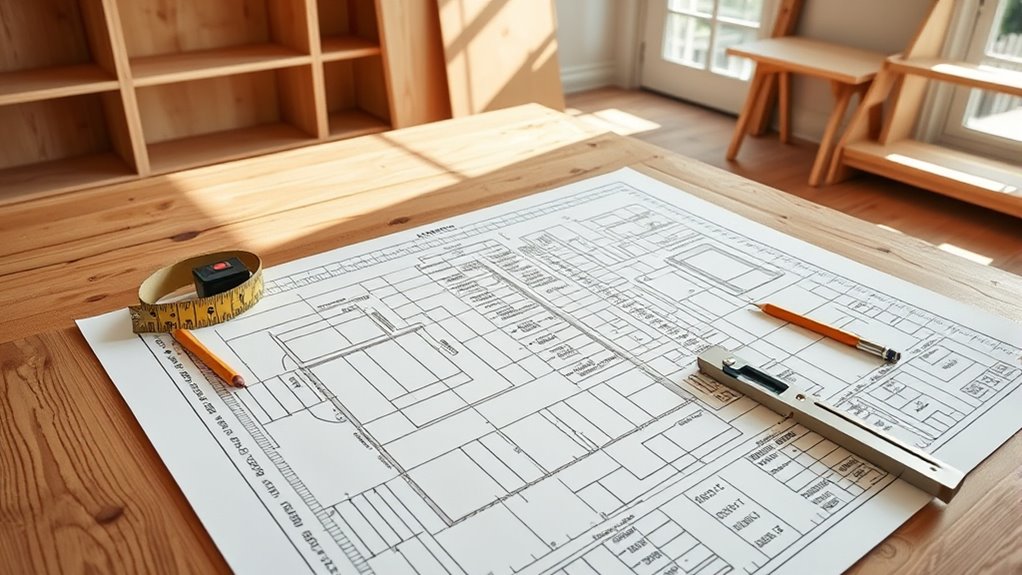
Once you’ve selected your materials and tools, the next step is to measure your space accurately and create a detailed blueprint. Accurate measuring guarantees your shelves fit perfectly and prevents costly mistakes. Use a tape measure to record the width, height, and depth of the area where the shelves will go, double-checking your measurements for measuring accuracy. Note down each measurement carefully, including any irregularities or obstacles like electrical outlets or moldings. When creating your blueprint, include precise dimensions and details such as shelf heights, spacing, and support locations. Clear blueprint details help guide your build process and ensure everything aligns correctly. Taking the time to measure carefully and draft an exact plan saves you time and money in the long run. Additionally, consulting online resources or tutorials can provide helpful tips for creating accurate blueprints and measurements.
Building the Frame: Walls and Support Structures

To build a sturdy frame for your built-in bookshelves, start by marking the wall where the supports will go, based on your blueprint. Next, follow these steps:
- Attach wooden supports directly to the wall using wall anchoring, ensuring they’re level and securely fastened.
- Use a level and measuring tape to verify that each support is perfectly aligned, providing a stable base.
- Connect the supports with horizontal braces, creating a robust frame that can hold shelves and books without sagging.
- Incorporate structural support techniques to ensure the frame remains durable and safe over time.
Focus on wall anchoring techniques to guarantee the wooden supports stay firmly in place over time. Properly secured supports form the backbone of your bookshelf, making it both sturdy and reliable.
Installing Shelves and Adjusting for Flexibility
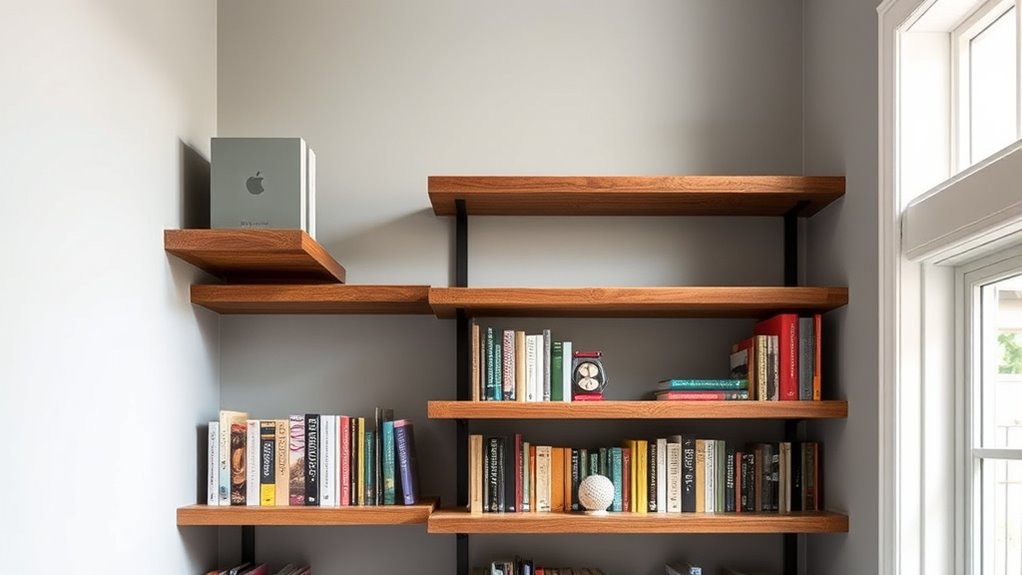
After securely installing the support frame, you can move on to placing the shelves themselves. Start by measuring the space between supports to ensure your shelves fit snugly. As you install each shelf, consider adjusting shelf heights to accommodate different book sizes or decorative items. Use adjustable shelf brackets or cleats to make customizing shelf layouts easy—you can move shelves up or down later without much effort. If your shelves are fixed, plan the layout carefully beforehand, leaving space for taller books or objects. Take your time to level each shelf for a neat appearance. Flexibility is key when building on a budget, so prioritize adjustable components that allow you to modify your shelves as your needs change. Incorporating micro influences in your shopping choices can help you find affordable, stylish options for shelving accessories and organizational tools.
Finishing Touches: Painting, Staining, and Decor
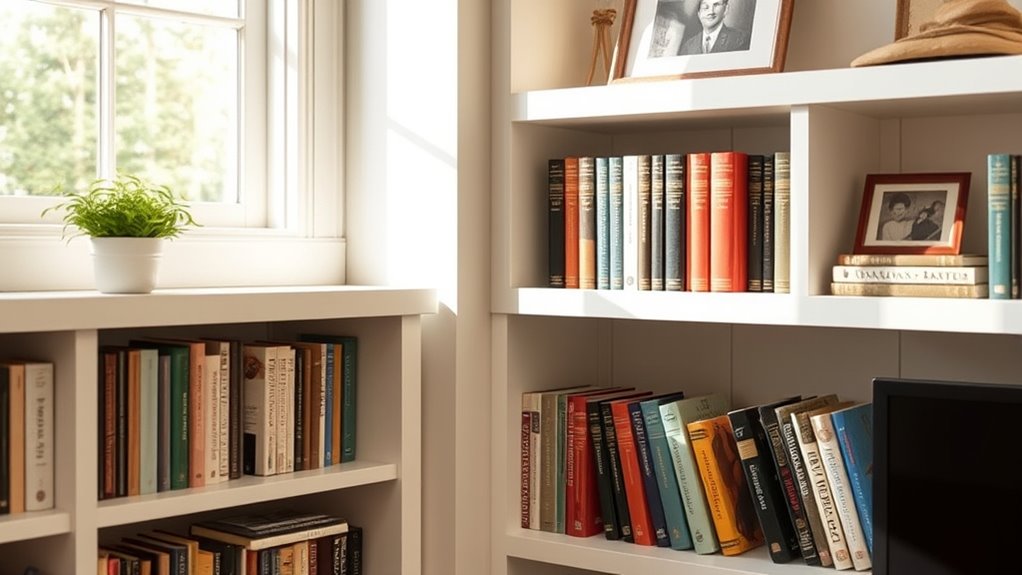
Once you’ve built your shelves, it’s time to choose how to finish them with paint or stain to match your space. You can add decorative accessories like bookends or small plants to personalize the look. These finishing touches really make your built-ins stand out and feel complete. Incorporating aesthetic wall organization can further enhance the visual appeal and functionality of your shelves.
Choosing Paint or Stain
Choosing between paint and stain for your built-in bookshelves depends on the look you want to achieve and how much you want to highlight the wood’s natural grain. Stain enhances the wood’s texture and offers a warm, natural feel, while paint provides a bold color choice and a smooth finish. Consider these options:
- Opt for stain if you prefer earthy tones and want to showcase the wood’s character.
- Choose paint for vibrant color choices and a uniform, matte or glossy finish.
- Think about finish durability—paint generally resists scratches better, while stain may require sealing for added protection.
- If you’re considering a specific style, exploring preppy dog names can inspire a refined and trendy aesthetic that complements your decor.
Your decision should align with your style preferences and how much maintenance you’re willing to do to keep your shelves looking great.
Adding Decorative Accessories
Wondering how to make your built-in bookshelves stand out? Adding decorative accessories is a simple way to elevate their look. Think framed photos, small potted plants, or unique collectibles that reflect your personality. Use styling tips like grouping items in odd numbers or varying heights to create visual interest. Mix books with decorative objects to avoid a cluttered appearance, and keep some shelves less crowded for balance. Incorporate decorative accessories that complement your color scheme and overall decor style. Don’t be afraid to experiment with different arrangements until you find what feels right. These finishing touches add character and warmth, transforming your built-ins from functional storage into eye-catching focal points. To enhance the farmhouse style, consider incorporating vintage or rustic accessories to further unify the design.
Tips for Maintaining and Customizing Your Shelves

Keeping your shelves clean with regular dusting helps them stay looking fresh. You can also easily adjust shelf heights to fit different items and maximize space. Personalizing your decor style adds a unique touch that reflects your personality and keeps the shelves interesting. Incorporating aquatic exercise themes or accessories can create a calming, water-inspired ambiance that enhances your space.
Regular Cleaning Practices
Regular cleaning is essential for keeping your built-in bookshelves looking their best and prolonging their lifespan. Proper dust control and air quality help prevent damage and keep your books in top shape. To maintain this, start by:
- Dusting shelves weekly with a microfiber cloth to trap dust and prevent buildup.
- Using a gentle vacuum attachment to reach corners and tight spaces, reducing airborne dust particles.
- Wiping surfaces with a damp cloth occasionally to remove stubborn dirt without harming the finish.
These practices help minimize dust circulation, improving air quality and protecting your collection. Regular cleaning also allows you to spot any issues early, like loose shelves or signs of wear, so you can address them promptly. Keep up with these simple routines for beautiful, long-lasting bookshelves.
Adjusting Shelf Heights
After cleaning your shelves, it’s a good time to contemplate adjusting their heights to better suit your collection. Adjusting shelf heights allows for flexible storage, accommodating larger books or decorative items easily. To optimize space, consider the following:
| Item Type | Ideal Shelf Height |
|---|---|
| Tall books | 14-16 inches |
| Small collectibles | 6-8 inches |
| Decorative objects | 10-12 inches |
| Standard paperbacks | 8-10 inches |
Personalizing Decor Styles
- Display framed photos or artwork that hold special meaning.
- Incorporate unique vases, sculptures, or vintage finds for visual interest.
- Use baskets or decorative boxes to organize and add texture.
- Regularly assess and rotate items to prevent clutter buildup, ensuring your shelves remain organized and functional.
Frequently Asked Questions
How Can I Maximize Storage in a Small Space?
To maximize storage in a small space, focus on smart organization and multifunctional furniture. Use vertical space for shelves, especially if they match your decorating style and color schemes, to keep clutter out of sight. Incorporate hidden storage options like ottomans or beds with drawers. Opt for light colors to make the room feel larger, and keep decor minimal to create an open, airy feel that enhances your storage potential.
What Are Cost-Effective Ways to Reinforce Shelves?
You won’t believe how easily your shelves can hold the weight of a thousand books with just a few simple shelf reinforcement techniques! For affordable support options, try adding L-brackets or metal corbels underneath the shelves. You can also use thicker wood or install additional supports along the length. These cost-effective support options will turn your flimsy shelves into sturdy, reliable storage solutions that can handle even your heaviest collections.
How Do I Prevent Shelves From Sagging Over Time?
To prevent shelves from sagging over time, you should choose sturdy shelf material choices like solid wood or plywood. Incorporate support brackets or center supports to add stability, especially for heavier items. Aesthetic design tips include using decorative molding or hidden supports for a seamless look. Regularly check and tighten hardware, and avoid overloading shelves to maintain their shape and longevity.
Are There Eco-Friendly Materials Suitable for Built-In Shelves?
You’re wondering if eco-friendly materials suit built-in shelves. Absolutely, sustainable wood is a great choice because it’s harvested responsibly and offers durability. Recycled materials, like reclaimed wood or recycled metal, also work well, reducing waste and environmental impact. These options not only help the planet but can add unique character to your shelves. Choose these eco-friendly materials for a sustainable, stylish, and long-lasting built-in solution.
How Can I Incorporate Lighting Into Budget-Friendly Shelves?
To incorporate lighting into your shelves cost-effectively, consider using LED strip lighting, which provides bright, energy-efficient illumination. You can find affordable, easy-to-install options, including battery-powered LED strips, so you don’t need to worry about wiring or outlets. Attach the strips under shelves or along edges for a sleek look. This approach keeps costs low while adding a modern touch and functional light to your built-ins.
Conclusion
With a little creativity and careful planning, you can turn your space into a stunning bookshelf haven without breaking the bank. Think of your DIY project as a blank canvas—every nail and shelf adding to your masterpiece. So, roll up your sleeves, trust your instincts, and remember: the most beautiful shelves are built with passion and patience. Your perfect, budget-friendly library awaits—are you ready to make it happen?
Halloween Picks
halloween
As an affiliate, we earn on qualifying purchases.