Antique furniture often develops smells due to natural aging, mold growth, residual chemicals, or being exposed to moisture over time. Common odors like mustiness suggest mold or dampness, while chemical scents come from past finishes or treatments. Pet dander, hidden stains, or old fabrics can also cause lingering odors. To truly freshen up your piece, understanding the underlying cause is key—keep exploring to discover effective cleaning and deodorizing tips.
Key Takeaways
- Natural aging, dirt, mold, and old finishes can cause persistent odors in antique furniture.
- Mold and musty smells often indicate moisture issues or organic decay within the wood.
- Residual chemicals from past treatments or finishes may emit lingering chemical odors.
- Pet fur, old fabrics, or environmental factors can embed odors in hidden compartments and surfaces.
- Proper cleaning, ventilation, and moisture control are essential to prevent and eliminate antique furniture odors.
Why Does My Antique Furniture Smell?
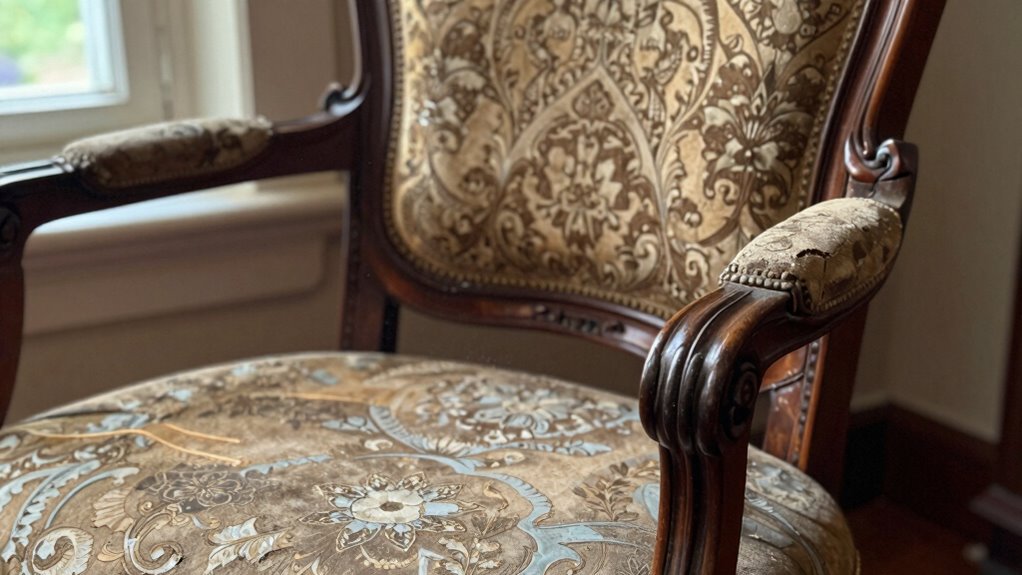
Have you ever wondered why your antique furniture has a distinct smell? It’s often due to the natural aging process and accumulated dirt, mold, or old finishes. Over time, wood can absorb moisture, leading to odors that persist even after cleaning. Effective furniture restoration involves various restoration techniques to address these issues, such as cleaning, deodorizing, and sometimes refinishing surfaces. These methods help remove embedded smells and restore your furniture’s original character. The scent may also come from the materials used in its construction or previous storage conditions. Understanding why your antique furniture smells is the first step toward restoring it properly. Proper restoration techniques can effectively eliminate unwanted odors and bring new life to your cherished piece. Additionally, environmental factors like humidity and storage environment can influence odors, making proper storage practices essential for maintaining freshness. Regular maintenance and climate control can also help prevent odors from developing in the future.
What Are Common Odors and What Do They Mean?
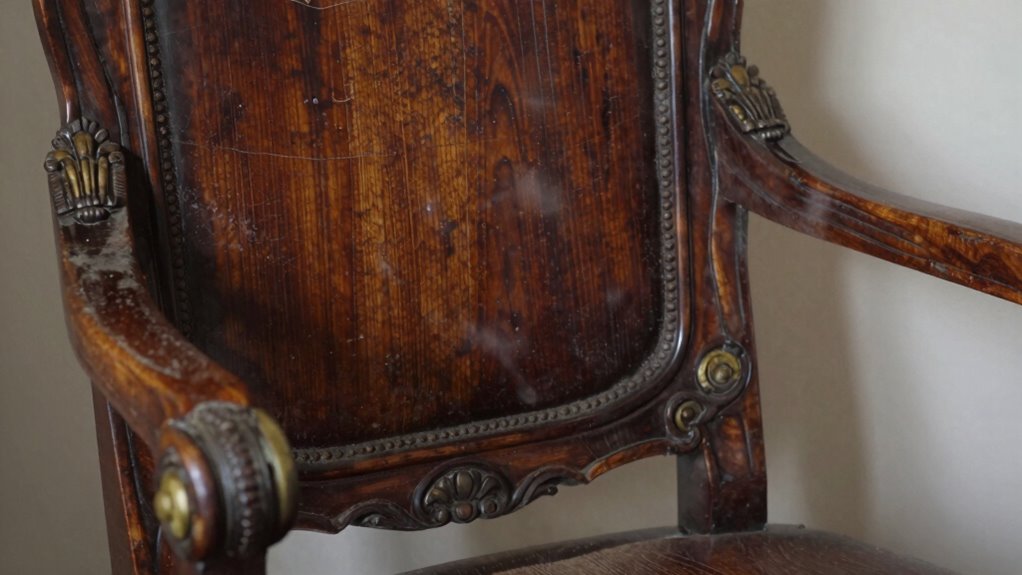
You’ll notice different smells in your antique furniture, like musty, moldy, or smoky odors. These scents often indicate issues such as moisture damage, mold growth, or previous exposure to smoke. Understanding these common odors helps you identify underlying causes and decide how to address them effectively. Leveraging energy-efficient cloud solutions can also support environmentally conscious preservation efforts. Recognizing air quality indicators in your environment can further assist in diagnosing and remedying odor problems. Monitoring indoor air quality can provide valuable insights into the presence of pollutants or mold spores contributing to these odors.
Types of Odors
Different odors lingering in antique furniture can reveal a lot about its history and condition. Musty smells often indicate mold or dampness, hinting at poor storage or water damage. Understanding mold growth can help you determine if professional cleaning is necessary. Sharp, chemical odors might suggest previous furniture polishing with harsh products or incomplete antique restoration. Sweet or fruity scents could point to lingering smoke or food stains absorbed into the wood. Additionally, pet odors may be embedded from past owners’ animals. Recognizing these odors helps you decide whether cleaning, deodorizing, or professional restoration is needed. To address these issues, start with proper cleaning and furniture polishing to refresh the scent. Proper cleaning methods can help eliminate many common odors and restore freshness, especially when combined with odor-neutralizing techniques. Being aware of the specific source of odors can also assist in selecting the most appropriate cleaning approach. Learning about antique preservation can further help you maintain your furniture’s condition and scent over time.
Underlying Causes
Understanding the underlying causes of odors in antique furniture is essential for proper care and restoration. Most odors stem from deterioration processes, where wood, fabric, or other materials break down over time, releasing foul smells. Chemical residues from past treatments, finishes, or cleaning products can also cause persistent odors. These residues often linger deep within the material, gradually emitting odors that intensify with age. Additionally, mold or mildew growth due to moisture exposure can produce musty smells, signaling underlying damage. Recognizing these causes helps you identify whether the smell results from natural aging, chemical buildup, or environmental factors. Addressing the root cause guarantees effective odor removal and preserves the furniture’s integrity, allowing you to restore its beauty and value. Exploring proper cleaning techniques can further aid in safeguarding antique pieces from future odors. Regular maintenance and preventive measures are essential to keep your antique furniture smelling fresh over time.
Are Residual Chemicals and Preservatives Causing the Odor?
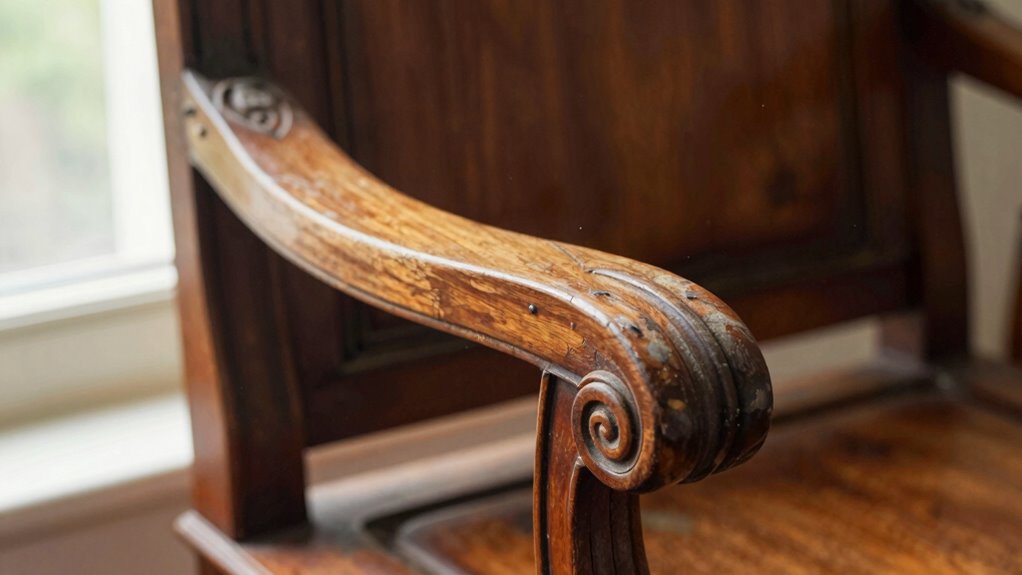
Residual chemicals and preservatives used during the manufacturing and finishing processes can often be the primary sources of persistent odors in antique furniture. These chemical residues from preservation treatments can linger long after the piece was made, releasing strong smells over time. You might notice a chemical or pungent scent that doesn’t fade, especially in poorly ventilated spaces. To better understand, consider:
- The use of formaldehyde-based glues in joints
- Residual solvents from varnishes and stains
- Preservative sprays applied for insect protection
- Chemical residues from cleaning agents or treatments
These substances can emit odors as they slowly off-gas, making your antique furniture smell unpleasant. Proper cleaning and airing out can help reduce these chemical residues and diminish the odor’s intensity.
How Do Mold and Mildew Develop on Old Furniture?
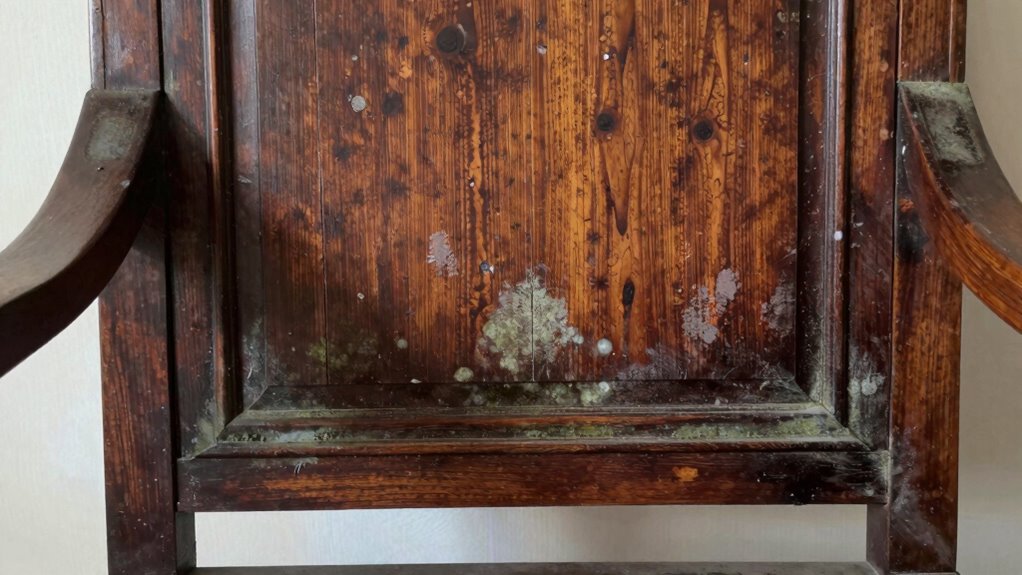
Moisture often gets trapped in old furniture through leaks, high humidity, or poor ventilation, creating ideal conditions for mold and mildew. As organic materials like wood and fabric decay over time, they provide nourishment for these fungi to grow. When moisture and decay combine, your furniture can develop musty smells and hidden growths that are tough to spot. Additionally, proper cleaning methods can help prevent and remove mold and mildew from furniture surfaces.
Moisture Intrusion Factors
Old furniture often becomes a breeding ground for mold and mildew when moisture seeps into its porous surfaces. Elevated humidity levels create the perfect environment for mold spores to thrive. Ventilation issues, such as poorly circulated air, trap moisture inside, increasing the risk. You might notice these moisture intrusion factors:
- Humid environments, especially in basements or attics
- Leaking roof or plumbing leaks near the furniture
- Improper storage in damp areas
- Lack of airflow around the furniture pieces
When moisture lingers, it encourages mold growth on the wood and fabric surfaces. To prevent this, control humidity levels, improve ventilation, and keep your furniture dry. Using dehumidifiers can effectively reduce moisture in the air and help protect your antique furniture. Recognizing these factors helps you avoid mold development and preserves your antique pieces.
Organic Material Decay
Mold and mildew develop on furniture when organic materials like wood, fabric, or padding begin to decay, providing a nutrient-rich environment for fungi to thrive. As wood deterioration occurs through organic decay, it creates soft, damp spots that promote mold growth. When moisture combines with the natural cellulose in wood and other organic materials, it accelerates decomposition. This process releases musty odors and weakens the furniture’s structure. Poor ventilation and high humidity exacerbate organic decay, making mold and mildew more likely to develop. You might notice fuzzy patches or a damp smell—signs that organic material is breaking down. Proper ventilation and climate control can help prevent organic decay and mold growth. Addressing wood deterioration early can prevent mold from spreading, preserving both the appearance and smell of your antique furniture. Additionally, understanding fungal growth factors can help you take targeted steps to protect your furniture from future damage.
Why Does My Vintage Furniture Smell Musty?
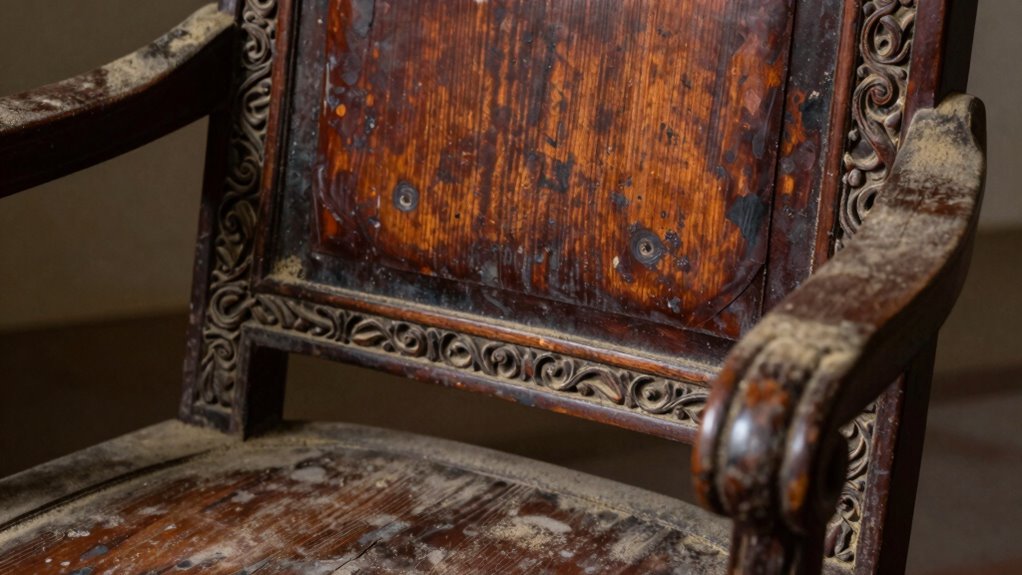
When vintage furniture develops a musty smell, it’s usually because it has absorbed environmental odors over time or hasn’t been properly ventilated. This can happen during storage or from previous use in damp spaces. To address this, you might consider vintage restoration techniques that focus on scent elimination. Proper cleaning, drying, and ventilation help restore freshness. Using specialized scent elimination methods during vintage restoration can effectively remove these odors and bring back the furniture’s original charm. Additionally, incorporating restoration techniques practices can ensure that the process aligns with preserving the furniture’s integrity and aesthetic appeal, while also addressing odor issues effectively. Ensuring proper ventilation during and after restoration helps prevent future odor buildup and maintains a fresh environment around your vintage pieces. Implementing proper drying methods is also crucial for preventing moisture from lingering and causing odors in the future. Furthermore, understanding how environmental factors influence odor absorption can help in developing more effective odor control strategies.
What Other Hidden Sources Could Be Causing Odors?

While addressing visible odors like mustiness is important, some hidden sources can silently contribute to persistent smells in your vintage furniture. Hidden storage compartments or drawers may trap dust, mold, or old fabric that releases odors over time. Additionally, if you’ve kept pets or animals nearby, their fur, dander, or accidents might have seeped into the furniture’s crevices or upholstery, creating lingering smells. Even if you don’t notice pets directly on the furniture, their presence in the room can lead to odor transfer. These hidden sources are often overlooked but play a significant role in the odor problem. To tackle this, you’ll need to thoroughly inspect and clean those less obvious areas, paying special attention to any places where odors could be hiding undetected. Understanding the importance of thorough cleaning can help you identify and eliminate these hidden odor sources more effectively. Conducting detailed inspections of all parts of your furniture ensures no odor-causing culprits are missed. Recognizing that vintage furniture often contains older materials which can emit odors over time is also crucial in addressing persistent smells.
How Can I Properly Clean and Deodorize My Antique Furniture?
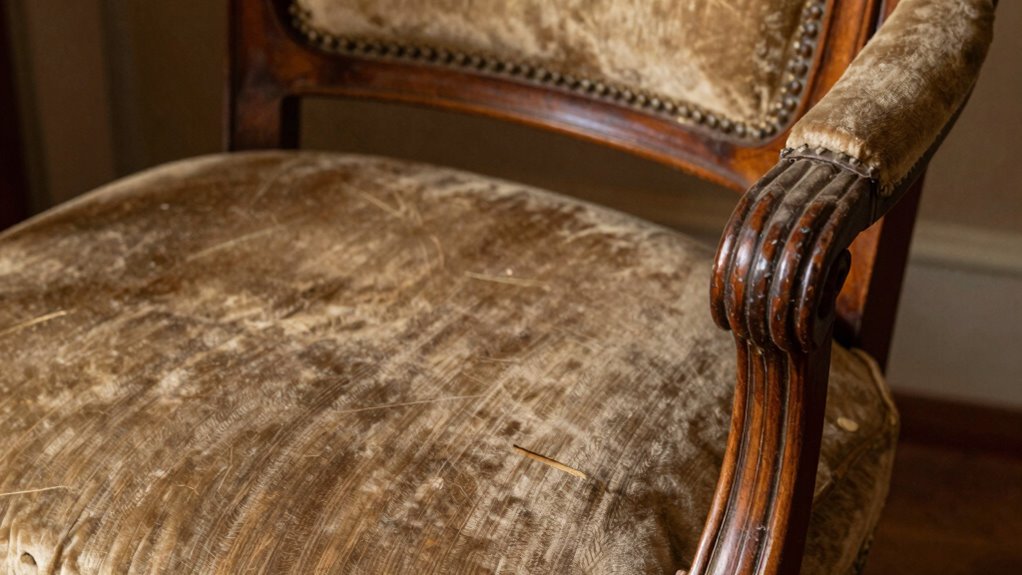
Properly cleaning and deodorizing antique furniture requires a careful, step-by-step approach to avoid causing damage. Begin by gently dusting with a soft cloth to remove surface dirt. For deeper cleaning, use a mild solution of warm water and gentle soap, avoiding harsh chemicals that can harm the finish or interfere with antique restoration efforts. To deodorize, consider placing activated charcoal or baking soda nearby, but don’t apply directly to the wood. Instead, allow these odor absorbers to work over time. Remember, modern manufacturing techniques can sometimes speed up cleaning but risk damaging delicate finishes. Be patient, and always test any cleaning method on a small, inconspicuous area first. This preserves the integrity of your antique and keeps it smelling fresh.
Frequently Asked Questions
Can New Finishes on Antique Furniture Cause Lingering Odors?
Yes, new finishes on antique furniture can cause lingering odors. The chemical residues from fresh finishes release fumes that can smell for weeks, especially if the furniture isn’t properly ventilated. Additionally, if moisture gets trapped, mold growth can develop, intensifying the smell. To reduce odors, guarantee good airflow, use low-VOC finishes, and consider cleaning the surface thoroughly to eliminate residues or mold.
Do Insects Contribute to the Smell of Old Furniture?
Did you know that pest infestations are responsible for roughly 30% of musty antique furniture smells? Insects, such as beetles and silverfish, can cause odor by leaving behind droppings and shed skins that promote mold growth. These pests damage wood and fabric, creating a damp environment that intensifies odors. If you notice strange smells, check for signs of pests or mold, and address infestations promptly to preserve your furniture’s condition.
How Long Does It Take for Odors to Naturally Fade?
Odors from antique furniture can take weeks to months to naturally fade, depending on factors like odor absorption and scent longevity. You should regularly air out your furniture, use baking soda or activated charcoal to absorb smells, and avoid exposing it to moisture or direct sunlight. Be patient, as persistent scents gradually diminish over time, especially with consistent care and proper ventilation.
Are Certain Types of Wood More Prone to Odor Retention?
Some types of wood, like oak and cedar, are more prone to odor retention, acting like sponges soaking up smells over time. These woods have natural oils and dense grain structures that trap odors, making it harder for them to dissipate. If you’re dealing with persistent smells, consider choosing woods with less oil and tighter grain, as they tend to hold onto odors less and help keep your furniture smelling fresh longer.
Can Humid Environments Worsen Antique Furniture Smells?
Yes, humid environments can worsen antique furniture smells. Increased humidity promotes mold growth, which can produce musty odors that cling to the wood and fabric. When moisture levels are high, these smells intensify and become harder to remove. To prevent this, keep your furniture in a climate-controlled space with stable humidity levels, and guarantee proper ventilation to minimize mold growth and maintain a fresh scent.
Conclusion
If your antique furniture still smells despite cleaning, something’s lurking beneath the surface—mold, hidden residues, or even unseen pests. Don’t settle for a temporary fix; uncover the real cause and act before the odor worsens or causes damage. Curious about what’s truly hiding in your vintage piece? The secret might surprise you, and the solution could be closer than you think. Keep investigating—you’re just one step away from restoring its original charm.