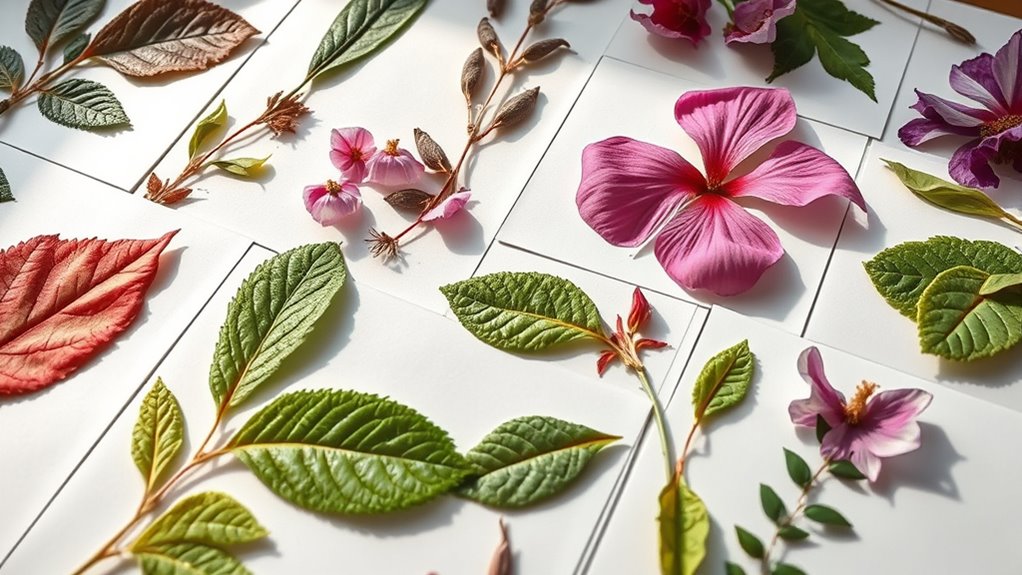

To press and display botanical specimens, start by selecting healthy, undamaged plants and arrange them on absorbent paper, spreading out the parts for visibility. Use a plant press with even pressure and keep it in a warm, dry place for one to two weeks, checking regularly. Once dried, mount your specimens on sturdy backing with glue or tape for display or study. Keep exploring for detailed tips to perfect your preservation skills.
Key Takeaways
- Select healthy plant parts and arrange them visibly on absorbent paper for effective preservation.
- Use a plant press with even pressure to dry specimens over one to two weeks in a warm, ventilated area.
- Regularly check and replace damp papers to prevent mold and ensure proper drying.
- Mount dried specimens on sturdy backing with glue or archival tape for display or study purposes.
- Utilize preserved plants for educational, decorative, or artistic displays, enhancing visual appeal and long-term preservation.
Have you ever wondered how botanists preserve delicate plant specimens for study and display? The process of plant preservation is both an art and a science, designed to maintain the natural beauty and structure of plants over time. When it comes to creating decorative displays, preserving plants becomes especially important because you want the specimens to look as fresh and vibrant as when they were first collected. To achieve this, botanists typically use pressing techniques that flatten and dry the plants, allowing them to be easily handled, stored, and showcased.
The most common method for press and display botanical specimens starts with selecting healthy, undamaged plants or plant parts. You carefully arrange these specimens on sheets of absorbent paper, such as newspaper or blotting paper, ensuring each part is visible and properly spread out. This step is essential because it determines how well the plant’s features will be preserved and how attractive the finished display will look. Once arranged, you place the sheets inside a plant press, which consists of two rigid boards with straps or screws to apply even pressure. Applying consistent pressure is crucial because it prevents mold growth and encourages thorough drying, which helps preserve the plant’s color and form.
Arrange healthy plants on absorbent paper and press with rigid boards for perfect preservation.
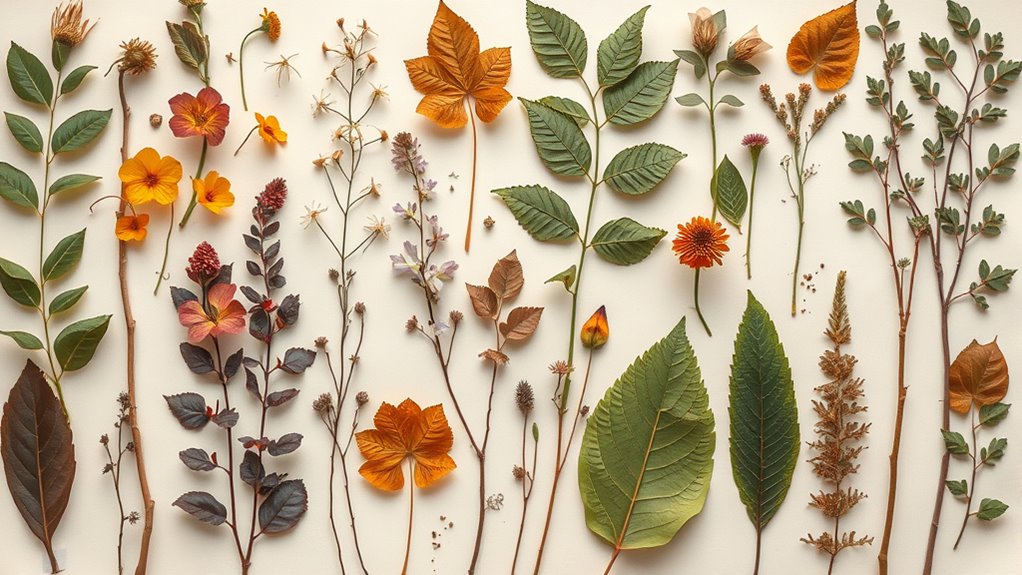
During the drying process, which typically takes one to two weeks, you need to keep the press in a warm, dry, and well-ventilated area. Checking periodically allows you to replace damp papers and assure the specimens remain flat and free from mold. When the plants are completely dry, you’ll notice they’ve become fragile but retain their shape and color remarkably well. These pressed specimens are then mounted onto sturdy backing boards or paper, often with glue or archival tape, making them ready for display or study. Proper plant preservation techniques are essential for maintaining both scientific integrity and aesthetic appeal.
Not only does this method serve scientific purposes, but it also lends itself beautifully to decorative displays. When mounted thoughtfully, pressed plants can be framed or incorporated into artwork, botanical scrapbooks, or educational displays. This blend of plant preservation and aesthetics allows you to appreciate nature’s intricate details long after the plants have been collected. Whether for a personal collection, a classroom, or a museum exhibit, pressing botanical specimens transforms delicate plants into lasting, visually appealing decorations. By mastering this simple yet effective technique, you guarantee that the beauty of plants endures, inspiring curiosity and admiration for the natural world.
Frequently Asked Questions
How Long Can Pressed Botanical Specimens Be Preserved?
Pressed botanical specimens can last for decades or even centuries when you use proper preservation techniques. To prevent plant aging, keep them in a cool, dry environment away from direct sunlight and humidity. Regularly check for signs of deterioration, and consider using archival-quality materials. Properly stored, your pressed specimens will serve as beautiful, long-lasting records of plants, making them ideal for research, display, or personal collections over many years.
What Materials Are Best for Displaying Pressed Plants?
You should choose framing options like glass or acrylic frames to showcase pressed plants clearly and protectively. Display case materials such as wood, metal, or plastic work well, but guarantee they’re acid-free to prevent damage over time. Use archival-quality backing and matting to keep the specimens safe. Opt for UV-protective glass to prevent fading, and ensure your display setup is stable and dust-free for long-lasting preservation.
Can Pressed Specimens Be Used for Educational Purposes?
Yes, pressed specimens are excellent for educational purposes. You can use them to teach botanical art techniques, helping students develop their illustration skills. They also support plant taxonomy studies, allowing learners to observe details like leaf venation and flower structure up close. By examining pressed plants, students gain a better understanding of plant diversity and classification, making these specimens valuable tools in botanical education.
How Do I Prevent Mold and Deterioration in Pressed Displays?
Imagine your pressed specimens basking in a carefully controlled environment, free from mold and decay. To prevent mold and guarantee display longevity, keep your displays in a cool, dry place with low humidity. Use silica gel packs or dehumidifiers, and avoid direct sunlight. Regularly inspect your specimens, and handle them with clean hands. These steps create a stable environment, safeguarding your botanical treasures for years to come.
Are There Eco-Friendly Methods for Pressing and Displaying Plants?
Yes, you can use eco-friendly methods for pressing and displaying plants. Opt for sustainable harvesting practices, ensuring you collect plants responsibly without damaging ecosystems. Use biodegradable frames and mounting materials to reduce plastic waste and environmental impact. Additionally, choose natural adhesives and avoid chemical preservatives. These steps help you create beautiful, sustainable displays that protect the environment while showcasing your botanical specimens effectively.
Conclusion
Think of pressing and displaying botanical specimens as tending a garden of memories. Each pressed leaf or flower is a treasured story, preserved like a secret waiting to be discovered. When you carefully care for these treasures, you become a gardener of time, nurturing beauty and history. Your efforts turn nature’s fleeting moments into everlasting artworks. In this way, you create a living gallery, where each specimen whispers tales of seasons gone by, forever blooming in your collection.