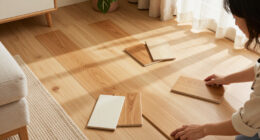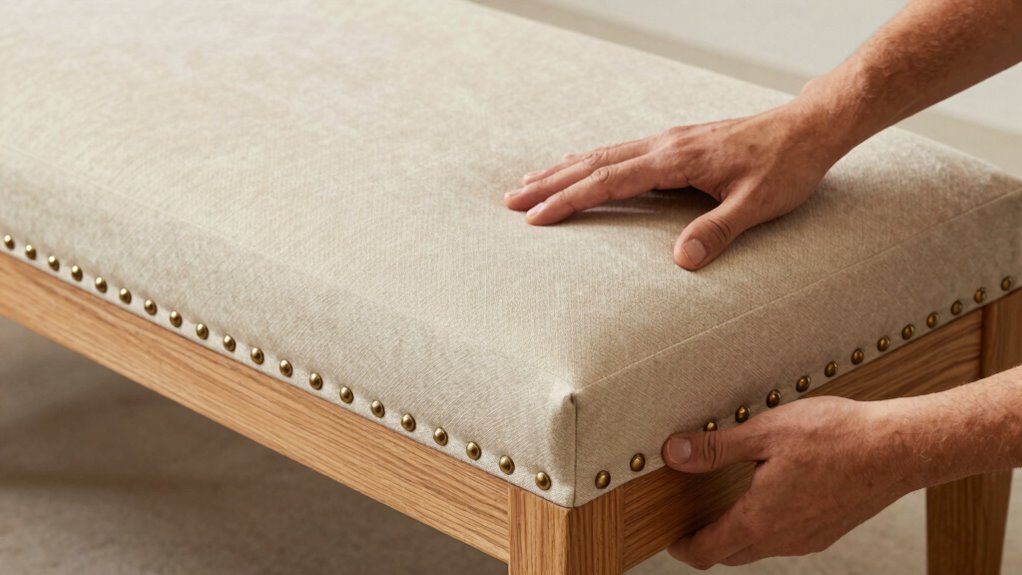

To make a simple upholstered bench top, start by choosing durable fabric that matches your decor and fits your lifestyle, especially for high-traffic areas. Cut foam padding to the bench’s size and secure it evenly with adhesive or fasteners, ensuring it stays smooth without shifting. Cover the padding with batting for a plush look, then stretch and attach your fabric tightly around the edges, trimming excess. For detailed tips to perfect your project, keep going—there’s plenty more to discover.

Get furniture and decor delivered free with Prime
- Fast, free delivery on millions of items
- Prime Video, Amazon Music and more included
- Member-only deals all year
Key Takeaways
- Select durable fabric and padding suited for the bench’s intended use and style.
- Cut the foam padding to fit the bench top, layering with batting for a smooth surface.
- Secure the padding evenly with adhesive or fasteners to prevent shifting during use.
- Cover the padded surface with fabric, ensuring even tension and no wrinkles.
- Staple or attach the fabric securely underneath the bench top for a clean, finished look.

Creating a simple upholstered bench top is an easy project that can instantly enhance your space. Whether you want to add a cozy spot in your entryway or a stylish surface for your bedroom, upholstering a bench top is straightforward and cost-effective. The first step is selecting the right fabric choices. Think about the room’s decor and how much wear and tear the bench will endure. For high-traffic areas or furniture that gets frequent use, choose durable fabrics like canvas, denim, or performance textiles that resist stains and tears. If you’re aiming for a softer, luxurious feel, velvet or chenille can add elegance but may require more maintenance. For a casual look, linen or cotton blends can work perfectly. The key is balancing style with practicality, so pick a fabric that complements your space and suits your lifestyle.
Next, you need to *contemplate* padding options, which influence both comfort and appearance. Foam padding is the most common choice because it offers a nice balance of softness and support. You can opt for high-density foam if you want the bench to hold its shape over time, or softer foam for a plush, cushioned feel. If you’re concerned about long-term durability, layering foam with batting — a soft, cushioning material — can give your bench a smooth, plush surface. Batting also helps to prevent the fabric from wrinkling or showing foam impressions. For a more luxurious touch, some crafters add a quilted layer or use memory foam, but these options can increase costs and complexity. Additionally, properly attaching the padding ensures both comfort and durability for your project. When selecting your padding, consider the importance of thickness to achieve the desired comfort level. It’s also helpful to understand how biodiversity and sustainable materials can influence your choice of eco-friendly padding options. Incorporating environmentally friendly padding can contribute to a more sustainable home and reduce your ecological footprint. Whichever padding option you choose, make sure it fits snugly within the dimensions of your bench top, providing even coverage without bunching or shifting.
As an affiliate, we earn on qualifying purchases.
Frequently Asked Questions
What Tools Are Essential for Upholstering a Bench Top?
You’ll need essential tools like a staple gun, scissors, and a measuring tape for upholstering your bench top. A decorative nailhead adds a stylish touch, so keep a nail set handy. Cushion padding is vital for comfort, so have foam or batting ready. A hot glue gun can help secure edges, and a screwdriver might be needed for assembling parts. These tools make upholstering smoother and more professional-looking.
How Do I Choose the Right Foam Thickness?
Did you know that the right foam thickness can considerably impact comfort? For a sturdy, comfortable bench, choose foam with a density of 1.8 to 2.5 pounds per cubic foot. Thicker foam offers more cushioning but might be less firm, so select based on your preferred feel. Secure the foam with upholstery staples, ensuring it’s tightly attached without sagging. This balance creates a durable, inviting bench top.
Can I Customize the Fabric for Different Styles?
Yes, you can definitely customize the fabric for different styles. Choose fabric patterns that match your decor, whether you prefer bold prints or subtle designs. Opt for colors that coordinate with your space to create a cohesive look. By selecting the right fabric, you can easily adapt your bench to any style, making it a versatile and personalized piece. Just make certain the fabric is durable and suitable for upholstery.
How Long Does the Entire Process Typically Take?
The entire process usually takes about 4 to 6 hours, depending on your experience and the bench’s design. Start with design inspiration and fabric selection, which can influence the time spent. Once you gather your materials, you’ll cut, assemble, and upholster step-by-step. If you’re new, expect a bit more time, but with patience and focus on your design inspiration, you’ll create a beautiful, customized piece efficiently.
What Safety Precautions Should I Follow During Construction?
Think of safety as the anchor that keeps your project from sailing into dangerous waters. You should always wear safety gear, like goggles, gloves, and a dust mask, to prevent accidents. Keep your workspace tidy to avoid tripping hazards, and handle tools carefully. Make certain power tools are in good condition, and work in a well-ventilated area. Staying alert and cautious ensures your project stays safe and successful.
Conclusion
Now that you’ve crafted your upholstered bench top, it’s ready to transform your space—function meets style like a perfect handshake. Just as a cozy blanket invites relaxation, your DIY project offers comfort and charm. Remember, even simple steps can yield impressive results, proving that beauty often lies in the details. So, sit back and enjoy your handiwork, knowing that your effort has turned a basic piece into a standout feature—proof that DIY can be both rewarding and surprisingly easy.
Halloween Picks
halloween
As an affiliate, we earn on qualifying purchases.