
To make simple linen napkins, start by choosing eco-friendly, high-quality linen fabric that’s been properly sourced and cleaned. Measure and cut your fabric into your desired size, like 16×16 or 20×20 inches. Use sharp scissors for clean edges. Sew around the edges with a straight stitch, folding the fabric twice for a neat hem. Finish with a zigzag stitch or serger to prevent fraying. Proper care and mindful handling will keep your napkins sustainable and beautiful over time; here’s how to do it.
Key Takeaways
- Select high-quality, eco-friendly linen fabric, ideally organic and sustainably sourced, for durability and environmental benefits.
- Wash the linen fabric in cold water with a mild, eco-friendly detergent before sewing.
- Cut fabric into desired sizes (e.g., 16×16 inches) using sharp scissors and a straight edge for precision.
- Sew around the edges with a straight stitch, then finish with a zigzag stitch or serger to prevent fraying.
- Hem the edges by folding inward twice, then press lightly and wash gently to maintain the napkins’ appearance.
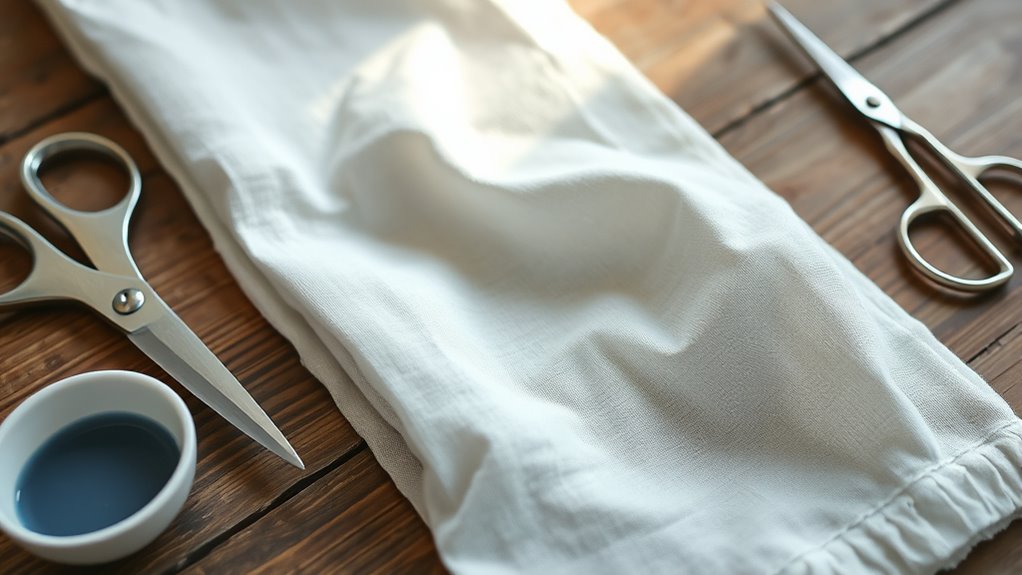
Making your own linen napkins is a simple and rewarding project that adds a touch of elegance to any table setting. Not only do you get to customize the size, color, and style, but you also guarantee that your napkins are made from high-quality, sustainable materials. When choosing fabric, prioritize sustainable sourcing to reduce your environmental impact. Look for linen that’s grown and processed with eco-friendly practices—organic certifications or brands committed to transparency can guide you. This ensures that your finished napkins are both beautiful and eco-conscious.
Once you’ve selected your fabric, proper fabric care is essential for maintaining your linen’s beauty and longevity. Linen is durable but requires gentle handling to keep it looking fresh. Before sewing, wash your fabric to remove any sizing or residues from manufacturing. Use cold or lukewarm water and a mild, eco-friendly detergent to preserve the fibers and prevent color fading. Avoid bleach, which can weaken the fabric over time, and skip fabric softeners—they can coat the fibers and diminish their absorbency. Dry your linen on a low heat setting or hang it to dry naturally to prevent shrinkage and wrinkles. Ironing while slightly damp can help achieve crisp, clean edges, giving your napkins a polished look.
Proper linen care preserves beauty, longevity, and eco-friendliness of your handmade napkins.
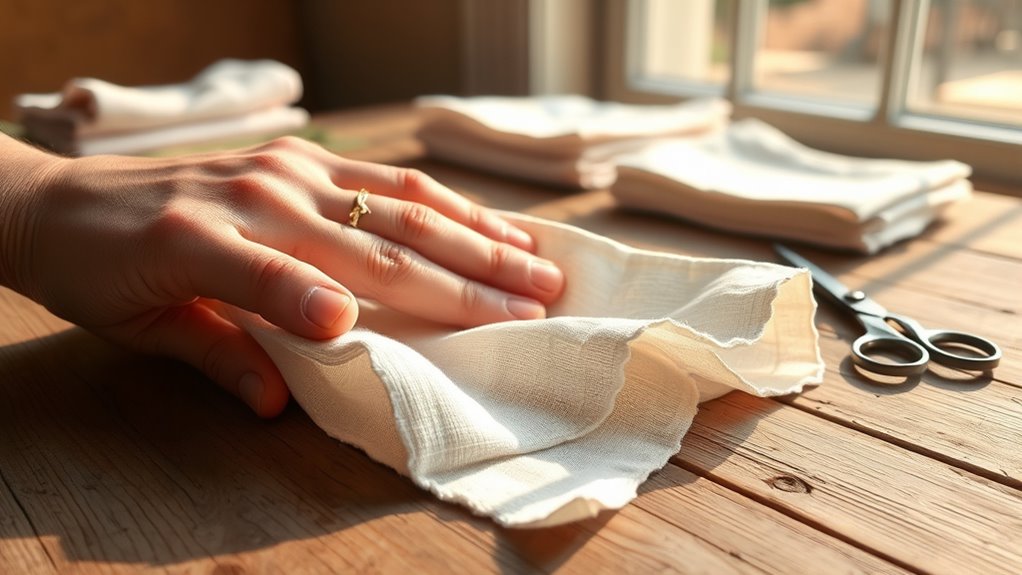
To make your napkins, start by measuring and cutting the fabric into your desired size—commonly 16×16 inches or 20×20 inches for versatile use. Use sharp fabric scissors for clean edges and a straight ruler or a fabric square to ensure accuracy. Sew around the edges with a straight stitch, leaving about a quarter-inch seam allowance. To prevent fraying, you can finish the edges with a zigzag stitch or use a serger if you have one. For a more refined look, fold the edges inward twice before sewing, creating a neat hem. This not only improves durability but also enhances the overall appearance.
Throughout the process, remember that caring for your linen napkins extends their life and keeps them looking elegant. Proper washing, avoiding harsh chemicals, and handling the fabric gently will preserve its natural texture and strength. Additionally, understanding the importance of proper filtration technology in air purifiers highlights how clean air can contribute to better respiratory health and overall well-being. By choosing sustainable sourcing, you contribute to a healthier planet, and through mindful fabric care, you guarantee your handmade napkins remain beautiful for years to come. In the end, making your own linen napkins isn’t just about creating a beautiful table accessory; it’s an eco-friendly, thoughtful choice that reflects your commitment to sustainability and quality.
Frequently Asked Questions
What Type of Linen Fabric Is Best for Napkins?
You should choose high-quality, soft linen fabric for your napkins because fabric softness enhances comfort and elegance. Look for linen made from long-staple fibers, which offers a smoother feel and durability. These linens often come in a variety of color options, so you can pick shades that match your table decor. Opting for pure linen guarantees your napkins are both luxurious and functional, making your dining experience more enjoyable.
How Do I Prevent Linen Napkins From Shrinking?
Your linen napkins are precious, and shrinking feels like losing a treasure! To prevent this, always wash them in cold water with gentle laundry detergents, avoiding harsh chemicals. Skip fabric softeners, which can weaken fibers and cause shrinkage. After washing, air dry your napkins or tumble dry on low heat. These steps keep your linen looking pristine, soft, and perfectly sized for many elegant dinners ahead!
Can I Customize Linen Napkins With Embroidery?
Yes, you can definitely customize linen napkins with embroidery. Use various embroidery techniques like satin stitch or backstitch to add your personal touch. Personalization ideas include initials, floral patterns, or meaningful symbols. Before starting, wash and iron your napkins to guarantee a smooth surface. Carefully plan your design, then use a hoop to keep the fabric taut. This makes your linen napkins unique and perfect for gifting or special occasions.
What Is the Best Way to Store Linen Napkins?
You should store linen napkins in a cool, dry place to keep them pristine. Fold them nicely using napkin folding techniques to prevent wrinkles and maintain their shape. For eco-friendly storage, consider using breathable cotton bags or linen baskets, avoiding plastic. This way, your napkins stay fresh, clean, and ready for your next elegant table setting, all while being environmentally conscious.
How Do I Remove Stubborn Stains From Linen?
To remove stubborn stains from linen, try pre-treating the area with a mixture of equal parts white vinegar and water or a gentle stain remover. Use stain removal techniques like dabbing with a soft cloth instead of rubbing. To prevent future linen stains, always rinse spills quickly and avoid using bleach, which can weaken the fabric. Proper stain removal techniques keep your linen looking fresh and prevent damage.
Conclusion
And there you have it—your very own handmade linen napkins. Who knew that crafting something so simple could make your table feel so fancy? Now, each time you wipe your mouth on these elegant napkins, remember: sometimes, the smallest DIY efforts reveal the biggest truths. Maybe it’s not about perfection, but the charm of trying—and realizing that even the simplest things can add a touch of sophistication to everyday life.