To measure accurately and avoid costly mistakes, start by preparing your workspace with good lighting, organized tools, and a clean surface. Use the right tools, like digital calipers or a reliable tape, and make sure they’re calibrated. Take your time, mark carefully, and record measurements immediately. Always double-check with a second measurement or tool before cutting. If you follow these steps, you’ll ensure precision and save time—keep exploring for detailed techniques to master every step.

Get furniture and decor delivered free with Prime
- Fast, free delivery on millions of items
- Prime Video, Amazon Music and more included
- Member-only deals all year
Key Takeaways
- Use calibrated, reliable tools suited for your measurement needs, such as digital calipers or laser measures.
- Always measure from the same reference point, ensuring proper alignment and consistent technique.
- Record measurements immediately and double-check for accuracy before proceeding to cut.
- Avoid measuring at an angle; take multiple readings to verify consistency.
- Prepare your workspace with proper lighting, stable surface, and minimal distractions for precise results.
digital calipers for woodworking
As an affiliate, we earn on qualifying purchases.
As an affiliate, we earn on qualifying purchases.
Why Accurate Measurement Matters: Save Time and Materials

Accurate measurement is essential because it helps you avoid costly mistakes and waste. When your measurements lack precision, measuring mistakes can lead to incorrect cuts, wasted materials, and delays. Ensuring measurement accuracy means you get it right the first time, saving you both time and money. Small errors in measurement can compound, causing larger issues down the line. By taking the time to measure carefully and double-check your work, you reduce the risk of errors that could require redoing projects or purchasing extra supplies. Proper calibration techniques and careful tools handling can further improve your measurement precision. Additionally, understanding filter maintenance schedules ensures that your air purifier operates efficiently and extends its lifespan. Maintaining measurement tools regularly also plays a crucial role in achieving consistent accuracy. Being aware of measurement standards helps you adhere to best practices and industry requirements. Ultimately, precise measurements keep your project on track, helping you finish efficiently and with quality results. Understanding measurement accuracy is a key part of creating a calm and organized home.
Preparing Your Workspace for Precise Measurements
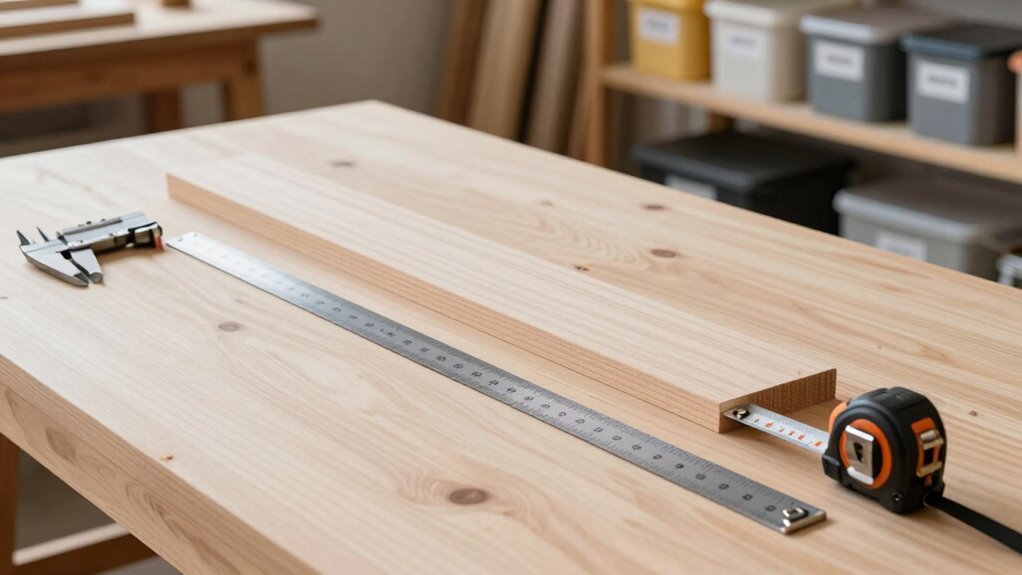
A well-organized workspace sets the stage for precise measurements and helps prevent errors. Start by creating an ergonomic setup that minimizes strain and guarantees comfort, enabling you to focus without distraction. Position your work surface at a comfortable height, and arrange tools within easy reach to maintain efficiency. Lighting optimization is equally important; ensure your area is well-lit with natural light or adjustable task lighting to eliminate shadows and glare. Proper illumination helps you read measurements accurately and reduces eye strain. Keep your workspace tidy, free from clutter that could interfere with precise work. By establishing an ergonomic setup and optimizing lighting, you create an environment that promotes accuracy and consistency in every measurement you take. Additionally, understanding reliable testing methods can help verify your measurements and ensure safety in your workspace. Using calibration techniques regularly can also help maintain measurement precision over time. Incorporating measurement standards ensures that your results are consistent and trustworthy across different projects. Regularly reviewing measurement accuracy practices can further enhance your precision and confidence in your work. Paying attention to environmental factors such as temperature and humidity can also improve measurement reliability.
Essential Tools for Accurate Measuring

Having the right tools is essential for guaranteeing your measurements are precise and reliable. High-quality tools make a significant difference in accuracy and ease of use. Consider investing in:
- Digital calipers, which provide quick, precise readings down to thousandths of an inch
- Laser tape measures, offering long-range, highly accurate measurements with minimal effort
- A sturdy, reliable measuring tape for everyday tasks and quick checks
Digital calipers are perfect for detailed work, while laser tape measures excel in large projects or when measuring distances in hard-to-reach spots. Advanced measurement technology can further enhance your accuracy and confidence in your project outcomes. Incorporating modern measurement techniques can also help you achieve more consistent results. Using proper measuring techniques can further enhance your accuracy and confidence in your project outcomes. Accurate measurements are fundamental to successful craftsmanship, ensuring your projects are both functional and aesthetically pleasing. Having the right tools on hand simplifies the measuring process and boosts confidence in your project outcomes, especially when you utilize precision tools tailored for high-heat outdoor cooking projects.
Picking the Right Measuring Method for Your Project

To select the most suitable measuring method, you need to pick the right tools for your project and understand the measurement units involved. Consider what your project requires regarding accuracy and precision, and match your tools accordingly. Making informed decisions now helps guarantee your measurements are spot-on and your project turns out just as planned. Additionally, understanding the accuracy and precision of your measuring tools ensures you select the best method for your specific needs. For example, using a cooking thermometer can provide precise temperature readings essential for certain culinary techniques, and recognizing the measurement units involved helps prevent errors and improves consistency. Being aware of battery lifecycle and performance metrics can also guide your measurement choices when assessing battery health and longevity. Moreover, understanding the Gold IRA market trends can assist investors in making better-informed decisions regarding their precious metal holdings.
Choosing Appropriate Tools
Choosing the right measuring tool can make or break your project’s accuracy. To get precise results, you need to select tools suited to your specific task. For close-up measurements, digital calipers are ideal—they offer high precision and ease of use. For larger distances, a laser distance meter can quickly and accurately measure without physical contact. Consider these options:
- Use digital calipers for small, detailed measurements requiring high precision.
- Opt for laser distance tools when measuring longer spans or hard-to-reach areas.
- Always choose tools with appropriate measurement ranges and resolution for your project’s needs.
- Be aware of potential measurement inaccuracies caused by environmental factors or user error, and choose your tools accordingly.
- Understanding the enigma of shadows and how environmental conditions influence measurements can help prevent errors and improve accuracy.
- Selecting tools that match the measurement range ensures your results are both accurate and efficient.
- Recognizing environmental effects and their impact on measurements can further enhance accuracy and reliability.
- Being familiar with aviation regulations and standards can guide you in selecting the proper measurement methods for technical tasks.
Matching your tools to the task guarantees accuracy and saves time. Proper selection minimizes errors and helps you achieve professional results without frustration.
Understanding Measurement Units
Selecting the appropriate measurement units is essential to guarantee your project’s accuracy and clarity. Understanding measurement units involves knowing the difference between systems like imperial and metric, and how to choose the right one for your task. Conversion charts are valuable tools that help translate measurements between systems, ensuring consistency. Familiarity with measurement history reveals how units evolved and why certain standards exist, making it easier to grasp their applications. When working on a project, consider whether precision or convenience matters most, and select units accordingly. For example, carpentry often uses feet and inches, while scientific work prefers metric. Additionally, understanding proper measurement techniques can significantly improve the accuracy of your results. By understanding measurement units and utilizing conversion charts, you ensure your measurements are accurate, reducing errors and saving time.
Considering Project Requirements
Understanding your project’s specific needs is essential when deciding how to measure. Your choice depends on design considerations, the project scope, and the level of precision required. For small, detailed tasks, you might opt for fine-tipped tools or digital measurements. Larger projects may need quick, less precise methods that save time. Consider these factors:
- Design considerations: Will accuracy impact the final outcome or fit?
- Project scope: Is this a quick fix or a long-term build?
- Measurement environment: Will measurements be taken indoors or outdoors, where conditions vary?
Matching your measuring method to these requirements guarantees accuracy, efficiency, and a successful project outcome. Knowing what’s most important allows you to choose tools and techniques that fit your specific project needs.
How to Measure Accurately: Marking, Recording, and More
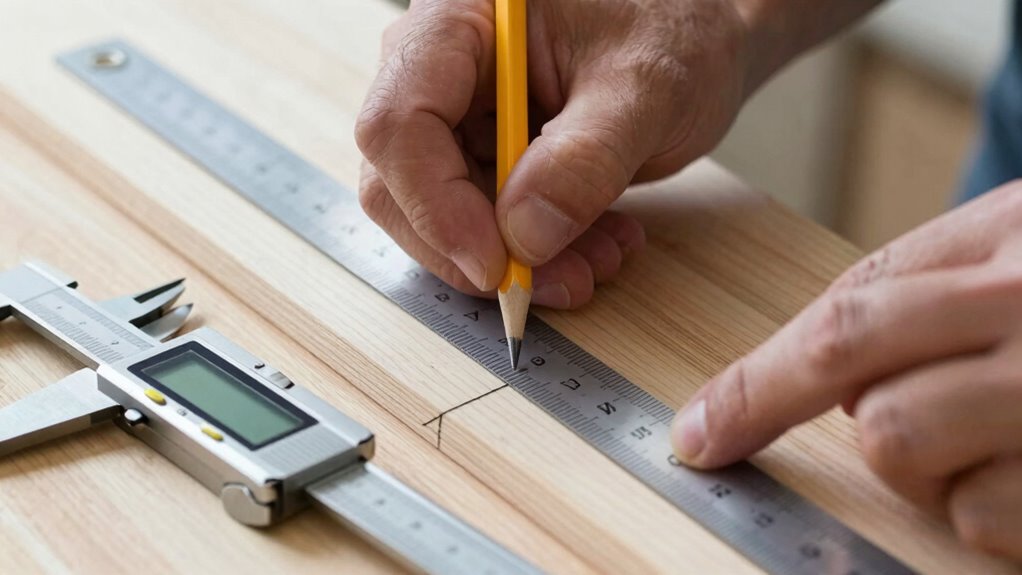
To guarantee your measurements are spot-on, focus on proper marking techniques that leave clear, precise lines. Record your measurements carefully to prevent mistakes later, using tools like notebooks or digital apps. Mastering these methods will help you cut accurately and avoid costly errors.
Proper Marking Techniques
Are you getting the most accurate measurements when marking your materials? Proper marking techniques are essential for measurement accuracy. To improve your precision, focus on these key methods:
- Use sharp pencils or marking tools to create clear, visible lines.
- Align your ruler or measuring tape properly, ensuring it’s snug against the edge for consistent marks.
- Make light, precise marks that are easy to see but won’t smudge or distort your measurements.
Accurate Recording Methods
Accurate recording of measurements is just as important as marking them correctly. To guarantee precision, use digital calipers for detailed readings, especially when measuring small or complex objects. Digital calipers offer clear, digital displays that minimize reading errors. For larger or longer distances, laser measurement tools are invaluable—they provide quick, highly accurate results with minimal effort. When recording measurements, write them down immediately to avoid forgetfulness or confusion later. Use consistent units, and double-check your figures before proceeding. Keep your measuring tools calibrated and clean to maintain accuracy. Combining precise tools like digital calipers and laser measurement devices with disciplined recording habits guarantees your measurements are reliable, reducing errors and ensuring your project’s success.
Avoid Common Measuring Mistakes (and How to Prevent Them)
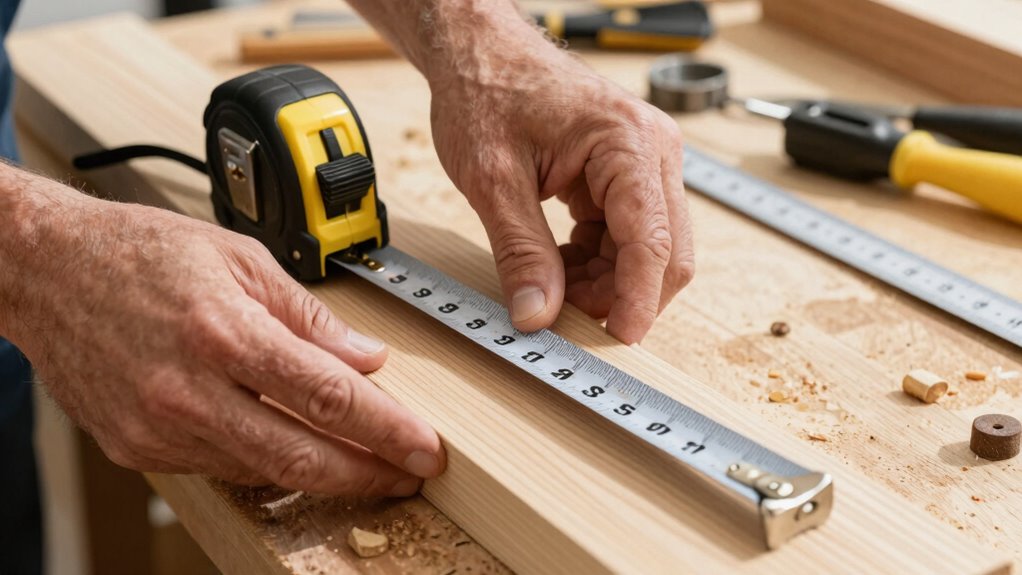
Even experienced DIYers can fall into common measuring pitfalls that throw off their projects. To avoid mistakes, focus on proper calibration techniques and maintaining measurement precision. One frequent error is reading measurements at an angle, which skews results. Always make sure your measuring tools are correctly calibrated before starting. Additionally, avoid rushing; careful alignment and steady hands improve accuracy. Keep these tips in mind:
- Regularly calibrate your tools to prevent measurement drift.
- Use the same measuring point each time for consistency.
- Take multiple measurements and verify results before proceeding.
Double-Check Your Measurements Before Cutting
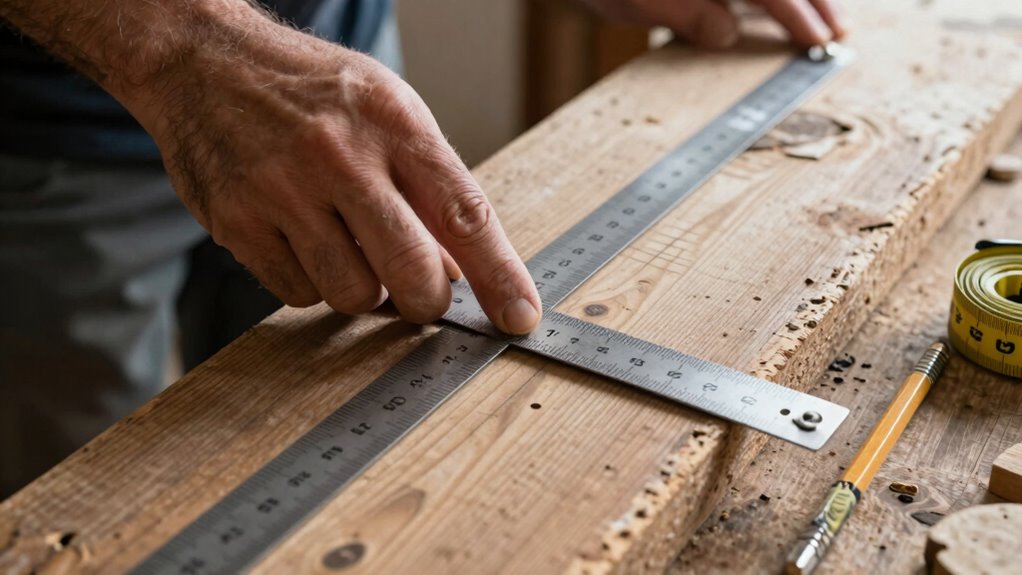
Before you make the cut, take a moment to double-check your measurements. This step helps prevent calibration issues and measurement inconsistencies that could ruin your project. Verify your measurements by re-measuring from different angles and cross-checking with your initial markings. Use a reliable tape measure and ensure it’s properly calibrated. Small errors can multiply, so accuracy is key. Here’s a quick reference:
| Measurement Step | Tool Used | Common Mistakes |
|---|---|---|
| Marking the cut | Pencil or marker | Skipping double-checks |
| Measuring distances | Tape measure | Not accounting for calibration issues |
| Confirming length | Ruler or square | Rushing and ignoring inconsistencies |
| Cross-verifying marks | Second tape measure | Overlooking measurement inconsistencies |
| Final check | Hands and eyes | Ignoring minor discrepancies |
Double-checking guarantees precision before cutting.
Troubleshooting When Measurements Don’t Match Expectations

When measurements don’t match your expectations, it’s time to troubleshoot. First, check your measurement calibration to guarantee your tools are accurate. An uncalibrated device can give false readings, leading to errors. Next, verify your unit conversion; switching between inches, centimeters, or other units can cause discrepancies if done incorrectly. Finally, re-measure carefully, using a steady hand and consistent technique to avoid parallax errors. You might also consider the following:
- Confirm that your measuring tools are clean and in good condition
- Cross-check measurements with a different tool for accuracy
- Review your unit conversion process step-by-step
Frequently Asked Questions
How Often Should I Calibrate My Measuring Tools?
You should calibrate your measuring tools regularly to guarantee peak accuracy. The calibration frequency depends on how often you use them and the precision required for your projects. For critical tools, calibrate at least once a year or after any impact or drop. For less sensitive tools, every 6 to 12 months is usually sufficient. Regular calibration helps maintain tool accuracy and prevents errors in your work.
What Are the Best Storage Practices for Measuring Instruments?
You should store your measuring instruments in a dedicated, clean space to guarantee precision storage. Use labeling systems to clearly identify each tool’s calibration status and storage location, preventing mix-ups. Keep tools in their original cases or padded containers to protect them from damage. Regularly check and maintain your storage area to avoid dust and humidity, which can affect accuracy. Proper storage ensures your tools stay reliable and ready for precise measurements.
Can Digital Tools Replace Traditional Measuring Methods?
Digital tools can often substitute traditional measuring methods, as they offer superior digital accuracy and tool precision. For example, a manufacturing plant switched to laser measurement systems, reducing errors and saving time. While traditional tools are reliable, digital devices enhance accuracy, especially in complex or repetitive measurements. You should consider digital tools for their efficiency and precision, but always verify their calibration regularly to ensure ongoing reliability.
How Do Environmental Factors Affect Measurement Accuracy?
Environmental conditions, like temperature, humidity, and vibrations, can substantially impact your measurement precision. When these factors fluctuate, they cause materials to expand or contract, leading to inaccuracies. You should control or account for environmental factors to guarantee accurate measurements. Use stable environments, calibrate instruments regularly, and be mindful of external influences. Doing so helps you achieve consistent, precise results, reducing errors caused by environmental variability.
What Safety Precautions Should I Take When Measuring Sharp or Heavy Materials?
Think of safety gear as your shield in a battlefield. When measuring sharp or heavy materials, always wear protective gloves and goggles to protect your hands and eyes. Keep your workspace organized and free of clutter to prevent accidents. Use proper tools and secure heavy items before measuring. By prioritizing workspace safety, you create a safer environment where risks are minimized, and your focus remains sharp on accurate measurements.
Conclusion
Remember, precise measuring is the foundation of a successful project—think of it as the compass that guides your way. When you double-check your work and avoid common mistakes, you’ll save time, money, and frustration. Like a skilled navigator, your careful attention guarantees you stay on course, turning your vision into reality with confidence. Stick to these tips, and you’ll cut once, accurately, every time.
Halloween Picks
halloween
As an affiliate, we earn on qualifying purchases.