Choosing the right glue depends on your project’s materials and needs. Wood glue is best for furniture repairs, fabric glue for clothing, and craft glues for paper and foam. Epoxy and super glue suit heavy-duty or precise fixes. Safety and proper application are vital for lasting results. To get your bonds just right and avoid mistakes, it’s helpful to understand each adhesive type’s uses—continue to explore so you can make the best choice.
Key Takeaways
- Different glue types are designed for specific materials like wood, fabric, paper, foam, and plastics.
- Wood glue provides strong bonds suitable for furniture repair and woodworking joints.
- Fabric glue offers flexibility and durability for clothing and textile projects.
- Craft glues are optimized for paper, foam, and decorative projects, ensuring clean, strong bonds.
- Safety, application techniques, and material compatibility are essential factors when selecting the appropriate glue.
How to Choose the Best Glue for Your Project
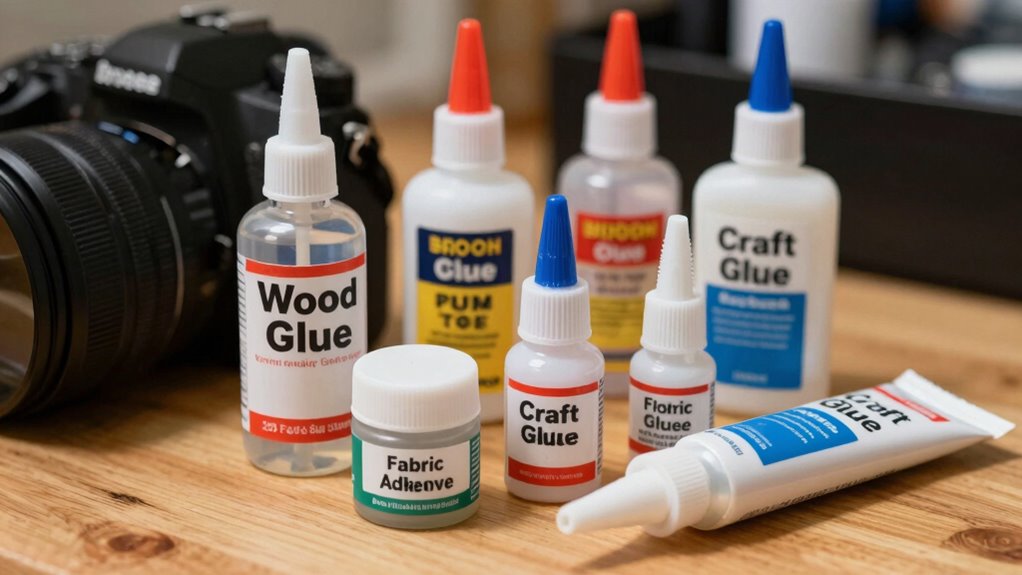
Choosing the right glue depends on understanding your project’s materials and requirements. First, consider glue safety; always read labels for proper use and ventilation needs. Confirm you’re working in a well-ventilated area to avoid inhaling fumes, especially with strong adhesives. Storage tips are also essential—keep glues tightly sealed and stored in a cool, dry place away from children and pets. Proper storage prevents drying out and spoilage, extending the glue’s effectiveness. Think about the materials you’ll bond: some glues work better on porous surfaces, while others are ideal for non-porous materials. By evaluating these factors—safety, storage, and material compatibility—you can select the best glue for your project, ensuring a strong, durable bond and a safe working environment. Additionally, understanding water-based adhesives can help you choose less toxic options that are easier to clean up. Recognizing adhesive types can further aid in selecting the most suitable glue for specific applications. For instance, knowing the differences between wood, fabric, craft, and other glues enables more precise and effective bonding choices. Moreover, considering the sound healing science behind certain adhesives can reveal innovative ways to enhance your workspace environment.
Main Types of Glue and What They Do Best
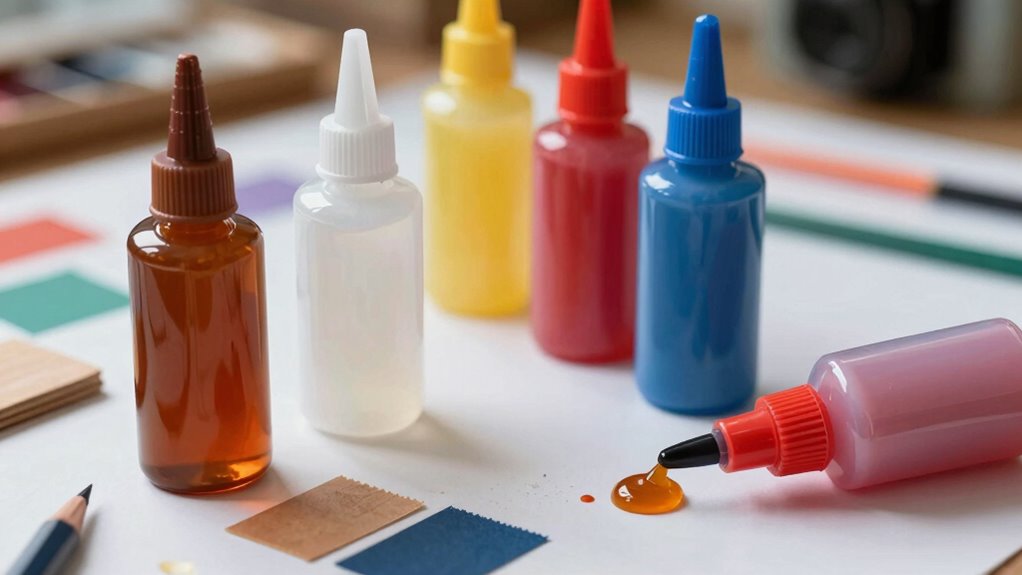
Have you ever wondered which type of glue is best suited for your project? Different glues serve different purposes, so knowing their main types helps you choose wisely. For example, PVA glue is great for paper and wood, offering strong bonds with minimal environmental impact. Cyanoacrylate (super glue) bonds quickly and works well for small repairs but requires careful use due to glue safety concerns. Epoxy provides durable, waterproof bonds, ideal for heavy-duty projects, though it can be more toxic. When selecting a glue, consider its environmental impact—look for non-toxic, eco-friendly options whenever possible. Understanding the main types of glue helps you match your project needs with the right adhesive, ensuring safety and effective results. Additionally, adhesive properties play a significant role in how well a glue performs under different conditions, and choosing the right type ensures your project remains durable and reliable.
When and Why to Use Wood Glue
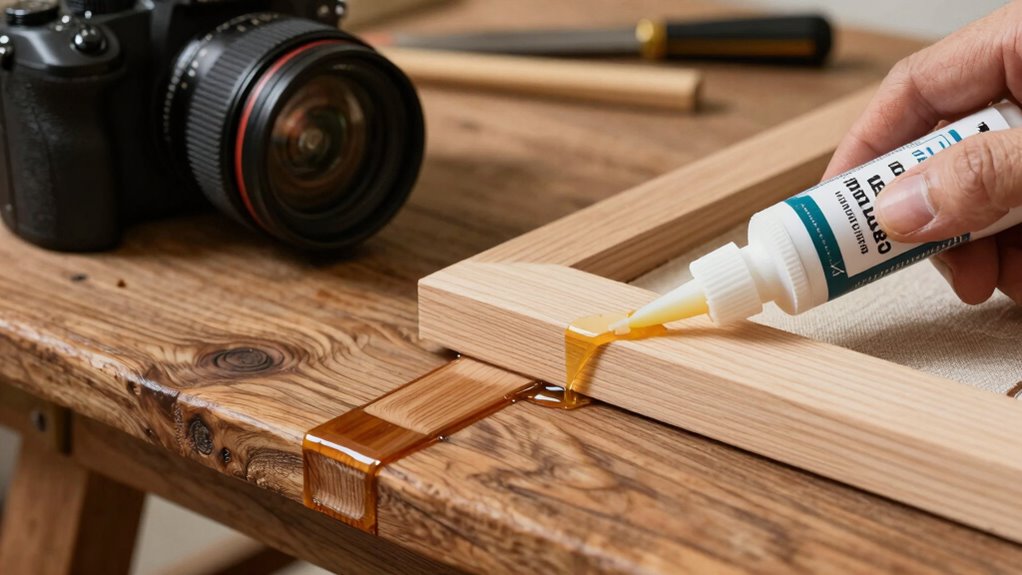
If you’re working on wooden projects, wood glue is your best choice for a strong bond. It’s easy to apply with simple tips that help guarantee a secure hold. Knowing when and why to use it makes your craftsmanship more reliable and professional. Additionally, understanding the proper application techniques can prevent common issues like weak joints or excess glue residue. Using the right type of adhesive for your specific project can also enhance durability and longevity. Recognizing the types of wood glue available can help you select the best option for your project. Being aware of the weight of pinball machines can also be useful if you plan to incorporate elements into your woodworking projects, ensuring stability and safety. To ensure safety and durability, it’s also helpful to consider safety measures such as proper ventilation and clean-up procedures.
Ideal for Wooden Projects
Wondering when to reach for wood glue in your projects? If you’re working on woodworking joints or furniture repair, wood glue is your best choice. It provides a strong bond that holds pieces securely together, ensuring durability over time. Use it whenever you’re assembling parts that need to withstand regular use or stress, like chair legs or tabletop edges. Wood glue penetrates the fibers, creating a tight bond that’s often stronger than the wood itself. It’s especially effective for repairing broken or cracked furniture, restoring stability and extending the piece’s life. When precision and a reliable hold matter, wood glue is your go-to adhesive for wooden projects. It’s simple to apply and clean up, making it a versatile and essential tool in your woodworking arsenal.
Provides Strong Bonding
When you need a bond that can withstand daily use and stress, wood glue is the ideal choice. Its high adhesive strength guarantees a durable connection, making it perfect for bonding various materials. Whether you’re repairing furniture or building a new project, wood glue provides the strength you need. It penetrates fibers deeply, creating a tight bond that resists pulling apart. For best results, match the glue to your bonding materials—wood to wood, or wood to other porous surfaces. Here’s a quick comparison:
| Bonding Material | Adhesive Strength |
|---|---|
| Wood to wood | Very strong |
| Wood to fabric | Moderate |
| Wood to metal | Strong |
| Fabric to fabric | Light to moderate |
| Craft projects | Varies |
Choose the right glue based on your materials for a lasting bond. Additionally, understanding adhesive properties can help you select the most suitable glue for your specific application. For example, selecting a glue with the appropriate bonding strength ensures your project remains secure over time.
Easy Application Tips
Applying wood glue correctly guarantees your project holds firm and lasts. To guarantee the best results, focus on proper application techniques. Start by applying a thin, even layer of glue to one surface, avoiding excess that could seep out. Clamp the pieces tightly to improve adhesion and prevent gaps. Be mindful of drying times; most wood glues require at least 30 minutes to set and 24 hours to cure fully. Patience is key—rushing drying can weaken the bond. Clean up any excess glue immediately with a damp cloth to keep your project neat. Proper adhesion is essential for a durable bond, and following these simple steps helps you achieve a strong, durable bond while making the application process smooth and effective.
Fabric Glue: Tips for Fabric and Clothing Projects
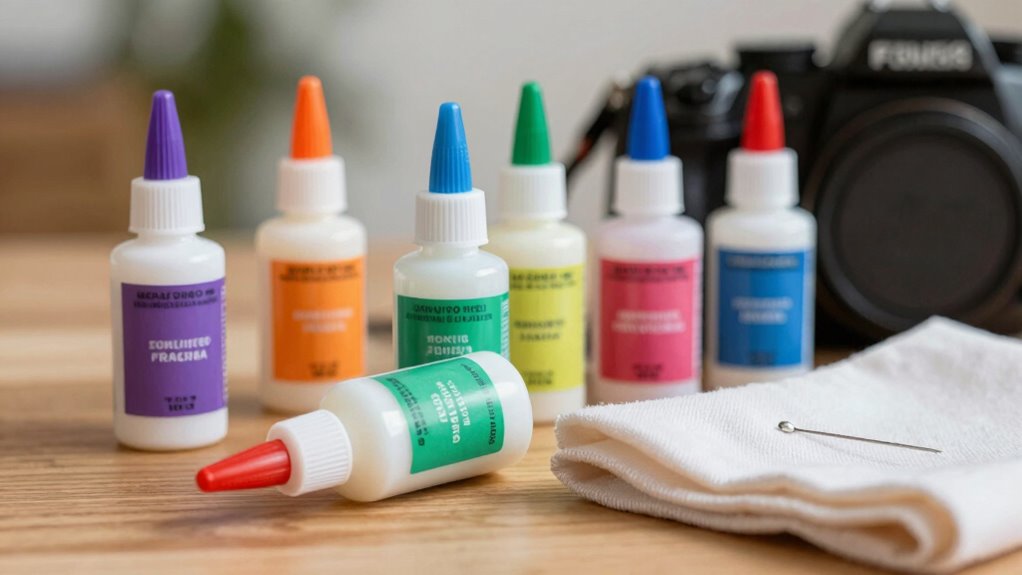
Fabric glue can be a versatile tool for clothing and craft projects, but using it correctly is key to achieving professional-looking results. To guarantee success, follow fabric glue tips like applying a thin, even layer and letting it dry completely before handling. For clothing project adhesives, choose a glue designed specifically for fabrics to maintain flexibility and durability. Always test the glue on a small fabric area first to check for colorfastness and adhesion. When attaching embellishments or repairing tears, use a precise applicator to avoid excess glue. Keep your workspace clean and press the fabric gently during drying to prevent shifting. Additionally, understanding different glue types can help you select the best adhesive for your project’s needs. Being aware of air purifier maintenance can help ensure your tools stay in top condition, preventing any mishaps during craft projects. Proper application techniques are essential for long-lasting results and a neat finish. Using the right adhesive application methods will help you achieve a seamless and durable bond, making your fabric projects look professional. With the right techniques, fabric glue can help you create seamless, long-lasting garments and crafts.
Craft Glues for Paper, Foam, and Decorations

When working on paper and foam projects, choosing the right glue makes all the difference. Paper and card adhesives provide a strong, clean bond, while foam glues are designed to prevent surface damage. Understanding these options helps you select the perfect glue for your decorations and craft needs. Additionally, selecting a specialized adhesive ensures your project remains durable and damage-free over time. Using the appropriate adhesive chemistry can also enhance the longevity and appearance of your craft projects, making your creations both beautiful and lasting. Being aware of safety precautions related to different glues can help prevent accidents and ensure a safe crafting environment. Recognizing the importance of proper application techniques can further improve the durability and neatness of your finished work.
Paper and Card Adhesives
Are you looking for a reliable adhesive to bond paper, foam, or decorative elements? When it comes to paper crafting, choosing the right adhesive type is essential for clean, durable results. For lightweight papers, glue sticks and double-sided tape work well, providing quick application and mess-free bonding. For heavier cardstock or layered projects, craft glues like PVA or liquid glue offer strong adhesion and flexibility. Foam adhesives are specially formulated to prevent melting or warping, making them ideal for embellishments and 3D effects. Always consider whether your project needs quick drying, repositionability, or permanent hold. Selecting the proper paper and card adhesive can make your craft projects look professional and last longer. Additionally, understanding the different adhesive formulations ensures you choose the best product for your specific material and finish requirements.
Foam and Decorative Glues
To achieve secure bonds on foam and decorative elements, selecting the right craft glue is essential, especially since some adhesives can cause warping or melting. Foam and decoration glues often have specific adhesive properties tailored for delicate materials, offering flexible, quick-drying bonds. Look for glues designed for craft projects that mention compatibility with foam, paper, or fabric. These adhesives typically have shorter drying times, allowing you to complete your project efficiently. Be cautious with certain glues, like hot glue or solvent-based options, which may damage or distort foam. Opt for specialized craft glues that balance strong adhesion with gentle application. Properly choosing the right glue guarantees your decorations stay secure without compromising the integrity of your materials.
Epoxy, Super Glue, and Other Specialty Adhesives

Ever wonder which adhesive is best for a tough repair or a delicate craft? Specialty adhesives like epoxy and super glue offer powerful options. Epoxy cures through a chemical reaction, forming a very strong bond suitable for heavy-duty tasks. Super glue, on the other hand, dries quickly and is perfect for small, precise repairs, but super glue safety is essential—avoid skin contact and inhaling fumes. Other adhesives like cyanoacrylate or UV glue serve specific purposes, like bonding plastics or curing under light. Keep in mind, epoxy curing times vary, so patience is key. When choosing these adhesives, consider the materials and strength needed. Proper use guarantees a lasting bond and safe handling, maximizing your project’s success.
Tips for Applying Glue Effectively and Avoiding Mistakes

Applying glue effectively requires careful preparation and technique to guarantee a strong, lasting bond. Start by cleaning surfaces thoroughly and applying glue evenly. Be mindful of drying time; avoid moving pieces until the adhesive sets. Use a clamp or weight if needed to ensure proper contact. Store glue properly after use—tighten lids and keep in a cool, dry place to prevent drying out.
| Tip | Explanation |
|---|---|
| Use sparingly | Excess glue causes mess and weakens bonds. |
| Check drying time | Follow manufacturer instructions for best results. |
| Store properly | Protect glue from heat and moisture. |
| Avoid haste | Rushing leads to mistakes and weak adhesion. |
Troubleshooting Glue Failures and Finding Alternatives
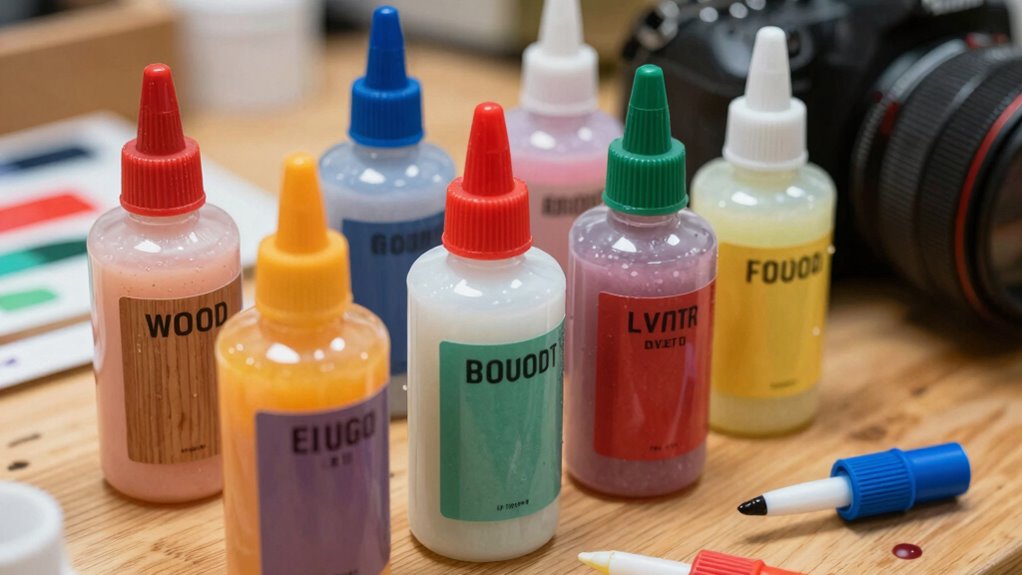
When glue fails to hold, identifying the cause is vital to finding an effective solution. Poor glue storage can cause adhesives to dry out or lose effectiveness, so check if your glue is old or improperly stored. Surface preparation is essential—dirt, moisture, or dust can weaken bonds. If a glue fails, consider alternative adhesives suited for your project, like epoxy or contact cement. Sometimes, switching to a different glue type can save your project.
- Ensure proper glue storage to extend shelf life
- Clean and prep surfaces thoroughly
- Experiment with alternative adhesives for better results
- Test new glues on small areas first to avoid waste
Frequently Asked Questions
Can Certain Glues Be Used Interchangeably Across Different Materials?
Some glues can be used interchangeably across different materials, thanks to their adhesive versatility. However, you should always check for material compatibility, as not all glues bond well with every surface. For example, craft glues might work on paper and fabric but won’t hold wood or plastic effectively. To guarantee a strong, lasting bond, choose a glue specifically designed for the materials you’re working with.
What Safety Precautions Should Be Taken When Using Industrial-Strength Adhesives?
Think of working with industrial-strength adhesives as wielding a fiery sword—you need protection. Always wear personal protective equipment like gloves and goggles to shield yourself from splashes and fumes. Guarantee proper ventilation to clear out hazardous vapors and prevent inhalation. Keep the workspace tidy, follow label instructions, and store adhesives safely away from children. These precautions turn a risky task into a safe, controlled craft.
How Long Does It Typically Take for Different Glues to Fully Cure?
The drying times and curing periods vary depending on the glue type. Most quick-drying glues, like cyanoacrylates, set in seconds to minutes, but full curing can take 24 hours. Epoxies and industrial adhesives may need 24 to 72 hours to fully cure, ensuring maximum strength. Always check the manufacturer’s instructions for precise drying times and curing periods to achieve ideal results and safety.
Are There Environmentally Friendly or Non-Toxic Glue Options Available?
Yes, eco-friendly adhesives and non-toxic glue options are available for your projects. You can choose glues made from natural ingredients like plant-based resins or water-based formulas that emit fewer fumes. These options are safe for your family and the environment, making them ideal for craft, fabric, or woodworking. Look for labels that specify non-toxic, biodegradable, or environmentally friendly to guarantee you’re selecting the best option.
How Do Temperature and Humidity Affect Glue Performance and Application?
Temperature fluctuations and humidity levels can substantially impact your glue’s performance. Higher temperatures may cause glue to dry too quickly or become too runny, making application tricky. Conversely, cold conditions slow down curing. Humidity levels influence adhesion; high humidity can weaken bonds or cause mold, while low humidity helps glue set properly. To guarantee strong, lasting bonds, apply glue in stable temperature and humidity conditions, and follow manufacturer recommendations.
Conclusion
Now that you know the ins and outs of different glues, you’re ready to tackle any project with confidence. Choosing the right adhesive is like finding the missing piece of a puzzle—you’ll see everything come together smoothly. Remember, a little patience goes a long way, and don’t be afraid to experiment. With the right glue in hand, you’ll have your crafts, repairs, and creations sticking like they were meant to be.