
To create a DIY wreath with foraged greens, start by collecting natural materials like pinecones, dried flowers, and various greens from your surroundings. Attach larger greens to a sturdy base first, securing them with floral wire or twine. Fill in gaps with smaller sprigs, layering different textures for depth. Keep decorations minimal to showcase the natural beauty and eco-friendly aspect. If you want to learn more about the best techniques and tips, keep going for a all-inclusive guide.
Key Takeaways
- Collect natural greens such as holly, ivy, or pine from local foraging sources for an eco-friendly wreath.
- Attach larger greens first to a sturdy base, wrapping with floral wire for secure attachment.
- Fill gaps with smaller sprigs and layer textures for a full, balanced appearance.
- Add minimal natural accents like dried flowers or pinecones for decorative interest.
- Hang or display your wreath indoors or outdoors to celebrate the season sustainably.
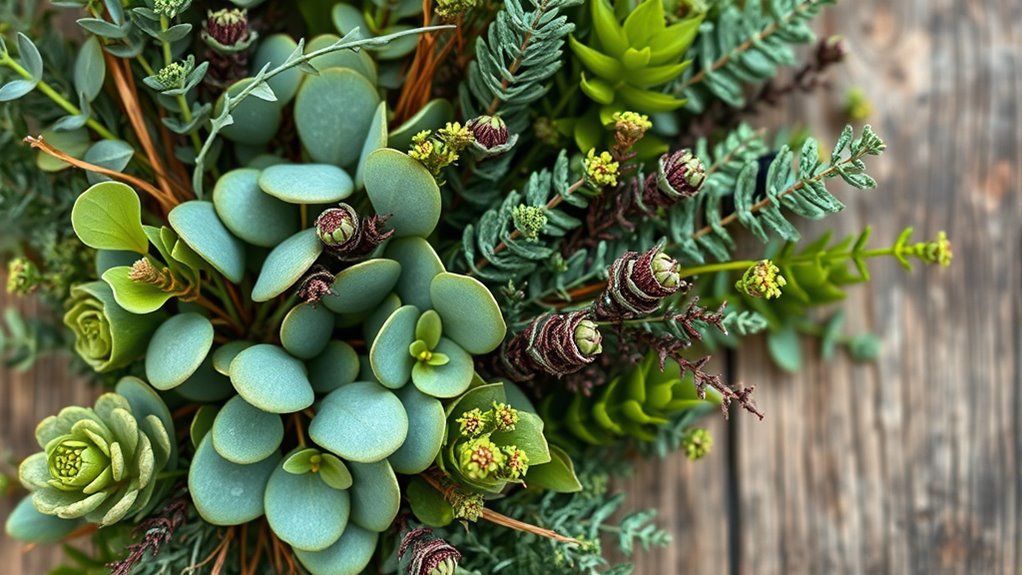
Creating your wreath is straightforward. You’ll need a sturdy base, such as a wire or foam ring, and some floral wire or twine to secure your greens. Start by attaching larger pieces first, wrapping them around the base and anchoring with wire. Fill in gaps with smaller sprigs, layering different textures and shades of green for visual interest. Don’t forget to add decorative touches like dried flowers, pinecones, or ribbons if desired, but keep it simple and natural to emphasize the eco-friendly aspect. As you build, think about the overall shape and balance, turning your gathered greens into a harmonious display that highlights seasonal colors and textures.
Start with a sturdy base, layer greens and textures, and add natural accents for a beautiful, eco-friendly wreath.
Using foraged greens not only enhances the natural look of your wreath but also connects you more deeply with the environment, encouraging sustainable practices. Once finished, your wreath becomes a versatile piece of seasonal decorating. Hang it on your front door to welcome guests, or display it indoors above a fireplace or on a wall. Because you used foraged greens, your wreath is not only beautiful but also environmentally conscious. It’s a tangible reminder that sustainable, eco-friendly crafts can be both charming and meaningful. Plus, making wreaths from foraged greens allows you to connect with nature, appreciate the changing seasons, and enjoy a creative, eco-conscious activity that reduces waste and celebrates the natural world.
Frequently Asked Questions
Can Foraged Greens Be Used for Outdoor Wreaths Year-Round?
Yes, you can use foraged greens for outdoor wreaths year-round, but seasonal variations affect their longevity. Fresh greens look beautiful, but they may wilt or fade quickly outside. To prolong their life, consider providing indoor protection during harsh weather and replacing or revitalizing your wreaths as needed. Using preserved or dried greens also helps maintain their appearance longer, ensuring your outdoor wreath stays vibrant regardless of the season.
How Do I Preserve Foraged Greens for Longer-Lasting Wreaths?
Want your foraged greens to last longer on your wreath? Start with effective preservation methods like air drying or pressing your greens. Use drying techniques such as hanging bundles upside down in a warm, dry space or using silica gel for quicker results. These methods lock in color and texture, ensuring your wreath stays vibrant and beautiful for months. Don’t wait—preserve your greens now for stunning, lasting outdoor decor.
Are There Any Safety Concerns With Foraging for Greens?
When foraging for greens, you should watch out for poisonous plants that can cause health issues if mistaken for safe varieties. Always positively identify plants before harvesting, and avoid any that look unfamiliar or have warning signs. Also, consider legal considerations; some areas have restrictions or require permits for foraging. By staying informed and cautious, you can enjoy gathering greens safely for your wreath-making projects.
What Are the Best Tools for Collecting Foraged Greens?
You should use sharp scissors or pruning shears for collecting greens, as they make clean cuts and reduce plant damage. A small hand trowel can help dig up roots or foraged items safely. Always prioritize foraging safety by keeping your tools clean and well-maintained to prevent rust or infection. Regular tool maintenance ensures accurate cuts and minimizes injury risk, making your foraging experience safer and more efficient.
Can I Customize Wreaths With Non-Green Natural Elements?
You can absolutely customize wreaths with non-green natural elements; the sky’s the limit! Picture a wreath bursting with dried flower accents and decorative berries, adding pops of color and texture. These elements bring your vision to life and make your wreath uniquely yours. Mix and match materials to reflect the season or personal style, turning a simple project into a stunning, one-of-a-kind masterpiece that truly stands out.
Conclusion
Now that you’ve crafted your wreath with foraged greens, you’ve truly made something special from nature’s gifts. Remember, it’s not just about the finished piece but the joy and effort you put into it. Sometimes, the best things in life come from what’s right outside your door. Keep exploring and creating — you never know what treasures you might find. After all, it’s often the little things that make the biggest difference.