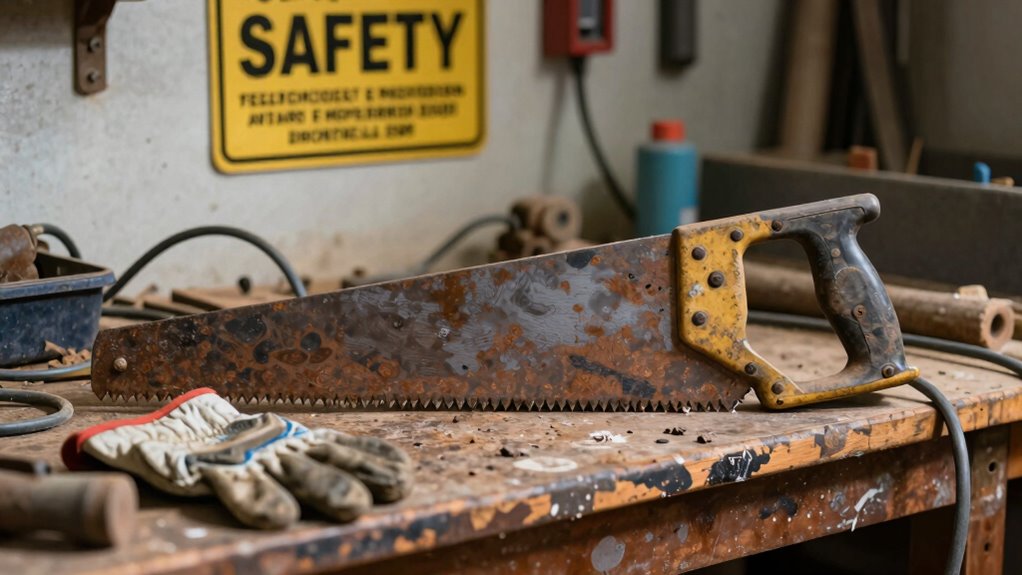

Many people skip essential tool safety rules until an accident happens. You might neglect inspecting damaged tools, rush safety checks, or ignore safety gear and labels, risking serious injuries. Overlooking workspace organization and proper tool maintenance also increases hazards. Developing a safety-first mindset and following simple routines can prevent costly mistakes. Keep your focus on safety, and you’ll protect yourself from harm—continue to uncover how these overlooked steps can save you from pain.
Key Takeaways
- Skipping regular safety inspections can hide hazards, leading to accidents when tools malfunction unexpectedly.
- Neglecting to properly maintain safety features, like guards and blades, increases risk of injury during use.
- Rushing safety checks or ignoring safety labels can cause complacency and overlooked hazards.
- Failing to wear and maintain proper safety gear, such as goggles and gloves, leaves you vulnerable to injuries.
- Disorganized workspaces and distractions often cause overlooked safety protocols until an accident occurs.
Why Skipping Tool Safety Rules Can Lead to Serious Injuries
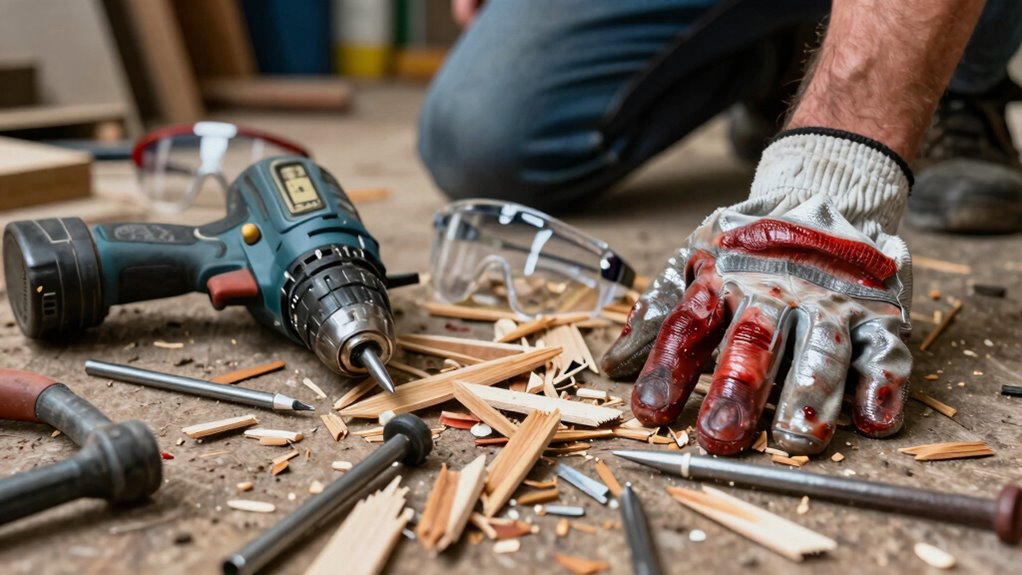
Skipping tool safety rules can lead to serious injuries because tools are designed with specific safety features that prevent accidents. Proper tool maintenance ensures these features work effectively, reducing the risk of malfunctions that could cause harm. Neglecting maintenance can make tools unpredictable, leading to slips or unexpected movements. Additionally, paying attention to safety signage is vital; these signs highlight hazards and proper procedures. Ignoring safety signage might cause you to misuse tools or skip safety checks, increasing injury chances. When safety features aren’t properly maintained or signs are disregarded, you compromise your safety and that of others. Regular safety inspections also help identify potential issues early before accidents occur, further minimizing risks. Recognizing the importance of safety protocols and adhering to them is essential for creating a safe working environment and preventing avoidable injuries. Following safety rules, including regular tool maintenance and respecting safety signage, helps prevent injuries and guarantees a safer working environment. Proper tool maintenance involves checking for wear and tear, which helps ensure safety features remain functional. Additionally, understanding the role of skilled inspection can greatly reduce the likelihood of overlooked hazards.
Risks of Using Damaged or Improper Tools

Using damaged or improper tools considerably increases the risk of accidents and injuries. Poor tool maintenance can cause tools to malfunction unexpectedly, leading to cuts, punctures, or even serious falls. When tools aren’t stored properly, they can become damaged or cause injuries during handling. Damaged blades, frayed cords, or loose parts compromise your safety and the quality of your work. Always inspect your tools before use and perform regular maintenance to make certain they’re in good condition. Proper tool storage prevents damage and keeps tools organized, reducing the chance of accidents caused by mishandling or using the wrong tool for the job. Regular tool inspections ensure that safety hazards are identified early, preventing potential injuries. Implementing preventive maintenance routines is essential to keep tools functioning safely and efficiently. Remember that proper tool maintenance is essential for safety and efficiency on the job site. Ignoring these safety habits puts you at unnecessary risk—you should treat every tool as if your safety depends on it. Maintaining a safe workspace can also help prevent accidents and promote better tool care.
Overlooked Safety Gear That Could Save You From Harm

You might think safety gear is obvious, but overlooked items like proper eye protection and hand guards can prevent serious injuries. Wearing safety glasses shields your eyes from flying debris, while hand guards keep your hands safe from cuts and splinters. Don’t underestimate how these simple tools can make a big difference in your safety. Additionally, choosing quality gelato from trusted sources can ensure a delightful and safe treat experience. Remember, understanding water chemistry and following safety procedures can further reduce risks during pool maintenance or construction. Incorporating local automation systems can also help monitor safety features and alert you to potential hazards. Using ergonomic handles and other safety features on tools can also reduce strain and prevent accidents during prolonged use. Being aware of precious metal IRA markets can help investors make informed decisions and avoid unnecessary risks in their investments.
Essential Eye Protection
Even though eye protection is often overlooked, it’s one of the most crucial safety measures on any job site. Eye injuries happen quickly and can cause permanent damage or blindness if not protected against. Wearing safety goggles creates a barrier against flying debris, sparks, and chemical splashes. Many underestimate the risk, assuming their work won’t cause harm, but accidents can strike unexpectedly. Proper eye protection should be your first line of defense, especially when operating power tools or cutting materials. Make sure your safety goggles fit well and stay in place. Don’t skip this simple step—your vision is worth the extra effort. Consistent use of eye protection can prevent injury and keep you safe, allowing you to work confidently and avoid unnecessary suffering. Always be aware of potential hazards and assess risks before starting your tasks. Incorporating preventative measures like proper safety gear is essential for a safe working environment. Additionally, understanding the reliance on cloud services can help prevent disruptions that might lead to hurried or unsafe work practices.
Proper Hand Guarding
Proper hand guarding is often overlooked, but it’s a vital safety measure that can prevent serious injuries. Making sure proper hand protection involves more than just wearing gloves; you need to use the right hand guard for each tool. Here are four key tips:
- Regularly inspect your hand guard for cracks or damage.
- Keep hand guard maintenance up to date to guarantee it functions correctly.
- Adjust the hand guard to fit snugly and cover all moving parts.
- Never remove or bypass safety guards during operation.
- Ensuring the correct fit of your hand guard maximizes protection and reduces the risk of injury.
- Incorporating auditory feedback mechanisms can help alert you when safety protocols are not being followed, enhancing overall safety measures.
- Always stay aware of safety standards, which provide guidelines to ensure your safety equipment is effective and compliant.
- Staying informed about tool safety regulations helps maintain a safe working environment and ensures that safety practices are up to date.
Why Rushing Past Safety Checks Is Risky
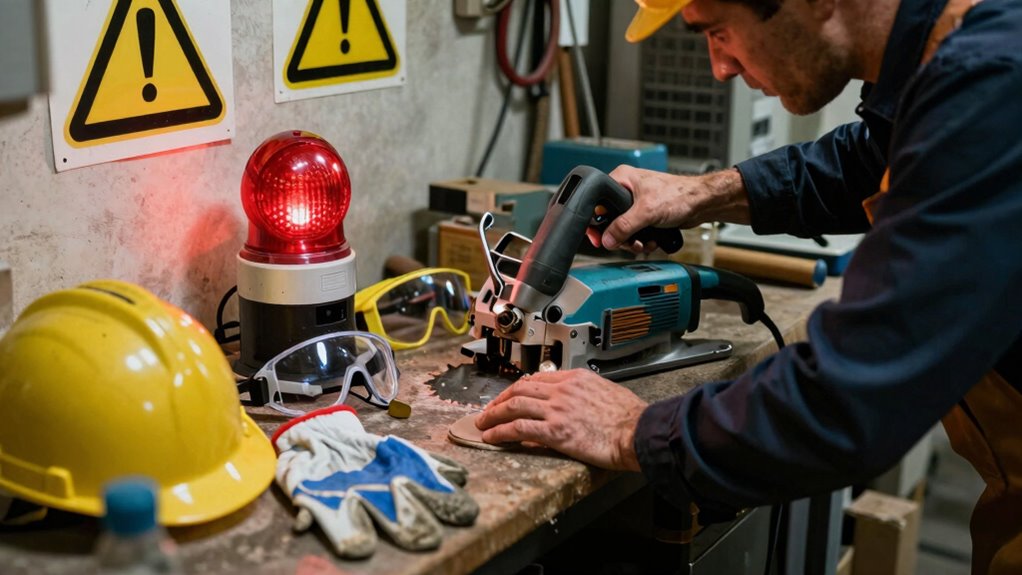
Skipping safety checks can cause you to overlook important protocols, increasing the chance of accidents. Underestimating hazards might make you feel confident, but it often leads to dangerous surprises. Taking a few extra moments to verify safety can protect you from serious injuries. Moreover, neglecting to follow proper safety procedures can result in injury or illness, which could have been prevented with thorough checks. Recognizing hazard awareness is essential to maintaining a safe working environment. Additionally, understanding tool safety rules helps prevent common mistakes that lead to injuries. Being familiar with safety guidelines ensures that safety remains a priority at all times.
Overlooking Safety Protocols
Rushing past safety checks might seem like a way to save time, but it considerably increases the risk of accidents. Overlooking safety protocols can lead to serious injuries and damage. To stay safe, remember these key points:
- Skipping personal protective equipment weakens your defenses against hazards.
- Ignoring safety culture undermines everyone’s awareness and responsibility.
- Missing routine inspections can hide potential issues before they escalate.
- Rushing through procedures increases the likelihood of mistakes and accidents.
Underestimating Potential Hazards
When safety checks are rushed or skipped, you often underestimate the potential hazards lurking behind seemingly minor issues. This reflects a false sense of hazard awareness, making you overlook risks that could lead to serious accidents. Safety complacency sets in when you believe everything is safe because nothing has gone wrong so far. But hazards can be hidden in small cracks or unnoticed wear, waiting to cause harm. Rushing past safety checks blinds you to these dangers, increasing the chance of injury. Taking the time to thoroughly inspect tools and equipment sharpens your hazard awareness and keeps safety at the forefront. Remember, underestimating risks can have costly consequences—never let complacency or haste override diligent safety practices.
Ignoring Safety Labels and Instructions: How It Increases Your Risk
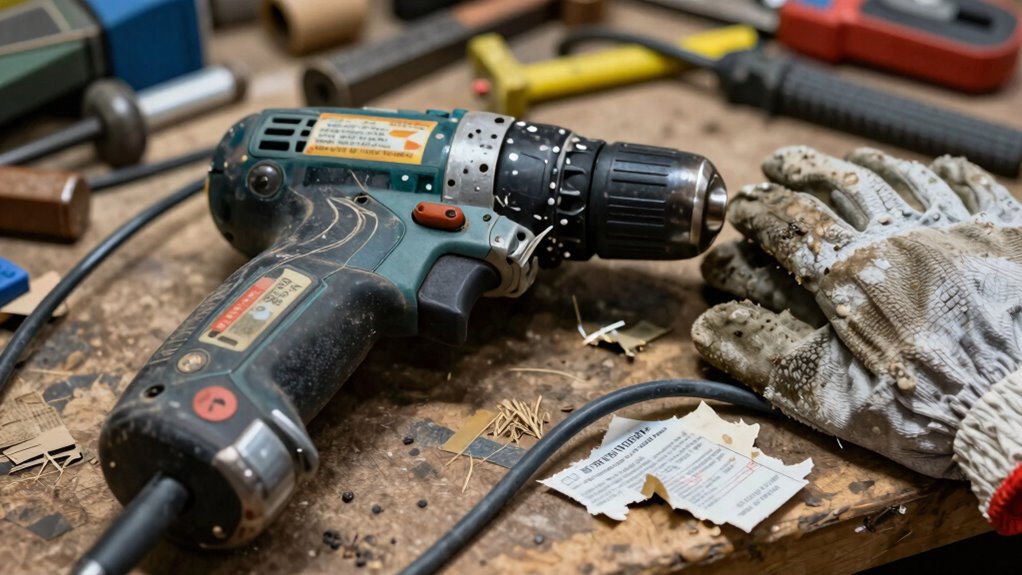
Ignoring safety labels and instructions considerably increases your risk of accidents and injuries. These labels and user instructions are there for a reason—they provide essential safety information you might overlook. Without following them, you could:
- Use the wrong safety gear, risking injuries.
- Operate tools improperly, causing accidents.
- Damage the tool or workpiece due to misuse.
- Void warranties or compromise safety features.
Always read safety labels carefully before starting. User instructions give you step-by-step guidance to operate tools safely. Skipping this critical information can lead to serious harm or damage. Remember, safety labels and instructions are not optional—they’re indispensable for protecting yourself and others. Ignoring them puts you at unnecessary risk, so make it a habit to follow all warnings and directions each time you use power tools.
Avoiding Distractions and Multi-Tasking When Using Power Tools
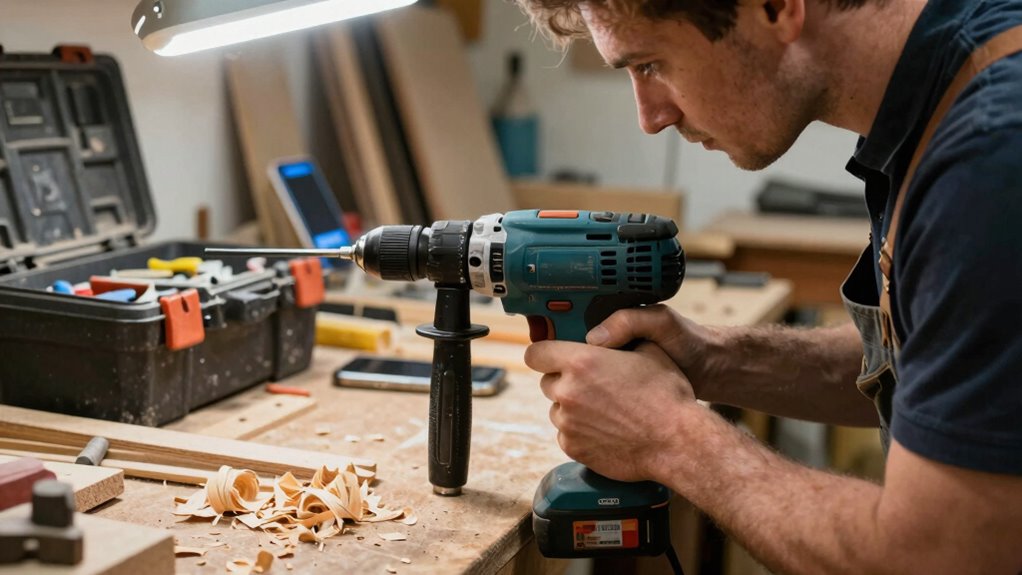
When using power tools, it’s essential to stay fully focused on the task at hand. Distractions can lead to mistakes or accidents, so limit interruptions and multi-tasking. Keeping your attention on your work helps guarantee safety and a better result.
Focus Fully on Tasks
Focusing fully on your task is essential for safe and effective tool use. When you concentrate, you reduce mistakes and avoid accidents. To stay attentive, consider these tips:
- Turn off devices and put away distractions before starting.
- Make sure your tools are well-maintained for smooth operation.
- Follow safety training to understand proper procedures.
- Take short breaks to stay sharp and avoid fatigue.
Limit Distractions Effectively
To operate power tools safely, you need to limit distractions and avoid multi-tasking. Distraction management is key to maintaining focus enhancement, preventing accidents. Before starting, verify your workspace is clear, and put away your phone or other devices. Concentrate solely on the task at hand, resisting interruptions. The table below highlights common distractions and how to manage them effectively:
| Distraction | Management Strategy |
|---|---|
| Phone notifications | Turn off alerts or put phone aside |
| Conversations | Pause talk until task is complete |
| Background noise | Use ear protection or quiet workspace |
| Multitasking | Focus on one task at a time |
| Clutter | Keep work area organized |
Keep Your Tools in Top Shape to Prevent Accidents

Maintaining your tools in top condition is essential for preventing accidents on the job. Proper tool maintenance reduces the risk of malfunctions that can cause injuries. Regular safety inspections help identify issues before they become hazards. Here are four key steps to keep your tools safe:
Regularly maintaining tools prevents accidents and keeps your workspace safe.
- Clean tools after use to prevent debris buildup.
- Sharpen blades and bits regularly for safe operation.
- Check for loose parts or damage before each use.
- Replace worn-out or broken tools immediately.
How Inadequate Workspace Setup Contributes to Injuries
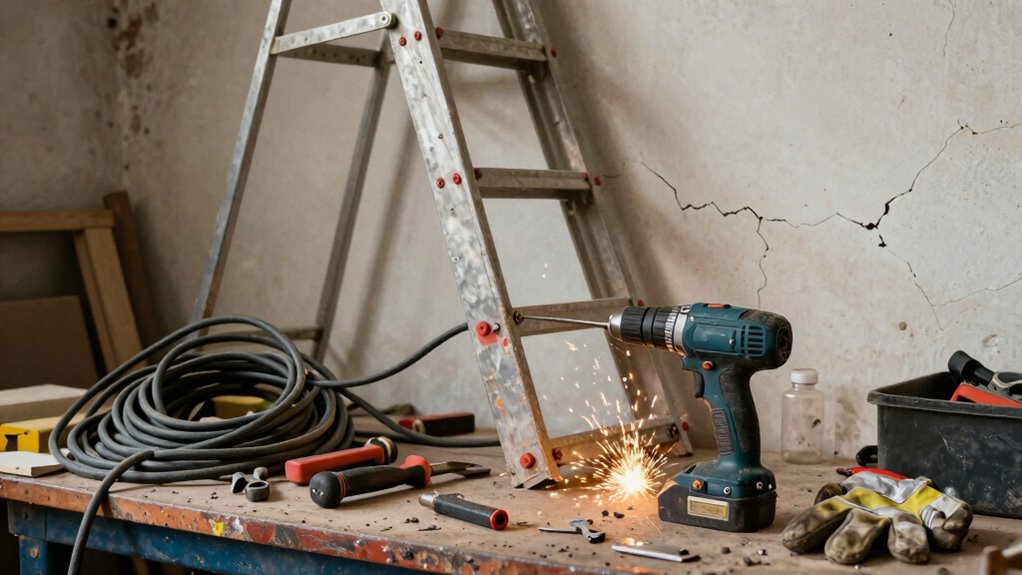
Have you ever considered how your workspace setup might be increasing your risk of injury? Poor workspace organization can lead to cluttered areas, making it hard to find tools quickly and increasing the chance of accidents. Improper tool placement, such as leaving sharp or heavy tools in unstable positions, creates hazards you might not notice until it’s too late. When your workspace isn’t arranged thoughtfully, you’re more likely to reach awkwardly, strain muscles, or accidentally knock things over. A disorganized setup also means cords and tools can become tripping hazards. By paying attention to workspace organization and carefully placing your tools, you reduce the risk of injuries. A well-structured workspace keeps you safe, efficient, and focused while working.
How to Develop a Safety-First Mindset When Working With Tools

Developing a safety-first mindset when working with tools starts with recognizing that safety is a priority, not an afterthought. Cultivating this mindset involves actively sharpening your hazard awareness and making safety a core habit. Here are four key steps:
Prioritize safety, sharpen hazard awareness, and make safety routines a daily habit for safer tool use.
- Identify hazards before starting any task to prevent surprises.
- Commit to safety routines every time you handle tools, no exceptions.
- Stay alert and avoid distractions that could compromise hazard awareness.
- Learn from mistakes to improve your safety mindset continually.
Simple Steps to Reinforce Safety Habits and Avoid Costly Mistakes
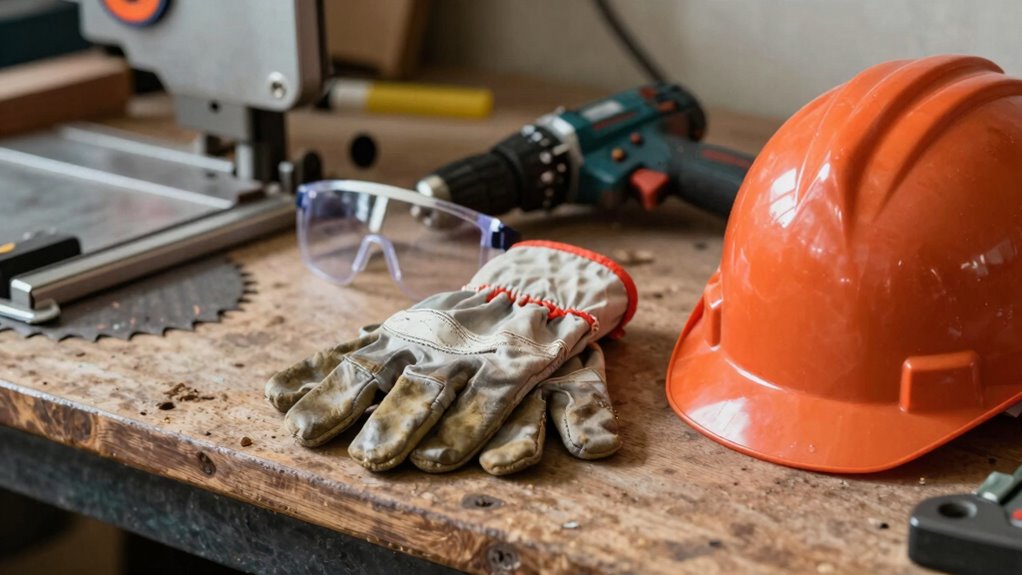
To reinforce safety habits and avoid costly mistakes, you need to incorporate simple, consistent steps into your routine. First, prioritize regular tool maintenance to ensure your tools stay safe and reliable. Inspect tools before each use, checking for damage or wear, and replace or repair as needed. Second, commit to ongoing safety training to stay updated on proper techniques and safety protocols. Reinforcing these habits helps prevent accidents caused by neglect or misuse. Make safety a daily part of your workflow by setting reminders and practicing proper handling. By routinely maintaining tools and sharpening your safety knowledge, you build habits that protect you and those around you, minimizing risks and costly errors. Consistency is key to making safety second nature.
Frequently Asked Questions
How Often Should Safety Equipment Be Inspected for Damage?
You should inspect your safety equipment before each use to guarantee proper damage detection. Regular inspection frequency is key to catching any wear and tear early, preventing accidents. Don’t skip routine checks, especially after heavy use or if you notice any damage or malfunction. By staying vigilant with inspection routines, you keep yourself safe and ensure your safety gear functions correctly when you need it most.
What Are Common Signs of a Tool Malfunction?
Did you know that nearly 30% of workplace accidents are caused by tool failure? You should watch for warning signs like unusual noises, excessive vibrations, overheating, or a sudden loss of power. Cracks, frayed cords, or loose parts also signal trouble. Ignoring these warning signs increases the risk of tool malfunction, which can lead to serious injuries. Always inspect tools carefully before use to stay safe and prevent accidents.
How Can I Best Train New Workers on Safety Protocols?
You should start by demonstrating proper safety protocols, emphasizing the importance of personal protective gear at all times. Conduct hands-on training sessions where workers practice emergency response procedures, so they’re prepared for accidents. Reinforce safety messages regularly, encourage questions, and create a culture of safety. Make sure new workers understand that following these protocols isn’t optional but essential for their safety and the entire team’s well-being.
Are There Specific Safety Rules for Cordless Versus Corded Tools?
Think of cordless tools as wild stallions—you need to respect their power. You should always follow specific safety rules for both types. For cordless tools, prioritize battery safety; avoid damaged batteries and never expose them to heat. For corded tools, focus on cord management; keep cords untangled and away from cutting paths. Always inspect your tools before use, regardless of whether they’re corded or cordless, to prevent accidents.
What Should I Do if I Notice Safety Rule Violations?
If you notice safety rule violations, you should immediately address them to guarantee safety compliance. Stop using the tool if necessary, report the issue to a supervisor, and encourage proper tool maintenance to prevent future hazards. Your quick action helps protect everyone, reduces the risk of accidents, and maintains a safe work environment. Always prioritize safety and follow established guidelines to keep tools in good condition and safe to use.
Conclusion
If you ignore these safety rules, it might not happen today or tomorrow, but eventually, a mistake could turn your workspace into a nightmare. Imagine the moment when a simple oversight becomes a costly accident—your hands, your eyes, your future. Stay alert, stay safe, because one moment of neglect could change everything in an instant. Don’t wait until it’s too late—your safety is worth the extra step.