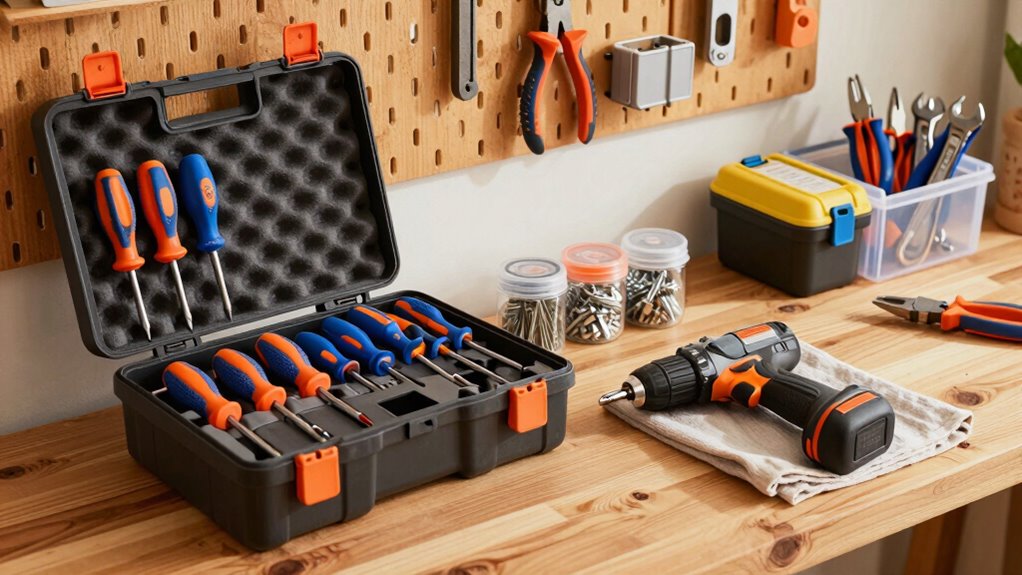

To create a beginner-friendly home tool station, start by choosing a dedicated, clutter-free area with good visibility of your tools. Use pegboards for hanging frequently used items, clear containers, and labeled drawers for small parts, and invest in a tool chest for organization. Keep tools in good condition, wear safety gear, and store hazardous items out of reach. Maintaining this setup makes your space practical and safe, and if you keep exploring, you’ll find more helpful tips to improve your workshop.
Key Takeaways
- Designate a clear, accessible space with ample room and good lighting for easy tool use.
- Use pegboards and labeled containers to organize tools and small parts logically.
- Keep frequently used tools within reach and store less-used items separately.
- Regularly inspect and maintain tools, replacing damaged ones promptly.
- Ensure safety by wearing protective gear and maintaining a tidy, hazard-free workspace.

A well-organized home tool station can make your DIY projects easier and more efficient. When you set up your space thoughtfully, you’ll find it simpler to locate the tools you need and complete tasks without frustration. The key is focusing on tool organization—sorting your tools in a way that makes sense for your projects—and keeping safety tips in mind to prevent accidents. Start by choosing a dedicated area, whether it’s a corner in your garage, basement, or a sturdy shelf in your workshop. Clear out clutter so you have enough room to work comfortably and see everything at a glance.
Once you’ve designated your space, invest in storage solutions like pegboards, tool chests, or labeled bins. Pegboards are excellent for hanging frequently used tools such as screwdrivers, pliers, and hammers, allowing you to see everything instantly. Small parts like nails, screws, and washers should go into clear containers or divided drawers so you can grab what you need quickly. Label each container or section for easy identification, especially if multiple people use the space. Keeping your tools in order not only streamlines your workflow but also reduces the chance of accidentally grabbing the wrong item or misplacing something important. Incorporating effective storage practices can help maximize your space and improve overall safety. Additionally, proper tool maintenance can extend the lifespan of your equipment and ensure safer operation.
Use pegboards, labeled bins, and clear containers to organize tools and small parts for quick, easy access.
Safety tips are just as crucial as good tool organization. Always wear protective gear such as safety glasses, gloves, and dust masks when working with power tools or handling sharp objects. Store hazardous items, like chemicals or sharp blades, out of reach of children or untrained users. When using power tools, ensure cords are tucked away to prevent tripping hazards, and double-check that your tools are in good working condition before starting any project. Keep your workspace well-ventilated, and avoid working in cluttered or cramped areas where accidents are more likely. Regularly inspect your tools for damage or wear, and replace or repair them as needed to maintain safety. Incorporating safe storage practices can greatly reduce the risk of accidents in your workshop. Additionally, understanding home maintenance principles can help you create a more organized and sustainable space, such as through eco-friendly materials or waste disposal methods. Developing a routine for regular cleaning and inspection can further enhance safety and prolong the lifespan of your tools.
As an affiliate, we earn on qualifying purchases.
Frequently Asked Questions
What Safety Equipment Should I Include in My Tool Station?
You should include safety goggles and dust masks in your tool station to protect yourself during projects. Safety goggles shield your eyes from debris, splashes, and sparks, while dust masks prevent inhaling dust, fumes, or particles. Keep them within easy reach so you remember to wear them every time you work. These essential safety items help prevent injuries and guarantee your DIY projects stay safe and enjoyable.
How Can I Organize Small Hardware Like Nails and Screws?
You can organize small hardware like nails and screws with storage bins and a clear labeling system. Use small, stackable bins that fit easily on your shelves or drawers, making each type easy to find and access. Label each bin precisely—nails, screws, washers—so you know exactly what’s inside at a glance. Keep your workspace tidy and efficient by regularly updating your labels and sorting your hardware systematically.
What Are Essential Tools for a Beginner Home DIYER?
As a beginner DIYer, essential tools include a hammer, screwdrivers, pliers, a tape measure, and a level. For tool storage ideas, consider a sturdy toolbox or wall-mounted organizer to keep everything accessible. Opt for budget-friendly tool options like basic brands or multi-tools to save money while building your collection. Start simple, prioritize quality for frequently used items, and gradually add specialized tools as your projects grow.
How Often Should I Clean and Maintain My Tools?
A stitch in time saves nine—so you should clean and maintain your tools regularly to keep them in top shape. For ideal tool maintenance, establish cleaning schedules after each use or weekly, depending on how often you work. Regular cleaning, oiling, and inspecting for damage prevent costly repairs and guarantee safety. Remember, consistent care prolongs your tools’ life, making your DIY projects smoother and more enjoyable.
How to Choose a Durable Work Surface for My Station?
Choose a durable work surface like a sturdy wood or metal top, which can withstand heavy use. Look for materials that resist dents, scratches, and moisture. An ergonomic workbench with height adjustments helps reduce strain during tasks. Consider adding a protective coating or mat to extend its lifespan. Prioritize stability, ease of cleaning, and comfort, ensuring your station stays functional and safe for all your projects.
Conclusion
Creating a home tool station isn’t just about organization—it’s about empowering yourself. Imagine having all your essential tools within arm’s reach, ready for any quick fix. Did you know that a well-organized workspace can boost your efficiency by up to 30%? So, invest a little time now, and you’ll enjoy the confidence and convenience of a dedicated space that makes every project easier and more enjoyable. Your future DIY self will thank you!