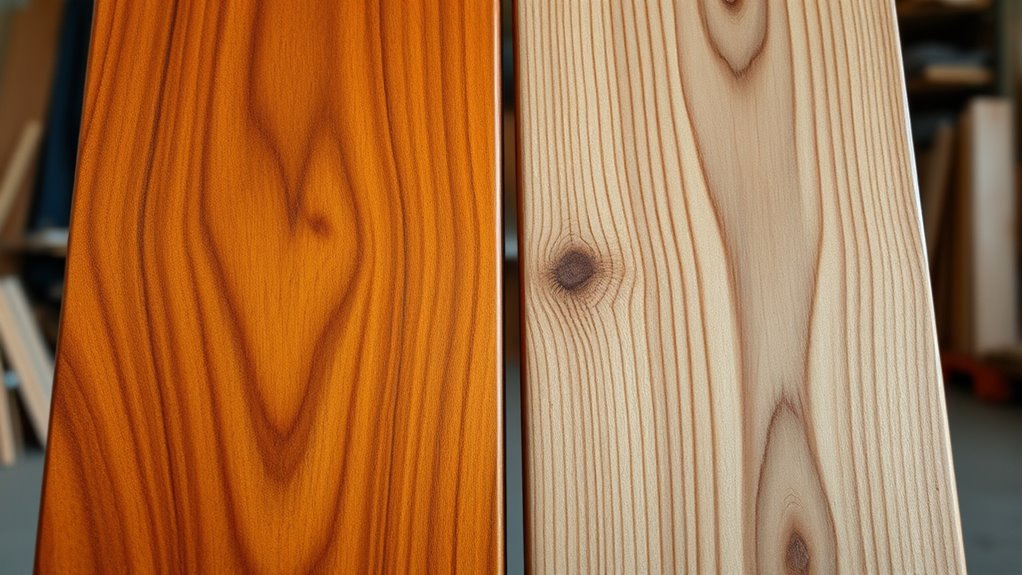

When choosing between oil and water-based stains, consider your goals. Oil stains penetrate deeply, creating warm, rich hues that highlight wood grain, but they take longer to dry and require more cleanup. Water-based stains dry quickly, are easier to apply, and give a smooth, uniform finish—great for beginners. Understanding these differences helps you pick the right stain for your project. Keep exploring to discover tips on achieving the best finish with each type.
Key Takeaways
- Oil stains penetrate deeply for a rich, warm finish, ideal for traditional looks; water-based stains dry fast and offer uniform color.
- Oil stains enhance natural wood tones with better control over shade; water-based stains are easier for layering and quick projects.
- Oil stains require brushes or cloths, longer drying times, and more cleanup; water-based stains use simple tools and dry quickly.
- Oil stains are suited for achieving deep, warm hues; water-based stains are great for beginners and creating consistent, smooth finishes.
- Practice on scrap wood before staining your project to ensure desired color and application technique for both stain types.
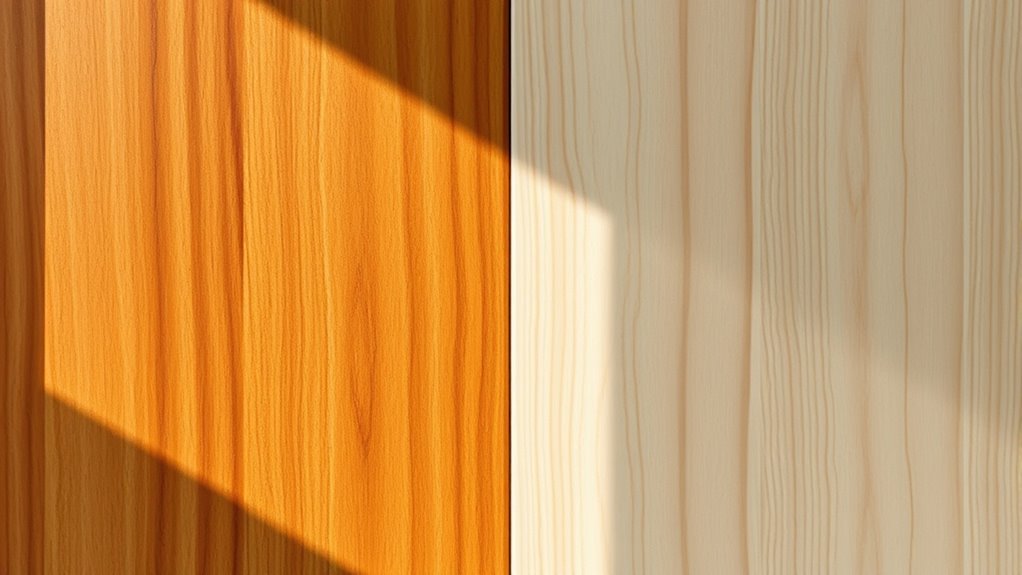
Are you unsure which wood stain is right for your project? Choosing between oil-based and water-based stains can be tricky, especially if you’re new to woodworking or furniture finishing. The key is understanding how each type performs, what kind of look you want to achieve, and how to use them effectively. When considering your options, pay close attention to color matching—since stains come in a variety of shades—and application techniques, which can influence the final result. Your goal is to enhance the wood’s natural beauty without making the process more complicated than it needs to be.
Oil stains tend to penetrate deeply into the wood, highlighting its grain and richness. They usually offer a more traditional finish and tend to blend better with the wood’s natural tones. If you’re aiming for a rich, warm hue or want to match a specific color, oil stains give you more control over the shade. When applying oil stain, you’ll want to work with application techniques that promote even coverage. Use a brush or cloth to apply the stain evenly, wiping away excess to prevent blotchiness. Wipe in the direction of the grain, ensuring the stain penetrates uniformly. Multiple coats can deepen the color, but always allow ample drying time between layers. Keep in mind that oil stains can be messier and longer drying, so patience is key.
Water-based stains, on the other hand, dry faster and are easier to clean up, making them more suitable for beginners. They tend to produce a more uniform color, which can be helpful if you’re trying to achieve a consistent, smooth finish. When it comes to color matching, water-based stains often provide a wider selection of shades and are easier to blend or layer for custom hues. Their application techniques involve using a brush, sponge, or spray, depending on the project. To get an even color, apply thin coats and work swiftly, especially since water-based stains tend to dry quickly. If you want to lighten or darken the color, just add more coats, but always test on a scrap piece first. This will help you refine your application technique and ensure the color matches your vision before tackling the actual piece.
Ultimately, your choice depends on your project’s requirements, your familiarity with stain application, and the finish you desire. Both oil and water-based stains can deliver beautiful results when used correctly. Paying attention to application techniques and color matching will help you achieve a professional-looking finish, whether you’re going for a rustic, traditional, or modern look. Remember, practice on scrap wood first, and don’t rush the process—your patience and preparation will reward you with a stunning, durable finish.
Frequently Asked Questions
Can I Switch Between Oil and Water-Based Stains Mid-Project?
You can switch between oil and water-based stains mid-project, but you need to take into account stain compatibility and project timeline. Make sure the previous stain has dried completely, and clean the surface thoroughly to ensure proper adhesion. Keep in mind that changing stains might affect the final look, so plan ahead. Allow extra drying time if switching, and test a small area first to see how the new stain interacts with the previous one.
How Long Does Each Stain Type Typically Last Outdoors?
Oil-based stains typically last 3 to 5 years outdoors, offering excellent stain durability and outdoor longevity. Water-based stains usually last 2 to 4 years, but they dry faster and are easier to clean. Your choice depends on your project’s needs, climate, and desired maintenance. Keep in mind that proper surface preparation and regular upkeep can extend the outdoor longevity of either stain type.
Are There Health Risks Associated With Oil-Based Stains?
Yes, oil-based stains pose health risks like toxic fumes and skin irritation. When applying, you might inhale strong fumes that can cause respiratory issues, so proper ventilation and masks are essential. Skin contact can lead to irritation, so wearing gloves is recommended. Always follow safety instructions on the label, work in well-ventilated areas, and wash your hands thoroughly afterward to minimize health hazards.
What Are the Best Cleaning Methods for Tools After Staining?
Don’t let dirty tools ruin your project; cleaning tools after staining is simple. Use mineral spirits or soap and water for stain removal, depending on your stain type. For oil-based stains, soak your brushes in mineral spirits, then rinse thoroughly. Water-based stains require soap and warm water. Regular tool cleaning not only prolongs their lifespan but also guarantees smooth application, making your woodworking projects more enjoyable and professional-looking.
Can Stain Color Be Customized or Mixed for Unique Shades?
Yes, you can customize stain color by mixing different shades to create unique hues. Color mixing allows you to achieve custom shades tailored to your project’s needs. Start with small amounts to test the resulting color before committing. Keep in mind that water-based stains blend easily, while oil-based stains may require more effort. Experimenting with different ratios helps you find the perfect custom shade for your woodworking project.
Conclusion
Now that you’ve explored the nuances of oil and water-based stains, you’re better equipped to choose what suits your project best. Remember, each type offers its own charm, like gentle whispers of nature’s palette. Trust your instincts, and don’t rush the process—sometimes, a little patience reveals the most beautiful finish. With your newfound knowledge, every stroke brings your vision closer to life, turning plain wood into a story worth sharing.