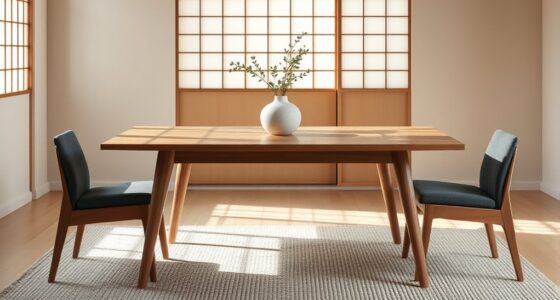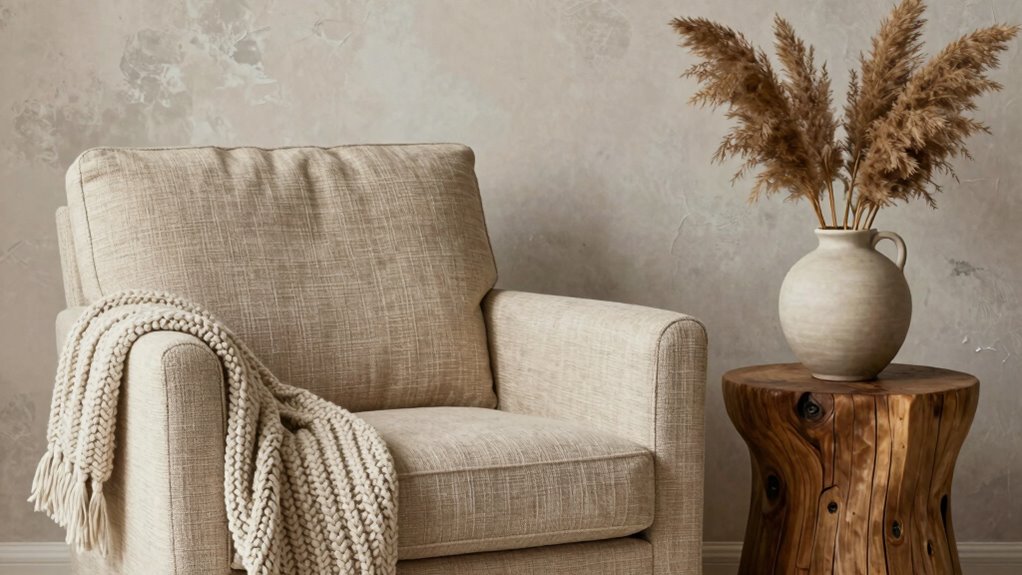

Texture matters more than color in calm interiors because it creates depth and warmth without overwhelming your space. By focusing on tactile surfaces like soft fabrics, layered textiles, and textured rugs, you engage your senses and foster a cozy, inviting atmosphere. Textures add visual interest and can easily adapt to changing styles or seasons. They promote relaxation by emphasizing feeling over bright hues, guiding you toward a serene environment—if you continue exploring, you’ll discover how to craft truly soothing spaces.

Get furniture and decor delivered free with Prime
- Fast, free delivery on millions of items
- Prime Video, Amazon Music and more included
- Member-only deals all year
Key Takeaways
- Texture adds depth and warmth without relying on bold colors, creating a soothing and inviting environment.
- Tactile surfaces engage the senses, promoting relaxation and mindfulness in calm interiors.
- Layered textures provide visual interest and versatility, allowing easy updates without changing color schemes.
- Textures enhance comfort and insulation, contributing to a cozy, nurturing space.
- Relying on textures emphasizes craftsmanship and sensory experience, fostering emotional well-being.

Texture plays a crucial role in creating calm interiors, adding depth and warmth without overwhelming the space. When you focus on tactile surfaces and layered textiles, you craft an environment that feels inviting and serene. Instead of relying solely on color, you emphasize the sensory experience within your space. Soft, textured fabrics like linen, wool, and cotton bring a gentle complexity that invites touch and discovery. These layered textiles create visual interest without the need for bright hues or bold patterns, helping maintain a tranquil atmosphere.
Textures add warmth and serenity, creating inviting, layered spaces that soothe through tactile richness and subtle visual interest.
In a calm interior, textures are your secret weapon. You want your space to feel harmonious, so you incorporate tactile surfaces that offer subtle variation. Think about plush rugs underfoot, textured throw blankets, and cushions with different weaves. Each element adds a new layer for your senses to explore. These layers of textiles soften edges and create a cozy, balanced environment. When you combine various textures, you avoid flatness, ensuring your space feels rich yet understated. It’s about tactile contrast—smooth against rough, soft against coarse—that keeps the eye engaged without causing visual clutter. Incorporating textural diversity enhances the overall sensory experience and prevents monotony. Additionally, paying attention to material quality can elevate the tactile richness of your interior, making it more durable and inviting over time.
Layered textiles also serve a practical purpose, providing insulation and comfort. A thick woven blanket over a sleek sofa, a plush rug anchoring a room, or linen curtains that gently diffuse daylight all contribute to a calm, welcoming space. You don’t need loud patterns or bright colors to make an impact; instead, the interplay of textures draws your attention naturally. The tactile surfaces become the focal point, engaging your sense of touch and sight simultaneously. This multi-sensory approach enhances relaxation, making your home a true sanctuary. Additionally, understanding sensory richness helps deepen the appreciation of how textures influence mood and ambiance, encouraging mindfulness in your decor choices.
By prioritizing texture over color, you create a versatile foundation that can easily adapt to changing tastes or seasons. Neutral tones paired with layered textiles allow you to switch out accessories or accents without disrupting the overall calm. The textures themselves become the visual interest, making your space feel thoughtfully curated yet effortlessly soothing. When you choose tactile surfaces with intention, you craft a space that feels balanced and grounded. It’s about creating a refuge from sensory overload, where every surface invites you to slow down and appreciate the subtle beauty of touch and craftsmanship.
Ultimately, the power of texture in calm interiors lies in its ability to transform a simple room into a sensory haven. By emphasizing layered textiles and tactile surfaces, you craft an environment rich in quiet details that soothe and inspire. It’s a mindful approach—less about what you see and more about what you feel—creating a calming atmosphere that promotes relaxation and well-being. Recognizing the importance of sensory experience can help guide you in designing spaces that truly nurture your mental and emotional health.
soft textured rugs for living room
As an affiliate, we earn on qualifying purchases.
As an affiliate, we earn on qualifying purchases.
Frequently Asked Questions
How Does Texture Influence the Overall Mood of a Room?
Texture influences the overall mood of your room by creating material contrast and sensory engagement. When you incorporate different textures, such as plush fabrics or rough woods, you add depth and warmth, making the space feel more inviting and tranquil. This tactile variety stimulates your senses and promotes calmness, as your brain responds positively to comfort and subtle contrasts, ultimately shaping a soothing, harmonious environment.
Can Texture Be Used to Make Small Spaces Feel Larger?
Yes, texture can make small spaces feel larger. You can use wall textures like subtle wallpaper or textured paint to add depth without overwhelming the room. Choose furniture finishes with sleek, reflective surfaces or smooth fabrics to create an airy feel. Combining these textures with strategic lighting tricks enhances the sense of openness, making your small space appear more expansive and inviting.
What Are the Best Textures for Creating a Cozy Atmosphere?
Think of your space as a warm hug; soft textures envelop you, creating coziness. To achieve this, you should focus on plush textiles like velvet or chunky knits, layered through textile layering techniques. Incorporate wall coverings like textured wallpaper or fabric panels to add depth and warmth. These textures invite touch and make your room feel inviting, comforting, and truly cozy, transforming your space into a sanctuary.
How Do Different Textures Affect Acoustic Qualities in a Room?
Different textures influence a room’s acoustic qualities by affecting sound absorption and diffusion. Soft, plush textures like rugs and cushions absorb sound, reducing echo and noise, creating a calmer atmosphere. Meanwhile, textured surfaces with visual contrast, such as textured wall panels, can diffuse sound waves, preventing harsh reflections. By choosing varied textures, you can balance sound absorption and diffusion, enhancing both comfort and acoustic quality in your space.
Is It Better to Mix Textures or Keep Them Uniform?
You should mix textures rather than keep them uniform, as it creates tactile contrast and visual interest in your space. Incorporate seasonal textures, like cozy knits in winter and breezy linens in summer, to enhance comfort and style. Mixing textures adds depth, making your interior feel more inviting and dynamic, while uniform textures can seem flat. Embracing variety keeps your look fresh and engaging year-round.
Conclusion
When you focus on texture in your calm interiors, you create a space that’s more than just visually soothing—you craft a sanctuary that feels alive and inviting. Texture adds depth, warmth, and a touch of magic that color alone can’t achieve. It’s like turning a simple room into a cozy masterpiece where every touch tells a story. So, don’t underestimate the power of texture; it’s the secret ingredient that transforms your space into a true haven.
Halloween Picks
halloween
As an affiliate, we earn on qualifying purchases.