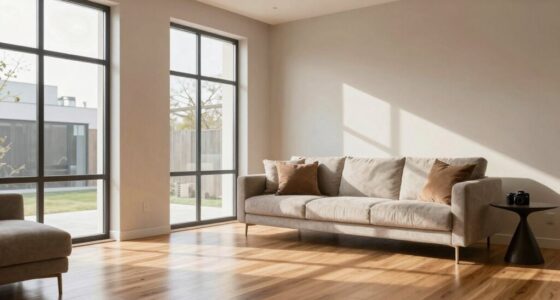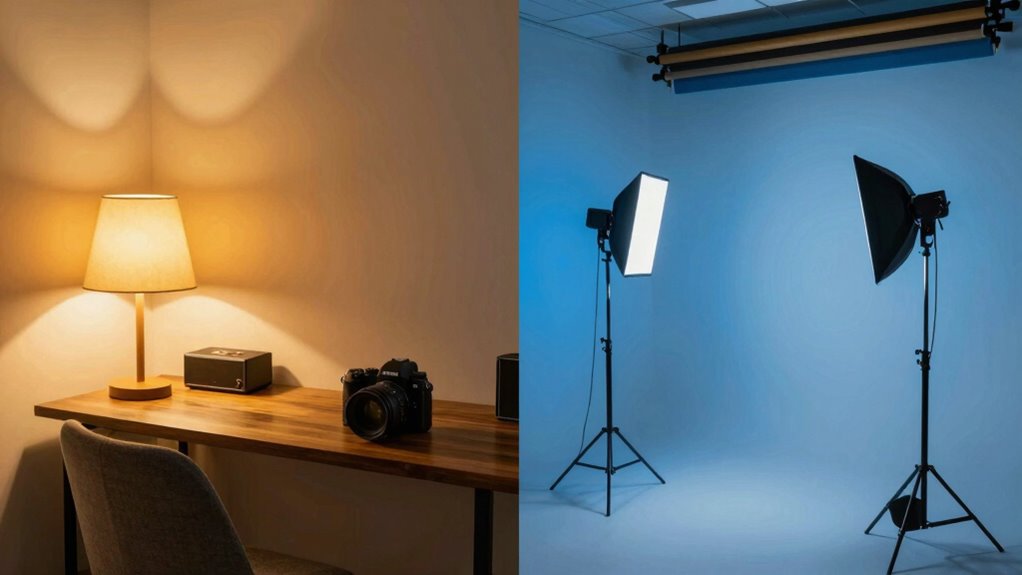

Warm lighting (2700K–3000K) creates cozy, relaxing atmospheres that enhance skin tones and highlight architectural details, making spaces feel inviting. Cool lighting (4000K–6500K) offers bright, energizing illumination perfect for tasks and areas needing clarity. Balancing these tones can improve mood and functionality while complementing your interior style. If you want to master choosing the right lighting for each space, keep exploring the key differences and best practices.
Key Takeaways
- Warm lighting (2700K–3000K) creates cozy, inviting spaces, enhances skin tones, and emphasizes textures, ideal for relaxing environments.
- Cool lighting (4000K–6500K) offers clarity, alertness, and modern aesthetics, suitable for workspaces, kitchens, and task-oriented areas.
- Combining warm and cool lighting layers can balance ambiance, enhance design features, and promote psychological comfort.
- Warm tones generally promote relaxation and comfort, while cool tones boost focus, energy, and visual precision.
- Choosing the right color temperature depends on space function, desired mood, and interior decor for cohesive, effective lighting.
What Are Warm and Cool Lighting? A Clear Explanation

Understanding the difference between warm and cool lighting is essential when choosing the right ambiance for your space. Warm lighting typically has a lower color temperature, around 2700K to 3000K, giving off a soft, yellowish glow that creates a cozy and inviting light mood. Cool lighting, with a higher color temperature of 4000K to 5000K or more, emits a bluish or white light that feels more energizing and modern. This contrast in color temperature influences how you perceive your environment and impacts the overall atmosphere. Warm lighting is perfect for relaxing areas like living rooms and bedrooms, while cool lighting works well in areas requiring alertness, such as kitchens and workspaces. By understanding these differences, you can better tailor your space’s lighting to suit your needs. Additionally, zodiac traits can influence personal preferences for lighting styles based on individual personalities. Recognizing lighting psychology can also help you choose lighting that enhances mood and productivity.
How Does Color Temperature Define Warm vs Cool Lighting?

Color temperature is the key factor that defines whether lighting appears warm or cool. It measures the hue of light emitted by a source, typically in Kelvin (K). Lower temperatures, around 2700K to 3000K, produce warmer light with yellow and amber tones, enhancing cozy, inviting spaces. Higher temperatures, from 4000K to 6500K, create cooler light with bluish hues, ideal for alert, modern environments. Your color perception shifts based on these temperatures, affecting how you view objects and spaces. Warm lighting tends to evoke comfort and intimacy, while cool lighting promotes alertness and clarity. This temperature-driven distinction also influences the mood of a room, guiding your emotional response and setting the overall atmosphere. Understanding this link helps you choose lighting that aligns with your desired ambiance. Additionally, lighting quality can vary within the same temperature range, impacting the overall effect. For example, the spectral distribution of a light source influences how colors are rendered, even if the temperature remains constant. Recognizing the importance of color rendering index can further help in selecting lighting that accurately displays colors in your space. Moreover, light consistency is essential to ensure uniform illumination and avoid visual discomfort.
What Are the Benefits of Using Warm Lighting?
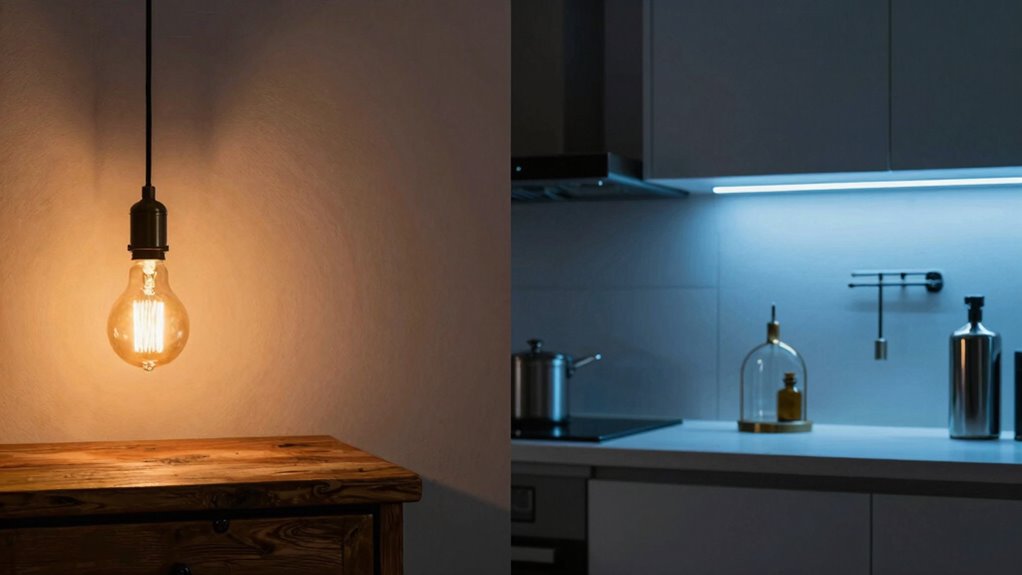
Have you ever noticed how warm lighting creates a cozy and inviting atmosphere? It taps into color psychology, making spaces feel more comfortable and relaxing, perfect for social areas or bedrooms. Warm lighting also enhances skin tones, giving a flattering glow that boosts confidence and mood. Additionally, it can reduce eye strain in low-light settings, helping you feel more at ease. From an energy efficiency standpoint, warm LED bulbs often last longer and consume less power, saving you money over time. This type of lighting encourages relaxation and intimacy, making it ideal for unwinding after a long day. By choosing warm lighting, you create a welcoming environment that promotes comfort, emotional well-being, and energy savings. Incorporating lighting choices that align with your ambiance goals can further optimize your space for comfort and efficiency. Understanding lighting quality helps you select the best options for both aesthetics and functionality, especially when considering lighting technology to maximize benefits. Being aware of lighting standards can also ensure your space meets safety and performance expectations. Additionally, selecting the right lighting control systems can enhance convenience and energy efficiency in your space.
When Should You Use Cool Lighting for Better Clarity?
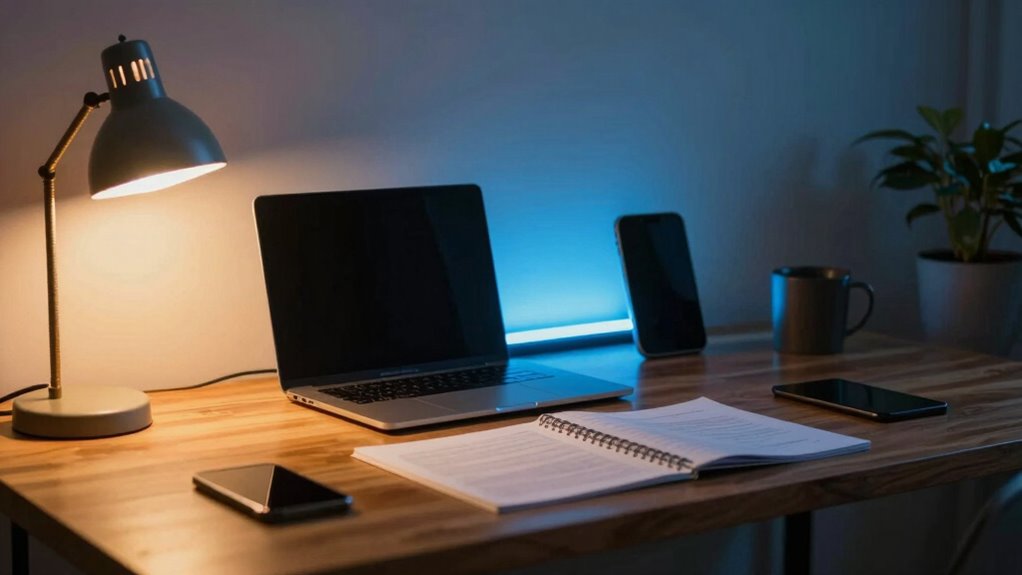
Cool lighting is best suited for spaces where clarity and focus are essential. The lighting color in these settings enhances visual clarity, making details sharper and more distinguishable. Use cool lighting in workspaces, kitchens, or areas requiring precise tasks, as it reduces eye strain and improves concentration. The crisp, bluish tone of cool lighting helps you see colors more accurately, which is vital for activities like reading, assembling, or analyzing fine details. When clarity is a priority, opt for higher color temperatures around 5000K to 6500K. This type of lighting minimizes glare and shadows, creating a brighter environment that promotes alertness. Additionally, color temperature plays a crucial role in optimizing visual performance and comfort. Maintaining proper lighting levels and lighting placement further enhances clarity and reduces fatigue. Being mindful of lighting quality ensures the environment remains comfortable for extended use. Overall, cool lighting supports environments where sharpness and accuracy matter most, ensuring you perform tasks efficiently and with greater visual comfort.
Practical Applications of Warm Lighting in Homes and Hospitality

Warm lighting creates inviting and cozy atmospheres in homes and hospitality spaces. It also makes food look more appetizing and enhances the presentation on plates. Plus, it highlights design features, adding depth and character to your surroundings. Using warm lighting can also improve safety by reducing glare and creating a more comfortable environment. Additionally, understanding battery performance metrics can help in selecting the right lighting for energy efficiency and sustainability. A thoughtful approach to lighting design, including selecting the appropriate lighting fixtures, can further elevate the ambiance and functionality of your space. Incorporating human-centered design principles into your lighting choices ensures that the environment is both aesthetically pleasing and comfortable for everyone. To optimize lighting choices, considering lighting quality factors can ensure the environment remains both functional and welcoming.
Creating Cozy Atmospheres
To create a cozy atmosphere, warm lighting plays an essential role in making your home or hospitality space feel inviting and comfortable. An ambient glow from soft, warm lights instantly relaxes the environment, encouraging guests or family to unwind. Focus on color coordination by choosing warm tones like amber, peach, or soft yellow to enhance the sense of intimacy. Use dimmable fixtures to adjust brightness levels, creating layers of light that add depth and warmth. Incorporate table lamps, wall sconces, or fairy lights to further enhance the cozy vibe. Remember, the goal is to make the space feel welcoming, so keep the lighting gentle and consistent. Additionally, selecting fixtures with free floating designs can help achieve a seamless and unobtrusive light distribution, further enriching the cozy atmosphere. Incorporating layered lighting techniques allows you to tailor the ambiance to different moods and occasions, making your space more versatile and inviting. Using lighting controls can also help you easily switch between different settings for various times of day or events. For optimal comfort, consider light color temperature options that align with the warm lighting aesthetic, enhancing overall ambiance. Moreover, understanding the importance of light placement can significantly influence the effectiveness of your cozy lighting setup.
Enhancing Food Presentation
Lighting can markedly influence how food looks and feels in your space, making warm lighting a powerful tool for enhancing presentation. It creates inviting, appetizing tones that highlight textures and colors, perfect for food photography and plating techniques. Warm light brings out the richness of dishes, making them appear more appealing. To maximize this effect, consider the following:
| Aspect | Benefit |
|---|---|
| Color temperature | Enhances natural food hues |
| Focused lighting | Accentuates key details in plating |
| Consistent ambiance | Keeps presentation cohesive |
Using warm lighting strategically helps you showcase dishes beautifully, whether in a restaurant or at home. It’s an effective way to make your culinary creations visually irresistible and memorable.
Highlighting Design Features
When you want to emphasize architectural details or accentuate specific design features, warm lighting can be a highly effective tool. The right lighting color draws attention to textures, moldings, and decorative elements, making them stand out. To achieve this, carefully select your bulb type, opting for warm white or soft amber tones. Your bulb selection influences the overall ambiance, highlighting details without overpowering the space. Use warm lighting to create a cozy, inviting atmosphere that showcases your design features in a flattering way. Focus on areas like alcoves, fireplaces, or artwork, and aim for lighting that complements the color palette of your room. Proper lighting color and thoughtful bulb selection help you highlight your design features with precision and style. Additionally, aiming to highlight architectural details with the appropriate lighting can significantly enhance the overall aesthetic of your space.
Best Uses for Cool Lighting in Commercial Spaces
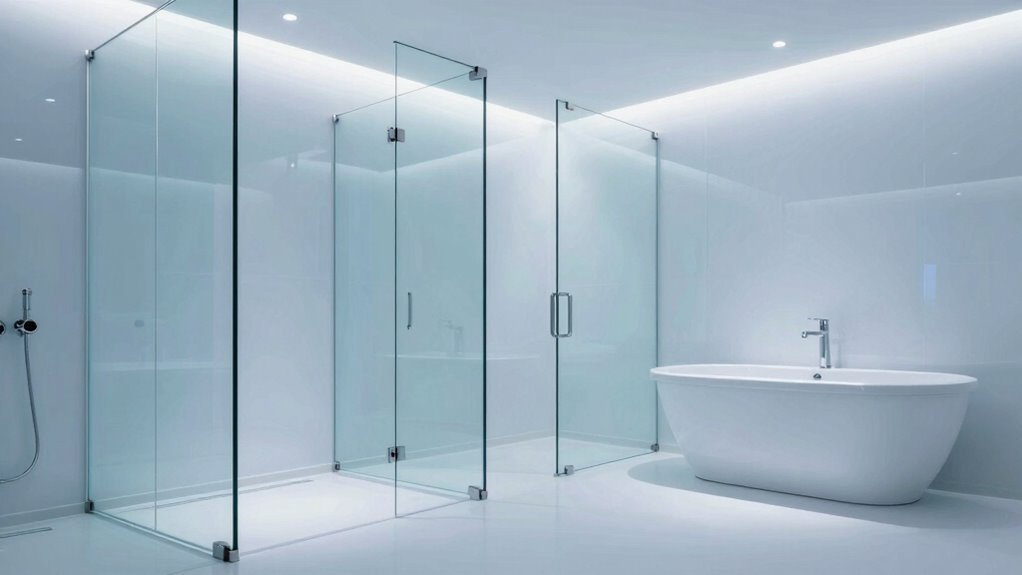
Cool lighting is especially effective in commercial spaces where clarity, focus, and a modern aesthetic are priorities. It enhances your retail displays by highlighting products with crisp, vibrant illumination that attracts customers. In an art gallery, cool lighting accentuates artwork’s details and colors, creating a clean, professional atmosphere. Use cool lighting in these scenarios:
- Retail Displays – To make products stand out and appear more appealing.
- Art Galleries – To emphasize fine details and true colors of artwork.
- Showrooms – To give a sleek, contemporary vibe while showcasing items clearly.
- Technology Stores – To reinforce a modern, high-tech feel that appeals to customers.
How to Balance Warm and Cool Lighting for a Cohesive Atmosphere
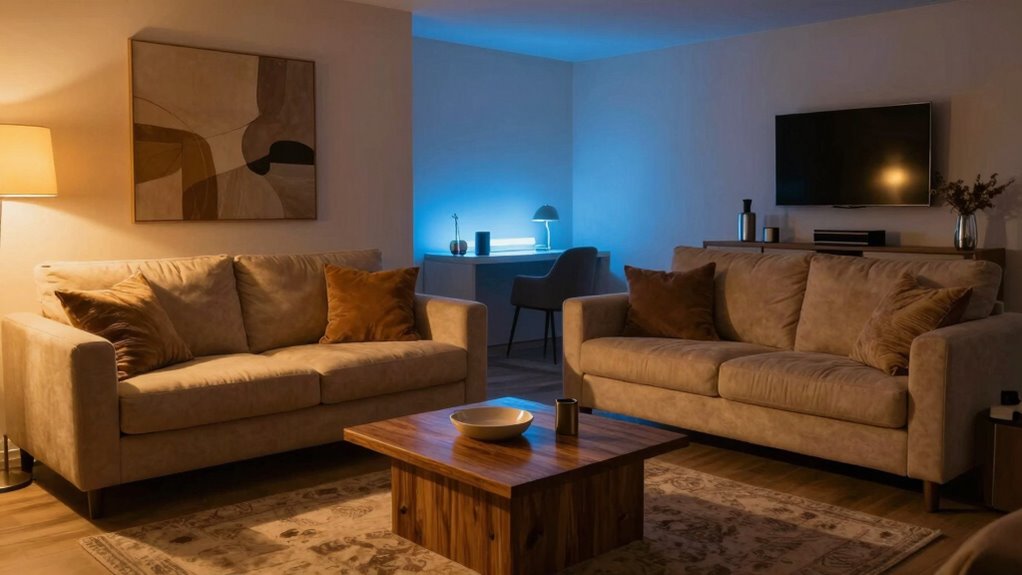
Achieving a cohesive atmosphere involves thoughtfully combining warm and cool lighting to enhance your space’s ambiance and functionality. To do this, consider how color contrast influences mood setting; warm tones create comfort and intimacy, while cool tones promote alertness and clarity. Balance these by layering lighting sources, such as warm ambient light with cool task lighting, ensuring neither dominates. Use warm lighting in social areas and cool lighting where focus is needed. Pay attention to gradual zones, blending the two types smoothly to prevent jarring shifts. Adjust intensity to match the mood you want to evoke, maintaining harmony across the space. By carefully balancing warm and cool lighting, you create a unified environment that feels intentional and inviting.
Tips for Choosing the Right Lighting Based on Room Function

When selecting lighting for different rooms, focus on how brightness and tone support their specific functions. In kitchens, opt for bright, cool lights to enhance visibility; in living rooms, create a cozy feel with softer, warm lighting; and for workspaces, choose focused, adjustable lighting to boost concentration. Understanding these distinctions helps you choose lighting that improves both utility and atmosphere.
Brightness Levels for Kitchens
Choosing the right brightness level for your kitchen lighting is essential to guarantee the space is both functional and inviting. Brightness control helps you adapt lighting for cooking, cleaning, or entertaining. When selecting brightness, consider these tips:
- Use high brightness (around 400-700 lumens) for task areas like countertops and the stove.
- Opt for softer lighting (around 200-300 lumens) in dining zones to create a welcoming atmosphere.
- Adjust lighting color temperature to match the task—cooler tones for precision, warmer for relaxation.
- Incorporate dimmable fixtures to easily modify brightness levels based on activity or mood.
Proper brightness levels, combined with suitable lighting color, ensure your kitchen remains practical without sacrificing comfort.
Cozy Ambiance in Living Rooms
Creating a cozy living room starts with selecting the right lighting that invites relaxation and comfort. To enhance the fireplace ambiance, opt for warm, soft lighting that creates an inviting glow. Dimmer switches work well to adjust brightness based on mood or activity. For your reading nook, choose focused lighting like a table lamp or wall sconce that provides ample illumination without causing glare. This combination ensures the space feels intimate yet functional. Incorporate layered lighting—ambient, task, and accent—to add depth and warmth. Use warm tones for general lighting and targeted cool lighting for specific tasks. This approach helps you craft a living room that’s both welcoming and versatile, perfect for unwinding or entertaining guests.
Focused Lighting for Workspaces
Selecting the right lighting for your workspace is essential to boost focus and reduce eye strain. When choosing lighting, consider how lighting color and fixture styles impact productivity. Here are four tips:
- Opt for neutral or cool lighting colors to enhance alertness and concentration.
- Use adjustable fixtures styles, like task lamps, to direct focused light exactly where needed.
- Incorporate layered lighting—combining ambient and task lighting—for balanced brightness.
- Choose sleek, modern fixtures that complement your workspace’s style without creating clutter.
Factors Influencing Your Choice of Warm or Cool Lighting in Design
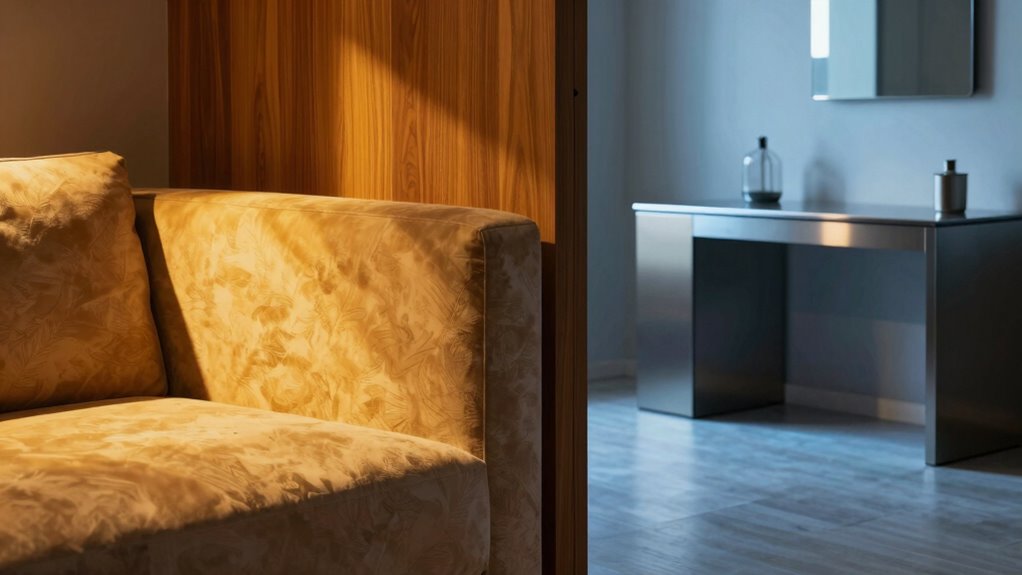
Several factors can influence whether you opt for warm or cool lighting in your design. Lighting color plays a pivotal role in setting the right mood, so consider the atmosphere you want to create. Warm lighting, with its yellowish hue, fosters coziness and intimacy, ideal for living rooms or bedrooms. Cool lighting, with a bluish tint, promotes alertness and cleanliness, making it suitable for kitchens or workspaces. Your choice also depends on the function of the space; relaxing areas benefit from warm tones, while task areas often require cool lighting. Additionally, natural light availability and existing decor influence your decision. Think about how each lighting color impacts mood setting and overall ambiance, ensuring your design aligns with your desired vibe and functionality.
Frequently Asked Questions
How Does Lighting Impact Mood and Psychological Well-Being?
Lighting profoundly influences your mood and mental health by shaping your emotional impact daily. Warm lighting creates a cozy, relaxing atmosphere that reduces stress, while cool lighting energizes you and enhances focus. Poor lighting can lead to fatigue or depression. You can improve your well-being by choosing lighting that aligns with your activities, supporting positive mental health, and creating environments that foster comfort and productivity.
Can Warm and Cool Lighting Influence Energy Efficiency?
You can see the light at the end of the tunnel—warm and cool lighting do influence energy efficiency. Cool lighting often uses LED bulbs with longer lifespan and lower energy consumption, making them more efficient. Warm lighting may consume slightly more energy and have a shorter bulb lifespan, but it creates a cozy atmosphere. Choosing the right lighting based on your needs can save you money and help conserve energy.
What Are Common Mistakes to Avoid When Mixing Lighting Temperatures?
You should avoid mixing lighting temperatures that create color temperature mismatches, which can make a space look disorganized or unappealing. Also, watch out for fixture placement errors; placing warm and cool lights too close can cause uncomfortable contrasts. To maintain a cohesive look, choose fixtures with similar color temperatures and plan your placement carefully. This approach helps your lighting feel balanced and intentional, enhancing your overall design.
Are There Specific Industries That Prefer One Lighting Type Over the Other?
Imagine walking into a cozy retail store bathed in warm, inviting light, or entering a healthcare facility where cool, crisp lighting feels sterile yet reassuring. Retail environments often prefer warm lighting to create a welcoming ambiance, while healthcare facilities favor cool lighting for clarity and cleanliness. Your choice impacts mood and perception, making it essential to select the right lighting type to suit each industry’s unique needs and atmosphere.
How Do LED and Incandescent Bulbs Differ in Producing Warm or Cool Light?
LED and incandescent bulbs differ in producing warm or cool light primarily through their color temperature and spectrum differences. LEDs offer adjustable color temperatures, allowing you to select warm (around 2700K) or cool (up to 6500K) tones, with narrower spectra. Incandescent bulbs naturally emit warm light, typically around 2700K, due to their broad spectrum. You can choose LEDs for versatility, while incandescent bulbs are ideal for warm, cozy atmospheres.
Conclusion
Choosing between warm and cool lighting is like picking the right seasoning for a dish—you want just enough to bring out the best. By understanding their differences and how they suit various spaces, you can create an environment that feels inviting or sharp as needed. Experiment with both, and don’t be afraid to balance them like a well-composed song. Ultimately, the right lighting enhances your space’s mood and function, making it truly shine.