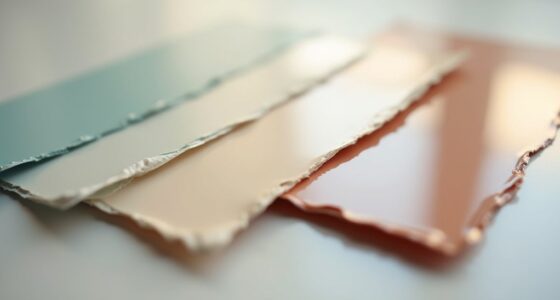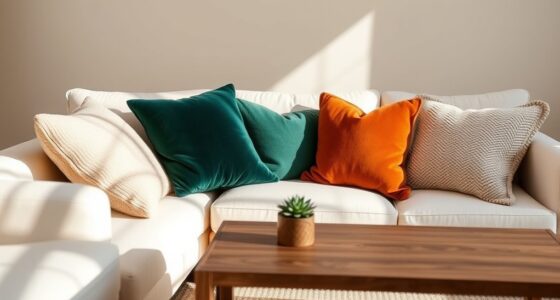
In Scandinavian minimalism, you’ll find a soft palette of neutral colors like whites, grays, and pale blues that brighten spaces and create a calm vibe. To add warmth, you incorporate layered textures such as wool throws, linen cushions, and smooth woods, which bring tactile richness without clutter. This balance of subtle hues and textured elements makes your space feel both serene and inviting. Keep exploring to discover how these choices transform your environment effortlessly.
Key Takeaways
- Scandinavian minimalism uses soft neutrals like whites, grays, and beiges to create bright, calming spaces.
- It emphasizes subtle color variations to add visual interest without clutter.
- Textures such as wool, linen, wood, and ceramics add warmth and depth to minimalist interiors.
- Layering different textures enhances tactile richness while maintaining a clean aesthetic.
- Material choices focus on natural, high-quality elements that age well and develop character.

Scandinavian minimalism embodies a design philosophy centered on simplicity, functionality, and clean aesthetics. When you explore this style, you’ll notice how carefully curated elements work together to create a space that feels both calming and purposeful. A key aspect of achieving this look lies in the thoughtful use of color and texture. Nordic color palettes, characterized by soft neutrals, muted tones, and subtle contrasts, form the foundation of this style. These colors, often inspired by the natural landscapes of Scandinavia, include shades of white, gray, beige, and pale blues, which help to brighten rooms and foster a sense of openness. By sticking to these subdued hues, you avoid visual clutter, allowing the focus to remain on essential forms and materials.
But color isn’t the only tool you should leverage. Textural layering techniques are equally crucial in adding depth and interest to your minimalist space. Instead of relying on bold patterns or loud designs, you layer different textures—think soft wool throws, smooth ceramics, matte woods, and tactile fabrics—to create a rich, inviting environment. For example, placing a plush rug over a wooden floor or adding a linen cushion on a sleek leather chair introduces tactile variety without disrupting the minimalist aesthetic. These layers serve to warm up the space and make it feel more lived-in, while still maintaining the clean lines and uncluttered vibe that define Scandinavian minimalism.
The key is to balance simplicity with tactile richness. You want your space to feel effortless but not sterile. To do that, choose a few high-quality, natural materials that age well and develop character over time. Think of brushed oak, soft cotton, or textured wool—these materials embody the Scandinavian ethos of nature-inspired design. When you combine these textures with your Nordic color palette, you achieve a layered look that’s visually appealing yet understated. These layering techniques also help to define different zones within an open-plan space, giving each area a sense of purpose without overcrowding.
In essence, mastering Scandinavian minimalism involves understanding how to harness subtle color variations and textural nuances to craft a space that’s both functional and aesthetically serene. By focusing on Nordic color palettes and employing textural layering techniques, you create a harmonious environment that feels effortlessly stylish, calming, and uniquely yours. This approach invites you to embrace simplicity while celebrating the tactile richness that makes your space truly inviting.
Frequently Asked Questions
How Do Scandinavian Minimalism Colors Influence Mood?
You’ll find that Scandinavian minimalism’s soft, neutral colors positively influence your mood through color psychology, creating a calming atmosphere. These light shades reduce stress and promote relaxation, helping you feel more centered. By surrounding yourself with these colors, you enhance your overall mood and foster a sense of peace. The subtle hues support mood enhancement, making your space feel inviting, serene, and perfect for unwinding after a busy day.
What Textures Are Most Common in Scandinavian Minimalist Interiors?
Textures in Scandinavian minimalist interiors are like a warm hug for your senses. You’ll find a lot of textured fabrics that invite you to touch and feel cozy, while smooth wood finishes create a sleek, calming surface that balances simplicity and comfort. These textures work together to craft an inviting, serene space where every detail feels thoughtfully chosen, making your home a true sanctuary of understated elegance.
Can Scandinavian Minimalism Work With Bold Accent Colors?
Yes, Scandinavian minimalism can work with bold accent colors. You can incorporate bold color accents through statement wall ideas or colorful accessories, which add visual interest without overwhelming the clean aesthetic. Use these accents sparingly to maintain the minimalist feel, balancing them with neutral tones and simple textures. This approach creates a striking yet harmonious space that highlights your personality while preserving the essence of Scandinavian design.
How to Incorporate Natural Materials Into Minimalist Spaces?
You can incorporate natural materials into minimalist spaces by adding wooden accents like furniture or décor to bring warmth. Use organic textiles such as linen or wool for soft furnishings to enhance texture without clutter. Keep the design simple and let these materials stand out as focal points. This approach maintains the clean, uncluttered aesthetic of Scandinavian minimalism while adding natural beauty and tactile interest.
What Lighting Strategies Enhance Scandinavian Minimalism?
You should use layered lighting to enhance Scandinavian minimalism, combining ambient illumination with task and accent lighting. Opt for simple, sleek fixtures that blend seamlessly into your space, emphasizing clean lines and natural textures. By creating a balanced glow, you highlight the minimalist aesthetic without clutter. Keep the lighting soft and warm to evoke coziness, ensuring your space feels inviting, functional, and true to Scandinavian design principles.
Conclusion
Embracing Scandinavian minimalism is like opening a window to fresh air—simple, soothing, and full of life. By blending clean colors with rich textures, you create a space that feels both calm and inviting. Think of it as the gentle rhythm of a lullaby, calming your senses and grounding your day. So, let your home be a canvas of quiet elegance, where every detail whispers serenity and beauty in perfect harmony.