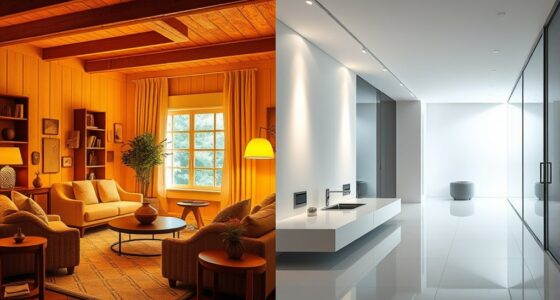
Understanding paint undertones helps you choose colors that create the right mood and harmony in your space. Warm undertones have hints of yellow, gold, or red, making a room feel cozy and inviting. Cool undertones lean toward blue, gray, or green, giving a calm and invigorating vibe. Recognizing these subtle differences ensures your color choices match your décor and lighting. Keep exploring to discover how to spot these nuances easily and make confident selections.
Key Takeaways
- Warm undertones display hints of yellow, gold, or orange, while cool undertones reveal blue, gray, or green hints.
- Use the color wheel to compare hues and identify if a color leans toward warm or cool shades.
- Observe paint swatches in different lighting conditions to see how undertones shift from warm to cool.
- Warm colors complement earth tones and wood accents; cool colors pair well with blues, grays, and whites.
- Testing colors in your space helps determine their true undertones and how they harmonize with existing décor.

Choosing paint colors can feel overwhelming, especially when you consider the subtle differences in undertones. These tiny hints of color beneath the main hue can dramatically change how a paint looks in your space. To master undertone identification, it helps to understand the color wheel, which is a handy tool for visualizing how colors relate to each other. The color wheel shows you primary, secondary, and tertiary colors, giving you a foundation for recognizing whether a paint has warm or cool undertones. For example, if a beige leans toward yellow or gold, it has warm undertones. Conversely, if it hints at gray or hints of blue, it likely possesses cool undertones. Using the color wheel as a reference makes it easier to compare and identify undertones accurately.
When you’re selecting paint, pay close attention to how the color interacts with your room’s lighting. Natural light can enhance warm undertones, making them appear more vibrant and inviting, while cool undertones often look crisper and more calming in the same setting. To pinpoint undertone identification, look at your paint swatches in different lighting conditions—morning sunlight, afternoon, and evening—to see how the hue shifts. This process helps you determine whether a color is truly warm or cool, eliminating surprises after the paint dries.
Another useful tip is to compare your swatches against objects in your room. Warm undertones tend to complement wood furniture, brass fixtures, and earth-toned accents, making everything feel cozy and inviting. Cool undertones, on the other hand, pair well with stainless steel, white trim, and blue or gray accessories, creating a more modern, serene atmosphere. Recognizing these cues helps you visualize how a color will look once it’s on your walls, reducing the risk of ending up with a shade that clashes with your existing décor.
In essence, understanding paint undertones boils down to paying attention to the subtle hints within each color and how they play with your environment. By using the color wheel and practicing undertone identification, you’ll develop an instinct for choosing colors that truly match your style and mood. It’s all about observing, comparing, and testing—these steps will help you confidently pick warm or cool hues that transform your space exactly as you envision. Additionally, being aware of paint undertone differences can help prevent costly repainting and ensure your space remains harmonious.
Frequently Asked Questions
How Do Natural Light Conditions Affect Paint Undertone Perception?
Natural light and lighting conditions greatly influence how you perceive paint undertones. In bright, natural sunlight, warm tones might appear more vibrant, while cool tones can seem subdued. On overcast or dim days, undertones may look muted or even shift slightly. You should observe your paint color at different times of day and under various lighting conditions to make sure it matches your vision, as natural light can dramatically change how colors appear.
Can Color Undertones Change Over Time After Painting?
Yes, your paint’s undertones can change over time due to factors like paint lifespan and color fading. As paint ages, sunlight, cleaning, and environmental exposure may cause the original undertones to shift subtly. You might notice warm tones becoming cooler or vice versa. To maintain your desired look, choose high-quality paint and consider applying protective finishes. Regular touch-ups can help preserve the original undertones longer.
What Tools Are Best for Identifying Undertones Accurately?
Did you know that 85% of homeowners struggle to identify paint undertones accurately? To get it right, use tools like color swatch comparison and digital color matching. Color swatches help you compare shades side-by-side, revealing subtle warm or cool undertones. Digital color matching apps analyze your sample to provide precise matches, making it easier to select the perfect hue. These tools guarantee your paint choices match your vision perfectly.
Do Wall Colors Influence the Perceived Undertones of Furniture?
Yes, wall colors influence how you perceive furniture undertones. When you choose wall colors that complement your furniture, it enhances the overall harmony using color matching techniques. Complementary color schemes can make furniture look warmer or cooler depending on the backdrop. By carefully considering wall hues, you can subtly shift the perceived undertones, creating a cohesive and balanced space that highlights your furniture’s best features.
How Do Undertones Affect the Overall Mood of a Room?
Undertones considerably impact a room’s mood by influencing color psychology and creating aesthetic harmony. Warm undertones evoke feelings of coziness and energy, making spaces feel inviting and lively. Cool undertones promote calmness and serenity, ideal for relaxation. When you choose colors that align with your desired atmosphere, you enhance the overall ambiance, ensuring your room reflects the mood you want to foster.
Conclusion
Choosing the right paint undertone is like tuning a musical instrument—you want harmony in your space. Warm and cool undertones each bring their unique melody, setting the mood for your room. Trust your instincts and test samples to find what feels just right. Remember, selecting the perfect shade is a dance of patience and intuition. When you strike the right chord, your space will sing with personality and warmth.