To make open-plan spaces feel cohesive, start by defining clear zones with furniture placement, rugs, and visual cues like lighting or color changes. Choose a consistent color palette and materials to unify different areas. Incorporate supportive furniture that matches your style and functions well, and organize clutter with smart storage solutions. Thoughtful lighting and decorative accents further enhance flow. Keep exploring tips to turn chaos into harmony and create a space that feels inviting and well-connected.
Key Takeaways
- Define clear zones with visual cues like rugs and furniture to create purpose and separation without closing off space.
- Use a consistent color palette and complementary materials throughout to ensure visual harmony.
- Arrange furniture thoughtfully to facilitate natural flow and highlight different activity areas.
- Incorporate layered lighting and decorative accents to unify zones and enhance ambiance.
- Keep clutter minimal with smart storage solutions to maintain an organized, cohesive environment.
Start With Your Goals: Why Open-Plan Spaces Need Thoughtful Design
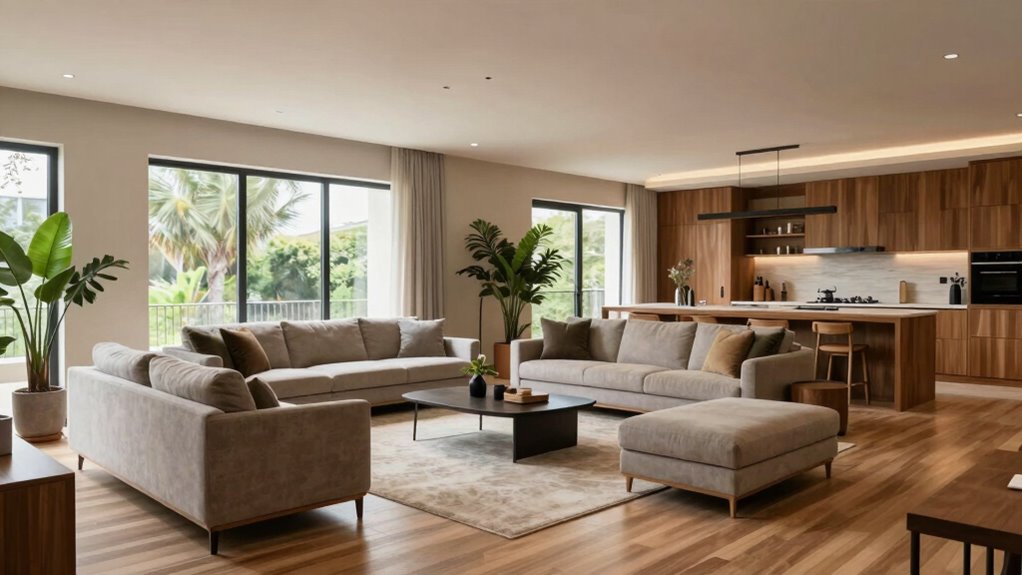
To create a cohesive open-plan space, you first need to define your goals clearly. Think about how you want the space to feel and function. Your furniture arrangement plays a key role in achieving this, helping to create visual flow and purpose. Consider where you want to place key pieces so the layout feels natural and inviting. An accent wall can serve as a focal point, anchoring the room’s design and adding personality. Decide if you want a bold color or texture to draw attention without overwhelming the space. Clarifying these goals early ensures your furniture arrangement and accent wall work together harmoniously, making your open-plan area feel intentional, balanced, and cohesive rather than chaotic. Additionally, incorporating sustainable design principles can enhance the environmental quality and longevity of your space.
Define Clear Zones to Make Your Space Work for You
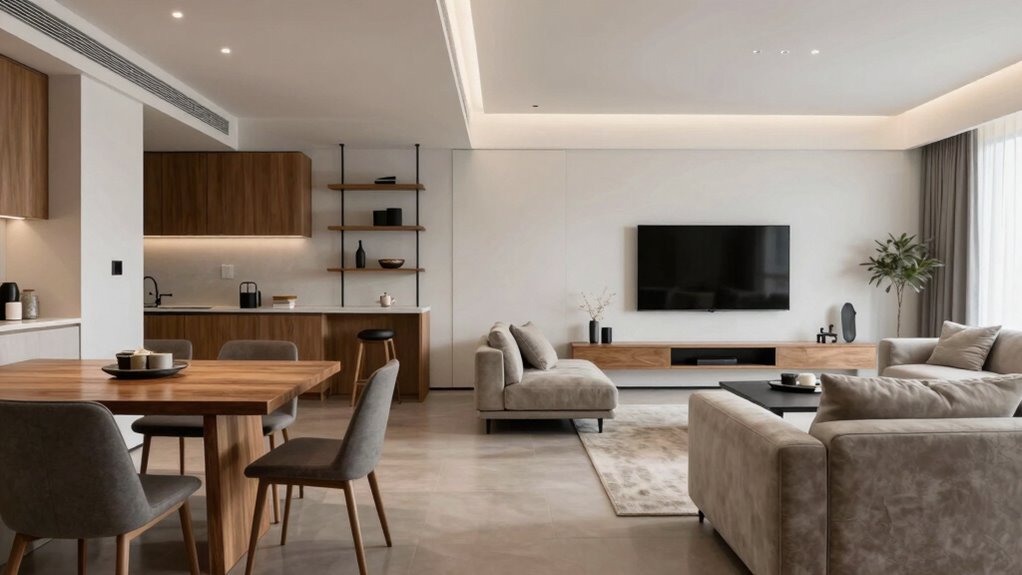
To make your open-plan space functional, you need to establish clear zones that guide movement and purpose. Use visual cues like rugs, furniture, or color changes to define boundaries without disrupting flow. These spatial arrangements help create distinct areas that serve different functions while maintaining a cohesive look. Incorporating thoughtful ventilation considerations can also improve comfort and air quality across zones.
Establish Distinct Boundaries
Creating clear boundaries within an open-plan space helps you define different areas for specific activities, making the entire layout more functional and comfortable. To effectively divide spaces, use boundary markers like rugs, furniture, or shelving to create visual separation without closing off areas. These markers act as cues, signaling where one zone ends and another begins, which helps reduce chaos and improve flow. For example, a sofa can delineate the living area from the dining space, while a bookshelf can serve as a subtle partition between work and relaxation zones. Additionally, understanding the contrast ratio of your design elements can enhance the perceived separation and clarity between zones. By establishing these boundaries, you give each area a sense of purpose and organization, making your open-plan space feel cohesive rather than cluttered.
Use Visual Cues
Using visual cues is a powerful way to define clear zones within your open-plan space. By incorporating visual cues, you help create open plan zones that serve different functions without clutter. Here are three effective strategies:
- Use rugs or carpets to anchor specific areas, signaling a dedicated zone.
- Change lighting styles or fixtures to differentiate spaces, like task lighting for work zones.
- Incorporate furniture arrangements that naturally divide areas, such as sofas or shelving units.
- Select quality rugs that enhance the visual appeal and durability of your designated zones, ensuring your space remains inviting over time.
These visual cues guide your eye and define boundaries, making your open-plan layout feel cohesive rather than chaotic. When you establish clear zones through visual cues, your space becomes more functional and inviting, encouraging flow and purpose within your open plan zones.
Use Color and Materials to Create a Cohesive Look
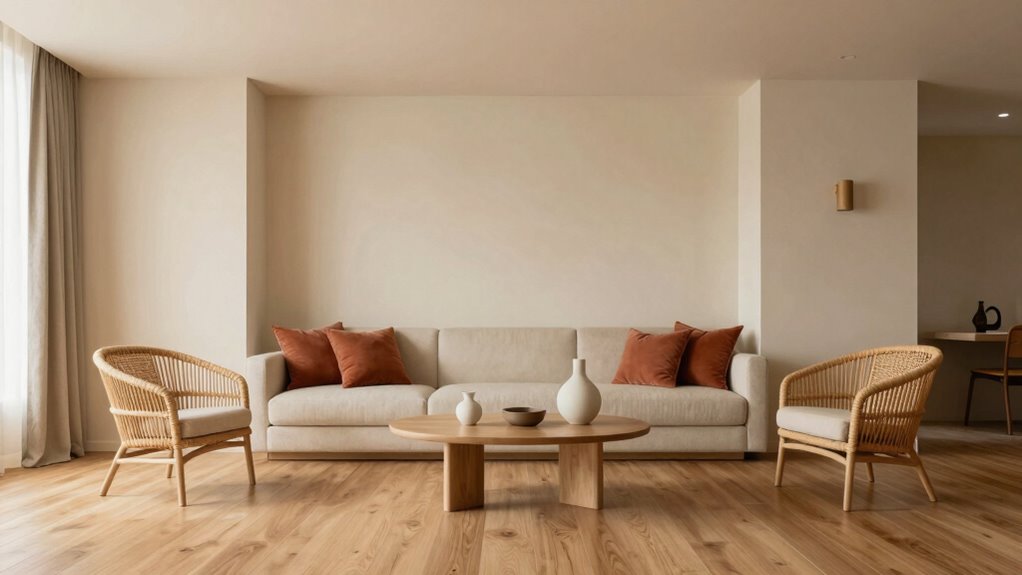
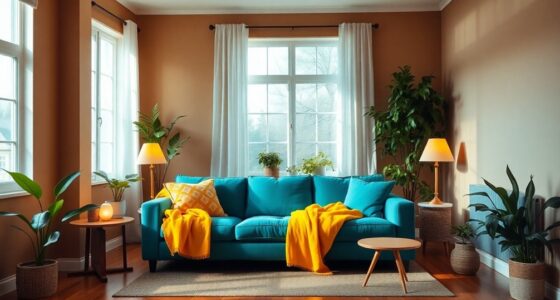
Choosing a consistent color palette and selecting materials that complement each other can instantly unify an open-plan space. Focus on color coordination by sticking to a few harmonious shades that flow throughout the area. This creates visual coherence and makes each zone feel connected. When it comes to material mixing, choose textures and finishes that work well together—smooth with rough, matte with glossy—to add depth without chaos. Use similar tones or subtle variations to maintain harmony. For example, pairing warm wood with soft textiles in complementary hues can create a welcoming, cohesive look. Avoid mixing too many different colors or materials, which can fragment the space. Instead, aim for a balanced combination that guides the eye smoothly across the entire open plan.
Choose Furniture That Supports Your Zones and Style
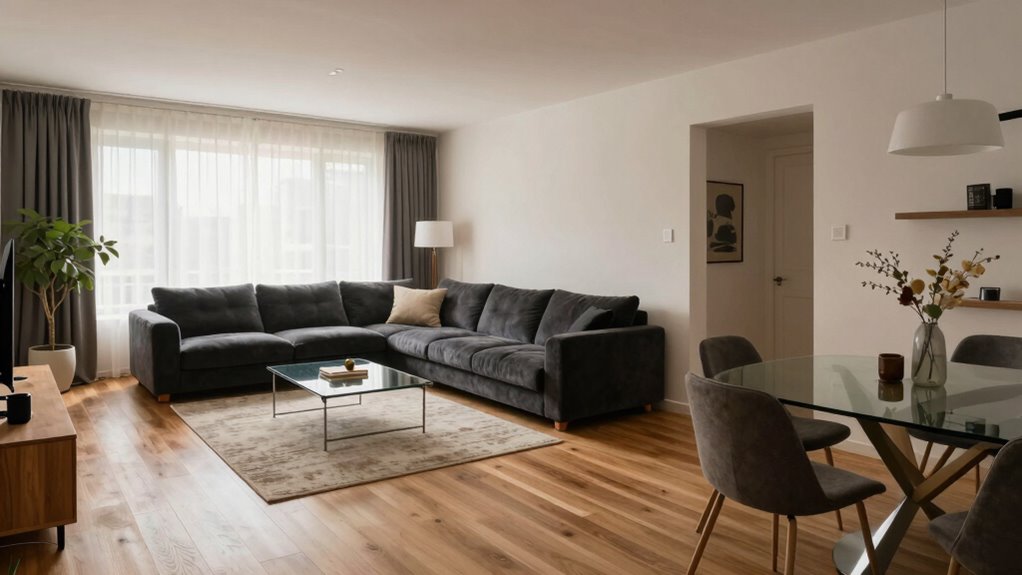
To create a cohesive open-plan space, you need to clearly define your zones and choose furniture that supports each one. Look for pieces that match your overall style while remaining functional and comfortable. Prioritizing both form and function helps your space feel unified and inviting. Incorporating interior design tips can further enhance the harmony and flow between different areas. Additionally, selecting furniture with consistent color schemes and materials can reinforce the visual connection across zones. Paying attention to space planning techniques ensures your furniture layout promotes both cohesion and practicality. Employing visual balance principles can also help in achieving a harmonious layout that feels natural and well-organized. Using modern technology such as smart furniture and connected devices can additionally streamline transitions and improve overall functionality within your open-plan layout.
Define Your Zones Clearly
When you define your zones clearly, selecting furniture that supports each area becomes essential. Proper zone delineation helps create distinct spaces within your open-plan layout, ensuring each area serves its purpose without confusion. Focus on space segmentation by choosing pieces that reinforce boundaries, like sofas or rugs, to visually separate zones. To enhance clarity, consider these tips:
- Use furniture height and placement to mark different zones.
- Opt for distinct styles or textures to differentiate areas while maintaining harmony.
- Incorporate functional pieces that support specific activities in each zone.
These strategies help you achieve a cohesive flow while maintaining clear boundaries, making your open-plan space feel organized rather than chaotic. Clear zone delineation transforms your layout into a purposeful, inviting environment.
Select Cohesive Style Pieces
Selecting furniture that supports both your zones and overall style is key to creating a cohesive open-plan space. Focus on a consistent furniture arrangement that visually links different areas, avoiding clutter and confusion. Choose pieces that complement your color palette and design theme, ensuring each zone flows seamlessly. Incorporate decorative accessories that reinforce your style, such as rugs, cushions, or artwork, to unify the space. Avoid mixing overly contrasting furniture styles, which can cause disjointedness. Instead, opt for furniture that aligns with your chosen aesthetic and enhances each zone’s purpose. Thoughtful selection of furniture and accessories helps establish harmony, making your open plan feel intentional and well-designed rather than chaotic.
Prioritize Comfort and Function
Choosing furniture that balances comfort and functionality guarantees each zone in your open-plan space works well and feels inviting. Focus on ergonomic furniture to support your posture during long work or relaxation periods. Incorporate acoustic solutions like upholstered panels or area rugs to reduce noise and maintain a peaceful atmosphere. When selecting pieces, consider these principles: 1. Prioritize comfort with cushioned, supportive seating. 2. Ensure furniture supports the specific activities in each zone. 3. Blend style with practicality by choosing versatile, cohesive pieces. Additionally, integrating outdoor‑kitchen essentials like durable furniture can enhance the overall flow and usability of your space. To further promote a cohesive environment, consider the fundamentals of space planning to ensure each zone naturally transitions into the next. Paying attention to essential oils for creating a calming environment can also subtly influence the atmosphere, making your open space more harmonious and relaxing. Incorporating natural elements such as native plants can further enhance the aesthetic and environmental harmony of your space. For example, selecting furniture with multifunctional features can maximize small areas and improve overall organization.
Keep It Organized: Tips to Reduce Clutter and Stay Tidy

Keeping your open-plan space organized can seem challenging, but staying tidy is essential for maintaining a cohesive and functional environment. Start with effective storage solutions—use baskets, shelves, or multifunctional furniture to keep belongings out of sight yet accessible. Regular decluttering techniques help prevent clutter buildup; set aside time weekly to sort through items and eliminate what you no longer need. Label boxes or containers to streamline organization and make it easier to find things quickly. Designate specific spots for common items, like keys or remote controls, to avoid unnecessary messes. Implementing proper filtration systems can also help maintain a fresh atmosphere, reducing dust and allergens that contribute to cluttered or chaotic spaces. Additionally, understanding how space planning influences your environment can motivate you to keep your space orderly. Knowing how air quality impacts your health can further encourage maintaining a tidy space, especially in enclosed areas. Moreover, understanding how sleep comfort factors influence your well-being can motivate you to keep your environment orderly. Incorporating clutter management techniques can significantly reduce stress and create a more inviting atmosphere. By consistently applying these tips, you’ll create a sense of order that enhances your space’s flow and keeps it looking intentional and inviting.
Lighting Strategies That Enhance Flow and Atmosphere

Lighting plays a crucial role in creating a seamless flow and inviting atmosphere in your open-plan space. To achieve this, consider layering different types of lighting. First, use ambient glow from ceiling fixtures or wall sconces to provide overall illumination that unifies the space. Second, incorporate task lighting in specific areas like the kitchen or workspace to guarantee functionality without disrupting harmony. Third, create zones with adjustable lighting options, allowing you to control the mood and highlight key areas. This balance helps prevent chaos and promotes a cohesive feel. Thoughtful lighting choices guide movement, emphasize design elements, and foster a welcoming environment that feels both spacious and intimate. Proper lighting enhances flow and atmosphere, making your open-plan space feel intentional and well-connected. Additionally, understanding the “why” behind food can inspire innovative lighting designs that highlight textures and colors, enriching the overall ambiance of your living area. Integrating lighting layers thoughtfully can also help emphasize art and decor, creating visual interest and cohesion. Incorporating lighting zones with dimmable options further enhances flexibility and comfort throughout the space.
Decorate With Intention: Harmonize Accessories and Décor
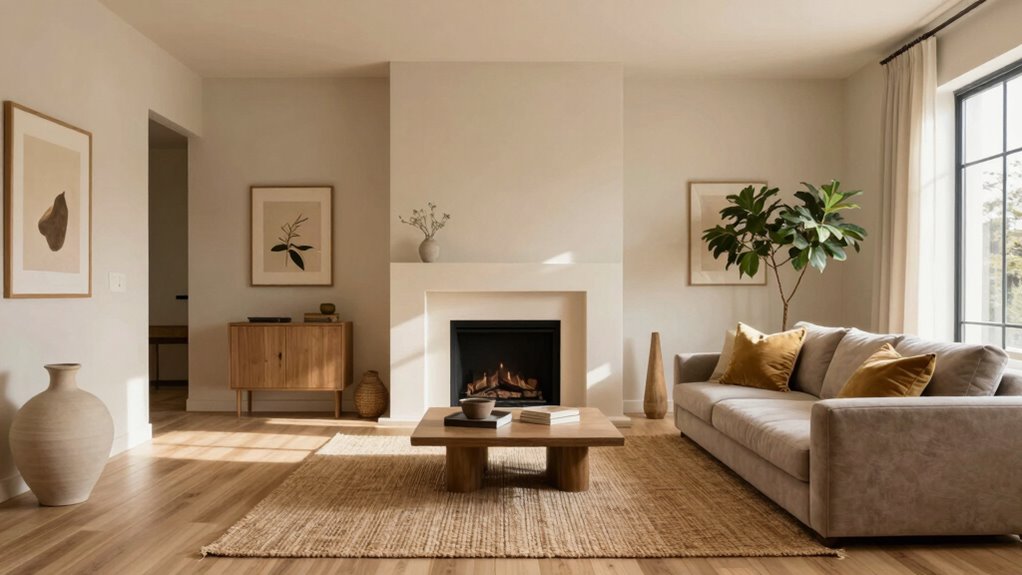
To create a cohesive open-plan space, decorating with intention is essential. Focus on accessory selection that complements your overall style and color palette, ensuring each piece contributes to décor harmony. Choose statement pieces or decorative accents that unify different zones without overwhelming the space. Mix textures and materials thoughtfully, balancing bold and subtle elements to maintain visual interest while avoiding chaos. Keep clutter to a minimum by selecting accessories that serve both aesthetic and functional purposes. Consistency in style, color, and scale helps tie the entire area together, making it feel intentional and harmonious. Remember, every decorative choice should enhance the flow and atmosphere, creating a space that feels connected rather than disjointed.
Plan Your Layout to Connect Areas Seamlessly and Functionally
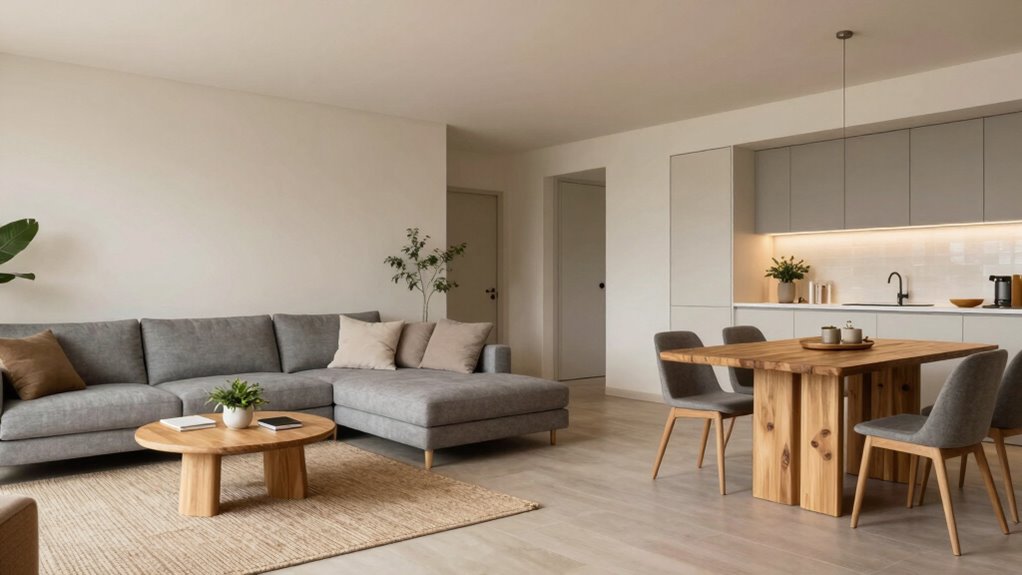
Thoughtful layout planning guarantees your open-plan space flows naturally from one zone to another, making it both functional and inviting. To achieve this, focus on furniture placement and traffic flow. Arrange furniture so that pathways remain clear, guiding movement without congestion. Use the following tips to connect areas seamlessly:
- Position seating to define zones while maintaining open sightlines.
- Place key furniture to encourage natural traffic flow between spaces.
- Use rugs or visual cues to subtly delineate areas without breaking cohesion.
Frequently Asked Questions
How Can I Balance Openness With Privacy in My Space?
You can balance openness with privacy by incorporating privacy solutions like movable screens or glass partitions, which create designated zones without sacrificing the open feel. Use acoustic treatments such as rugs, wall panels, or curtains to dampen noise and add a sense of enclosure. These strategies help you enjoy the spaciousness while maintaining quiet areas for focus or conversation, making your space both functional and inviting.
What Are the Best Ways to Define Zones Without Walls?
You can define zones without walls by using visual boundaries like rugs, different lighting, or furniture arrangements. Decorative partitions such as open shelving, screens, or curtains also help create distinct areas without sacrificing openness. These elements add structure and privacy while maintaining flow. Play with color schemes and textures to subtly differentiate spaces, making your open plan feel cohesive yet functional.
How Do I Choose Color Schemes That Unify Multiple Areas?
Like a true Renaissance artist, you’ll want to focus on color harmony to unify your spaces. Pick a cohesive palette with complementary hues and use accent accents to highlight different zones. Stick to 2-3 main colors, then add pops of contrasting shades for interest. This approach creates visual flow, making each area feel connected yet distinct, so your open-plan space feels harmonious instead of chaotic.
What Furniture Arrangements Promote Both Function and Flow?
You should focus on strategic furniture placement and seating arrangements that define zones while encouraging easy movement. Place sofas and chairs to create intimate conversation areas, leaving clear pathways for flow. Use rugs or furniture groups to visually separate spaces without blocking circulation. Keep a balance between open space and functional furniture, ensuring each zone serves its purpose while maintaining a cohesive, inviting layout that promotes smooth flow throughout your open-plan area.
How Can Lighting Be Used to Visually Separate Zones Effectively?
Think of your space as a stage, where lighting cues set different scenes. Use layered lighting to create depth and define zones, like soft ambient lights for relaxation areas and brighter task lighting for workspaces. Accent lighting highlights architectural features or decor, emphasizing separate zones. This combination guides the eye and subtly separates functions, making each area feel distinct yet harmonious, much like a well-directed performance on a versatile stage.
Conclusion
Creating a cohesive open-plan space isn’t about eliminating chaos but embracing it thoughtfully. When you define zones and choose harmonious colors, you invite order into your everyday life. Yet, amidst the organization, allow room for spontaneity and personality—these moments of chaos can breathe life into your home. Balance structure with freedom, and your space will feel inviting and intentional, a seamless blend of purpose and personality that truly reflects you.