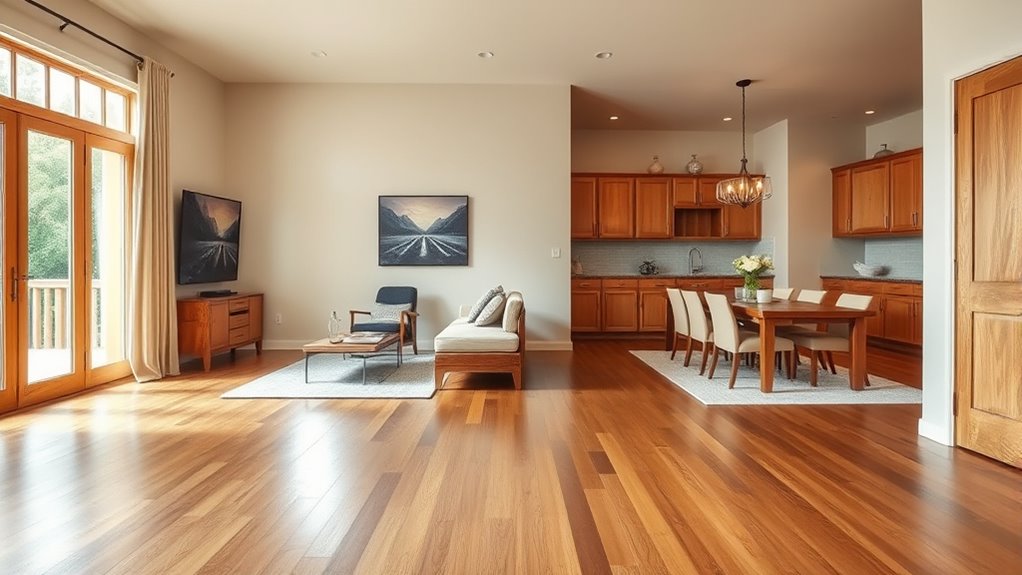

To match wood tones across rooms, start by identifying the dominant wood color in your main living area. Choose other spaces based on existing tones, aiming for a cohesive look by sticking to warm, cool, or neutral palettes. Use consistent finishes and tones in furniture and accents to create harmony. Lighting also plays a role in how wood appears, so select finishes that look good under different conditions. Want to master this harmonious approach? Keep exploring for more tips.
Key Takeaways
- Identify the dominant wood tone in the main living areas to guide overall matching decisions.
- Choose complementary wood finishes that fall within the same warm, cool, or neutral spectrum for cohesion.
- Maintain consistency in wood stain or finish across furniture and accents to unify different rooms.
- Use lighting to assess how wood tones appear in various environments and adjust finishes accordingly.
- Incorporate decorative elements like rugs or artwork to visually connect spaces with differing wood tones.
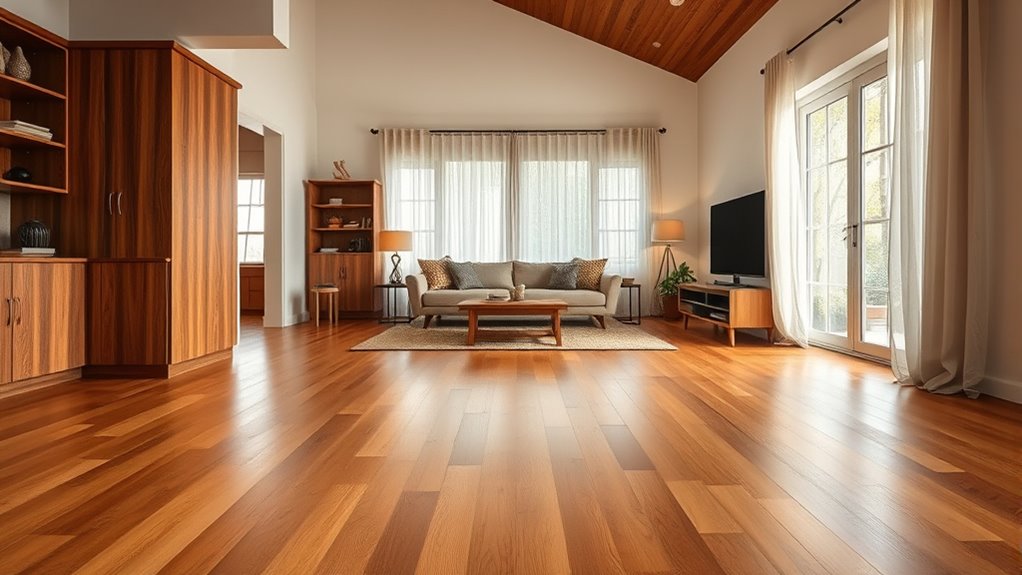
Have you ever struggled to coordinate different wood tones in your space? If so, you’re not alone. Mixing various wood finishes across rooms can feel intimidating, but with a few simple strategies, you can create a cohesive and inviting environment. The key lies in understanding color palette coordination and furniture style blending. When you pay attention to these elements, your home will flow seamlessly, even with diverse wood tones.
Start by evaluating the dominant wood color in your main living areas. Once you identify that, you can make intentional choices for other rooms. For example, if your living room features warm oak furniture, consider introducing a similar warm tone in adjacent spaces, like a cherrywood dining set or a walnut coffee table. This creates a natural harmony, tying the rooms together without matching every piece exactly. The goal is to develop a balanced color palette that complements your existing wood finishes. Think of your overall palette as a spectrum—warm, cool, or neutral—and aim to stay within that range when selecting new pieces.
Furniture style blending is another essential factor. You don’t need to have identical furniture styles, but mixing styles must be intentional. For example, pairing sleek modern pieces with rustic wooden accents can create visual interest if you keep the wood tones consistent. Conversely, if you’re blending traditional and contemporary furniture, choosing a common wood tone across these styles helps prevent the space from feeling disjointed. Consistency in wood tone acts as a unifying thread, making diverse furniture styles look intentional rather than mismatched.
Lighting plays a significant role in how wood tones appear across rooms. Natural light enhances the warmth and richness of wood, so consider the amount of sunlight each room receives. You might find that a piece of furniture looks different in two spaces simply because of lighting conditions. To maintain visual cohesion, select wood finishes that are versatile under various lighting situations or incorporate complementary decorative elements, like rugs or artwork, that tie the spaces together. Additionally, understanding color palette coordination can help you choose finishes that adapt well to different lighting environments.
Finally, don’t be afraid to experiment. Use swatches or samples before making large purchases, and view them in the actual rooms to see how they interact with your wall colors, fabrics, and other finishes. Remember, matching wood tones isn’t about perfect uniformity but creating a harmonious flow. With thoughtful color palette coordination and deliberate furniture style blending, you can achieve a stylish, cohesive look that feels intentional and welcoming across all your rooms.
Frequently Asked Questions
How Do Natural Light Variations Affect Wood Tone Matching?
Natural light and artificial lighting greatly impact how you perceive wood tones. Natural light varies throughout the day, making wood appear lighter or darker, while artificial lighting can cast warm or cool hues that alter the wood’s true color. To guarantee consistent tone matching, observe your wood samples in both lighting conditions at different times. Adjust your choices accordingly, understanding that lighting influences the way wood tones look in your space.
Can Mismatched Wood Tones Impact Home Resale Value?
Mismatched wood tones can negatively impact your home’s resale value, as they may give rooms an uncoordinated look. This inconsistency can distract potential buyers and make spaces feel less cohesive. To boost appeal, you can use decorative accessories and color accentuation to draw attention away from mismatched tones. Properly balancing wood and accent colors helps create a harmonious environment, increasing your home’s overall attractiveness and potential resale value.
What Are Quick Tips for Blending Different Wood Grain Patterns?
Mixing wood grain patterns can seem tricky, but you can make it work. Start by contrasting grain directions—like horizontal and vertical—to add visual interest. Use color swatches to compare tones side by side, ensuring they complement each other. Keep a consistent color palette, even with different grains, to create harmony. Combining these tips helps you blend varied wood patterns seamlessly, making your space feel cohesive and thoughtfully designed.
Are There Specific Wood Finishes That Help Unify Tones?
Yes, certain wood finish options can help unify tones in your space. Opt for matte or satin finishes, which tend to even out color differences and create a cohesive look. You can also use tone unification techniques like applying a tinted stain or a clear glaze to harmonize the wood tones. These finishes soften contrasts and give your rooms a seamless, polished appearance, making your wood elements look intentionally coordinated.
How Do I Match Wood Tones in Open-Concept Spaces?
To match wood tones in open-concept spaces, start by choosing a cohesive color palette that complements your existing wood finishes. Use furniture coordination to blend different tones seamlessly, mixing lighter and darker woods thoughtfully. Consider incorporating rugs or textiles to create visual connections between areas. This approach helps unify the space, making it feel harmonious and well-designed without overwhelming the room’s natural beauty.
Conclusion
Matching wood tones across rooms creates a cohesive, inviting space you’ll love. Did you know that homes with consistent wood finishes tend to feel 20% more harmonious and balanced? By paying attention to subtle differences and choosing complementary shades, you can effortlessly unify your decor. Remember, small details make a big difference—so trust your eye and enjoy the process of creating a seamless, stylish home that flows beautifully from room to room.