To create effective color zoning in an open-plan home, use different shades to define each area while maintaining visual harmony. Add lighting accents like warm pendant lights or spotlights to highlight zones and set the mood. Arrange furniture thoughtfully to suggest separate spaces naturally, using contrasting colors or feature walls as anchors. Balancing these elements helps you craft distinct, inviting zones that flow well. Continue exploring these strategies to transform your open-plan space into a beautifully cohesive home.
Key Takeaways
- Use distinct color schemes to define separate zones while maintaining overall harmony.
- Incorporate lighting accents to highlight and visually separate different areas.
- Arrange furniture strategically to naturally suggest boundary lines and create functional zones.
- Select color palettes and lighting to evoke specific moods for each zone, enhancing purpose and cohesion.
- Plan with visual cues, anchors, and thoughtful placement to create inviting, well-defined open-plan spaces.
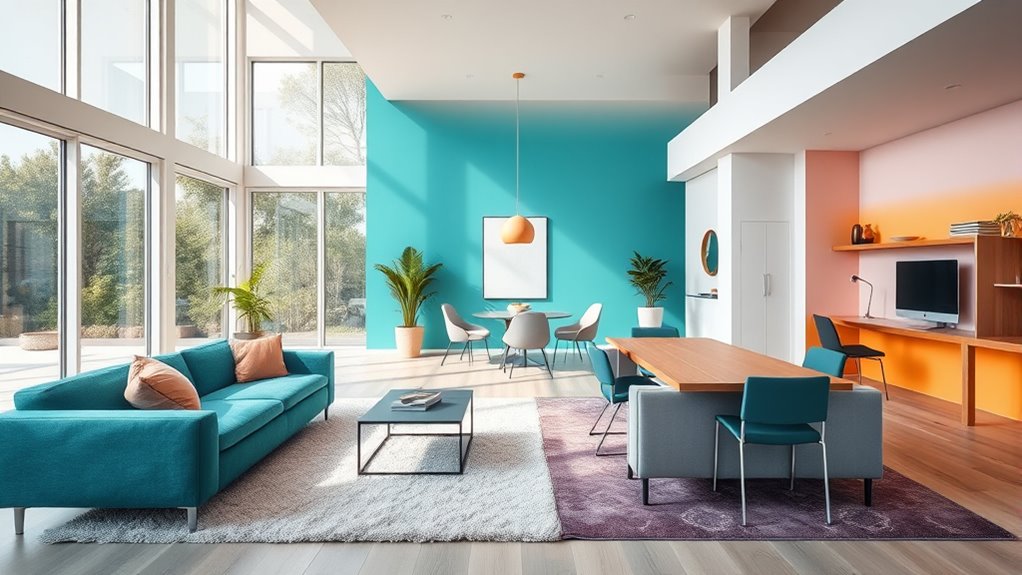
Open-plan homes offer a seamless flow between living spaces, but without careful design, they can feel chaotic or bland. To prevent this, color zoning becomes essential, helping you define different areas while maintaining visual harmony. When you’re thinking about creating zones, consider how lighting accents can enhance each space. For example, a warm pendant light over the dining area can draw attention and establish it as a distinct zone, even if it shares an open layout with the living room. Similarly, subtle wall sconces or spotlights can highlight architectural features or artwork, adding depth and focus. These lighting accents not only brighten the space but also guide the eye, emphasizing boundaries without the need for physical barriers.
Another critical aspect in defining zones is furniture placement. You want to position pieces in a way that naturally suggests separate areas, using color as the unifying thread. For instance, use a bold, contrasting color on a feature wall in the living area to anchor that space, while keeping the adjoining dining or kitchen zones in softer or complementary hues. This approach creates a visual cue that separates each zone without disrupting the open feel. Arranging furniture thoughtfully—like placing a sofa to face a distinct wall or grouping chairs around a different color accent—reinforces the boundaries. It’s about creating visual anchors that work with the overall color scheme, not against it.
Position furniture to suggest separate areas, using contrasting colors to create visual anchors within an open-plan space.
When selecting colors for your zones, think about the mood you want each space to evoke. Cooler tones like blues and greens can create a calming environment, perfect for a lounge area, while warmer shades such as yellows and oranges can energize a dining space. Use lighting accents to enhance these effects; a dimmable fixture can adjust the ambiance, making a cozy reading nook feel inviting or a lively kitchen area feel vibrant. Furniture placement should complement these color choices, ensuring that each zone feels intentional and cohesive. For example, placing a brightly colored armchair in a corner with focused lighting can turn it into a cozy retreat within a larger open space.
Additionally, exploring retail hours for lighting fixtures and furniture can help you plan your shopping trips to find the perfect pieces that tie your zones together. Ultimately, successful color zoning in open-plan homes hinges on how well you balance lighting accents and furniture placement. They work hand-in-hand to create distinct, inviting zones that feel connected yet purposeful. With thoughtful planning, you can enjoy the spaciousness of an open layout while still defining individual areas that suit your lifestyle and aesthetic preferences.
Frequently Asked Questions
How Do I Choose the Right Color Palette for Different Zones?
To select the right color palette for different zones, start by considering color harmony to create a cohesive flow, even when zones differ. Use color psychology to evoke the desired mood in each area—calm blues for relaxing zones or energizing reds for activity spaces. Choose complementary or analogous colors that shift seamlessly, and avoid jarring contrasts. This approach guarantees your open-plan home feels unified yet tailored to each zone’s purpose.
What Are the Best Lighting Options to Enhance Color Zoning?
You should use layered lighting techniques to enhance your color zones effectively. Incorporate a mix of ambient, task, and accent lighting to highlight each area’s unique color palette. Accent lighting, like spotlights or LED strips, draws attention to specific zones, making them stand out. Dimmable lights allow you to adjust brightness, creating the perfect mood and emphasizing the contrast between different zones for a cohesive, vibrant open-plan space.
Can Color Zoning Affect the Perceived Size of the Space?
Ever wondered if color zoning can change how big your space feels? Yes, it can influence the perceived space, creating a sense of visual expansion or intimacy. By using lighter shades in larger areas, you make them seem more open, while darker hues can make smaller zones feel cozy. You control the perception of your open-plan home, making it look bigger or more defined based on your color choices.
How Do I Maintain Consistency Across Open-Plan Zones?
To maintain consistency across open-plan zones, you should coordinate furniture placement and decorative accents thoughtfully. Use a cohesive color palette and similar styles to tie the spaces together. Incorporate recurring patterns or textures in rugs, cushions, or artwork to create harmony. Keep the flow smooth by avoiding abrupt contrasts and ensuring each zone complements the next, making your entire open-plan home feel unified and inviting.
Are There Any Color Conflicts to Avoid in Zoning?
Yes, you should avoid color clashes and overuse of bold hues in zoning. Using too many contrasting colors can create visual chaos, making your space feel disjointed. Stick to a cohesive palette with subtle variations to guarantee harmony. Limit bold accents to one or two zones, and select colors that complement each other. This approach keeps your open-plan home feeling unified and inviting, without overwhelming the senses.
Conclusion
By using color zoning thoughtfully, you can turn your open-plan home into a harmonious space that feels inviting and well-defined. Don’t be afraid to experiment and let your personality shine through in each zone. Remember, a little bit of paint can go a long way—sometimes, it’s the small changes that make the biggest difference. So, roll up your sleeves and get started; after all, a fresh coat of paint can work wonders in bringing your vision to life.